
A steel coil slitting machine must do more than divide a wide mother coil. It has to guide the coil, hold knife position, control strip tension and rebuild multiple narrow coils with consistent edges. Shaft choice is therefore connected to material strength, coil mass, finished width and the customer’s downstream process.
This guide focuses on arbor and rewind decisions for buyers processing steel, coated steel or similar strip. It uses published YG model data for preliminary comparison and then identifies the coil information required for a trial and quotation. Aluminum foil and very thin specialty strip may require a different tension and surface-protection strategy.
Define The Coil And Finished Package First
Record material grade, thickness range, yield strength, incoming width, outer diameter, inner diameter and maximum coil mass. Then list every required slit pattern, edge tolerance, burr limit and finished-roll diameter. A machine selected for one wide slit may not remain stable when the same coil is divided into many narrow lanes.
The receiving process matters as much as the slitter. Roll forming, stamping, tube making and resale each impose different requirements for telescoping, edge damage and winding tightness. Identify whether the finished coils need separators, paper interleaving, automatic unloading or individual strapping.

Unwind Mandrel And Arbor Stiffness
The decoiler must support the heaviest mother coil through loading, acceleration and braking. Confirm the coil bore, expansion range and support method. A mandrel sized only for nominal bore can slip when the core is damaged or outside tolerance, while an unsupported heavy coil can deflect the shaft and disturb strip tracking.
Slitting arbors require stiffness, accurate bearing support and repeatable axial positioning. Deflection changes knife overlap across the width and can create different burrs from the operator side to the drive side. Ask how arbor runout, spacer parallelism and bearing condition are checked during maintenance.


Published Steel Coil Slitting Machine Range
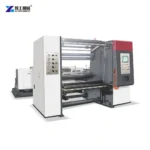
The slitting and rewinding machine range provides three reference working widths. Values below are screening data; final coil weight, material strength, knife arrangement and winding method must be verified together.
| Model | Max unwind width | Min slit width | Max rewind diameter | Published speed | Total power |
| YG-1100A | 1,100 mm | 50 mm | Ø1,000/1,200 mm | 10–450 m/min | 22 kW |
| YG-1300A | 1,300 mm | 50 mm | Ø1,000/1,200 mm | 10–450 m/min | 22 kW |
| YG-1600A | 1,600 mm | 50 mm | Ø1,000/1,200 mm | 10–450 m/min | 24 kW |
Maximum published speed is not the guaranteed rate for every metal. Thick, hard or surface-sensitive material can reduce acceleration and stable line speed. The accepted rate should be demonstrated with representative coil material, the narrowest planned slit and the required finished-roll quality.
COMPARE SLITTING MACHINE MODELS

Knife Setup And Strip Separation
Knife material, clearance and overlap must match thickness and strength. Too little clearance accelerates wear and can deform the edge; too much clearance increases fracture and burr. Record the setup used for every accepted trial so the result can be reproduced after the knives are sharpened.
After cutting, separator discs keep lanes from crossing before rewinding. Narrow strips are more sensitive to wandering and unequal tension. The line should allow operators to thread material safely and inspect the strip without reaching into moving rolls. Guards and interlocks must match local safety requirements.

Rewind Shaft, Tension And Finished Roll Quality
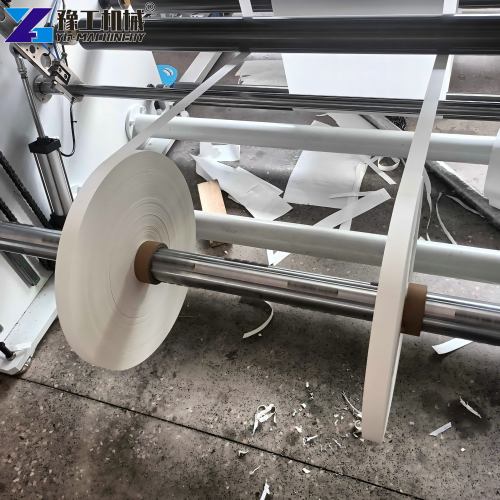
Rewinding must share tension among lanes that may not have identical thickness or length. Differential winding or suitable slip control can compensate for small variations. Without it, one lane can become tight while another telescopes, producing loose edges or damaged cores.
Specify core material, bore, wall thickness, finished diameter and maximum roll weight. Confirm how coils are separated and removed from the shaft. A rewind system that makes acceptable coils but requires unsafe manual handling is not a complete production solution.
CONFIRM MY REWIND CONFIGURATION

Trial Material And Acceptance Evidence
A useful trial uses the customer’s hardest normal material and a demanding slit pattern. Measure slit width, diagonal variation, burr, edge wave, surface marks, coil alignment and winding firmness. Run long enough to observe heat, knife wear and tension drift instead of presenting only the first few meters.
Keep the trial record with the quotation: coil data, knife setup, speed, tension settings, cores, accepted tolerances and sample photos. The automatic slitting machine page can support an automation comparison, but the final scope should name every included loading, slitting, rewinding and unloading component.

Line Scope, Safety And Ownership Cost
Clarify who supplies the coil car, decoiler, peeler, leveler, slitting head, scrap winder, tension stand, recoiler, separator, unloading car and guarding. The word slitting line can describe very different scopes. A comparison is meaningful only when every quotation follows the same material path and automation boundary.
Review coil loading and finished-roll unloading as carefully as cutting. Define crane capacity, coil orientation, aisle width and how operators install spacers or cores. Interlocked guards, emergency stops, safe threading modes and stored-energy controls should be incorporated into the layout rather than added after shipment.
Estimate cost per tonne using accepted throughput, changeover time, knife service, scrap loss, energy, labor and downtime. A faster line may not reduce cost when orders require frequent slit-pattern changes. Quick, repeatable tooling setup can be more valuable than unused maximum speed.
Specify documentation with the purchase: foundation loads, utility schedule, electrical drawings, lubrication plan, spare-parts list, knife specification and acceptance procedure. Operator and maintenance training should use the buyer’s material and should include fault recovery without bypassing safety devices.
Send representative coil certificates, slit schedules and finished-roll photographs before the technical proposal is frozen. YG can then review whether the arbor, knife package, tension system and rewind method form one compatible production line rather than a collection of individually sized components.
Specifications That Prevent Rework
State slit-width tolerance and burr measurement method on the purchase specification. Different instruments, sample lengths and edge locations can produce different conclusions. Agree on inspection frequency and whether tolerances apply to every lane or to sampled coils.
Surface-sensitive steel needs clean rolls, controlled handling and sometimes protective film or interleaving. Identify allowable scratches, dents and coil-edge contact. A line built for uncoated structural strip may need different rollers and housekeeping for painted or polished products.
Plan recipe storage for repeated orders. Knife locations, spacer stacks, tension settings, speed limits and core details should be tied to a product code. Good records shorten changeovers and prevent operators from rediscovering an accepted setup.
Acceptance should include several coils or enough running time to show thermal stability. Inspect both the first and final finished rolls. Rewind quality that deteriorates as diameter grows often indicates a tension or shaft issue that a short test will miss.
Pre-Shipment Acceptance For A Slitting Line
Begin acceptance with mechanical inspection of the decoiler, guides, arbors, spacers, knives, separator and recoiler. Check runout and alignment using the agreed method. Verify that shafts and lifting devices are marked with their allowable loads and that the supplied cores and tools match the approved coil specification.
Run representative material through the complete line. Test a normal order and the narrowest or hardest planned slit pattern. Record speed, edge quality, lane width, tension, finished diameter and coil appearance. Stop and restart the line to confirm that threading and fault recovery do not damage material.
Exercise guards, interlocks, emergency stops, low-speed threading controls and braking. Acceptance should not reward a high speed achieved with protection bypassed. Confirm that stored energy can be isolated and that operators can remove scrap and finished coils using the specified handling equipment.
Close the test with a signed configuration record: knife stack, spacer sequence, tension recipe, core data, motor list and included accessories. That record becomes the baseline for installation, operator training and later troubleshooting at the production site.
Steel Coil Slitting Machine FAQ
No. Material strength, thickness, slit pattern, surface requirement, knife condition and rewind stability determine the accepted operating speed.
Unequal strip length, tension variation, poor separation, unsuitable cores or incorrect differential winding can all contribute.
Provide coil grade, thickness, width, bore, diameter, mass, slit patterns, tolerances, finished-roll details, utilities and destination.
A representative trial is strongly preferred when edge quality, narrow width or surface condition is commercially important.