An aluminum foil slitting machine must control a thin, easily marked web while producing straight edges and stable finished rolls. The machine is not selected only by parent-roll width. Foil gauge, alloy, temper, coating, minimum slit width, finished diameter, core, winding direction and acceptable burr level all change the blade, tension and rewind arrangement. A configuration that handles paper successfully may still wrinkle or telescope thin foil if control is not adapted.
The verified YG slitter-rewinder range covers 1100, 1300 and 1600 mm maximum unwind widths with up to 450 m/min published speed. That speed is a machine capability, not a guaranteed production rate for every foil. The usable rate must be proven with the buyer’s material, roll geometry and quality limit. This guide organizes those checks before an aluminum foil slitting machine quotation is finalized.
Thin foil requires a different tension and knife trial from ordinary paper, although the web-path questions can be compared with a paper slitter rewinder
Which Foil Data Must Be Confirmed Before Machine Selection?
Provide alloy, temper, thickness range, coating or laminate, maximum parent width and diameter, roll weight and core dimensions.
Finished-roll requirements should include slit widths, tolerance, rewind diameter, core, winding direction, roll hardness and maximum accepted burr. A broad statement such as packaging foil is not enough because converter foil and thick technical foil behave differently under the same tension.
List the number of lanes in common jobs and the frequency of width changes. Narrow, numerous lanes increase knife setup and rewind-separation demands. If the foil is laminated or printed, identify the surface that contacts rollers and whether the web must follow a registration mark. Samples from normal production allow the supplier to verify tracking, edge quality and surface protection.
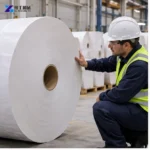
Parent-roll geometry defines unwind and handling requirements
Share the foil alloy, gauge range, parent roll and narrowest slit width. YG can check whether the material belongs within a practical slitting and rewinding window.
Which Aluminum Foil Slitting Machine Parameters Define The Base Model?
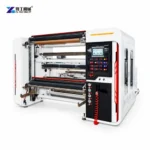
YG-1100A, YG-1300A and YG-1600A correspond to maximum unwind widths of 1100, 1300 and 1600 mm.
All three list φ1400/1600 mm maximum unwind diameter, φ1000/1200 mm maximum rewind diameter and 50 mm minimum slit width. Those limits establish the mechanical envelope; the buyer must still confirm parent-roll mass, shaft capacity and the exact lane pattern.
Model
YG-1100A
YG-1300A
YG-1600A
Maximum unwind width
1100 mm
1300 mm
1600 mm
Maximum unwind diameter
φ1400/1600 mm
φ1400/1600 mm
φ1400/1600 mm
Minimum slitting width
50 mm
50 mm
50 mm
Maximum rewind diameter
φ1000/1200 mm
φ1000/1200 mm
φ1000/1200 mm
Operating speed
10–450 m/min
10–450 m/min
10–450 m/min
Total power
22 kW
22 kW
24 kW
Power supply
380 V / 50 Hz
380 V / 50 Hz
380 V / 50 Hz
Weight
5600 kg
6000 kg
6400 kg
Dimensions (L×W×H)
4200×3200×1950 mm
4200×3400×1950 mm
4200×3700×1950 mm
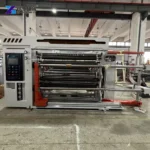
Published operating speed is 10–450 m/min, with 22 kW on the two smaller models and 24 kW on YG-1600A. Final line speed depends on foil gauge, width, blade condition, web guiding, roll acceleration and inspection requirements. Dimensions rise with web width, so include service aisles, roll-loading space, finished-roll handling and electrical cabinet access when preparing the factory layout.
Parent-roll geometry determines the unwind and handling design
Send the required roll geometry and normal production pattern so YG can compare the verified model limits without treating maximum speed as guaranteed output.
How Do Tension And Rewinding Prevent Wrinkles Or Telescoping?
Wrinkles in the moving web and telescoping in a finished roll require related but different checks. Separate tension-control performance from the way multiple rewind lanes share torque; otherwise a higher setpoint can hide one defect while making another worse.
Stable Tension Through Speed And Diameter Changes
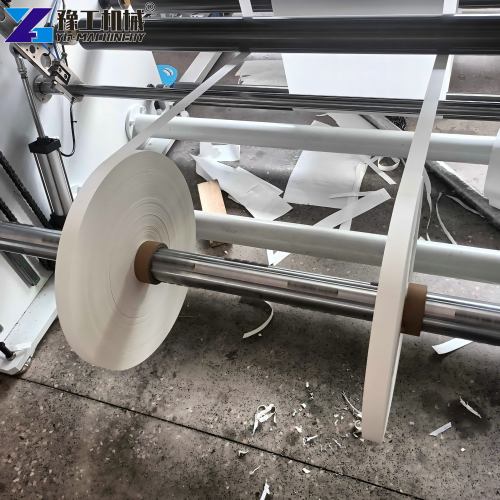
Foil requires low, stable tension from unwind through slitting and rewinding. The controller must compensate as roll diameter changes; otherwise the web may stretch, wrinkle or wander.
Confirm brake or drive type, load cells, dancer response, taper-tension capability and the range that can be controlled accurately. A large headline tension range is less useful than stable control at the foil’s actual low setpoint.
Low tension must remain stable as unwind and rewind diameters change. Review load-cell or dancer response, brake resolution, acceleration and taper-tension settings. Observe the web during startup, steady running, slowdown and stop because wrinkles or lateral movement often appear during transitions rather than at constant speed.
Knife setup controls slit width and edge condition
Stable low tension protects thin foil from wrinkles
Consistent Hardness Across Rewind Lanes
Rewind shafts, cores and differential control determine whether multiple lanes build with similar hardness. Air shafts must fit the supplied cores without slipping, while separators should prevent edge contact. Specify whether finished rolls are narrow and light or wide and heavy. The machine layout must also give operators a safe way to unload rolls without squeezing or denting the edges.
Inspect each finished lane for width, burr, edge curl, telescoping and roll hardness. Compare inner, middle and outer layers instead of judging only the exposed wrap. If lanes build differently, check differential rewind behavior, shaft grip, separator position and web alignment before increasing tension.
Retain measurements by lane instead of reporting one average roll result. A narrow lane at one edge may build differently from a central lane even when both pass the same knife setting. Compare the cores, separator positions and finished diameter with the observed defect before changing the full-web tension recipe.
Separated rewind lanes must build with consistent hardness
Which Blade And Edge Tests Prove Slitting Quality?
Razor, shear and score systems behave differently by thickness and laminate. The supplier should propose the blade method from the material, then run a trial using the narrowest required slit and the most sensitive foil.
Inspect burr, edge curl, dust, scratches, deformation and width accuracy. Measure both sides of the finished roll and examine multiple layers, not only the exposed outer wrap.
A representative trial should include the thinnest foil, widest parent roll and narrowest common slit pattern. Measure gauge, alloy, temper, coating, core and roll mass. Edge quality that looks acceptable on thick material may fail on the most sensitive foil, so the final selection cannot be based on one easy sample.
Blade setup controls foil edge quality and lane accuracy
Web alignment and low stable tension protect thin foil
Record blade clearance, overlap, speed, tension, web path and rewind settings for the accepted result. The trial should continue long enough to show roll build and heat behavior. Ask how blades are set, cleaned and replaced and what gauges or fixtures are supplied. Repeatable setup is essential when production changes widths frequently.
Check guarding, threading route, splice handling, static control and safe roll unloading with the normal operator team. These details determine whether the accepted trial can be repeated during routine changes.
Before shipment, repeat the chosen lane pattern for enough running time to build a meaningful finished roll. Verify that speed, edge result and rewind quality remain stable after acceleration and as roll diameter changes, then attach those settings to the acceptance agreement.
Finished-roll inspection verifies edge and rewind quality
What Should The Aluminum Foil Slitter Acceptance Package Include?
The final proposal should connect every option to a stated problem: shaftless loading for heavy rolls, guiding for lateral control, trim extraction for clean operation and handling aids for protected edges. Record the accepted blade setup and trial speed instead of treating maximum catalogue speed as guaranteed output.
Separate demonstrated performance from options still awaiting a trial. The order should identify the foil sample, lane pattern and accepted speed, plus the roll-handling and changeover tasks included in the supply. If a material falls outside the tested range, record a further test rather than extending the acceptance claim to it.
Submit the confirmed foil data, finished-roll requirements and handling needs to receive a machine configuration based on measurable acceptance conditions.
Only after blade, tension, roller surface, static control and rewind suitability are verified with the foil.
Is 450 m/min Guaranteed For Every Foil?
No. The stable production speed depends on gauge, width, lane count, quality limit and handling.
Why Does Foil Telescope During Rewinding?
Uneven tension, shaft slip, web misalignment or inconsistent lane hardness can push layers sideways.
Which Blade System Is Best?
The answer depends on foil thickness, laminate, slit width, burr limit and trial results.
What Samples Are Needed?
Provide normal parent material, cores and the most demanding lane pattern for a representative test.
The useful output is not simply a slit strip but a repeatable finished roll: the specified width, acceptable edges and stable rewind build at an agreed operating rate. Submit the parent-roll data and finished-roll limits below so YG can review a configuration against those acceptance conditions.