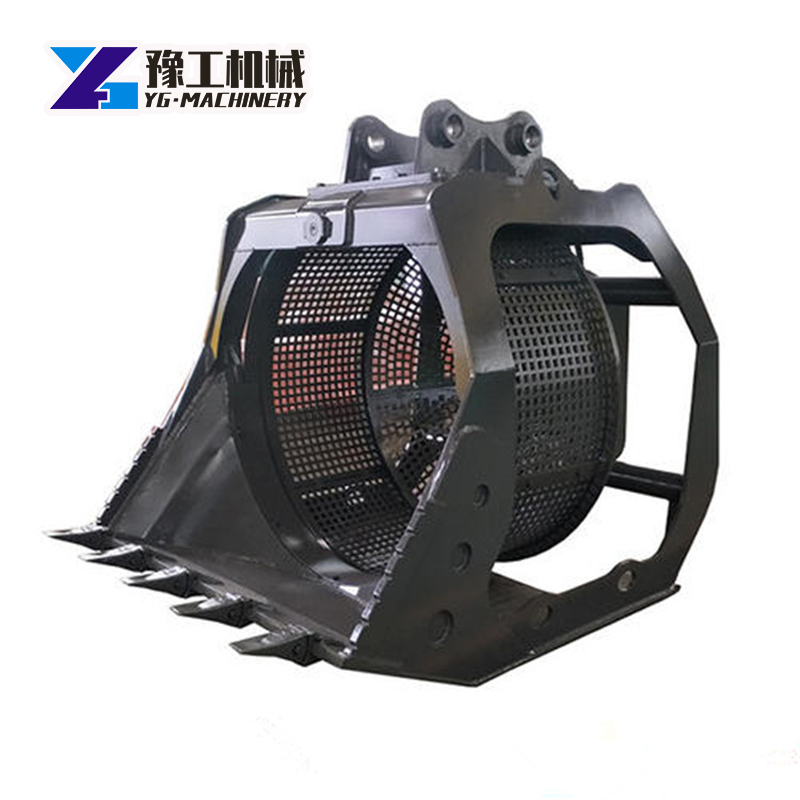
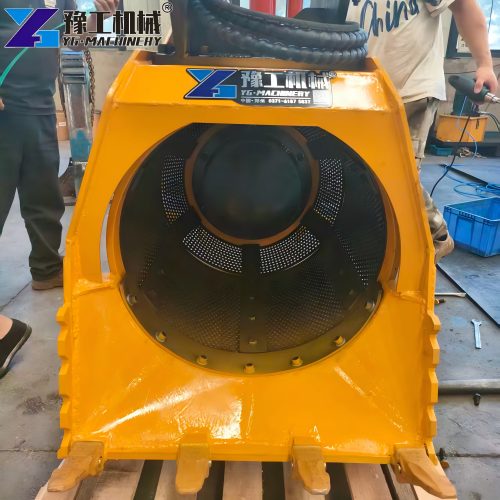

A screening bucket attaches directly to an excavator and separates soil, stone, and debris on site. Operators use it to sort material by size without hauling loads to a separate screening plant. Before buying, most buyers start by checking screening bucket price against flow rate, tonnage class, and drum design. These factors decide long-term value more than sticker price alone. YG Machinery builds rotary screening buckets that cover mini diggers all the way up to 38-ton excavators. As a result, contractors of nearly any fleet size can match a unit to their carrier. This guide walks through parameters, drum structure, cost logic, and mesh selection so buyers can choose with confidence.
Screening buckets suit several job types. Demolition crews use them to pull rebar and concrete chunks from crushed material. Landscaping teams screen topsoil to remove rocks and roots before grading. Road crews sort aggregate on site instead of trucking it elsewhere. Quarry operators also rely on screening buckets to grade stone by size. This step happens before material moves to the next stage of processing. Because the bucket mounts on standard excavator quick couplers, switching between digging and screening takes only minutes. This flexibility is one reason demand for a rotary screening bucket for sale keeps rising. Construction and quarry markets in particular have driven much of that growth in recent years.
Screening Bucket Parameter and Model Specifications
Buyers often need a quick reference before requesting a quote. The table below lists YG rotary screening bucket parameters by model. Each row shows applicable excavator tonnage, hydraulic flow, operating pressure, self weight, and rated RPM. Buyers can compare units side by side before narrowing down a choice.
| Model Number | Applicable Tonnage of Excavator(T) | Operating Flow(L/min) | Working Pressure(Mpa) | Self Weight(Kg) | Number of Revolutions Per Minute(RPM) |
| YG01 | 1.5-3 | 20 | 10-12 | 158 | 35 |
| YG02 | 3.5-5.5 | 30 | 10-12 | 245 | 60 |
| YG08 | 6-10 | 45 | 12-15 | 530 | 65 |
| YG012 | 11-18 | 65 | 15-18 | 1020 | 65 |
| YG016 | 19-28 | 80 | 18-22 | 1920 | 65 |
| YG018 | 29-38 | 150 | 18-22 | 2430 | 65 |
Smaller models such as YG01 and YG02 suit mini diggers handling light landscaping or utility trenching work. Mid-range units like YG08 and YG012 fit general construction fleets in the 6 to 18-ton class. Larger models, YG016 and YG018, handle heavy quarry or demolition tonnage up to 38 tons. Matching the model to carrier weight protects the hydraulic system and keeps rotation speed within the rated RPM range.


Screen Drum Structure and Replaceable Screen Plate Design
How the Rotary Drum Separates Material?
The rotary drum sits inside the bucket frame and turns on a hydraulic motor connected to the excavator’s auxiliary circuit. As the drum spins, material tumbles through the mesh openings. Fine particles pass through the screen, while oversized pieces roll out the open end. This continuous tumbling action screens loose soil, gravel, and demolition debris faster than static screening methods. Flow rate and RPM together control how quickly material moves through the drum. This is why matching hydraulic output to the bucket model matters.
Replaceable Screen Plate Options
Screen plates wear down over time, especially when processing abrasive rock or concrete rubble. YG screening buckets use bolt-on plates that technicians can swap without removing the entire drum. This design lets one bucket serve multiple jobs simply by changing mesh size. Operators moving between topsoil grading and rubble sorting can switch plates in the field rather than swapping the entire attachment. Wear-resistant steel extends plate life under repeated abrasive contact. Because plates come off individually, technicians can replace a damaged section without discarding the full screen. This approach lowers ongoing maintenance cost.
On-Site Screening vs. Off-Site Screening Cost Comparison
Cost of Transporting Material Off-Site
Traditional screening often means loading material onto trucks and hauling it to a separate plant. This process adds fuel expense, driver hours, and site congestion. Larger projects may also pay tipping fees or plant processing charges. Meanwhile, the excavator sits idle while trucks make repeated trips, which slows the overall project timeline.
Savings from On-Site Screening with a Screening Bucket
A screening bucket lets the same excavator dig and screen without leaving the site. This reduces truck trips, fuel use, and labor hours spent on transport. Crews can screen material as they excavate, then reuse sorted soil or aggregate immediately for backfill or grading. Over the course of a project, fewer transport cycles generally translate into lower overall handling cost. Actual savings still depend on site conditions, material type, and haul distance.
How to Choose the Right Screen Mesh Size?
Matching Mesh Size to Material Type
Mesh size determines what passes through and what gets screened out. Fine mesh works well for topsoil, sand, and landscaping material where a clean, debris-free product matters. Medium mesh suits general construction fill, separating mid-sized stones from usable soil. For heavier applications, a rock screening bucket fitted with wider mesh openings handles larger aggregate and demolition rubble without clogging. This type of rock screening bucket setup avoids frequent blockages on demolition sites. Buyers comparing screening bucket price across mesh options often find that wider openings run at a lower cost. Simpler plate construction is the main reason behind that difference.
Mesh Size for a Screening Bucket for Mini Digger and Larger Fleets
Tonnage class also influences mesh choice. A screening bucket for mini digger use typically handles lighter, finer screening tasks such as garden soil or utility backfill. Larger excavators pair naturally with coarser mesh for quarry or demolition debris. These carriers deliver enough hydraulic flow to keep dense material moving through the drum. Selecting mesh size around both material type and carrier tonnage keeps screening efficient and reduces wear on the plates.


Rotary Screening Bucket Price — YG Factory Direct
Buying direct from the manufacturer removes distributor markups from the final screening bucket price. Every rotary screening bucket for sale through YG Machinery covers the full tonnage range shown in the parameter table. Buyers can request a quote matched to their exact excavator model. Factory-direct sourcing also simplifies technical support. Specifications and replacement parts come from the same source that built the unit.
Beyond screening buckets, YG Machinery manufactures a wider range of excavator attachments for construction and demolition work. The lineup includes drum cutter machine,hydraulic shears for excavator,hydraulic pile breaker,rock splitter for excavator,and integrated rock drill and splitter. Contractors running mixed fleets often find it convenient to source multiple attachments from a single supplier. Compatibility and support stay consistent across the equipment this way. To confirm current screening bucket price for your excavator model, reach out for a quote. Our team will match specifications to your job requirements.
Review the full excavator screening bucket range or compare the rotary screening bucket when mesh size, material condition and carrier hydraulics are the main selection factors.