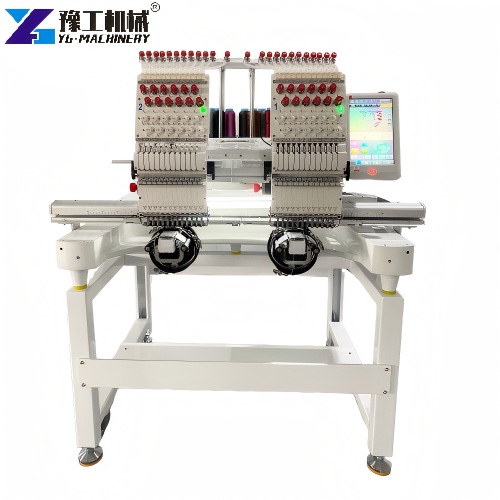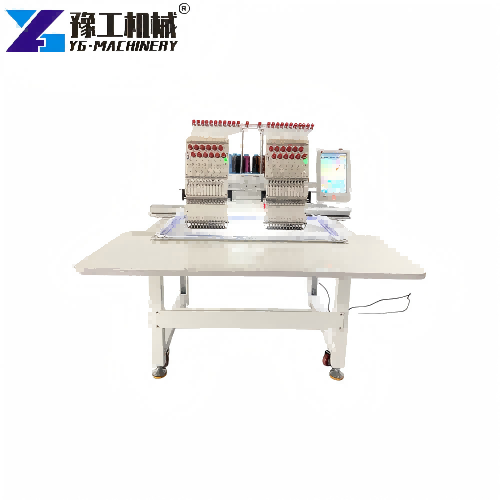

Welcome to YG Machinery. Our multi color embroidery machine transforms the way you create. It handles complex, vibrant designs with ease. You can produce detailed logos, patches, and garments faster than ever. This equipment uses multiple needles to change thread colors automatically. No manual switching interrupts your workflow. A multi color embroidery machine like ours suits both small studios and large factories. It keeps you competitive in a fast-moving market. You simply load a design, start the machine, and watch bright patterns come to life.

YG Multi Color Embroidery Machine Parameters
Below you will find the key specifications for our YS series. The table helps you choose the right model with confidence.
| Parameter | YS-1201CT (Single Head) | YS-1202CT (Two Heads) | YS-1203 (Three Heads) |
| Heads | 1 | 2 | 3 |
| Needles | 9 / 12 / 15 optional | 12 | 12 (9/15 optional) |
| Working Area | 360 × 510 mm | 400 × 500 mm | 400 × 450 mm |
| Max Speed | 1,000 RPM (adjustable) | 1,000 RPM (adjustable) | Flat: 1,000 RPM; caps/garments: 800 RPM |
| Control System | Dahao A15 | Dahao A15 | Dahao A15 |
| Display | Colour LCD touch, 1280×800 | Colour LCD touch, 1280×800 | 10 inch true colour touch LCD |
| Package Size (L×W×H) | 92×88×85 cm (wooden) | 1.37×1.12×0.92 m (wooden) | 2.07×1.12×1.01 m (wooden, ~2.3 CBM) |
| Gross Weight | 210 kg | 420 kg | 650 kg |
| Voltage | 110V/60Hz or 220V/50Hz | 110V/60Hz or 220V/50Hz | 110 220V |
| Spindle Motor | — | — | Servo motor |
| Rotary Hook | Standard | Standard | High quality hook |
You see clearly how each model fits different production needs. All units feature a color touch screen and the reliable Dahao A15 control system. Wooden crate packaging protects your investment during shipping.
Read the working field as a configuration limit, not a promise that every garment can be embroidered over that complete rectangle. Frames and access to the item affect the usable arrangement. Likewise, compare transport dimensions separately from the operating space and loading access needed around the machine.
Multi Colour Needle Positions for Repeat Apparel Orders
A multi colour head holds several pre-threaded needle positions. The design’s colour sequence calls the assigned position when it is needed, so a repeat order can reuse an established thread arrangement instead of rethreading a single needle for every change. The useful distinction is between automatic selection of an already loaded thread and the separate work of changing the threads held on the machine.
An apparel logo may return in different garment colours or customer colourways. Keep the design file and thread-to-needle assignment together as an order record. A colour name displayed in the design is not proof that the corresponding physical thread is loaded at that position. Confirming that mapping prevents the machine from executing the correct sequence with the wrong colour.
For on-demand work, the order mix determines how often the thread arrangement needs changing. Repeated logos using a shared palette can keep more of the setup in place. A succession of unrelated designs with different palettes may require additional threading and checking even on a multi-needle machine. Automatic colour change reduces a particular intervention; it does not remove all preparation, loading or inspection.
Identify the repeat palettes and how often orders introduce a thread not already loaded.


Single-Head Multi-Needle Embroidery: Colours Are Not Heads
Needle count and head count describe different capabilities. A single head with twelve needle positions can hold multiple threads for one embroidery position. It does not produce twelve garments at once. The head executes the design using the selected needle in sequence; additional loaded colours do not multiply the number of simultaneous garment positions.
A single-head arrangement can be useful where orders frequently change or only a small quantity of one design is needed. One order can be prepared without leaving other heads waiting for a matching batch. The trade-off is that one working head does not offer the parallel production positions of a multi-head arrangement.
The number of colours in a design also needs separating from the number of colour-change events. A logo may return to a colour later in its sequence, making more changes than its count of unique threads suggests. Review the actual stitch file and loaded palette instead of judging the workload from a customer’s artwork thumbnail.
When all required threads are loaded, a multi-needle setup can avoid rethreading for those programmed changes. If a design requires a colour not currently loaded, the operator still has to arrange that thread correctly and verify its assignment. This is a concrete operating benefit, not a guarantee of a higher selling price, profit margin or elimination of every manual finishing operation.
Separate the number of loaded colours from the number of simultaneous garment positions.
Double-Head Embroidery for Matching Batches
A double-head arrangement provides two working positions for a coordinated production run. It is most straightforward to plan when the garments, hoop arrangement, design and colour programme are compatible across the heads. This differs from asking two unrelated orders to run as if they were independent single-head machines. Check the controller and head-selection functions for the actual model before planning independent operation.
The possible batch advantage comes from parallel positions, not from removing thread breaks, bobbin changes or loading time. A stoppage may affect the machine differently depending on its controls and settings; do not assume another head always continues when one thread breaks. Evaluate a representative job from loading through unloading and inspection rather than multiplying a nominal spindle speed by the head count.
A practical comparison separates stitching time from the time spent preparing and handling the batch. Two heads can be underused if a worker cannot present matching garments at the required rhythm, or if orders are mostly single pieces. Conversely, repeated runs of the same apparel logo can make better use of parallel positions. Choose the arrangement around the orders actually expected rather than an assumed universal reduction in downtime.
For additional parallel positions, compare the multi-head embroidery configurations; for garment access, review the shirt embroidery equipment. Head count and access solve different production questions.
Describe the quantity per design and whether both positions will run matching garments.
Embroidery Design Software and Machine Controls Have Different Jobs
Artwork is a visual description; an embroidery file specifies machine operations such as stitches, colour changes and trims. Digitizing translates the artwork into that executable sequence. The machine controller then reads a compatible file and follows its programmed operations. A colour touch screen does not by itself establish that the machine can create or automatically digitize a logo.
Design software may be purchased or operated separately from the machine. If a software tool uses AI to create artwork, that artwork still needs an appropriate embroidery file and checking before production. Confirm file-format compatibility, the method of transfer and which software licences are actually included. Do not assume AI image generation, automatic name changes or unattended order personalization are native functions of every controller.
Keep a repeatable job record containing the approved file version, colour sequence, thread assignments and garment setup. When a customer changes the logo or colourway, update the relevant record rather than relying on an image alone. Sampling remains useful for checking the executable result; a software preview or automatic conversion cannot guarantee that the first sewn item will meet the order requirements.
Confirm the controller, embroidery-file format and any separately supplied design software.


Specify the YG Multi Color Embroidery Machine Package
The YS configurations in the table distinguish one, two and three heads, along with their listed needle options and working areas. Compare those complete configurations rather than combining a working field from one model with the controller or packing details of another. The listed maximum speed is not a guaranteed garment rate: stitch count, colour changes, machine settings and handling contribute to the time per accepted item.
Confirm the selected needle arrangement, frames, cap equipment where required, controller, file-transfer method and commissioning scope in the offer. Packing dimensions and gross weight describe transport rather than the space needed to load garments and service the machine. Availability and dispatch timing should be confirmed for the chosen package; they cannot be established by an evergreen product page.
Beyond these featured models, we supply a full range of embroidery solutions for different applications. Our catalog includes multi-head embroidery machines for bulk production, industrial embroidery machines for heavy-duty use, cap embroidery machines for structured headwear, computerized embroidery machines with advanced interfaces, and shirt embroidery machines for crisp garment decoration. Whatever your niche, you will find a reliable YG solution that matches your ambition.
For a configuration discussion, describe the usual apparel logo, the unique thread colours, quantity per design and whether orders are repeat batches or individual pieces. Include cap or garment access needs and the intended head count. These details make the comparison specific to the work without assuming that the largest model is the best fit.
Multi Color Embroidery Machine FAQs
No. Needle positions hold different threads at one head. Head count describes the number of working positions; the selected needle operates through the programmed sequence.
It selects among threads already loaded and assigned to needle positions. A required colour that is not loaded still needs the appropriate threading and assignment.
It can suit matching batches with a compatible design, colour programme and garment setup. Check the actual controller and head-selection functions rather than assuming unrelated jobs run independently.
Do not assume so. Artwork and digitizing software may be separate from the machine. Confirm included licences and compatible embroidery files for the supplied controller.
No. Stitch count, colour changes, loading, bobbin and thread interventions, unloading and inspection affect accepted output. Compare a representative complete job rather than speed alone.
Describe the product configuration and intended application for a specific equipment proposal.