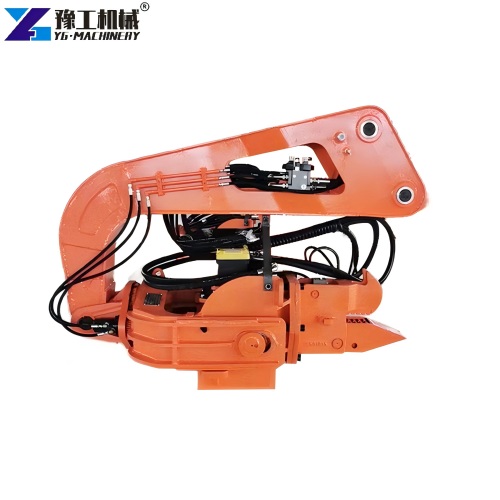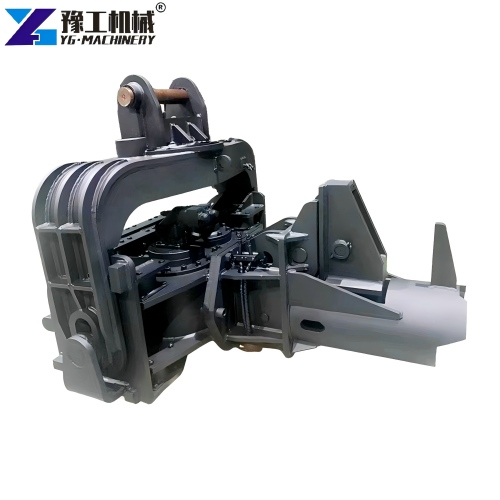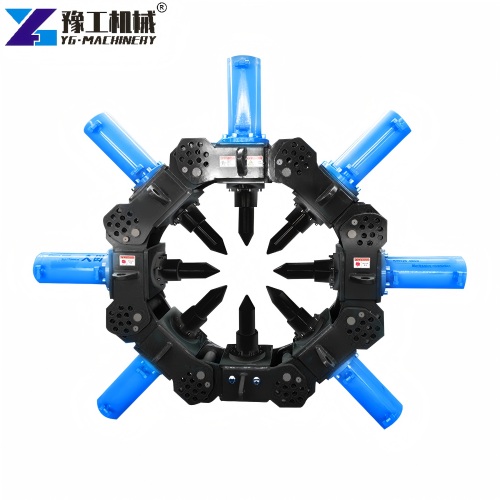
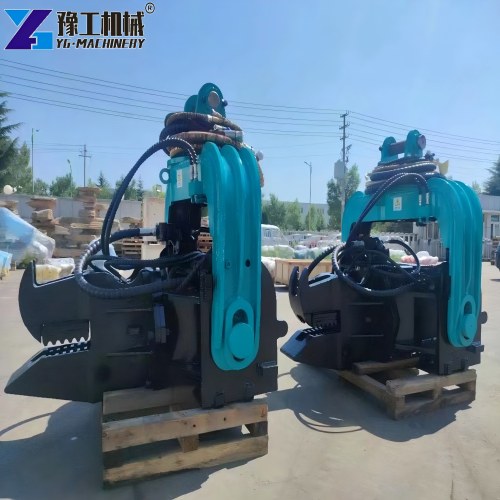
An excavator pile driver is a vibratory attachment for installing or extracting piles with an excavator as the carrier. The vibration box and clamp transfer oscillating force to the pile, helping it move through soil while the excavator positions and supports the attachment. For sheet-pile foundation work, the attachment must match the pile profile, excavator hydraulics and the working conditions along the pile line.
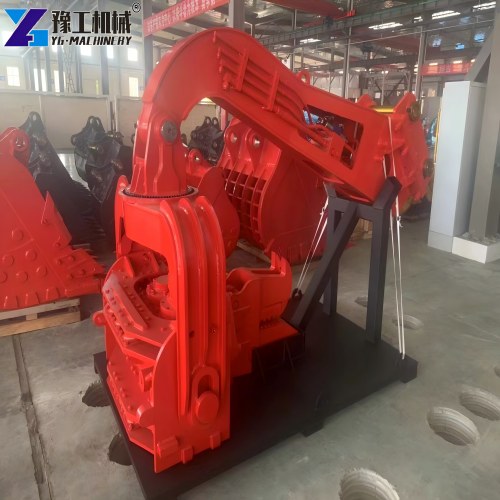
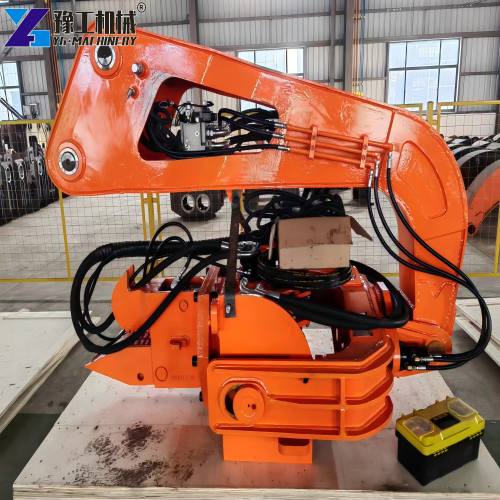
For a sheet-pile project, compare the pile section and excavator hydraulic details before selecting the driver.
CHECK MY SHEET-PILE SETUPHow Does an Excavator Pile Driver Install Sheet Piles?
The carrier lifts the attachment and brings its clamp to the pile head. Once the clamp securely grips the pile, the vibratory unit transfers motion into the steel. The excavator operator controls alignment and downward progress while the pile advances into the ground. The attachment can also be used in extraction work when the configuration and ground conditions permit it.
Alignment is central to the result. If the clamp does not suit the pile profile or the excavator approaches at an angle, the pile can drift from the planned line. A guide frame, adjacent installed sheets and the project sequence may help control alignment, but the method must follow the foundation design and the site’s lifting and piling procedure.
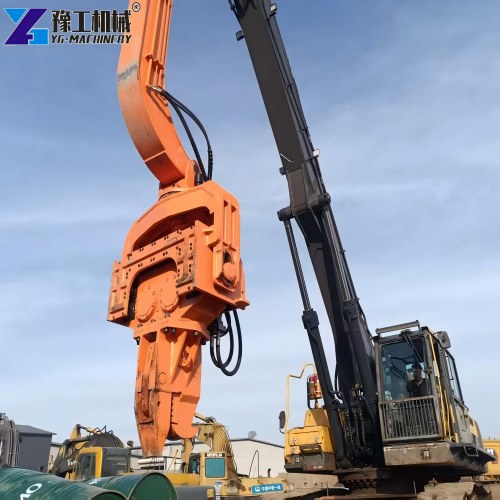
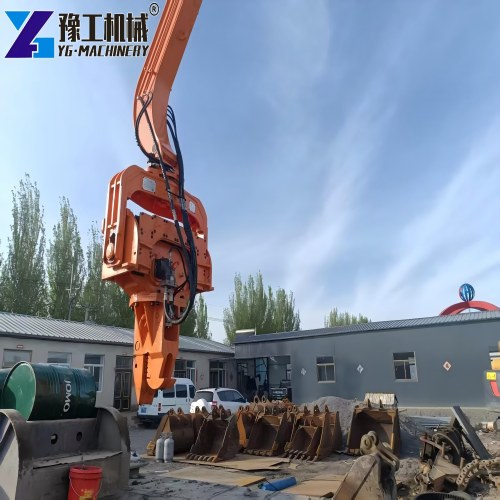
What Excavator Pile Driver Carrier Range Is Listed?
YG’s standard excavator pile driver table lists five configurations, with excitation force, hydraulic requirements, attachment weight and carrier class varying across them. The figures below are arranged in the same configuration order for an at-a-glance comparison.
| Parameter | Standard configuration |
|---|---|
| Configuration order | A / B / C / D / E; values in each row follow this order |
| Excitation force | 24 / 38 or 42 / 52 / 68 / 81 t |
| Eccentric moment | 3.2 / 5.1 or 5.7 / 7.1 / 9.2 / 11 kg·m |
| Operating oil pressure | 200 / 300 / 320 / 330 / 330 bar |
| Required oil flow | 100 / 163 / 220 / 260 / 300 L/min |
| Attachment weight | 1.2 / 1.6 / 2.4 / 2.5 / 2.6 t |
| Excavator operating-weight class | 8–12 / 20–25 / 25–35 / 35–45 / 40–55 t |
| Vibration speed | 2600 rpm across the listed configurations |
The A–E columns are comparison labels, not product model names; each row follows the same standard configuration order. Match pile section, excavator hydraulics and attachment weight together, then use the selected configuration sheet for the final check. These are standard series specifications for initial comparison. The final specification sheet should match the configuration selected for your job before ordering.
A carrier that falls within a broad weight class can still be unsuitable if its auxiliary circuit, hydraulic return arrangement, mounting interface or stability does not match. Share the excavator make and model and request the required hydraulic conditions for the exact attachment before ordering.
A carrier model and hydraulic specification help narrow the pile-driver configuration before a site trial.
MATCH THE DRIVER TO MY EXCAVATORWhich Sheet-Pile Details Affect Driver Selection?
The clamp has to engage the pile securely at its intended gripping point. Send the pile section, material, length and installation sequence so the clamp and attachment can be evaluated for the project. If the work includes both installation and extraction, state that at the outset; the attachment configuration and operating plan should reflect both tasks.
Ground conditions also affect the method. Dense layers, obstructions, buried services, water and nearby structures can change the response of the pile and the risk of vibration reaching adjacent assets. A vibratory pile driver is not a substitute for a geotechnical review or a site-specific vibration plan. Stop and reassess if the pile refuses to advance, moves off line or produces an unexpected response.
If the installation also includes extraction, include that task when the attachment is matched to your pile profile.
CHECK THE PILE AND CLAMP MATCH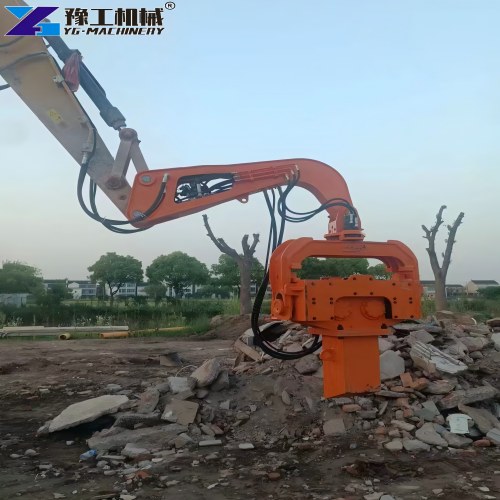
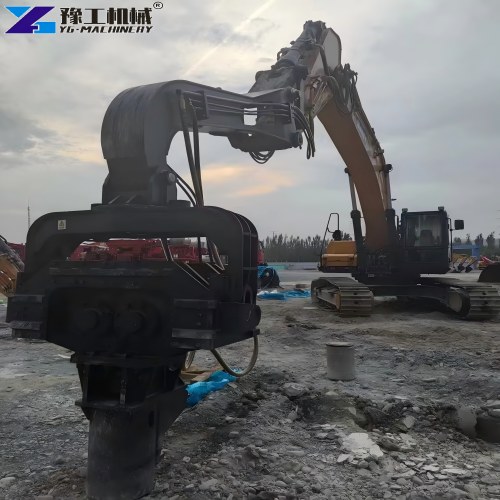
What Should You Check Before Buying an Excavator Pile Driver?
- Excavator make, model, operating weight and attachment interface.
- Auxiliary hydraulic flow, pressure, return line and available connection details.
- Sheet-pile section, gripping point, installation depth and whether extraction is required.
- Access along the pile line, lifting plan, ground information and nearby vibration-sensitive assets.
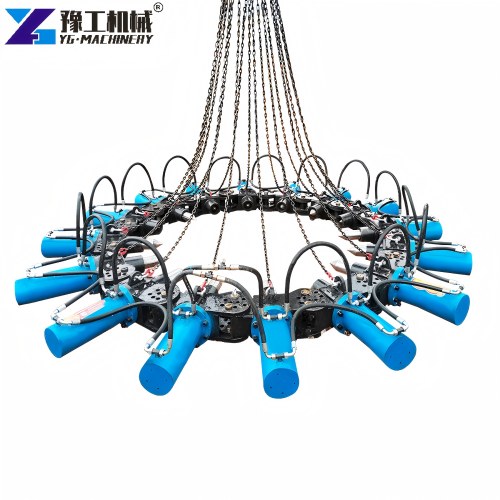
These checks help distinguish a compatible attachment from one that only appears to match by carrier weight. Compare the chosen driver with the wider excavator attachment range range; if your project instead needs concrete pile-head removal, a hydraulic pile breaker uses a different working method.
Send the pile section and excavator details to review the clamp, hydraulic circuit and job sequence together.
REQUEST A PILE-DRIVER FIT REVIEWWhat Do Buyers Ask About Excavator Pile Drivers?
It can be used for driving or extraction when the attachment, clamp, excavator and site method are suitable. State both tasks when requesting a configuration review.
No. Carrier weight is only an initial screen. Hydraulic flow and pressure, return-line conditions, mounting dimensions, attachment weight and stability also matter.
Provide the pile profile and material, intended gripping point, installation sequence and any extraction requirement. The clamp must match the actual section.
That depends on the ground, structure, pile method and permitted vibration level. Review the site conditions and project controls before work; do not assume vibration is harmless.