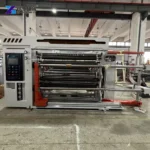
The slitting machine working principle is a controlled web-converting sequence: a parent roll unwinds, the web is guided and tensioned, knives divide it into lanes, trim is removed and each lane is rewound under controlled torque. Stable finished rolls require all stages to act as one system.
Machine selection begins with the actual material, parent-roll dimensions, slit pattern, core, finished diameter and accepted edge and winding quality. The same mechanical stages can use different knife and winding arrangements, so the final configuration must be confirmed for the product.
Send the roll material, dimensions and finished-roll target for an initial review.
Unwinding Starts the Slitting Machine Working Principle
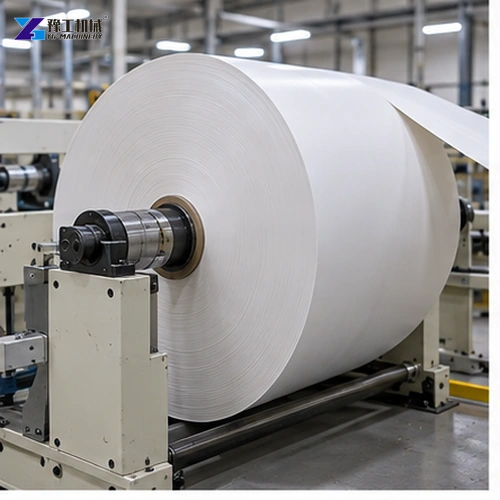
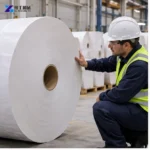
The unwind stand supports and centres the parent roll while a brake or drive controls web release. Shafted and shaftless systems solve different loading and core conditions. The roll must be secured, aligned and handled within the approved mass and diameter.
A stable unwind avoids sudden tension changes as diameter falls. Record core size, roll hardness, splice condition and winding direction. Poor parent-roll quality can enter the line as lateral movement, wrinkles or tension variation before any knife touches the web.
Web Guiding Keeps the Material on the Cutting Path
Edge or line sensors detect lateral movement and command a guide actuator. Rollers support the web while preserving a clean, wrinkle-free path. The guide corrects position; it cannot repair a badly loaded roll or damaged material.
Threading geometry, roller cleanliness and alignment influence tracking. Operators should use the approved path and keep hands clear of nip points. Confirm sensor target and correction direction at low speed before increasing production speed.
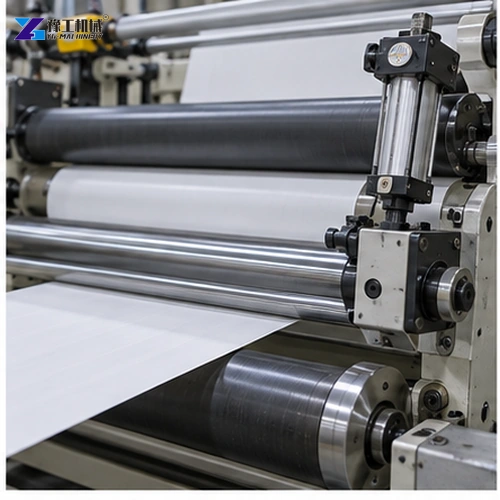
Tension rollers controlling the web
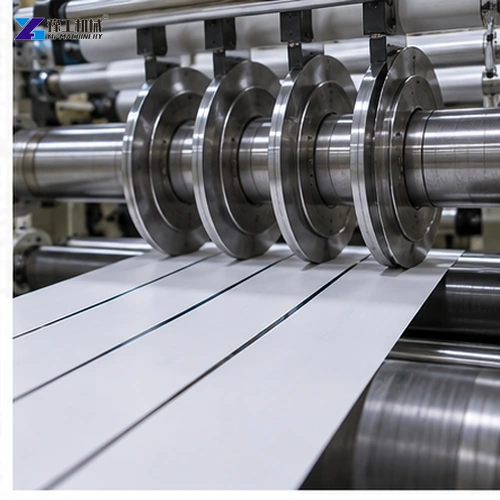
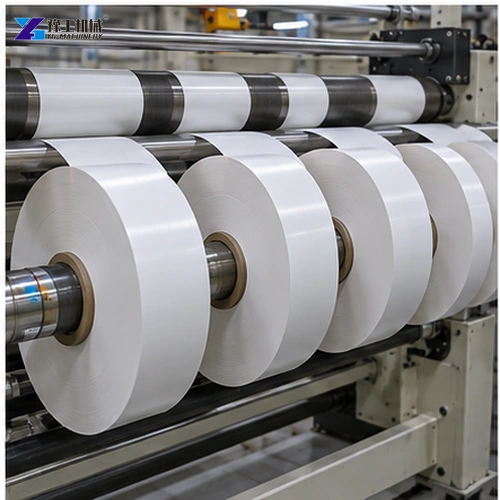
Circular knives dividing the parent web
Knife Action Divides the Parent Roll
Circular shear knives, razor blades or score systems suit different materials and edge requirements. Knife spacing creates lane width, while clearance, overlap, sharpness and runout influence dust, burr and edge deformation.
The knife station must match material thickness, coating and required minimum width. Change one setup variable at a time during trials. Inspect several lanes and both edges because one accepted sample does not prove the whole slit pattern.
The web needs enough tension to remain stable without stretching, marking or curling. Load cells, dancer systems, brakes and drives create feedback as roll diameters change. Each zone must coordinate with acceleration and stopping.
A displayed setpoint is not the finished result. Review wrinkles, lane movement and roll hardness across the width. Material modulus, coating and thickness can require a different recipe even when roll dimensions are unchanged.
Slit lanes separating after cutting
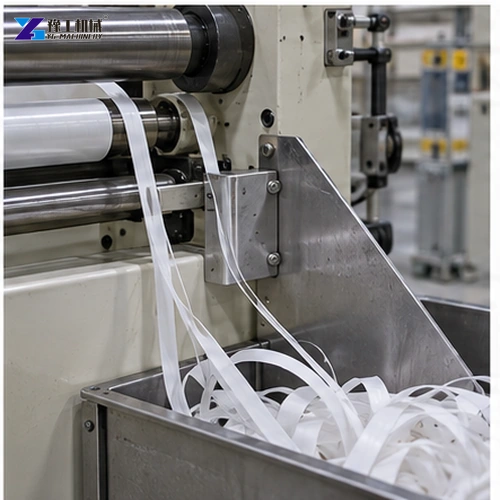
Edge trim leaving the process
Rewinding Completes the Slitting Machine Cycle
Separated lanes pass to cores on one or more rewind shafts. Torque changes with diameter so the finished rolls remain compact without crushed cores, starring or telescoping. Differential winding can help when lane thickness varies.
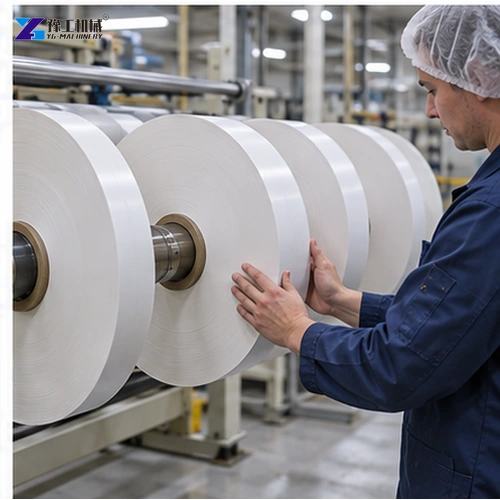
The accepted output includes width, edge quality, diameter, end-face alignment, roll hardness and safe removal. Record the recipe with material lot and slit pattern so repeat orders can start from evidence rather than a generic speed.
Match the Working Principle to the YG Model
YG-1300, YG-1600 and YG-1800 differ in maximum web width and installed power. All three use a 30 mm minimum slit width and an operating-speed range up to 350 m/min. Select the model by checking the parent-roll width first, then verify roll diameter, slit pattern, material behavior and finished-roll requirements.
Send the parent roll, material, minimum lane, finished roll and quality criteria. YG can then confirm knife type, tension zones, guiding, winding arrangement, utilities and handling equipment for the real converting task.
Provide utilities, destination and required accessories for a complete quotation.