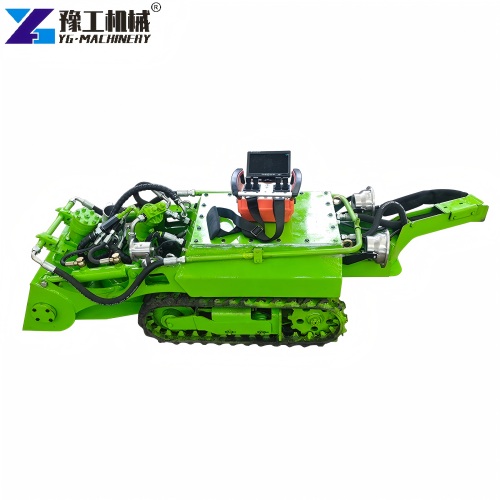


A sewer cleaning robot removes sludge, silt, and debris from underground pipes without sending workers inside. Municipal teams and industrial plants use this dredging equipment to keep drainage systems flowing smoothly. YG Machinery designs these robots to handle pipe diameters from small residential lines to large municipal mains. Each unit combines a crawler chassis, a hydraulic pump, and remote controls into one compact system. Operators guide the robot through pipes from the surface, so no one has to enter dangerous confined spaces. As a result, cleaning projects finish faster and with fewer safety risks.
Sewer Cleaning Robot Parameters
The table below lists specifications for six models, from the compact YG-500 to the powerful YG-1200. Buyers can match a unit to their pipe size.
| Dredging Robot Parameter | ||||||
| Model | YG-500 | YG-600 | YG-700 | YG-800 | YG-900 | YG-1200 |
| Robot dimensions | 1500*500*650mm | 1500*600*650mm | 1600*700*650mm | 1600*850*700mm | 1650*960*750mm | 1900*1200*750mm |
| Dredging width | 500mm | 600mm | 700mm | 800mm | 900mm | 1200mm |
| Track travel speed | 3-15m/s | 3-15m/s | 3-15m/s | 3-15m/s | 3-15m/s | 3-15m/s |
| Robot weight | 320kg | 350kg | 380kg | 400kg | 420kg | 500kg |
| Pump output diameter | 3inch | 3inch | 4inch | 4inch | 4inch | 4inch |
| Pump flow rate(cubic meters/ hour) | 100 m³ | 100m³ | 200m³ | 200m³ | 200m³ | 200m³ |
| Hydraulic station dimensions(mm) | 2200*1200*1700 | 2200*1200*1700 | 2200*1200*1700 | 2200*1200*1700 | 2200*1200*1700 | 2120*1240*1200 |
| Main motor power | 22kw | 22kw | 30kw | 30kw | 30kw | 45kw |
| Hydraulic system pressure | 0-16Mpa | |||||
| Particle size | 15mm | 15mm | 38mm | 38mm | 38mm | 60mm |
| Reeling system speed | 0-10r/min | |||||
| Hydraulic hoses | 50m (Standard configuration) | |||||
| Control system | Wireless remote control | |||||
| Lighting system | Underwater LED lights *2 | |||||
Why Traditional Dredging Equipment Struggles to Keep Sewers Clean?
Cities and industrial sites face growing pressure to maintain aging drainage networks. Traditional dredging equipment often falls short for several reasons.
- Aging pipe networks: Crews installed many sewer systems decades ago. Cracks, corrosion, and joint failures now create rough surfaces where sludge collects faster than before.
- Faster sediment buildup: Urban runoff carries more debris than older systems can handle. Silt and grit now accumulate faster, narrowing pipe capacity.
- Danger of manual entry: Sending workers into confined pipes exposes them to toxic gases, low oxygen, and collapse risks. Many regions now restrict manual entry entirely.
- High cost of traffic control: Cleaning a pipe under a busy road often needs lane closures and traffic officers. These costs add up quickly and disrupt daily commutes.
- Rising urban drainage pressure: As cities expand, more wastewater flows through the same pipe network. This added volume means blockages form more often.
Given these challenges, cities need dredging equipment that works without putting people at risk or closing streets for days.


Pipe Cleaning Robot vs High-Pressure Flushing Truck
Many operators compare a dredging robot against a high-pressure flushing truck before choosing equipment. Each method has strengths, but the differences matter for long-term planning.
A flushing truck sprays pressurized water through the pipe to push debris toward a collection point. This approach works well for loose, minor buildup. However, it often struggles with dense sludge that has hardened over time. A pipe cleaning robot uses a hydraulic pump and crawler tracks to reach and remove deep sediment layers instead. This gives a pipe cleaning robot a clear edge against stubborn blockages that water pressure alone cannot break apart.
Deep sediment handling also favors the robot. Flushing trucks mainly clear the upper layer, leaving compacted material along the pipe floor. A robot can dig into that layer and pump it out directly for a more thorough clean. Robots equipped with cameras and sensors can also adjust their approach based on what they detect. Flushing trucks rely more on surface estimation, which can miss hidden problems.
Cost matters too. A flushing truck may cost less per job, but repeated visits for tough blockages raise the total cost over time. The robot typically finishes in fewer passes, cutting labor hours across a year of work. Flushing trucks still suit light maintenance, yet heavy sediment favors a robot.
How Does a Pipeline Cleaning Robot Work in Invisible Pipe Environments?
Underground pipes are dark, narrow, and impossible to see into from the surface. A pipeline cleaning robot solves this through onboard technology that gives operators a clear picture of conditions inside.
- Camera systems: Built-in cameras stream live video to the surface control unit. Operators see blockages, cracks, and debris in real time, which helps plan the cleaning path.
- Sonar detection: In murky or flooded pipe sections, sonar sensors map the interior even when visibility drops to zero. This allows the robot to detect obstacles that a camera alone might miss.
- Laser positioning: Laser sensors measure distances and pipe dimensions as the robot moves forward. This data confirms the robot stays centered and avoids scraping pipe walls.
- Inertial navigation: This system tracks the robot’s exact position and orientation inside the pipe. Since GPS cannot reach underground, it keeps the robot on course over long distances.
- Remote control: Every function routes back to a wireless remote unit operated from the surface. This keeps workers safely away from the pipe while maintaining full control.
Together, these systems let operators complete a full cleaning cycle without ever entering the pipe. This protects worker safety while improving accuracy.
Will AI Transform the Sewer Cleaning Robot Industry?
Artificial intelligence is beginning to reshape pipeline maintenance work. Several developments point toward a more automated future.
- Automatic path planning: AI software can analyze pipe maps and sensor data to calculate an efficient cleaning route. This cuts manual guesswork and shortens job time.
- Blockage identification: Machine learning models can recognize common blockage types from camera and sonar footage, such as grease or roots. This helps operators choose the right approach.
- Predictive maintenance: AI systems can track sediment patterns over time and forecast which pipe sections are likely to clog next. Teams can then schedule cleaning before an overflow happens.
- Intelligent dispatch: AI-based scheduling tools can assign the nearest robot to an urgent job using real-time location and pipe data. This shortens response times during emergencies.
As these tools mature, AI-equipped robots could handle more decisions on their own. Human oversight will likely stay important for complex situations, though. Even now, early adopters report real gains in efficiency.

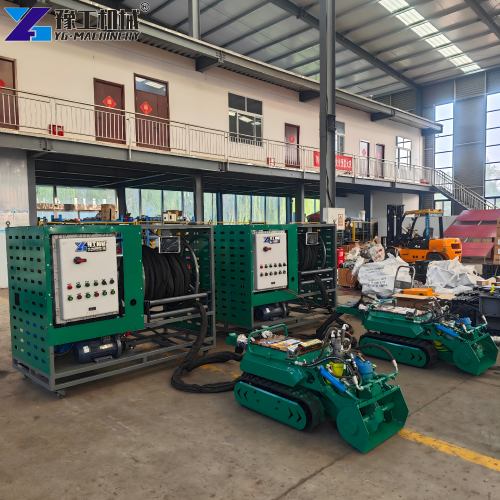
Sewer Cleaning Robot Manufacturer – YG Machinery
YG Machinery manufactures a full line of sewer cleaning robots for municipal, industrial, and infrastructure maintenance projects. Every model in the YG-500 to YG-1200 range goes through structured testing to confirm performance under real working conditions. The engineering team focuses on practical details, such as hose length, motor power, and control reliability. This gives customers equipment built for daily field use.
Beyond dredging robots, YG Machinery also produces excavator attachments, including hydraulic shears, pile drivers, and drum cutters. This wider range lets customers source multiple pieces of equipment from one supplier. Our team supports international buyers with technical guidance and after-sales assistance throughout the purchasing process.
For pricing, specifications, or a custom solution suited to your pipe network, contact YG Machinery today. Our team responds promptly and can help identify the right model for your project scale.