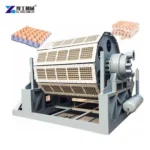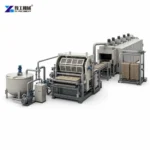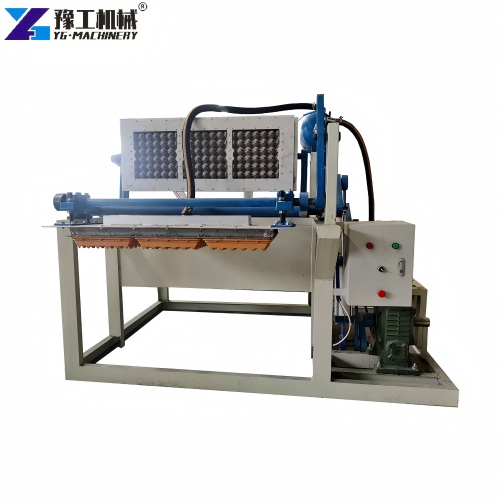
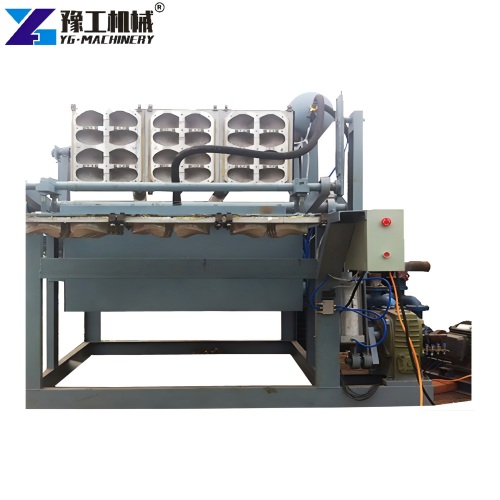
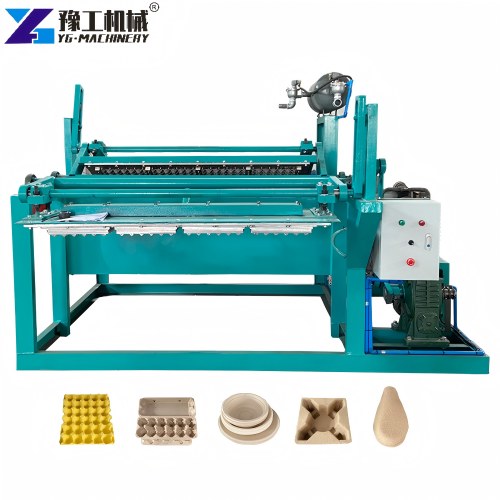
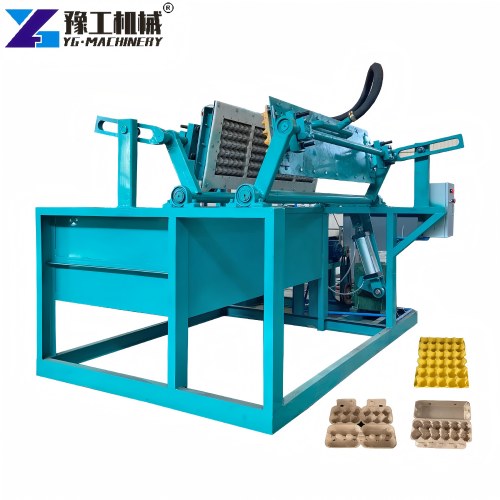
An egg tray making machine for sale converts prepared waste-paper pulp into wet moulded packaging. The forming stage creates the tray shape; drying and handling then prepare it for stacking and dispatch. YG configurations differ in listed capacity, mould quantity and installed power, so compare the selected forming unit with the pulping and drying stages needed for the intended tray product.
Egg Tray Making Machine For Sale: Model Parameters
Each column identifies a separate forming-machine model. Compare its mould quantity and power with the required tray format and the capacity of the pulping and drying stages; the machine rating is not a guarantee of finished dry-tray output.
| Model | YG-1*3 | YG-1*4 | YG-3*4 | YG-4*4 | YG-4*8 | YG-5*8 | YG-6*8 |
| Capacity (pcs/h) | 1000 | 1500 | 2500 | 3500 | 4500 | 5500 | 7000 |
| Forming Mould Quantity | 3 | 4 | 12 | 16 | 32 | 40 | 48 |
| Total Power (kW) | 40 | 40 | 50 | 60 | 130 | 140 | 186 |
| Electricity Consumption (kw/h) | 28 | 29 | 35 | 42 | 91 | 98 | 130 |
| Worker | 3-5 | 4-6 | 4-6 | 4-6 | 4-6 | 5-7 | 6-8 |
When comparing an egg tray making machine for sale, establish the drying arrangement separately. Natural drying depends on suitable conditions and handling space, while a dedicated drying stage needs an appropriate heat source and throughput. Confirm the supply scope before treating drying equipment as part of the forming-unit purchase.
Working Principle Of Egg Tray Maker Machine
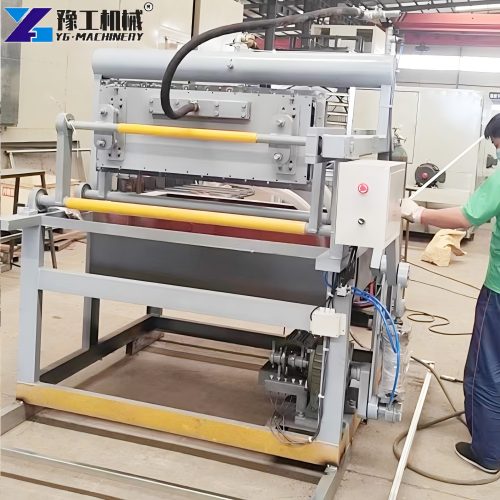
In pulp moulding, a prepared slurry reaches the forming mould. Vacuum draws pulp fibres against the mould surface while water is removed, creating a wet blank with the required pockets and supporting profile. The blank is then released or transferred for drying; this is why mould geometry and the downstream handling arrangement matter.
For coordinated pulping, forming, drying and packing, compare the egg tray production line. A forming-unit purchase and an integrated line cover different equipment, floor space and service needs. Match the stages to the intended product and shift rather than assuming the forming rating establishes the line’s finished output.
Compare the selected forming model with the pulp supply and drying arrangement.
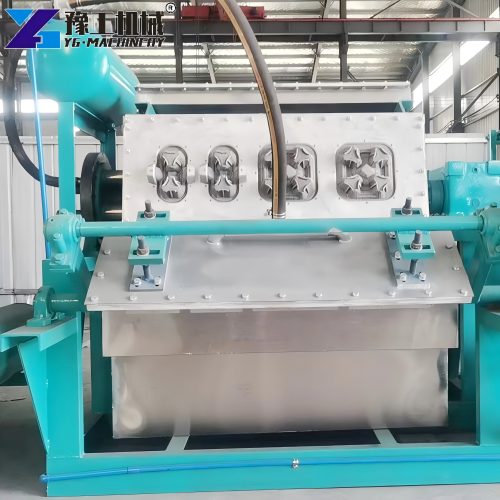
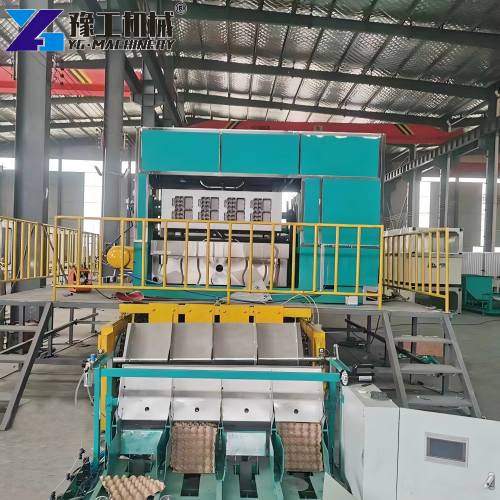
Production Process Of Egg Carton Making Machine
Paper-pulp packaging production separates raw-material preparation, wet forming and dry-product handling. Each stage must supply or receive material at a rate compatible with the next.
- Prepare and sort waste paper such as newspapers or discarded cartons, removing unsuitable contaminants.
- Mix paper with water in the pulping system to create the required slurry.
- Screen and condition the pulp for the forming mould and target packaging product.
- Form the wet blank on the mould through vacuum-assisted water removal.
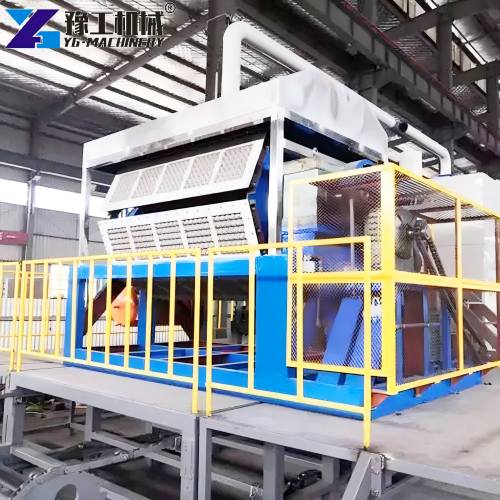
- Transfer and dry the blank using the selected drying arrangement before dry handling.
- Inspect and stack the dry trays, using manual or agreed downstream equipment; automatic stacking is not assumed to be included.
Define the tray product and intended throughput to plan the relevant production stages.
Compare an Egg Tray Making Machine For Sale by Packaging Task
- Model and mould count: compare the listed 1,000–7,000 pcs/h forming configurations with the tray design and planned drying capacity.
- Product geometry: egg pockets, supporting ribs and stack fit depend on the selected mould, not only the hourly rating.
- Material preparation: pulping and screening must provide a consistent slurry for the forming station.
- Drying and handling: space, heat source and wet-tray transfer affect the line arrangement and operating cost.
- Supply boundary: identify which pulping, forming, drying and packing items belong to the offer before comparing machine and full-line quotations.
A machine-only offer and a complete-line offer cover different equipment.
Egg Tray Making Machine For Sale FAQ
Waste paper is prepared with water into a pulp slurry. Newspapers and discarded cartons are common paper sources. Sorting and screening remove unsuitable material before forming, and the pulp must suit the moulded product.
No. A forming-machine rating describes its listed configuration. Saleable dry-tray output also depends on pulp supply, tray design, drying, handling and rejects. Compare the forming stage with the rest of the production line rather than treating its rating as guaranteed finished output.
The mould defines the pockets, supporting ribs and overall shape of the wet tray. A different egg count or another pulp packaging format needs an appropriate mould and transfer arrangement. Changing a product format can also change the forming and drying requirements.
Natural drying and dedicated drying equipment are different production arrangements. Compare the required throughput, available space, local weather or heat source, and handling between forming and drying. Select the drying stage together with the forming configuration.
It should identify the selected model, mould format and whether pulping, drying and downstream handling are included. A forming-unit quotation and a complete-line quotation cover different supply scopes; compare them at the same stage of readiness.
Match the Forming Unit and Drying Stage Before Ordering
An egg tray making machine for sale should be specified as part of a packaging workflow, whether the offer covers one forming unit or a broader line. Match the model and mould to the intended tray, then check the pulp supply, drying and handling needed to produce usable packaging. Availability, lead time and optional equipment must be confirmed in the actual quotation rather than assumed from a general product page.