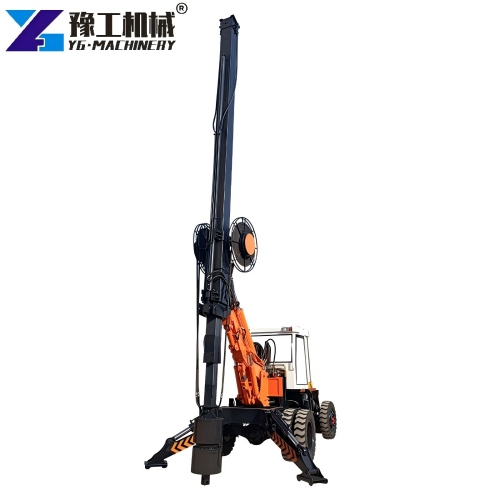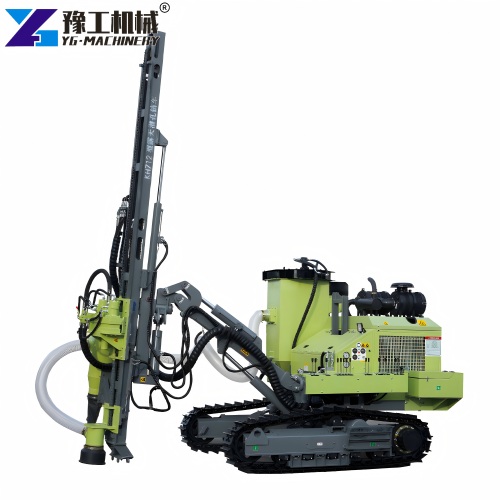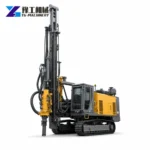
A DTH drilling rig drives a hammer down the drill string so impact energy reaches the bit at the bottom of the hole. This arrangement is used for surface drilling in hard rock, including quarry blast-hole work, when the drilling plan calls for a down-the-hole system. The rig, hammer, bit and compressed-air supply must be matched as one package; selecting by rig appearance alone can leave the hammer short of the air or feed conditions it needs.
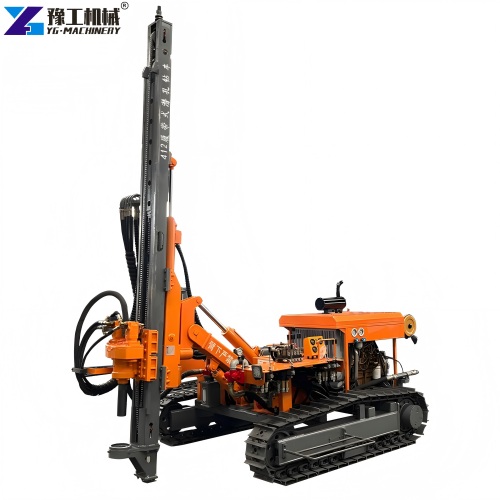
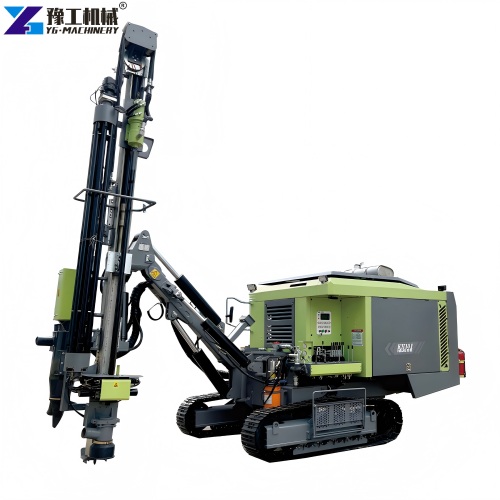
Before comparing DTH rigs, define the hole plan and the rock conditions the drilling system must handle.
REVIEW MY QUARRY DRILLING PLANHow Does a DTH Drilling Rig Make a Hole?
The rig positions the drill string and feeds it toward the rock. Compressed air travels down the string to operate the down-the-hole hammer near the bit. The hammer repeatedly strikes the bit while rotation changes the contact points; air then carries cuttings back up the annular space between the drill string and the hole wall.
Because the hammer works at the bottom of the hole, the method differs from a top-hammer arrangement, where impact travels through the drill string from above. The choice depends on hole requirements, geology, access and the available air package. The DTH process is only as effective as the match among hammer, bit, rig feed and compressor delivery under operating conditions.
Which Quarry Drilling Conditions Suit a DTH Rig?
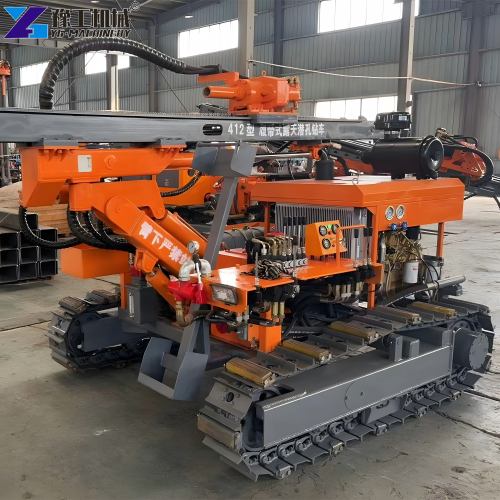
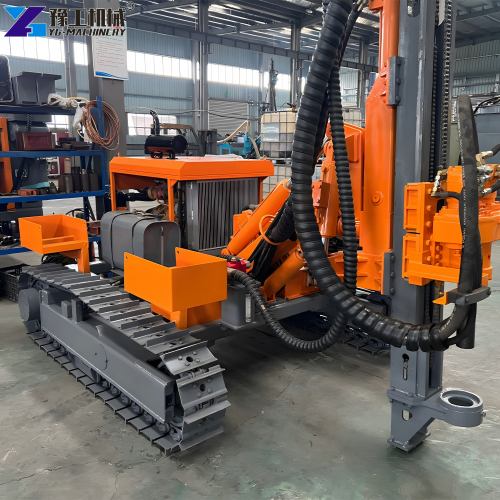
A crawler DTH rig is considered for surface blast-hole patterns where the machine can reach and position over each planned collar. Before choosing, review the rock type and variation, the hole layout, the required direction and the space for the rig and support equipment. Broken ground, benches, loose material and nearby edges can affect safe positioning and alignment.
Quarry productivity is not determined by the rig alone. Bit wear, flushing, hole deviation, compressor performance, operator practice and the blast pattern all affect the result. If a hole starts to wander or cuttings are not clearing as expected, the drilling setup and ground conditions need to be checked rather than assuming a faster feed will solve the issue.
A quarry bench photo and planned hole pattern help assess access, collar positions and support equipment needs.
CHECK THE QUARRY LAYOUTWhat DTH Hole-Diameter Options Are Listed?
The standard crawler DTH rig table lists three configurations for quarry and surface drilling. Compare their hole-size range, depth, mobility and power type below, then match the selected rig with its hammer and air supply.
| Parameter | Standard configuration |
|---|---|
| Configuration order | A / B / C; values in each row follow this order |
| Drilling diameter | 83–130 / 90–150 / 83–165 mm |
| Drilling depth | 30 / 30 / 30 m |
| Applicable rock-hardness range | f = 6–20 across the listed configurations |
| Travel speed | 2.5 / 2.5 / 2.5 km/h |
| Climbing ability | 30° / 30° / 30° |
| Power type | Diesel + electric / diesel / diesel + electric |
| Diesel-tank capacity | 70 / 70 / 70 L |
| Oil-tank capacity | 109 / 148 / 155 L |
| Complete-machine weight | 3.7 / 5.2 / 5.8 t |
The A–C columns are comparison labels, not product model names; values follow the standard crawler-rig configuration order. Hole size, rock conditions and the selected hammer also determine the required compressor package, so confirm the final rig-and-hammer combination before ordering. These are standard series specifications for initial comparison. The final specification sheet should match the configuration selected for your job before ordering.
For a valid comparison, state the target hole diameter and depth, rock type, planned production pattern and site constraints. Then confirm the matched rig, hammer, bit and air supply. The air compressor matching for DTH drilling details the compressor side of that match, while the crawler DTH drilling machine page covers the crawler DTH rig itself.
How Should You Match the Compressor to a DTH Drill?
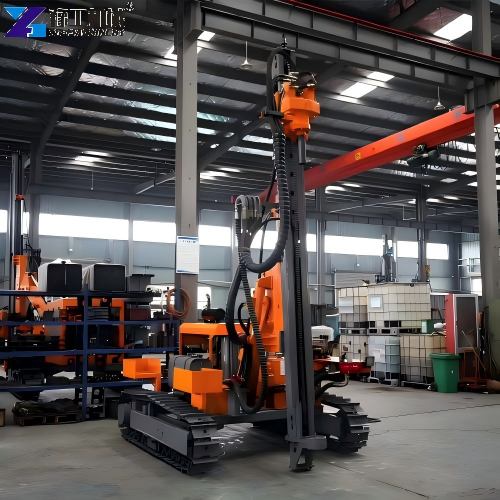
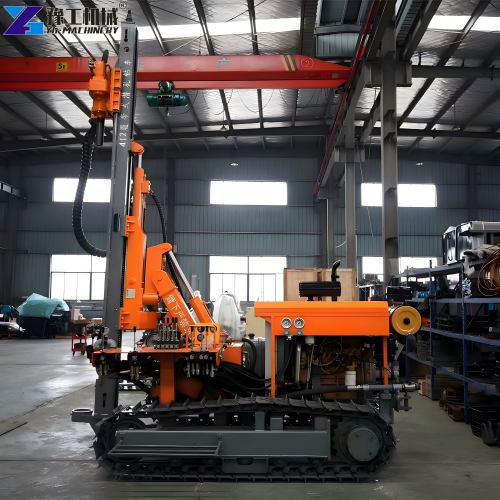
The compressor must provide air at the pressure and delivery rate required by the chosen hammer while the system is working—not simply match a headline engine size. Hose diameter and length, elevation, leakage, filters and other air users can reduce the air available at the rig. Ask for the hammer’s operating-air requirement and confirm the compressor can meet it at the job site.
Also check how cuttings will be managed and where the compressor can be placed without blocking the rig or haul route. The full drilling package includes the compressor, hoses, rig, hammer and bit, so a quote that lists only the crawler machine may not represent a ready-to-work system.
If the compressor is not selected yet, include the hammer requirement in the same review as the rig and bit.
CHECK MY AIR AND HAMMER MATCHWhat Should You Send for a DTH Rig Fit Review?
- Planned hole diameter and depth, pattern and required direction.
- Rock type, known changes in the formation and site or bench photos.
- Rig access, working platform and room for the compressor and hoses.
- Available air equipment, hose arrangement and expected support equipment.
With those details, the supplier can compare the rig and drilling package with the job rather than quote a machine without the air and tooling context. See the wider drilling equipment range range if you are still comparing drilling methods.
Share the hole plan, rock description and available compressor details to review the rig-and-hammer package.
REQUEST A DTH RIG REVIEWWhat Do Quarry Buyers Ask About DTH Drilling Rigs?
A DTH hammer works near the bit at the bottom of the hole, while a top hammer delivers impact from above through the drill string. The suitable method depends on the drilling plan, geology and rig package.
No. The stated options span model-specific configurations. Match the selected rig, hammer and bit to the required hole and rock.
The rig and compressor should be matched together. Confirm the selected hammer's operating-air requirement and check the air available at the rig after hose and site losses.
Provide the hole plan, target diameter and depth, rock type, site photos, rig access and the compressor or air system available on site.