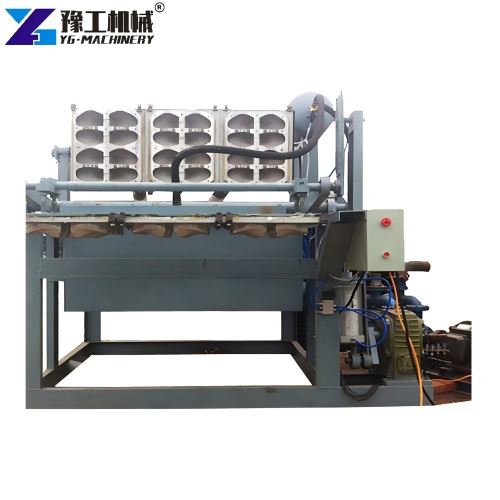

A small egg tray machine is attractive to a new producer because it can convert waste paper into a repeatable packaging product without the footprint of a large industrial line. The forming machine is only one station. Pulp preparation, vacuum, water return, transfer, drying, stacking and labor must all support the same hourly target or the advertised forming speed will not become saleable output.
This guide is for buyers comparing compact plants rather than a single standalone unit. It explains how to translate an hourly tray target into molds, utilities, drying area and shift organization. Published YG data provides a screening range; final output still depends on tray weight, pulp recipe, moisture, mold design and the selected drying method.
Start With Saleable Trays Per Shift
Define the number of accepted trays needed per working day, not merely the theoretical cycles per hour. Allow time for startup, pulp adjustment, mold cleaning, changeovers and normal stops. If a customer needs 8,000 trays in an eight-hour shift, a nominal 1,000-piece machine leaves almost no recovery margin. A higher nominal rate or longer production window may be necessary.
Tray geometry changes the calculation. Egg trays, fruit trays, cup carriers and industrial inserts have different weights, depths and drainage behavior. Ask the packaging customer for samples or drawings and confirm compression, nesting and moisture requirements before fixing the mold count.

Match Pulp Preparation To The Forming Rate
Recovered paper must be sorted, pulped and diluted to a stable consistency before it reaches the forming vat. A small machine can still suffer short cycles when the hydrapulper, storage tank or transfer pump is undersized. Size the preparation batch so operators are not constantly switching between pulping and forming.
Water recovery is equally important. White water returned from forming contains useful fiber and affects consistency. Provide settling, screening and controlled return instead of sending every batch to drain. The layout should let operators remove wire, plastic and other contaminants before they damage pumps or block mold screens.


Published Small Egg Tray Machine Parameters
The egg tray machine range below shows why capacity must be treated as a line decision. Power figures are published reference values and should be confirmed for the final motor list, local voltage and selected auxiliary equipment.
| Model | Nominal output | Molds | Total power | Typical labor |
| YG-1×3 | 1,000 pcs/h | 3 | 40 kW | 3–5 |
| YG-1×4 | 1,500 pcs/h | 4 | 40 kW | 4–6 |
| YG-3×4 | 2,500 pcs/h | 12 | 50 kW | 4–6 |
| YG-4×4 | 3,500 pcs/h | 16 | 60 kW | 4–6 |
| YG-4×8 | 4,500 pcs/h | 32 | 130 kW | 4–6 |
Do not select from the output row alone. More molds increase wet-product flow, which raises vacuum demand and the number of trays that must be transferred and dried each minute. The operator count also depends on automation, material handling and whether finished trays are counted and bundled manually.

Drying Usually Sets The Practical Capacity
Natural drying has low equipment cost but needs land, racks, stable weather and enough inventory to absorb long drying times. It can work for an entry project where climate and labor are favorable. Rain, low temperature or high humidity can interrupt production even while the forming machine is ready.
A brick, metal or multi-layer drying system reduces weather dependence and shortens residence time, but adds fuel, electrical load, ducting and emission considerations. Calculate evaporation from wet tray mass and final moisture rather than selecting a dryer only by the forming machine name. The production-line balance guide explains how a fast former can be restricted by a smaller dryer.

Workshop Layout And Utility Planning
Arrange paper receiving, pulping, forming, wet transfer, drying and packing in one directional flow. Crossing wet trays with raw-paper traffic creates contamination and handling losses. Leave maintenance access around pumps, vacuum equipment and molds, and provide drainage with enough slope to prevent standing pulp water.
Confirm voltage, frequency, installed power, water source, fuel, compressed air and ventilation. Peak electrical demand can differ from simple motor-nameplate addition because machines start at different times. The supplier needs the intended sequence and local utility limits to prepare a usable motor and control package.

Molds, Quality Checks And Product Changeovers
A mold set defines cavity shape, drainage and transfer behavior. Provide the tray sample, cavity count, egg size and nesting requirement. If several products will share one line, confirm changeover time, storage for spare molds and whether transfer tooling must also change.
Quality control should record dry weight, moisture, dimensions, stack height, edge strength and rejected causes. Stable pulp consistency and even vacuum usually matter more than chasing the fastest cycle. Keep accepted samples for each customer so adjustments are made against evidence rather than appearance.

Commissioning And Cost Control
A useful quotation separates the forming machine from pulping tanks, pumps, vacuum equipment, transfer devices, dryer, molds, electrical controls, installation and packing. Compare included scope line by line. A low machine price can become an expensive project when the buyer later discovers that drying, water return or electrical components were excluded.
Commission with the intended recovered-paper mix and the real tray mold. Confirm pulp consistency, vacuum stability, transfer release, wet-tray weight and the number of acceptable trays produced over a representative period. Short demonstrations do not show whether tanks remain balanced or whether drying inventory accumulates after several hours.
Calculate operating cost per accepted thousand trays. Include paper, water loss, electricity, drying fuel, labor, mold cleaning, rejected trays, packaging and routine wear parts. The cheapest nominal capacity may have a higher unit cost if it requires more handling or cannot maintain output through normal material variation.
Plan spare screens, pump seals, vacuum components and mold maintenance before startup. Train operators to identify changes in pulp consistency and wet-tray release early. A small plant benefits from simple preventive checks because one blocked screen or damaged transfer mold can stop the complete line.
For final selection, send a simple production brief covering product sample, hourly and daily target, shifts, paper supply, site dimensions, drying climate, fuel, voltage and destination. YG can then confirm which items belong in the supplied line and which civil or utility work remains with the buyer.
Capacity Risks To Resolve Before Ordering
Check seasonal paper supply and storage. Wet or contaminated recovered paper changes pulping time and usable fiber yield, while mixed coatings can disturb drainage. A small plant has less buffer inventory, so incoming-paper inspection and a clear rejection rule help protect daily output.
Confirm how rejected wet trays and trimmed dry trays return to the process. Recycling improves material yield, but uncontrolled return can change pulp consistency and color. Define a measured recycle ratio and keep floor waste separate from clean production scrap.
Review local permits for water discharge, boiler or burner use, noise and workplace safety. Drying fuel and exhaust treatment may determine the site even when the forming machine fits. Include these constraints before factory layout approval.
Finally, agree on acceptance quantities and test duration. Count good dry trays after the complete line, not wet pieces at the former. Record downtime and rejection reasons so any capacity gap can be traced to a station and corrected.
A Practical Pre-Shipment Acceptance Plan
Before shipment, verify that the forming section matches the approved mold and product. Check mold count, cavity shape, transfer alignment, vacuum response and wet-tray release. Weigh samples from different mold positions; a good average can hide weak trays caused by uneven drainage or blocked screens.
Run the pulp system and former together for a sustained period. Record accepted wet pieces, rejected pieces, stops and the level in each process tank. The test should show that pulping and water return can replenish the vat without repeated manual correction. If a dryer is included, count accepted dry trays at its outlet.
Review the electrical and utility list against the destination. Confirm voltage, frequency, cable entry, installed load, water connections, compressed air and fuel interfaces. Label pumps, valves and controls consistently with the manuals so the installation team can identify each circuit without guessing.
Agree on packing, foundation drawings, remote installation support, training and the initial spare-parts package. Photograph the tested line and preserve its settings. This evidence gives both parties a clear reference when the equipment is assembled at the buyer’s workshop.
Small Egg Tray Machine Buyer FAQ
Yes, when natural drying conditions and available space can handle the full wet-tray output. Production planning must include weather and drying inventory.
No. Tray weight, geometry, pulp recipe, moisture, mold condition and operator practice affect sustained accepted output.
Send tray samples or drawings, target trays per hour and day, paper source, available workshop, local utilities, drying preference and destination.
Often yes with suitable molds and transfer tooling, but each product must be checked for forming depth, drainage and drying behavior.