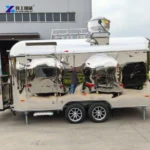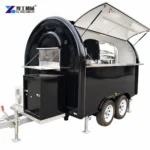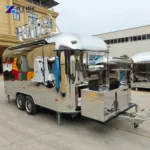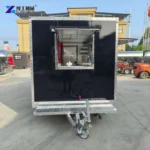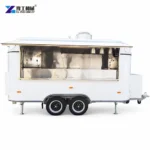
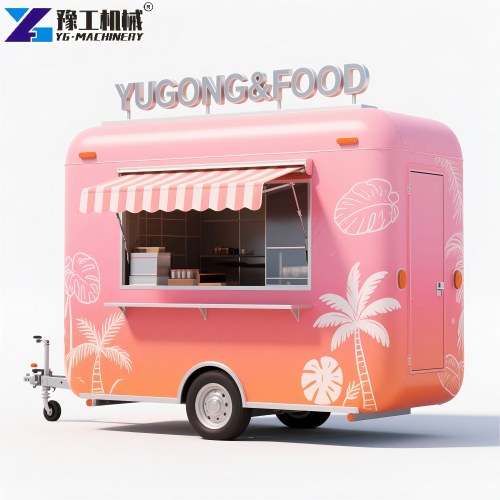
A mobile kitchen food trailer places food preparation, cooking, storage and service in a towable workspace. For event catering, its value depends on how those stations work together during a short rush of orders. A menu dominated by fried food creates a different cooking and holding pattern from cold food, drinks or oven-baked meals. Choose the kitchen arrangement around that service pattern before filling the available floor area with appliances.
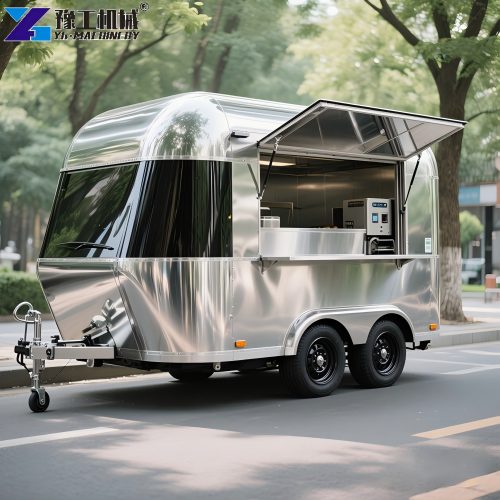
Body style, length and window positions determine where equipment and operators can fit. The product family offers different lengths and equipment options; the final body drawing and appliance schedule define the ordered trailer. Standard worktops, water arrangements and electrical fittings must be distinguished from optional cooking and refrigeration equipment. A photograph of a fitted kitchen does not establish that every appliance is included.
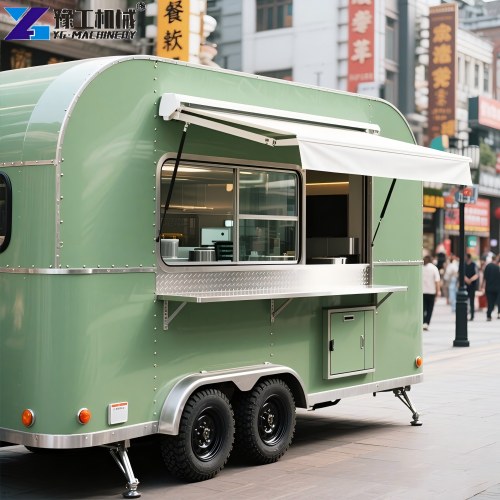
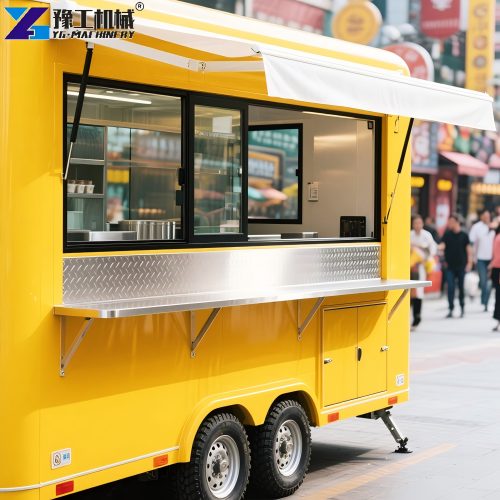
Technical Parameters of Mobile Kitchen Food Trailer
| Product Name | YG Food Truck & Food Cart & Food Trailer |
| Voltage | 110V/220V/380V |
| Color | All color can be customized |
| Serving Window | Can do 1 or 2 serving windows; window size can be customized Optional equipment: Grill, Griddle, Deep Frier, Refrigerator, Coffee Machine, and other taillight systems |
| Document scope | Confirm the documents applicable to the ordered body and equipment. |
| Floor | Non-slip Aluminum Floor |
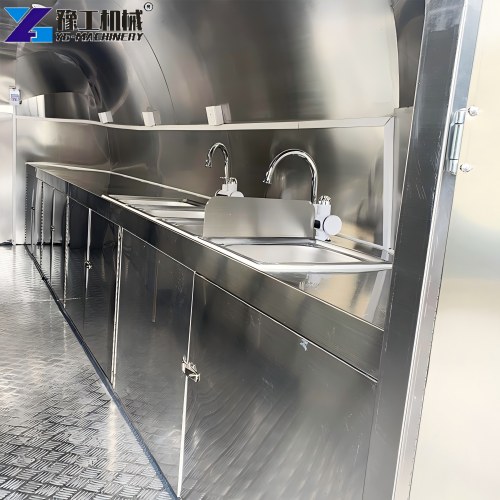
| Workbench material | 304 stainless steel; body materials depend on the selected configuration. |
| Optional Equipment | Refrigerator, LED Lights, Multifunctional Gas Stove, Fryer, Griddle, Gill, Oven, etc |
| Size | from 3m to 11m/ from 10ft to 36ft |
| Optional Functions | drink, coffee, beer, wine, ice cream, hot dog, pizza, fast food, steaks, taco, bubble tea, kebab, snack, etc. |
| Axle | Torsion Axle |
| Upgrade Option | Top signage, LED strip light, Generator box, Gas tank holder, Door step, Split door, Sliding window |
| Standard Configuration | 304 stainless steel workbench with cabinet, Water sinks, Double water tanks (clean water tank and waste water tank), Electricity system, Mechanical brake and hand brake, Taillight |
| Taillight System | Brake light, Turn light, Driving light |
| Product Positioning | High-end, Luxury, Popular model, Highly cost-effective |
| Application fields | Winery, Commercial catering, Bakery |
| Key Selling Points | Multifunctional |
| Function | All colors can be customized |
Describe the menu and peak service pattern to compare the kitchen working layout.
Wide Applications of Mobile Kitchen Food Trailer
- Markets and outdoor events: a concentrated arrival of customers makes order-taking, cooking and handoff coordination important. Keep the service route clear of replenishment and waste movement.
- Street-food operations: match the hot-food equipment to the actual menu and the available pitch services. Storage and preparation capacity need to support the serving station between replenishment opportunities.
- Drinks and cold-food service: allocate refrigeration, clean worktops and water points according to preparation and holding needs. A large cooker is not useful when cold storage is the limiting requirement.
- Temporary support kitchens: define whether the trailer cooks, reheats, assembles or serves food prepared elsewhere. Each role changes the appliance list and service interfaces.
Mobile Kitchen Food Trailer Layout for Peak Event Service
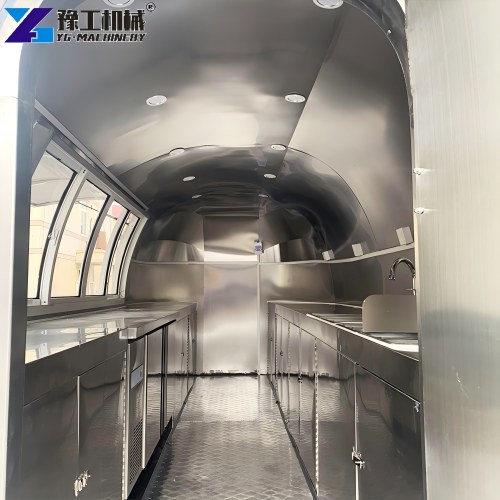
During a rush, one operator may be receiving orders while another finishes a batch and a third replenishes ingredients. If all three need the same counter or doorway, the trailer can be busy without serving customers quickly. Arrange the preparation surface, cooking position and finished-food handoff so that ingredients move forward while supplies and waste use a practical separate route.
Consider a menu with fried items and cold sides. The fryer operator needs a landing area for cooked food, while the cold-food station needs chilled ingredients and a clear assembly counter. Placing the handoff point across the preparation route creates repeated crossings. A different menu may need a different arrangement, even in a trailer of the same length.
Serving-window size is only part of the decision. The counter behind it needs room for the finished order, packaging and the person handing it over. Check the working layout with appliances open and stock in place, because an empty-body drawing can conceal clashes at refrigerator doors and access panels.
List the cooking and refrigeration equipment required for the proposed menu.
Configure a Commercial Kitchen Trailer Around Its Equipment
Compare the body, working stations, materials, documents and delivery scope as a coordinated package. Each part must suit the menu and destination rather than being selected independently.
Full Range of Personalized Customization
Customize the body and kitchen as one arrangement. Equipment depth, door opening, counter height and appliance servicing affect circulation, so an attractive exterior drawing is not a complete kitchen plan. Locate the window to suit the order and handoff sequence, and keep the staff entrance accessible with the appliances in their operating positions.
Cooking Equipment and Cold Storage for the Menu
Select equipment by the cooking method and the holding pattern of the food. Frying needs suitable hot-work space and a planned transfer to draining or serving; oven work needs loading and unloading clearance; cold assembly depends on refrigeration and preparation surfaces. Each appliance also brings heat, cleaning and connection requirements into the kitchen.
Storage should support the interval between replenishment opportunities. A refrigerator may have enough nominal volume but poor access when boxes are packed in front of the ingredients used most often. Keep frequent-use supplies near their station while maintaining the required storage conditions and space for cleaning.
Standard worktops and cabinet space are not equivalent to a complete cooking package. List optional ovens, fryers, griddles and refrigeration individually, with their installation and service connections. This makes the quotation useful for a real menu instead of presenting every available appliance as included.
Premium Raw Materials and Multiple Factory Tests
The ordered body specification should identify frame construction, panel and floor materials, and the worktop arrangement. A 304 stainless-steel workbench specification describes that component; it does not establish that the entire trailer is made from the same steel. Confirm the material schedule for the selected body and fittings.
Inspection records should correspond to the actual trailer and equipment supplied. Where water, electrical or other checks are included, confirm their scope and handover documents. A list of test names alone does not establish performance in every destination or operating condition.
Compare the Installed Cost of an Event Catering Trailer
Compare quotations with the same body, worktops, cooking equipment, cold storage, utility fittings and delivery scope. A low body-only price can exclude the appliances that determine whether the trailer can serve the planned menu. Destination preparation and any required inspection also belong in the opening budget.
Payback depends on trading opportunities, demand, menu margin, staffing and operating costs. The trailer configuration can support the work, but it cannot establish a fixed return period. Assess the purchase against an operating plan rather than a promise that every buyer recovers the investment quickly.
Compare the body, equipment, delivery and destination work within the same quotation.
Documents and Equipment Scope for the Destination
Separate documents for the trailer body from those for its cooking, refrigeration, electrical or fuel equipment. The identification and scope of each supplied document must match the actual item. A vehicle identifier, a management-system certificate and an appliance approval describe different things and are not interchangeable.
Confirm the intended operating location and the requirements that apply to the trailer and its installed kitchen. Available document copies and the final equipment schedule should be reviewed before manufacture or shipment. A product-family claim of global compliance does not establish approval for a specific destination or menu.
Delivery and Destination Handover for the Kitchen Trailer
Compare the shipping arrangement with the body dimensions, packaging, unloading method and destination access. Port collection and final delivery involve different handling steps, so define who provides each one and what equipment is required.
Customs and towing arrangements depend on the shipment and destination. Confirm the declaration scope and documents with the relevant service providers, and verify the towing combination and road-use requirements before movement. Do not assume that any private car can collect and tow a fitted kitchen trailer directly from the port.
One-stop Equipment Matching Service
Buyers may specify their own appliances or agree an installed equipment package. In either case, coordinate dimensions, connections, ventilation and service access with the body layout before fabrication. An appliance that fits through the door may still be unsuitable for the planned electrical supply, clearance or operating position.
The agreed schedule should identify what is supplied, installed, connected and checked, as well as the documents and instructions included at handover. This makes it possible to compare a furnished kitchen with a shell-and-worktop offer without confusing two different packages.
Water and Power Interfaces for Event Catering
The trailer and the pitch meet at the utility connections. Identify whether the event provides a suitable supply or whether a separate arrangement is needed, then compare the simultaneous demand of the chosen appliances with that connection. A list of 110 V, 220 V and 380 V options describes alternative builds, not automatic compatibility with all supplies on one trailer.
Water demand follows food preparation, handwashing and cleaning. Clean-water storage, waste-water collection and any external connections need to be specified together. Tank size alone does not establish the number of orders that can be served because menus and cleaning routines use different amounts of water.
Coordinate electrical, water and any selected fuel connections with access for staff and maintenance. Keep the agreed connection drawing with the appliance schedule so the destination team can prepare the pitch and compare the delivered arrangement with the order.
Confirm the installed appliance schedule and pitch connections for the kitchen proposal.
FAQs About Mobile Kitchen Trailer For Sale
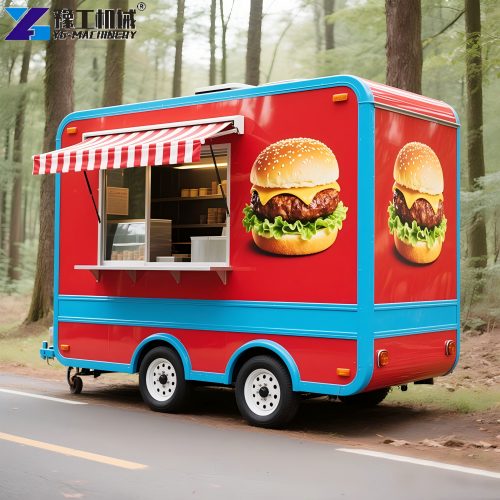
For a menu-specific hot-food arrangement, compare the hamburger trailer configuration.
Start with the menu and peak service sequence. Coordinate preparation, cooking, cold storage, packaging and handoff so operators can work without repeatedly crossing the same counter or entrance.
They depend on the agreed equipment package. Confirm each appliance, its installation and connections separately from the body, worktops and standard fittings.
No. Confirm the electrical build and connection for the ordered configuration, including the simultaneous demand of the selected appliances and the available pitch supply.
No. Check the scope and identity of documents for the body and installed equipment, together with requirements for the intended operating location. Different documents cover different subjects.
Agree the unloading and delivery responsibilities, shipment documents, handling requirements and the permitted towing arrangement. These depend on the actual trailer, shipment and destination.
Get Your Custom Mobile Kitchen Food Trailer Now
Choose the mobile kitchen food trailer as an integrated workspace: the body provides the room, while the selected appliances, storage and connections determine the menu it can support. Keep the final layout, equipment schedule, delivery scope and support terms together with the order.
For event catering, the strongest layout is the one that keeps orders moving through the busiest part of service while allowing replenishment and cleaning. Describe the menu, service pattern and available pitch utilities when comparing configurations. The resulting proposal should show the kitchen arrangement and included equipment clearly enough to review before manufacture.
Describe the event menu, operating pattern and available utility connections for a kitchen proposal.