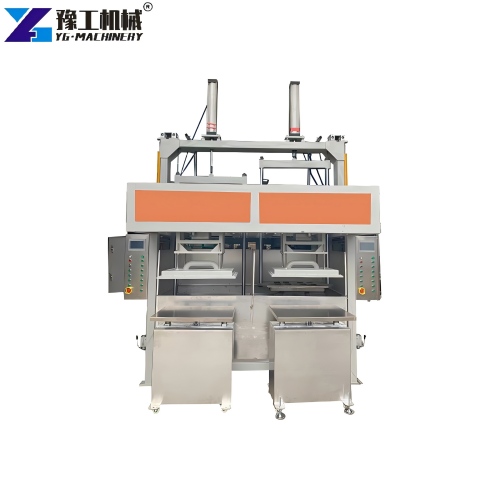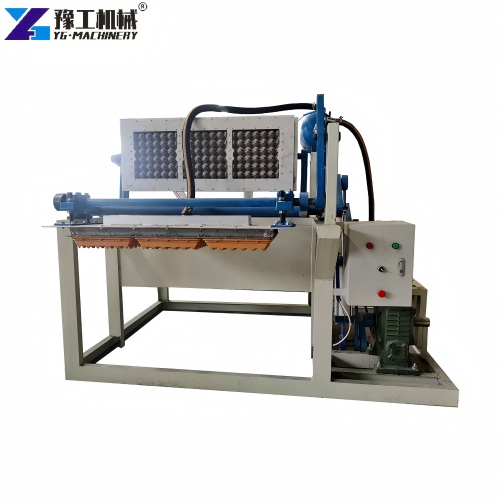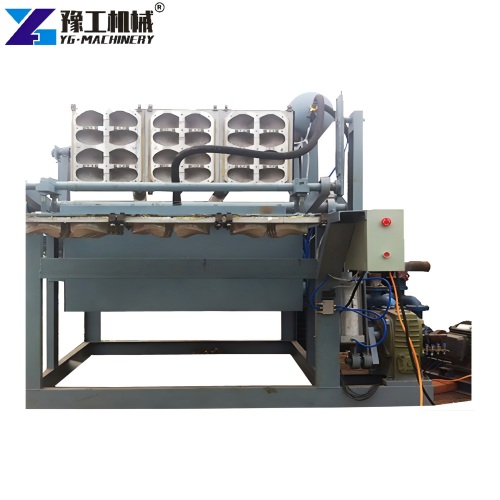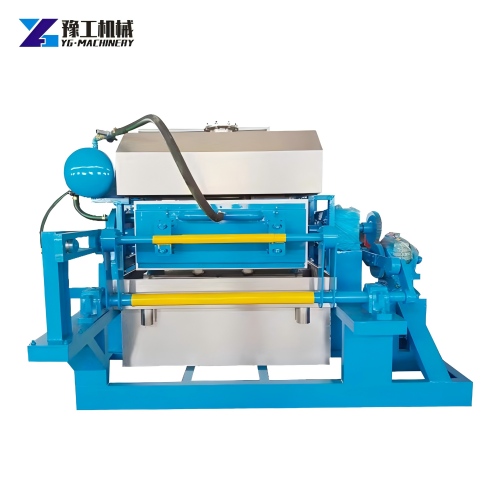

An egg tray production line turns waste paper into strong, moisture-absorbing trays ready for daily use. YG Machinery designs each egg tray production line to match different output needs, from small workshops to large factories. The system pulps raw paper, molds it into shape, dries it fully, then stacks and packs the finished trays. Many farms and packaging plants choose this equipment because it lowers long-term costs compared to buying trays from outside suppliers. A well-built forming and drying setup also gives you control over tray thickness, strength, and finish. Whether you need natural drying or a metal drying line, YG offers configurations suited to your climate and production volume. This flexibility makes it a practical investment for anyone wanting to produce their own trays, cartons, or crates on site.
Egg Tray Production Line Parameters
The table below shows output, equipment, and drying method options across each model.
| Production Line Models | Output (p/h) | Hydraulic Pulper | Egg Tray Machine | Drying Method | |||
| Natural Drying | Brick Drying Line | Single-layer Metal Drying Line | Multilayer Metal Drying Line | ||||
| YGDT3×1-1000 | 1000 | ZDS1(1m³) | DTF3×1 | √ | √ | √ | √ |
| YGDT4×1-1500 | 1500 | ZDS1(1m³) | DTF4×1 | √ | √ | √ | √ |
| YGDT3×4-2000 | 2000 | ZDS1(1m³) | DT3×4 | √ | √ | √ | √ |
| YGDT4×4-2500 | 2500 | ZDS2(2m³) | DT4×4 | √ | √ | √ | √ |
| YGDT3×8-3000 | 3000 | ZDS2(2m³) | DT3×8 | √ | √ | √ | |
| YGDT4×8-4000 | 4000 | ZDS4(4m³) | DT4×8 | √ | √ | √ | |
| YGDT5×8-5000 | 5000 | ZDS4(4m³) | DT5×8 | √ | √ | √ | |
| YGDT5×12-6000 | 6000 | ZDS6(6m³) | DT5×12 | √ | √ | √ | |
| YGDT6×8-7000 | 6000-7000 | ZDS6(6m³) | DT6×8 | √ | √ | √ | |
| Production Line Models | Drying Method | Raw Material(kg/h) | Power(kW/h) | Fuel Consumption | ||||
| Paper | Water | Coal(kg/h) | Gas(m³/h) | Diesel(kg/h) | LPG(kg/h) | |||
| YGDT3×1-1000 | Natural drying | 85 | 255 | 23.6 | ||||
| YGDT3×1-1000T | Brick drying line | 36.1 | 50 | 22-32 | 18-28 | 18-28 | ||
| YGDT3×1-1000J1 | Single-layer metal drying line | 36.1 | 22-32 | 18-28 | 18-28 | |||
| YGDT3×1-1000J6 | Multilayer metal drying line | 36.1 | 22-32 | 18-28 | 18-28 | |||
| YGDT4×1-1500 | Natural drying | 102 | 306 | 27.3 | ||||
| YGDT4×1-1500T | Brick drying line | 38.6 | 60 | 26-36 | 22-32 | 22-32 | ||
| YGDT4×1-1500J1 | Single-layer metal drying line | 38.6 | 26-36 | 22-32 | 22-32 | |||
| YGDT4×1-1500J6 | Multilayer metal drying line | 38.6 | 26-36 | 22-32 | 22-32 | |||
| YGDT3×4-2000 | Natural drying | 170 | 510 | 32.6 | ||||
| YGDT3×4-2000T | Brick drying line | 45.3 | 83 | 37-47 | 30-40 | 30-40 | ||
| YGDT3×4-2000J1 | Single-layer metal drying line | 45.3 | 37-47 | 30-40 | 30-40 | |||
| YGDT3×4-2000J6 | Multilayer metal drying line | 45.3 | 37-47 | 30-40 | 30-40 | |||
| YGDT4×4-2500 | Natural drying | 212 | 636 | 34.2 | ||||
| YGDT4×4-2500T | Brick drying line | 46.8 | 104 | 46-56 | 38-48 | 38-48 | ||
| YGDT4×4-2500J1 | Single-layer metal drying line | 46.8 | 46-56 | 38-48 | 38-48 | |||
| YGDT4×4-2500J6 | Multilayer metal drying line | 46.8 | 46-56 | 38-48 | 38-48 | |||
| YGDT3×8-3000T | Brick drying line | 255 | 765 | 88.9 | 125 | 56-66 | 46-56 | 46-56 |
| YGDT3×8-3000J1 | Single-layer metal | 88.9 | 56-66 | 46-56 | 46-56 | |||
| YGDT3×8-3000J6 | Multilayer metal drying line | 88.9 | 56-66 | 46-56 | 46-56 | |||
| YGDT4×8-4000T | Brick drying line | 340 | 1020 | 91 | 160 | 67-77 | 55-65 | 55-65 |
| YGDT4×8-4000J1 | Single-layer metal drying line | 91 | 67-77 | 55-65 | 55-65 | |||
| YGDT4×8-4000J6 | Multilayer metal drying line | 91 | 67-77 | 55-65 | 55-65 | |||
| YGDT5×8-5000T | Brick drying line | 424 | 1272 | 100 | 185 | 82-92 | 67-77 | 67-77 |
| YGDT5×8-5000J1 | Single-layer metal drying line | 100 | 82-92 | 67-77 | 67-77 | |||
| YGDT5×8-5000J6 | Multilayer metal drying line | 100 | 82-92 | 67-77 | 67-77 | |||
| YGDT5×12-6000T | Brick drying line | 510 | 1530 | 105 | 208 | 92-103 | 77-87 | 77-87 |
| YGDT5×12-6000J1 | Single-layer metal drying line | 105 | 92-103 | 77-87 | 77-87 | |||
| YGDT5×12-6000J6 | Multilayer metal drying line | 105 | 92-103 | 77-87 | 77-87 | |||
| Notes:The above data is calculated according to the weight of each egg tray of 100g.The above data is calculated as pure pulp without adding stone powder. If 20-30% stone powder is added, the actual consumption of paper is 70-80% of the above data. Contact us for more details. | ||||||||
Fuel and power use scale with output, so smaller lines suit workshops with limited space and budget. Larger configurations fit factories that need higher daily volume. All models share the same core process, giving you consistent quality no matter the size you choose.
Forming output counts wet pieces at the moulding stage. Drying capacity must be matched to the amount of water carried by those pieces, and finished output counts trays that pass the required checks. Keep these three quantities separate when choosing a line; an hourly former rating does not establish the number of dry, packed trays leaving the factory.
Match the table configuration to your tray format and drying route before comparing line totals.


Key Equipment in a Tray Making Machine Line
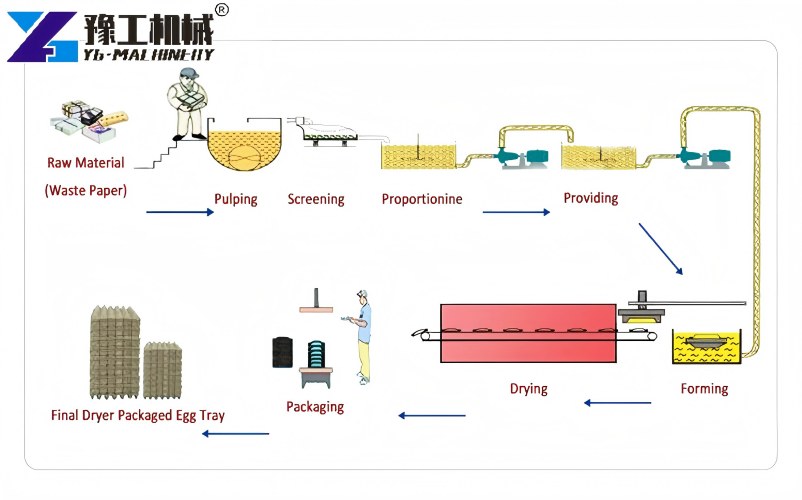
Every complete tray making machine or egg crate making machine line relies on six main stages working together.
- Pulping System The process starts with a hydraulic pulper that breaks down waste paper into fine pulp. Clean water mixes with the paper fibers to form a smooth slurry. This slurry becomes the raw material for every tray, carton, or crate produced afterward.
- Forming Machine Next, the egg tray machine shapes wet pulp into trays using molds under vacuum suction. Each mold pulls pulp onto its surface, forming the familiar tray pattern. This stage determines the final shape, cell count, and size of your product. YG offers multiple mold configurations to fit different tray and carton styles.
- Drying System After forming, trays pass through a drying system to remove moisture and gain strength. You can choose natural drying, a brick drying line, or a metal drying line with single or multiple layers. Each option balances speed, fuel type, and space differently. Warmer regions often prefer natural drying to save on fuel costs.
- Hot Press Machine (Optional) Some buyers add a hot press machine for a smoother, more rigid tray finish. This step suits products destined for retail display or export packaging. It is not required for standard farm or industrial use. Adding this stage raises production cost but improves surface appearance.
- Automatic Stacking Machine Once trays dry fully, an automatic stacking machine arranges them into neat, even stacks. This step reduces manual labor and speeds up the packing process. Consistent stacking also protects trays from damage before shipment.
- Packing Equipment Finally, packing equipment bundles finished trays for storage or transport. Proper packing keeps trays clean, dry, and ready for delivery to your customers. This last stage completes the journey from raw paper to a finished egg carton maker product ready for market. Together, these six stages form a complete, efficient production system.
The pulper breaks down the recovered paper, while screening separates unsuitable material before it reaches the mould. Pulp storage and delivery connect batch preparation to the repeated forming cycle. The vacuum and transfer arrangement then removes water and moves the wet shape onward. Specifying these connections matters because a fast forming cycle cannot compensate for an inconsistent pulp supply.
The dryer receives a wet, comparatively delicate product; the finishing stage receives a much drier product with different handling needs. Distinguish these transfer points in the layout. Tray weight and format affect the loading arrangement, so a drying selection should follow the product and transfer conditions rather than only the model number.
Identify the pulping, vacuum and wet-tray transfer equipment already available in your factory.
How to Use One Egg Carton Maker Line for Multiple Products?
A single egg carton maker line does not have to produce only one item. With the right setup, it can switch between egg trays, egg cartons, fruit trays, and other pulp molded goods. Quick mold change makes this possible. Operators swap mold sets in a short time without major downtime, keeping the production line running efficiently. Good mold management supports this flexibility. Storing molds properly and labeling them clearly helps your team switch between product types without confusion or delay. A clear product switching process ties everything together. Workers follow set steps to clean, adjust, and restart the tray making machine after each mold change. Many customers use this approach to serve different markets from a single machine investment. Instead of buying separate machines for each product, you gain more value from one flexible egg tray production line.
A replacement mould is not the only consideration when changing from an open egg tray to an egg carton or another pulp package. The matching transfer tooling, pickup method and drying support also need to suit the shape. A deeper feature or a hinged carton can change how the wet part releases and how it is handled after drying.
Confirm the full tooling set for each proposed product and how the changeover is carried out. If the offer includes hot pressing or a special finishing stage for one format, identify that scope separately. The ability to fit a different mould does not establish that every package can run through an unchanged line at the original tray output.
List the tray and carton formats to check the complete mould-and-transfer tooling scope.
Configure an Egg Tray Production Line Around the Drying System
The forming machine is one stage of a paper pulp packaging line. Choosing a larger former does not increase saleable output if wet trays cannot move into drying at the required pace. Plan the dryer and wet-tray transfer around the actual tray format, moisture load and operating schedule, then compare the pulping and forming capacity with that arrangement.
Drying choices change the factory workflow as well as the equipment price. Natural drying requires an appropriate climate, handling area and a plan for unsuitable weather. An enclosed dryer adds controlled equipment and energy supply but still needs a matched loading arrangement. Neither choice removes the need to inspect the dried product before counting it as acceptable output.
Compare the egg tray drying machine options with the forming equipment so both stages are specified as one connected system.
Brick and Metal Drying Arrangements Change Tray Handling
A brick drying arrangement involves civil construction as part of the production system. Its chamber layout, access and loading method need to work with the wet trays coming from the former. Review the building work, heat supply and commissioning scope alongside the machine offer; they cannot be inferred from the forming-machine model alone.
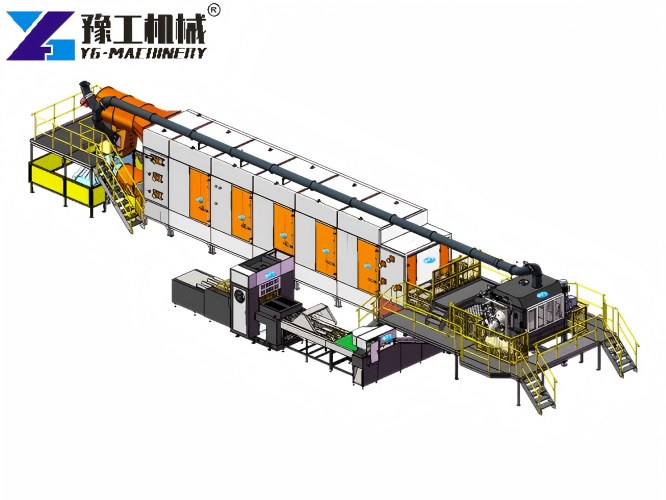
A metal drying arrangement can be specified as a single-layer or multi-layer system. These layouts do not have the same loading path, conveyor arrangement or maintenance access. A multi-layer layout may change how the drying path is accommodated, but its overall factory footprint still includes loading, discharge, heat equipment and working clearances. Compare the complete layout rather than only the dryer body.
Select the heat source and supply arrangement with the specific dryer. Electricity for motors and controls is not the same quantity as thermal energy used to evaporate water. The consumption entries in the existing table describe the listed configurations; do not extrapolate a universal fuel bill or energy saving from the hourly forming output.
Compare dryer construction, heat supply and tray loading as one installation scope.


Balance Wet-Tray Transfer and Finished-Tray Discharge
Wet trays must be supported through transfer because their handling condition differs from the dried product. The interface between the former and dryer therefore includes the pickup method, tray spacing and loading rhythm. If this interface cannot keep pace, increasing the former speed produces an accumulation of wet product rather than additional finished packaging.
At the drying exit, identify the operations needed before dispatch. Inspection, optional hot pressing, stacking and packing consume time and may require separate equipment. Define which tray formats need each operation, how rejected pieces are handled and where packed trays will be stored. A line quotation should not silently treat every illustrated finishing machine as standard.
For an egg producer making packaging in-house, the relevant demand is the accepted tray quantity needed for packing, not simply the highest machine rating. For a packaging supplier serving several customers, format changes and finished-stock handling also influence the line arrangement. These are different production conditions even if both buyers select the same former.
Compare Complete Production-Line Offers Without Assuming a Payback
Build the equipment comparison around the same boundary: waste-paper preparation, screening and pulp storage; forming and vacuum services; wet-tray transfer; drying and heat supply; and the required finishing and packing operations. Mark each stage as supplied, optional or provided by the factory. This prevents a forming-only price from being compared with a turnkey line as though they were equivalent.
Installation responsibilities deserve the same clarity. Identify foundations or dryer construction, electrical distribution, water supply and recirculation, heat-source connections and commissioning materials. The layout must connect the stages so that pulp, wet trays and finished stacks move through the plant without obstructing the operating areas.
Evaluate running costs using the proposed tray weight, accepted output, local input prices and actual operating hours. Raw-paper demand, energy and labour are separate inputs; reject rates and downtime change the cost per accepted tray. Equipment capacity alone cannot prove a percentage cost saving, return period or a particular customer result.
Before confirming the package, review a common configuration schedule showing model, tray format, included moulds, drying arrangement, handling equipment and utility boundaries. Compare all offers against that schedule and record exclusions. The useful outcome is an understandable, buildable production arrangement rather than an unsupported promise of lower packaging cost.
Ask for one schedule covering supplied equipment, dryer construction and factory-provided utilities.
Buy Your YG Egg Tray Production Line Today
YG Machinery supports customers from initial inquiry through installation and after-sales service. Beyond egg tray equipment, we also manufacture slitting machines, food trucks, generator sets, EV charging piles, and tire recycling lines. We also build sandblasting rooms for surface treatment needs. This wide product range means we understand diverse manufacturing needs across industries. If rising packaging costs concern your business, an in-house tray making machine may offer a practical solution. Contact our team today to discuss output requirements, drying method options, and pricing for your production line.
Egg Tray Production Line FAQs
No. The forming figure describes wet pieces at the moulding stage. Drying, handling, inspection and packing determine how many acceptable trays leave the factory.
Define pulping, screening and storage, forming and vacuum services, wet-tray transfer, drying and heat supply, and required finishing or packing. Mark optional equipment and factory-provided utilities separately.
Compare their actual loading arrangement, heat source, civil work, conveyor or chamber layout, maintenance access and discharge handling. Compare the complete installation rather than the dryer body alone.
Potentially, with the appropriate forming and transfer tooling and compatible drying and finishing arrangements. A mould change alone does not prove equal output for every package shape.
No. A cost assessment also needs accepted output, tray weight, local paper and utility costs, labour, operating hours, rejects and the full investment scope. Do not infer a guaranteed saving from capacity alone.
Describe the product configuration and intended application for a specific equipment proposal.