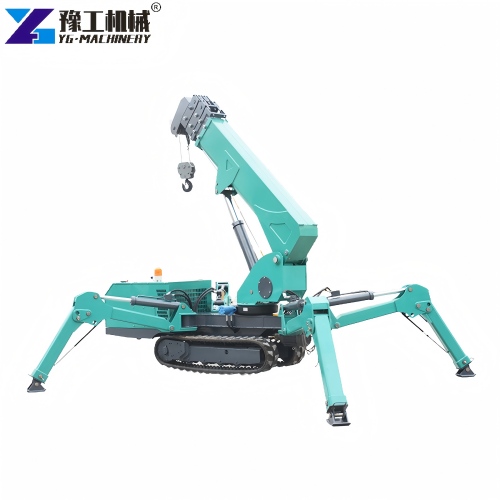
Spider crane cost is meaningful only when the crane can travel to the setup point and make the required lift from there. A capacity label does not tell you the allowable load at your working radius, boom position or outrigger arrangement.
To compare prices, define the load and its center of gravity, pickup and landing points, required radius and hook height, route width, support surface, power source and delivery destination. Then compare the matching crane configuration and the full supply scope—not just the rated tonnage.
How Do Working Radius and Load Charts Affect Spider Crane Cost?
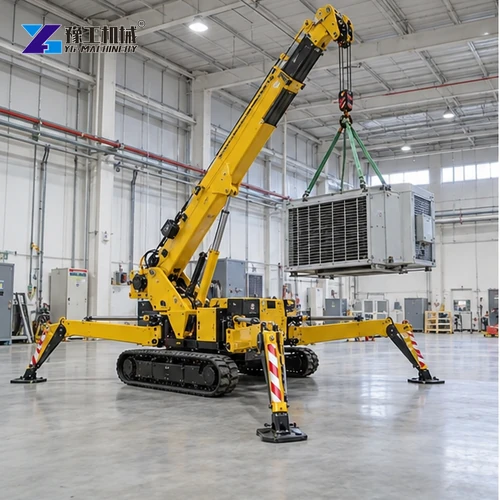
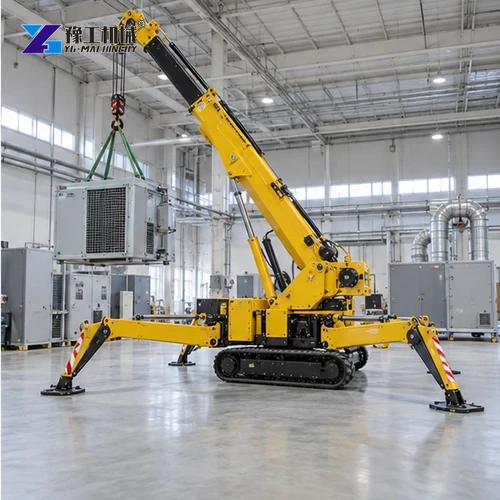
A spider crane’s rated capacity is not the load it can lift at every boom position. As the boom reaches farther from the crane, the load moment changes, so the allowable load depends on the charted radius, boom angle and setup. Start by weighing the load and rigging, then mark the pickup point, landing point and crane position; measure the horizontal radius to the load rather than estimating it from the room dimensions.
Use the exact model’s load chart to check that radius and the required hook height, including the rigging length. The table’s listed reach/load combinations are reference points, not a substitute for the full chart—especially where a row lists reach without a paired load. If the lift requires several positions, check each point along the path. Only then compare quotations for the model and options that can perform the full lift.
Send the load weight, dimensions and lifting radius for a chart review.
CHECK THE LIFT CHARTWhich Setup Details Change an Indoor Spider Crane Package?
Map the crane’s deployed footprint before deciding that it can work indoors. Mark the position of all four outrigger feet, the boom-slew envelope and the load path, then compare those points with columns, machinery and overhead services. Confirm the floor construction and permitted point loading; tracks carry the crane during travel, but the outriggers transfer the lifting load to their support points.
If the floor needs load-spreading mats, include their dimensions and handling in the plan and check that they fit without blocking the work zone. Also confirm the required power source, ventilation and operating restrictions with the facility, then specify the control arrangement the crew will use. These checks affect the crane package and site preparation, not just the equipment price.
These specifications use the official YG-3, YG-5 and YG-8 model names. The listed reach/load points and transport dimensions are model-specific; use the load chart for the exact working radius and setup instead of treating rated tonnage as capacity at every reach.
| Parameter | YG-3 | YG-5 | YG-8 |
|---|---|---|---|
| Specification | 3t | 5t | 8t |
| Maximum working radius | 8.83m×0.15t | 14m×0.5t | 16.5m |
| Maximum above-ground head | 9.9m×0.7t | 16.8m | 18m |
| Hook Speed | 0-8m/min(4 rope) | 12m/min(4 rope) | 12m/min(4 rope) |
| Rope diameter | φ8mm×45m | Φ11mm×80m | Φ11mm×80m |
| Boom Type | 5-section boom, pentagonal structure | 5-section boom, pentagonal structure | 5-section boom, pentagonal structure |
| Boom Length/Time | 3.1m-9.2m/20sec | 12.3m/54sec | 12.3m/54sec |
| Boom Angle/Time | 0°~78°/13sec | 0°~78°/13sec | 0°~78°/13sec |
| Slew Angle/Speed | 0-360°continuous/60sec | 0-360°continuous/38sec | 0-360°continuous/38sec |
| Walking Way | Hydraulic motor drives | Hydraulic motor drives | Hydraulic motor drives |
| Walking Speed | 0~2.5km/h | 0~2.5km/h | 0~2.5km/h |
| Grade Ability | (25°)36% | (25°)36% | (25°)36% |
| Operation type (Boom/outrigger) | Manual operation, manual walking(remote control option) | Manual operation, manual walking(remote control option) | Manual operation, manual walking(remote control option) |
| Operating characteristics | Manual operation, remote control | Manual operation, remote control | Manual operation, remote control |
| L*W*H(mm) | 2950*980*1560 | 5000*1500*1900 | 5000*1600*2180 |
| Total weight(kg) | 2700 | 6200 | 7200 |
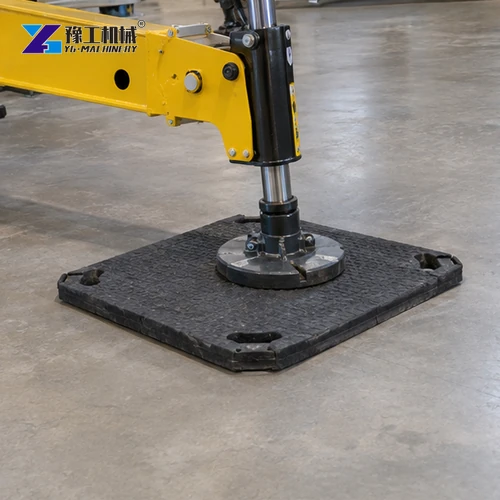
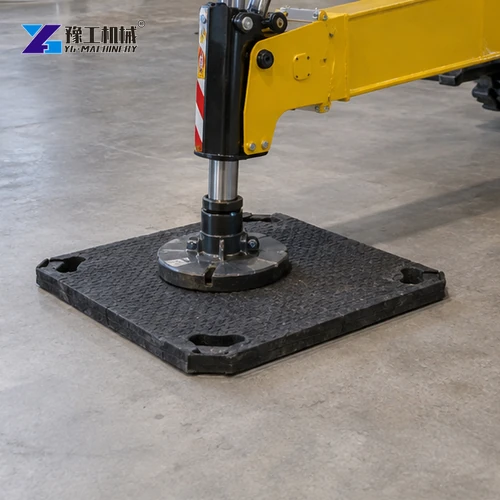
Provide floor and power details to confirm the indoor setup scope.
REVIEW THE SITE SETUPHow Do Access and Delivery Affect Total Spider Crane Cost?
Measure the entire route from the delivery vehicle to the lift position: narrowest doorway, corridor width, each turn, threshold height, overhead clearance and any ramp or freight-lift limit. Compare the route with the selected model’s transport dimensions and mass in the table. Check turning space as well as straight-line width—a crane that passes through a door may still be unable to turn into the setup area.
Ask the supplier to state the packed dimensions and gross weight, and confirm who unloads and moves the crane to the work face. Separate freight, lifting or unloading, assembly, commissioning and operator familiarization in the offer. If the access route has a step or weak floor section, identify the transfer method in advance so an apparently low equipment price does not leave an unplanned handling job.
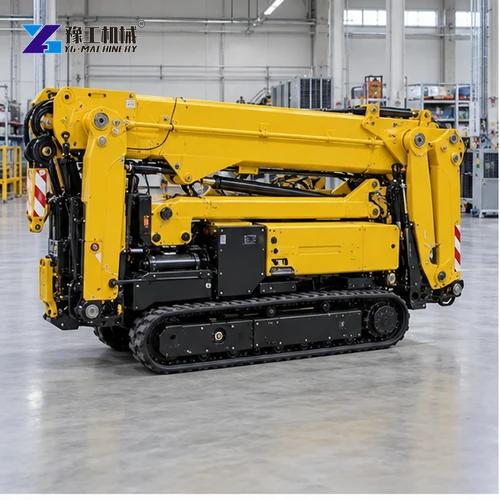
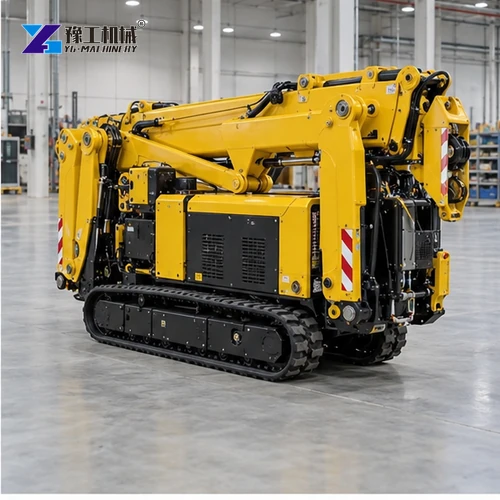
Share a route sketch and destination to review transport and access.
CHECK ACCESS AND DELIVERYWhat Should an Itemized Spider Crane Price Include?
Request a quotation that names the YG model and includes its matching load chart, boom and outrigger configuration, winch/rope arrangement, controls and any lifting accessories required for the job. State the load weight and dimensions, center of gravity, radius, hook height and whether the lift has intermediate positions. That lets the supplier identify what is standard and what must be added.
For an indoor installation, also list mats or floor protection, packing, freight basis, unloading, assembly and startup support. Share a route sketch and photographs of the setup floor and overhead obstructions. The indoor spider-crane planning guide and YG mini spider crane range provide related context, while the project lift plan determines the final configuration.

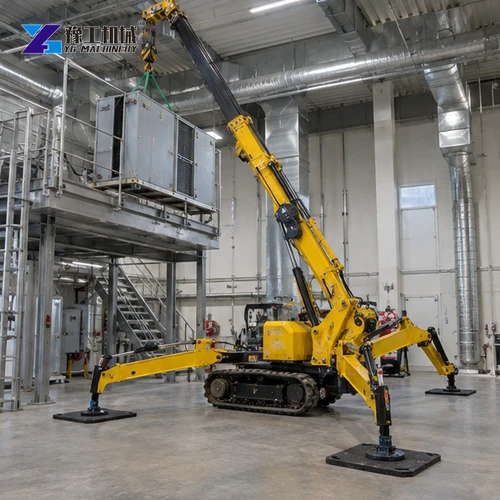
Send the lift plan, route and destination for a comparable crane offer.
REQUEST A SPIDER CRANE QUOTESpider Crane Cost FAQs
Working radius, load-chart capacity at the planned boom position, transport dimensions, setup requirements, power package, accessories, packing and freight all affect the quoted scope.
The load chart sets allowable capacity for each reach and setup. As reach changes, available capacity can change too, so check the pickup and landing positions against the chart.
Not automatically. Ask the supplier to itemize the crane, accessories, packing, freight, unloading, mats and any assembly or startup support.
Measure the narrowest doorway and route turns, thresholds, overhead clearance, freight-lift limits and the setup footprint at the final lifting position.
Provide load weight and dimensions, center of gravity, pickup and landing points, required radius and hook height, route measurements, floor details and destination.
The fairest spider crane price comparison uses the same load chart requirement, access route, setup conditions and delivered package for every quotation.