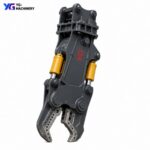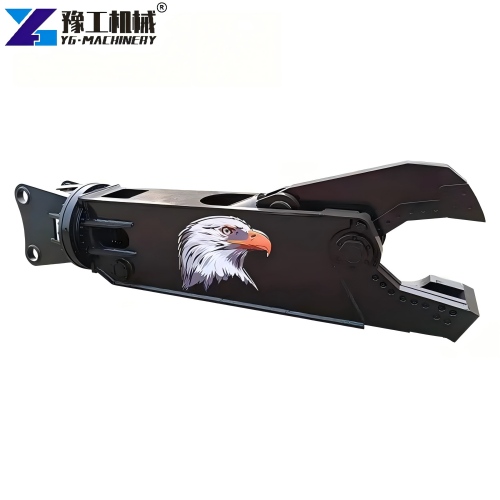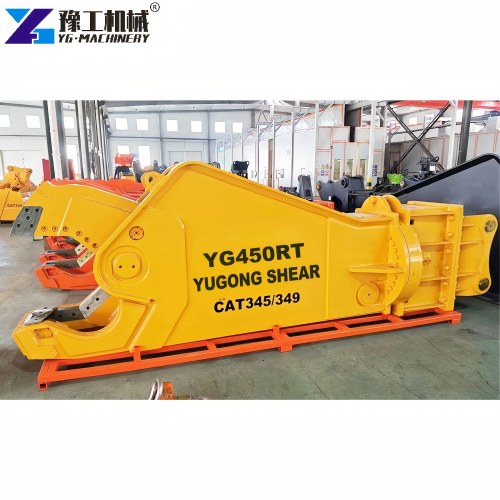
A hydraulic demolition shear works best when its jaw can accept the material, its cutting geometry suits the section, and the excavator can supply the required hydraulic power. Choosing by excavator tonnage alone can leave you with a jaw that does not reach around the stock—or a carrier circuit that cannot run the attachment as intended.
Start with the material stream: identify the most common and largest sections, whether they arrive loose or attached to a structure, how the excavator will feed them, and where the cut pieces will go. Those facts connect the shear choice to the actual recycling or demolition workflow.
How Does a Hydraulic Demolition Shear Cut Structural Steel?
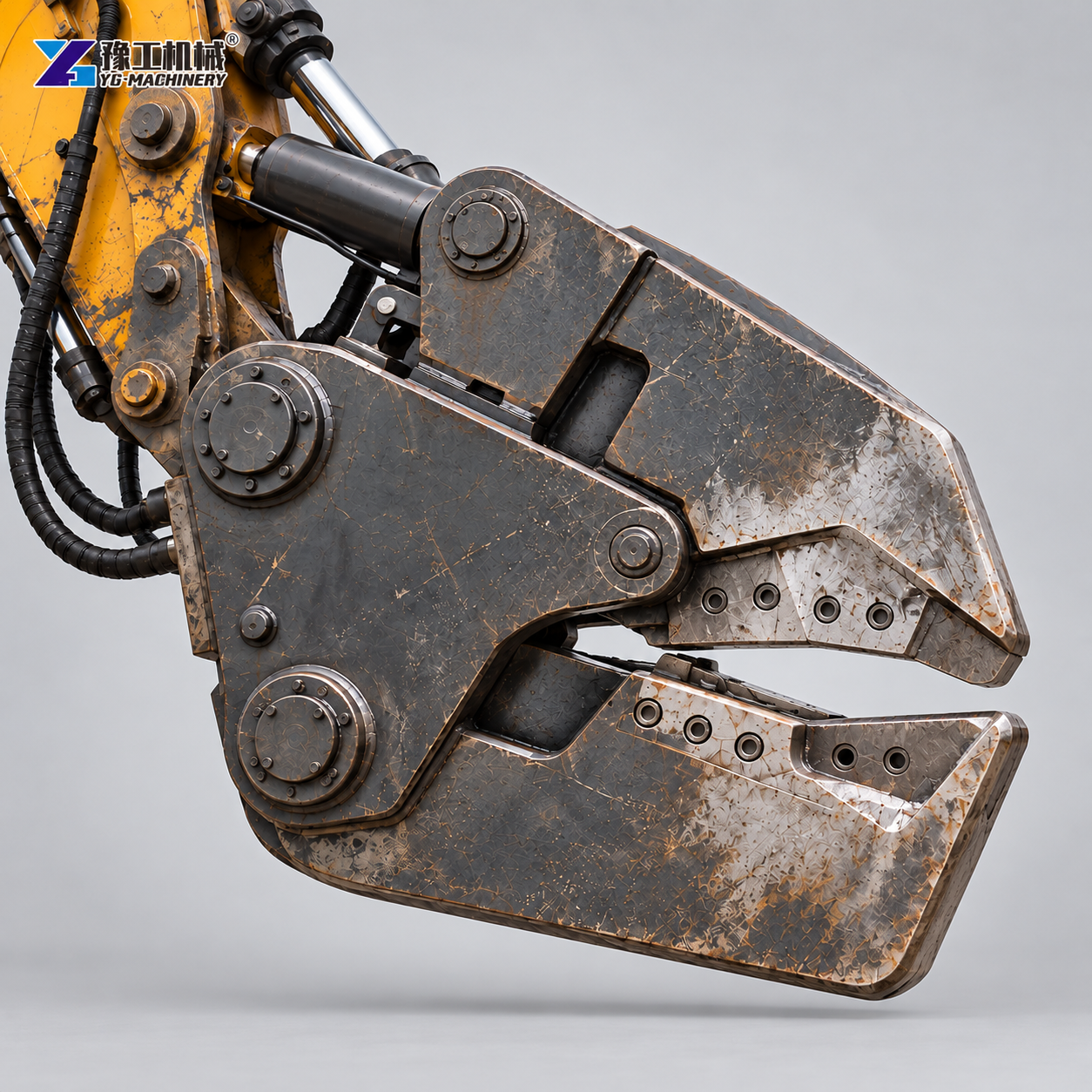
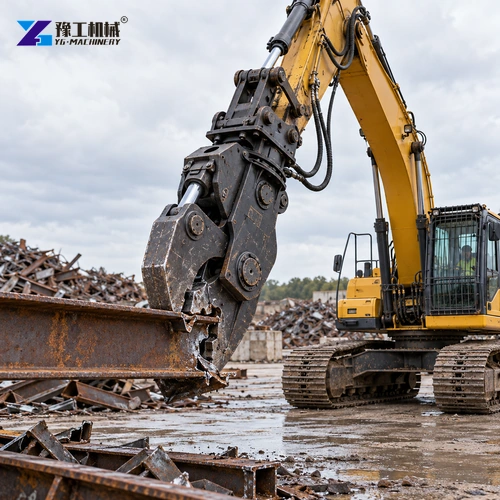
First the excavator brings the material into the jaw throat and holds it in a stable position. Hydraulic pressure moves the cutting jaw against the opposing edge; the material is sheared where the two edges meet. The section must enter the opening in a workable orientation, so a long beam, flat plate and bundled rebar each require a different feed position and may not be suited to the same jaw size.
Before the cut, identify where the separated piece will move and whether it is supported. If the stock is still attached to a structure, plan the order of cuts so the remaining frame does not shift onto the jaw or carrier. A rotating head, when included in the selected configuration, can help turn the jaw toward the material, but it does not increase the opening or replace a stable cut plan. Describe the largest and most common sections when shortlisting a shear.


Send the material section and feed method to check the jaw arrangement.
CHECK THE SHEAR JAWWhich Hydraulic Demolition Shear Specifications Matter for Steel Cutting?
Start with the model code and excavator-weight range, then compare the opening and effective shear depth with the section you need to process. The opening is the physical jaw gap, not a universal limit for steel thickness; the depth describes how far the material can sit within the jaw. The three force positions in the table also differ, so a tip rating should not be treated as the force available across the entire throat.
After the geometry fits, check attachment mass, working pressure and the carrier’s hydraulic data. Keep every value within one model column: do not pair one model’s larger opening with another model’s weight or force. The YG demolition shear range is useful for comparing the named models; the actual steel shape, grade and feed method still determine whether a proposed setup is appropriate.
The table retains the five published shear model codes and their corresponding specifications. Use a single model column for the whole comparison; the opening, cutting forces and carrier class describe different limits and should not be combined across models.
| Parameter | YG-620 | YG-1413 | YG-2200 | YG-2977 | YG-4052 |
|---|---|---|---|---|---|
| Weight kg | 620 | 1413 | 2200 | 2977 | 4052 |
| Max. Open Size mm | 334.4 | 540 | 500 | 660 | 801 |
| Width mm | 864 | 1175 | 1370 | 1600 | 1700 |
| Height mm | 1521 | 2050 | 2380 | 2600 | 2700 |
| Effective Shear Depth mm | 286 | 348 | 486 | 578 | 736 |
| Working Pressure Bar | 235 | 300 | 320 | 320 | 320 |
| Bottom Shear Force T | 81.2 | 138.2 | 171.2 | 330.2 | 387.2 |
| Medium Shear Force T | 50.2 | 80.2 | 100.2 | 189.2 | 218.2 |
| Tip Shear Force T | 32.2 | 53.2 | 75.2 | 127.2 | 147.2 |
| Applied Excavator Weight T | 5-9 | 10-19 | 20-25 | 28-35 | 38-50 |

Share material photos and the target cut size for a jaw recommendation.
MATCH THE MATERIAL AND JAWHow to Match an Excavator Demolition Shear to Hydraulics and Mounting?
Record the excavator make, model and operating weight, then obtain its auxiliary flow, pressure and return-line limits. Compare those readings with the proposed shear and confirm the hose connections and any rotation circuit. Next measure the mounting-pin diameter, pin spacing and bracket width; a shear that physically pins on can still be a poor match if the hydraulic supply or return arrangement is wrong.
Finally check the carrier at the reach where it will hold the incoming steel, not only with the boom folded close to the machine. Attachment mass, boom position and the weight of the stock all affect the working setup. Send a photo of the mounting point, hydraulic specifications and several representative material sections with the quotation request so the supplier can assess one real pairing. If the job involves a different jaw layout, compare the related excavator metal shear options as well.

Provide carrier and mounting details for a hydraulic fit check.
CHECK EXCAVATOR COMPATIBILITYHow Should a Hydraulic Shear Work Area Handle Cut Material?
Before cutting, define a feed side and a drop zone. Stabilize the member, remove loose pieces that can roll into the jaw and keep workers outside the jaw, suspended-load and excavator-swing areas. If a piece can fall or rotate after the cut, support it or change the cut order so the operator is not relying on the shear to hold an uncontrolled load.
After each cut, place the offcut in a designated pile and keep unprocessed stock separate; this avoids blocked access and repeated handling. Inspect the edges, pins, hoses and connections at the intervals in the operating instructions. If material binds or the attachment needs clearing, stop and isolate it before anyone approaches the jaw. This sequence makes the work area easier to manage and the next feed more predictable.


Send the material, excavator and work-area details for a job-specific offer.
REQUEST A SHEAR QUOTEHydraulic Demolition Shear FAQs
Excavator demolition shears are used for steel sections such as beams, plate, rebar and scrap, but suitability depends on the material dimensions, jaw geometry and selected configuration.
Use carrier class as a first filter, then verify hydraulic flow, pressure, return limits, attachment mass, pins and bracket dimensions for the exact excavator.
No. Rotation is configuration-dependent. Confirm whether the rotator is included and whether the carrier has the required hydraulic circuit and controls.
No. Opening describes the jaw gap, not a universal cut limit. Material shape, grade, blade position, cutting force and excavator hydraulics also affect suitability.
Send excavator hydraulic data and mounting dimensions, photos and sizes of the steel sections, expected feed method, work-area limits and delivery location.
A good demolition shear match connects the incoming steel, jaw geometry, excavator circuit and offcut-handling plan; no single capacity number can replace that fit check.