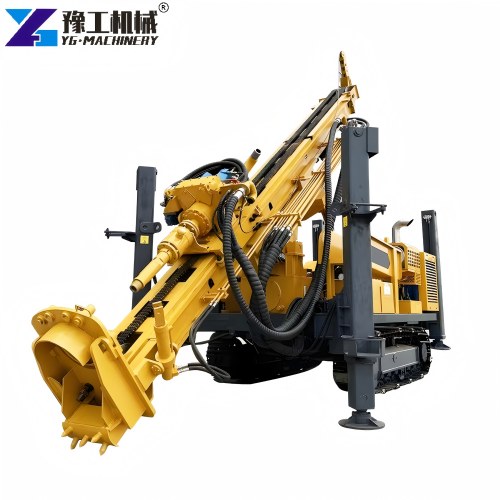
A small directional boring machine is a good fit only when the complete bore package can reach the entry point, form the planned bore and pull the specified pipe within the site limits. The word “small” alone does not tell you whether a rig can complete your crossing.
Before comparing machines, map the crossing length and profile, pipe material and outside diameter, ground, entry and exit footprints, access route, and mud or spoil handling. Those details determine the useful thrust, rod and tooling package—not appearance or engine rating by itself.
How to Choose a Small Directional Boring Machine for a Utility Crossing?
Draw the crossing route before comparing rigs. Mark the entry and exit points, planned depth, alignment and length, then add known utilities, road or rail limits and the available work area at both ends. Record the pipe material and outside diameter; these determine the final bore and reaming sequence, while ground and route geometry affect how the rig can form it.
Next, check that the exit area can receive and handle the pipe string and that the entry area can accommodate the machine, rods and support equipment. Measure the turning path and overhead clearance all the way from unloading to the rig position. Put these measurements on one route sketch. If utility locations, ground conditions or the exit footprint are still uncertain, resolve them before choosing a machine; a compact footprint cannot compensate for an unworkable bore path.
Send the route sketch, pipe details and ground notes for rig matching.
CHECK THE CROSSING PLANWhich Directional Drilling Rig Specifications Matter for Utility Work?
Read thrust and pullback together with torque, rod diameter and the planned tooling. Thrust advances the pilot assembly; pullback has to recover the reamer and pipe through the completed bore; torque turns the drill string. A larger value in one row does not settle the choice if the rods or reamer needed for the crossing do not match that same model.
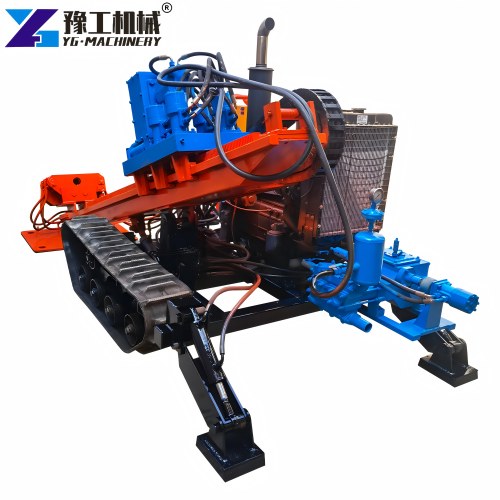
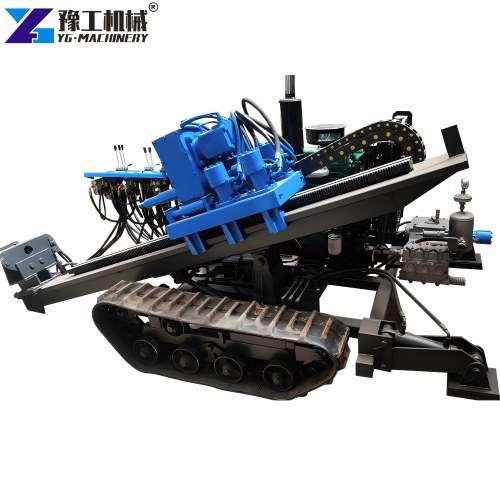
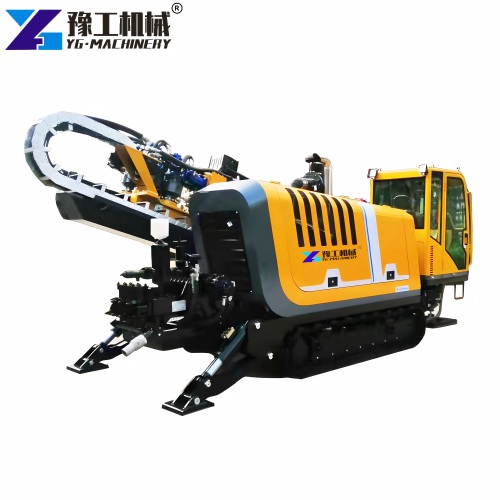
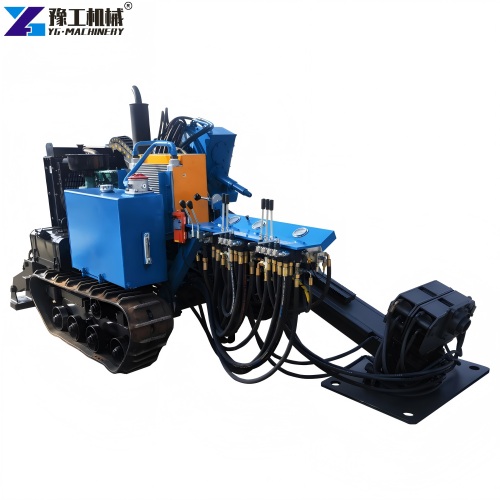
Compare one named model column at a time. Check its rated power, push/pull arrangement, feed force, torque, speed, rod dimensions, reaming diameter and mud limits against the bore design, then identify which tooling and guidance equipment are supplied. Do not infer that maximum reaming diameter is the planned pipe diameter: the bore is enlarged in stages for the ground and pipe. The horizontal directional drilling machine range shows the named model family; the YG drilling equipment range helps compare related rig types.
Use the exact model column when comparing thrust, torque, rods and mud delivery. These are separate machine configurations; keep every value within its listed model rather than combining the strongest figures into a hypothetical rig.
| Parameter | YG-160A | YG-180 | YG-280 | YG-320 | YG-320A |
|---|---|---|---|---|---|
| Engine rated power | 100KW | 97KW | 160KW | 140KW/160KW | 160KW |
| Push and pull | Cylinder | Motor | Motor | Cylinder | Motor |
| Maximum drag/feed force | 160/100KN | 180/180KN | 280/280KN | 320/320KN | 320/320KN |
| Maximum powerhead torque | 5000N.n | 6000N.n | 10000N.n | 12000N.n | 12000N.n |
| Powerhead speed | 0-180r/min | 0-140r/min | 0-120r/min | 0-140r/min | 0-140r/min |
| Powerhead moving speed | 30m/min | 20m/min | 20m/min | 20m/min | 20m/min |
| Maximum reaming hole diameter | Φ600mm | Φ600mm | Φ750mm | Φ800mm | Φ800mm |
| Single drill rod length | 3m | 3m | 3m | 3m | 3m |
| Drill pipe diameter | Φ60mm | Φ60mm | Φ73mm | Φ73mm | Φ73mm |
| Maximum mud flow | 160L/min | 250L/min | 320L/min | 320L/min | 320L/min |
| Maximum mud pressure | 100bar | 80bar | 80bar | 80bar | 80bar |
| Overall quality | 6700kg | 8500kg | 12500kg | 11500kg | 11200kg |
| Dimensions (length*width*height) | 5700*1820*2400 mm | 6400*2270*2340 mm | 7100*2260*2450 mm | 7100*2250*2450 mm | 7662*2162*2450 mm |
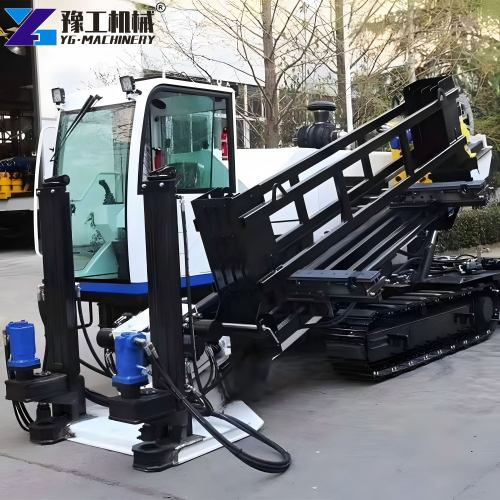
Share pipe size and steering requirements to review the rig system.
REVIEW THE HDD PACKAGEHow Do Mud, Drill Rods and Site Access Affect a Small HDD Rig?
Plan fluid handling as part of the bore, not as an accessory to decide after the rig arrives. The mud system circulates fluid through the drill string and bore to help carry cuttings back to the entry area. Before ordering, identify the pump, mixing tank, hoses, connections and any recovery equipment in the offer, then compare the specified flow and pressure with the selected model and tooling.
For rods, calculate the staging space from the single-rod length and the number needed for the crossing; leave a clear path for adding and removing each rod. At the entry, confirm the machine can align with the designed bore angle and be anchored as required. At the exit, keep room for reaming and pipe handling. A site sketch with access widths, rod storage and fluid-equipment positions exposes conflicts before mobilization.
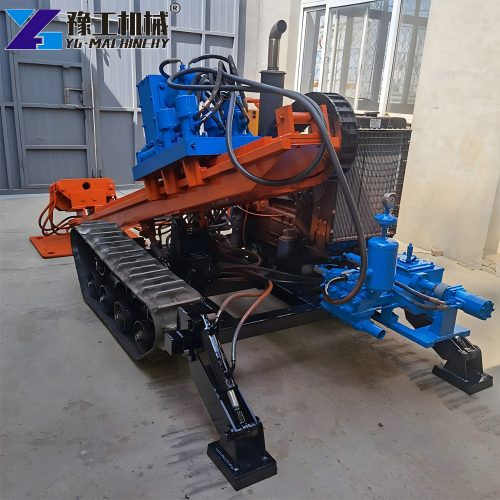
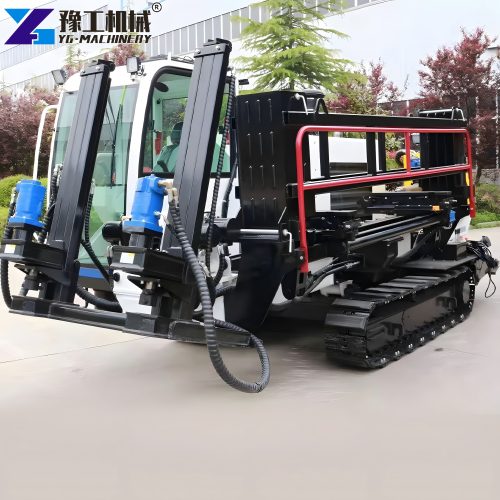
Send access photos and the support-equipment list for a setup review.
CHECK SITE ACCESS AND SUPPORTWhat Should a Small Directional Boring Machine Package Include?
Ask for an itemized list that names the rig model, rod quantity and diameter, pilot bits, reamers, guidance or locating equipment, mud pump and mixing equipment, hoses, connection tools and wear parts. For every item, mark whether it is included, optional or supplied by your crew. This prevents a bare machine from being compared with a complete crossing package.
Then compare the same delivery scope across quotations: packing dimensions and weight, freight basis, unloading responsibility, commissioning or operator instruction, spare parts and destination. Attach the route sketch, pipe specification, ground notes and access photos to the request. A supplier can then address the missing parts of the package against your crossing rather than returning a price for an undefined machine.
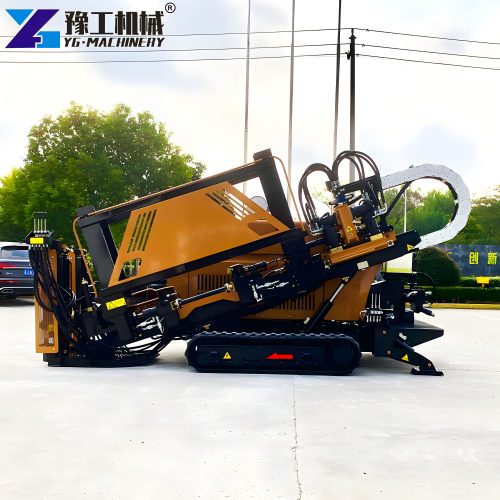
Send the bore plan, pipe, ground and destination for an itemized HDD offer.
REQUEST AN HDD QUOTESmall Directional Boring Machine FAQs
The label varies by supplier. Compare transport dimensions, working force, rod system, mud package and the bore requirements; a compact footprint alone does not prove that the machine can complete a crossing.
Pipe outside diameter and material, crossing length, bore profile, ground and exit space determine the reaming and pullback requirements. Share these details before choosing the rig.
Not necessarily. Ask for a line-item list of the pump, mixing or recovery equipment, hoses, rods, reamers and guidance tools included with the machine.
No. Thrust must be considered with pullback, rotation, rods, tooling, mud delivery, ground and route design. The complete package needs to match the planned bore.
Send a route sketch, pipe material and diameter, crossing length and profile, ground information, entry and exit dimensions, access photos and delivery destination.
The best small directional boring machine is the one whose rig, rods, tooling, fluid system and transport plan can complete your specified crossing as one workable package.