
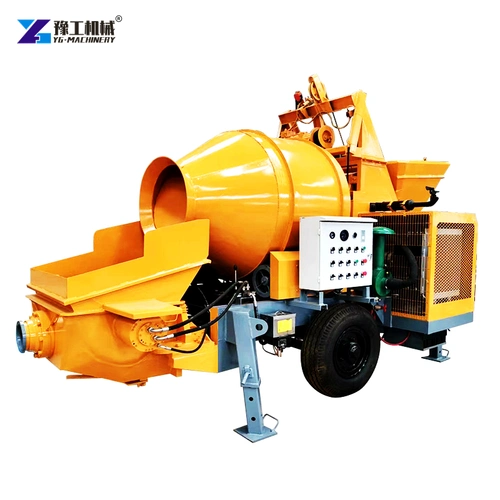
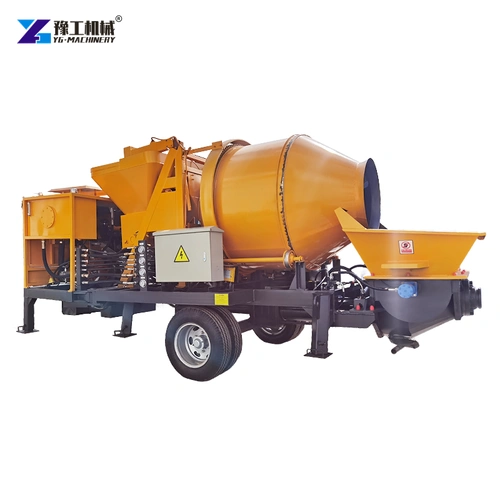
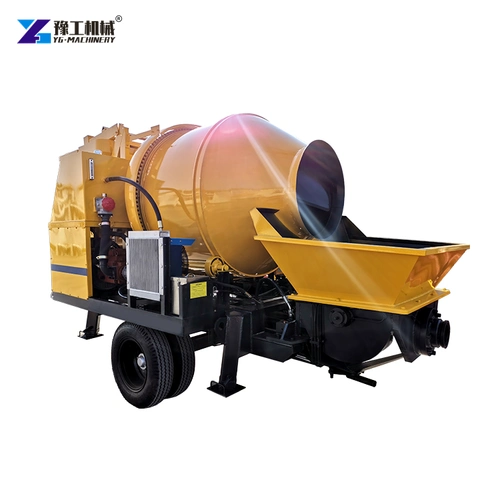
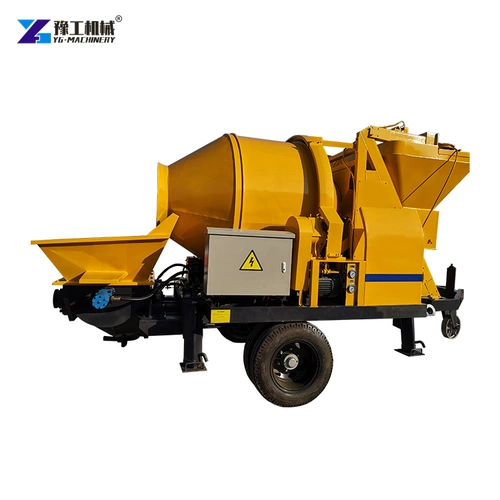
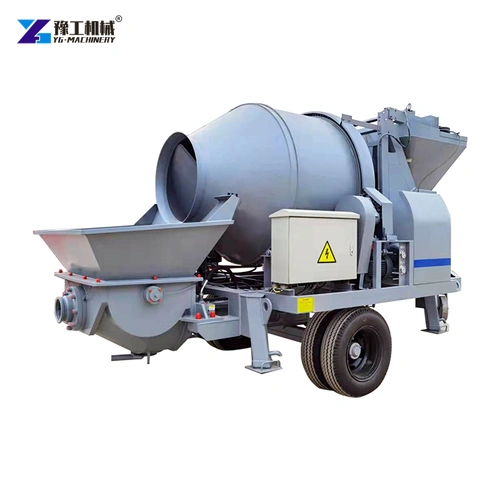
A concrete pump with mixer machine combines two linked jobs: preparing a batch and moving fresh concrete to the placing point. That can simplify a project where the site benefits from a compact integrated setup, but only if material supply, mixing rhythm and hose delivery stay coordinated. If mixing routinely runs ahead of the crew, or the pump route cannot carry the chosen mix, the combined machine will not remove the bottleneck.
The useful buying question is whether the complete mixing-and-placement sequence fits your pour. This article explains how to compare the integrated machine with pump-only equipment, what the published output figures do and do not mean, and which site details to send before requesting a quotation. See the YG concrete mixer pump range and the small-site concrete pump guide for the related equipment context.
How a concrete pump with mixer machine moves a batch from mixing to placement
The integrated workflow begins with aggregate, cement, water and any specified admixture prepared in the proportions set for the concrete. Mixing must bring the batch to a consistent condition before it enters the pump hopper. The pump then pushes material into the delivery line, and the placing crew controls where it is discharged. Mixing, transfer and placement are therefore one operating chain, not three independent machine ratings.
The crew has to keep the hopper supplied without introducing poorly mixed or oversized material. At the same time, the discharge point must be ready to receive concrete. If formwork is not ready, the line is obstructed, or the crew cannot place at the delivery pace, production pauses and the operator must follow the machine procedure for managing the interruption. A pump-mixer can reduce separate equipment moves, but it cannot fix a weak batching plan or a delayed placing crew.
Before selecting an integrated unit, estimate the pour sequence by area or section. Map each handoff in order:
- Choose a staging point for aggregate, cement and water that does not cross the delivery line.
- Set how each batch will reach the machine and who will keep material supply continuous.
- Assign who checks the mix and confirms that the placing crew is ready to receive it.
- Trace the delivery line from the pump to the work face, including moves between sections.
This sequence reveals whether the combined layout removes handling or instead creates a bottleneck; separate mixing and pumping may give the crew more flexibility when the handoffs cannot stay coordinated.
Decide when the integrated mixer-pump is better than a pump-only machine
An integrated machine is worth considering when the site needs mixing and pumping in one mobile package and the crew can feed it steadily. Small foundations, repair zones or restricted work areas may benefit when a separate mixer and pump would create extra handling or take up limited space. The decision still depends on the required concrete recipe, placement quantity, access and the rhythm of the job.
A pump-only machine may be the better choice when concrete arrives ready-mixed in a continuous supply, when a separate batching plant controls the mix, or when the pump must be dedicated to a larger flow. In those cases, the mixer function may add cost or handling without solving a real constraint. Compare the crew size, supply intervals, staging room, cleaning burden and planned volume rather than choosing solely because two functions are combined.
If the job is better served by a separate diesel-driven pump, compare the diesel concrete pump options as a distinct equipment choice; the supply method and package scope differ from an integrated mixer-pump.
Also check the intended concrete and aggregate size against the equipment’s stated limits. Fresh concrete is a mixture of cement paste, water and aggregate; a pump line that is too narrow or a mix with unsuitable gradation may block or segregate. Obtain the mix design and aggregate size from the responsible project source, then ask the supplier to confirm the machine’s compatible range. Never infer suitability from the word “concrete pump” alone.
Share the planned concrete mix, pour size and crew sequence to compare an integrated mixer-pump with a pump-only setup.
COMPARE THE MIXER-PUMP WORKFLOW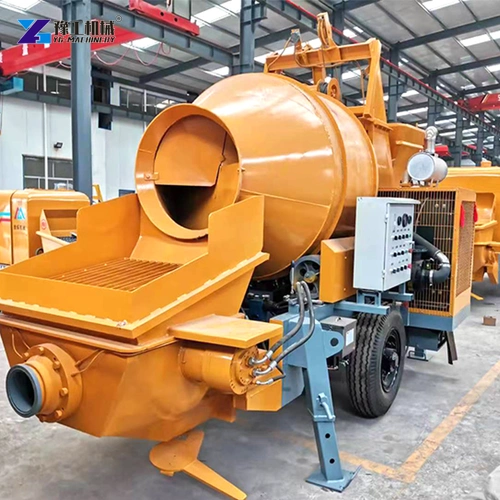
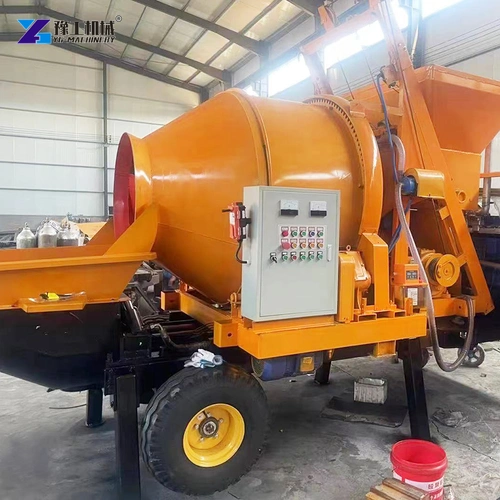
Concrete mixer pump parameters and operating limits
The figures below describe theoretical capacity, selected component options or maximum conveying conditions. They are not all simultaneous promises for one operating job. Values joined by “or” are alternatives, so the quotation should identify the supplied configuration rather than combine options into a made-up machine rating.
| Parameter | Value |
| Product model / output option | YG concrete mixer pump; theoretical output 30 or 40 m³/h |
| Maximum theoretical concrete mixing capacity | 15 m³/h |
| Theoretical concrete output | 30 or 40 m³/h |
| Maximum theoretical conveying distance | Vertical 50 m; horizontal 200 m |
| Distribution valve form | S valve |
| Hopper volume × height | 600 L × 1080 mm |
| Pumping motor power | 30 or 45 kW |
| Winch motor power | 5.5 kW |
| Hydraulic oil circuit | Open circuit |
| Rated speed | 1480 r/min |
| Fuel tank capacity | 170 L |
| Operating mass | 3500 kg |
| Delivery pressure | 6 MPa |
| Concrete cylinder specification × stroke | φ180 × 800 or φ200 × 800 mm |
| Spout diameter | φ180 mm |
| Mixing motor power | 8 or 4 kW |
| Pump motor power | 550 W |
| Voltage | 380 V |
| Overall dimensions | 4200 × 2100 × 3300 mm |
“Theoretical” matters: actual placement depends on the mix, line diameter and routing, elevation, bends, interruptions and the rate the crew can place. Ask the supplier to identify the selected pumping and mixing motors, cylinder, output option and included power unit in the offer. Also confirm the allowable aggregate size for that exact configuration: a particle that is too large for the concrete cylinder or valve passage can interrupt delivery even when the nominal output looks suitable.
Send the pour quantity, mix information and target delivery route so the stated capacity can be reviewed against the job.
CHECK THE PUMPING ROUTEPlan aggregate supply and mixing rhythm around the placement point
List the materials and supply method before the machine arrives. Estimate how aggregate, cement and water will reach the mixing area, where they can be stored dry and clean, and how the operator will load each batch without crossing the pump line. If material arrives in bags or small deliveries, include the handling time; a nominal mixing rate cannot be sustained when the next batch is waiting for a forklift or manual feed.
The placing end needs an equally clear sequence. Confirm the formwork, reinforcement and access are ready, define how the hose will move as the pour advances, and assign a person to direct placement. Break the pour into manageable sections with a plan for pauses and transitions. This helps the crew maintain a steady feed without leaving a line full of concrete while the discharge point is unavailable.
Check site access, ground bearing and machine position as well. The listed overall dimensions and mass help with transport and placement planning, but the route from unloading to the pour may include a gate, ramp, soft ground or overhead restriction. Measure the narrowest access and turning area, then confirm the unloading method and any required lifting or towing arrangement before ordering.
Route the delivery line to protect flow and keep placement controllable
Draw the line from the pump outlet to the farthest discharge location. Mark every bend, vertical rise, crossing and hose section that must be moved during the pour. A shorter, more direct route is usually easier to manage than a route with many tight changes, but the actual layout must respect site obstructions and the project’s placement sequence. Confirm pipe or hose sizes and connections with the machine supplier; do not substitute a convenient component without checking pressure and fit.
Support and secure the line using the specified arrangement, and keep it out of vehicle paths where possible. Plan where the crew can safely hold or reposition the end hose without pulling on couplings. Before pumping, inspect connections and follow the startup procedure for the selected machine. If flow changes or the line becomes obstructed, follow the operating instructions and isolate pressure before any intervention; never disconnect a pressurized line to clear it.
During the trial placement, observe whether the mix reaches the end consistently and whether the crew can place it before the batch or line condition changes. Record the mix, approximate route and interruptions. That field observation is a better basis for planning the full pour than multiplying a theoretical output by the shift hours.
Send the line sketch, vertical rise and bend count for a practical delivery-layout review.
CHECK THE DELIVERY-LINE LAYOUTMake cleaning and shutdown part of the concrete pump purchase decision
The working sequence ends only when the hopper and delivery path are cleaned according to the machine instructions. Concrete residue hardens; a delayed or incomplete cleanout can complicate the next start and consume crew time. Before purchase, ask which cleaning tools and connections are supplied, what the normal shutdown sequence requires and where the washout can be handled at your site.
Assign a trained operator to control the equipment and a separate crew member to manage material and placement where the job size requires it. Keep personnel clear of moving parts and pressurized connections, and follow the machine’s isolation steps before inspection or cleaning. Confirm which wear items and routine service parts are included, and how the supplier identifies replacements for the selected configuration.
The quotation should state the machine configuration, transport dimensions, weight, included accessories, initial spares, operating documents, delivery basis and any agreed setup support. Ask the supplier to list exclusions rather than assume that a single package label covers every hose, tool or site service.
List the accessories, cleaning items and delivery destination you need so the quotation reflects the full operating package.
REQUEST AN ITEMIZED MIXER-PUMP QUOTE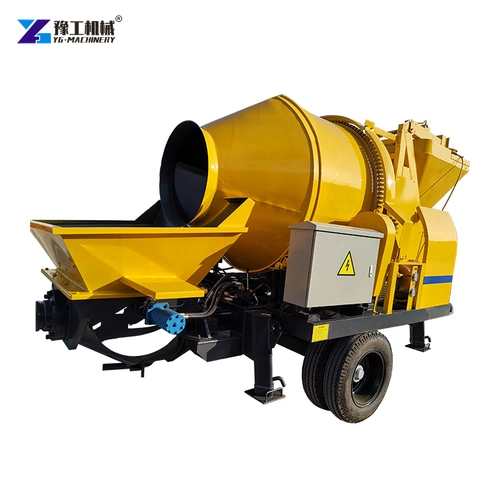
Concrete pump with mixer machine FAQs
A combined mixer-pump prepares concrete and transfers it through a delivery line in one equipment package. A pump-only machine receives concrete mixed or supplied separately. The better fit depends on material supply, crew sequence, space and pour size.
No. It is a theoretical equipment figure. Mix condition, line layout, elevation, replenishment, work interruptions and the crew’s placement speed affect actual output. Ask which option is being quoted and under what conditions.
No. Aggregate size and mix gradation must fit the specified machine and line. Provide the concrete mix and largest aggregate size to the supplier before selecting or operating the equipment.
Draw the route and include horizontal distance, vertical rise, bends, hose moves and access limits. Compare the complete path with the selected configuration; maximum theoretical distances alone do not confirm a workable route.
Provide the pour quantity and sequence, mix information, aggregate size, material-supply method, target delivery points, line sketch, site access, available ground space and delivery location.
Concrete residue hardens in the hopper and delivery path. Follow the machine’s shutdown and cleaning procedure promptly, isolate the equipment as instructed and use the specified washout arrangement.
Match the integrated machine to the full concrete placement cycle
The mixer-pump decision is strongest when each batch can be prepared, transferred and placed without a hidden wait between stages. Send the concrete details, route sketch, site access and planned crew sequence so the offered configuration can be compared with the actual pour. Use the form below for the project information.


