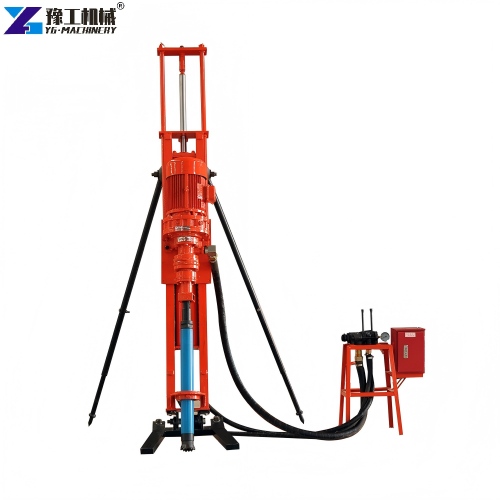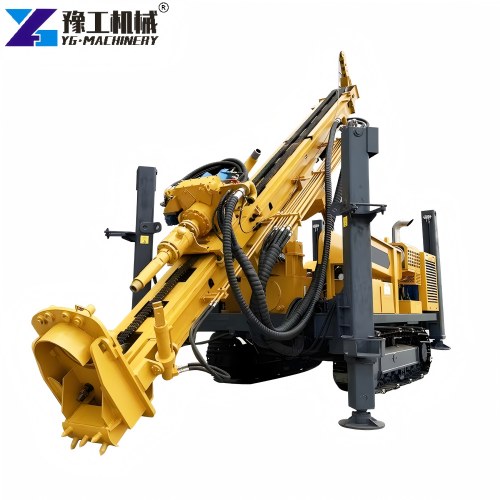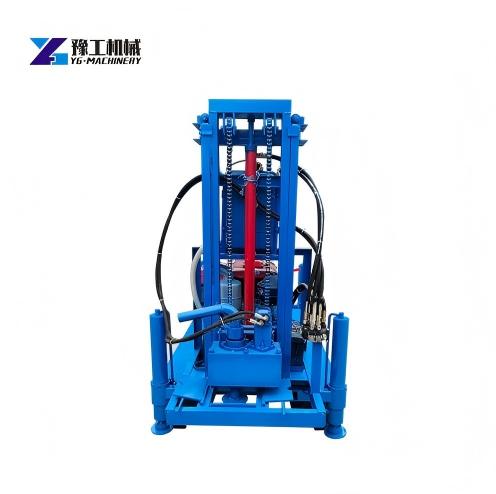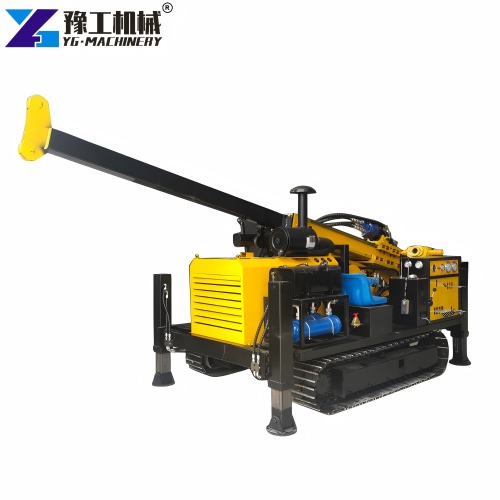
When a well site sits beyond a prepared road, the rig must do more than reach the target depth on paper. It must be transported to the property, unloaded safely, positioned at each borehole and supplied with the right drilling tools and air or mud system. A crawler water well drilling rig is a practical choice for contractors working across uneven farmland, remote villages and rough access routes. The buying decision starts with the ground and borehole plan, then narrows to the machine model and its supporting equipment.
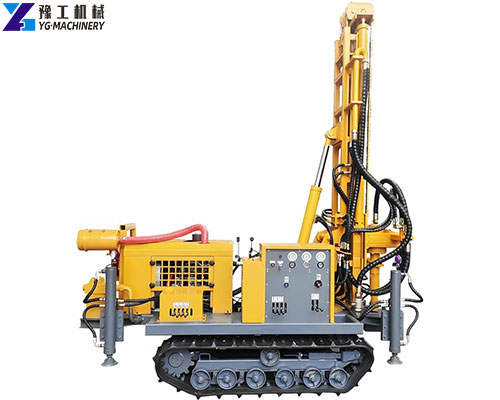
Start with the well, not the largest rig
Record the required final depth, finished bore diameter and casing diameter for the wells you expect to drill. Then identify the ground layers: loose soil, gravel, weathered rock or competent rock. These details determine the drilling method and tooling. A 300 m rated machine does not automatically suit every 300 m well; hole diameter, formation, drill string and available air or circulation capacity also matter.
For a rural water contractor, access is a separate buying condition. Measure the narrowest gate and road section, note bridges and slopes, and identify where a transport vehicle can unload. The crawler undercarriage helps the rig move between positions on a suitable site, but it does not remove the need to plan road transport, ground bearing and a stable working pad. Send photographs of the access route and drilling position with the well specification so the machine and delivery package can be assessed together.

Compare crawler water well drilling rig models
The YG crawler range covers several depth classes. Choose a model whose drilling depth and hole-diameter range fit the project, then check the corresponding power, weight and transport dimensions. Do not combine the deepest rating of one model with the smallest footprint of another.
| Parameter | YG-180 | YG-200 | YG-300 | YG-300A | YG-400 | YG-600 |
|---|---|---|---|---|---|---|
| Drilling depth | 180 m | 200 m | 300 m | 300 m | 400 m | 600 m |
| Drilling hole diameter | 140–254 mm | 140–305 mm | 140–325 mm | 140–325 mm | 140–350 mm | 140–350 mm |
| One-time advance length | 3.4 m | 3.4 m | 6.6 m | 3.4 m | 6.6 m | 6.6 m |
| Listed power | 55 kW | 65–70 kW | 84 kW | 75.8 kW | 92 kW | 115 kW |
| Operating air pressure | 1.7–2.5 MPa | 1.7–3.0 MPa | 1.7–3.3 MPa | 1.7–3.0 MPa | 1.7–3.5 MPa | 1.7–3.5 MPa |
| Air consumption | 17–31 m³/min | 17–30 m³/min | 17–35 m³/min | 17–35 m³/min | 17–35 m³/min | 17–35 m³/min |
| Drill pipe lengths | 1.5, 2.0, 3.0 m | 1.5, 2.0, 3.0 m | 1.5, 2.0, 3.0, 6.0 m | 1.5, 2.0, 3.0 m | 1.5, 2.0, 3.0, 6.0 m | 1.5, 2.0, 3.0, 6.0 m |
| Drill pipe diameter | 76, 89 mm | 76, 89 mm | 89, 102 mm | 76, 89, 102 mm | 89, 102, 108 mm | 102, 108, 114 mm |
| Rig lifting force | 15 t | 12 t | 20 t | 16 t | 22 t | 28 t |
| Rotation speed | 45–65 rpm | 45–70 rpm | 45–115 rpm | 40–70 rpm | 45–115 rpm | 45–115 rpm |
| Rotation torque | 3,200–4,600 N·m | 3,500–4,800 N·m | 6,200–8,500 N·m | 5,700–7,500 N·m | 6,500–9,000 N·m | 8,500–11,000 N·m |
| Travel speed | 2.5 km/h | 2.5 km/h | 2.5 km/h | 2.5 km/h | 2.5 km/h | 2.5 km/h |
| Maximum climbing angle | 30° | 30° | 30° | 30° | 30° | 30° |
| Weight | 4,500 kg | 5,800 kg | 9,000 kg | 7,000 kg | 10,000 kg | 12,000 kg |
| Transport dimensions (L×W×H) | 3800×1500×2200 mm | 4000×1750×2450 mm | 5900×2000×2850 mm | 4100×1950×2600 mm | 5900×2100×2850 mm | 6000×2200×2850 mm |
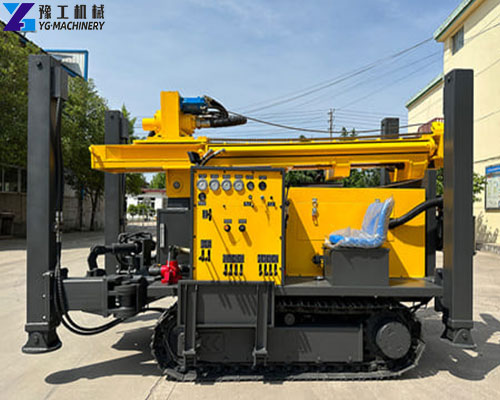

Match the drilling method and air supply
The material under the site decides whether air-driven DTH drilling or a circulation-based approach is appropriate. In hard rock, the hammer, bit diameter, drill rods and compressor must work as a system. Compare the selected rig’s air-pressure range with the proposed compressor and tooling; pressure alone does not establish adequate air delivery. Check the complete operating point and allow for the site altitude and hose route.
Loose formations create a different problem. Bore stability, cuttings removal and the casing plan need to be considered before choosing a circulation arrangement. A water supply, mud pump and settling area may be required by the project method. They should appear as separate items in the equipment scope instead of being assumed to arrive with the base rig. Where the well crosses both loose overburden and hard rock, define the transition between methods before the equipment is ordered.
Share a simple geological log if one is available. If it is not, provide records from nearby wells and describe the expected layers and water level. This lets the quotation address the actual well rather than a generic drilling depth.

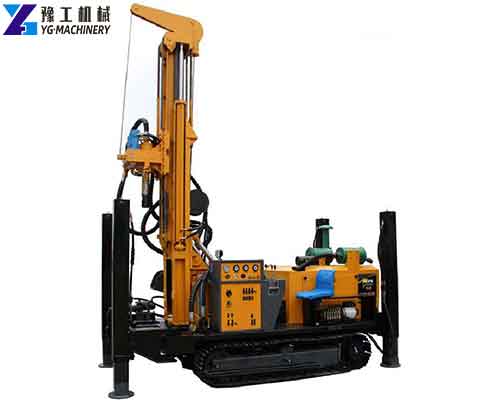
Check access, support equipment and crew workflow
A crawler rig still needs an unloading point, a working pad and room to handle drill rods and casing. Walk the intended route with the transport width, machine weight and turning space in mind. Sloping or soft ground may need preparation before the rig is positioned. Never treat a stated climbing angle as proof that the complete drilling setup is stable on a particular slope; working position and ground support must be assessed on site.
The supporting package affects both cost and daily workflow. List the compressor or mud system, drill rods, hammers and bits, casing tools, hoses, fuel and service parts. Identify which items are already owned and which YG should supply. A contractor moving between several remote wells should also check how rods and consumables will travel with the rig and how the crew will service the machine away from the workshop.
For comparison with smaller access-limited units, see the small water well drilling rig. For a separate rock-drilling application that is not automatically a water-well package, see the crawler DTH drilling machine.
CHECK THE COMPLETE DRILL PACKAGE
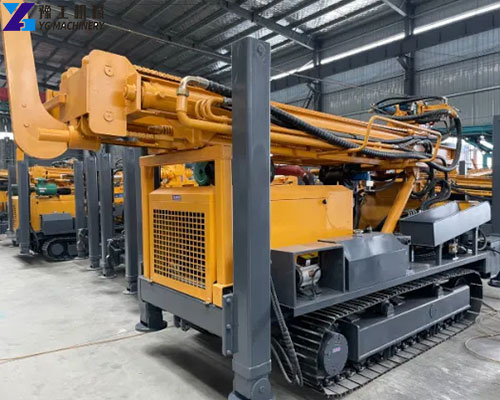

Request a quotation for the complete well-drilling package
Send the expected well depth and finished diameter, ground conditions, casing plan, project location, access photographs and the number of wells. State whether you need the rig alone or a package including air supply or circulation equipment, tooling and spare parts. YG can then identify a crawler water well drilling rig model and itemize what is included in the offer. This makes two quotations comparable and reduces the risk of discovering a missing compressor, rod size or transport requirement after purchase.
Common buying questions
Is a crawler water well drilling rig the same as a crawler DTH rig? No. Both may use a crawler chassis and DTH tools, but the water-well package must be specified against bore depth, finished diameter, casing and the site’s formation sequence. A rock-blast-hole rig should not be substituted on the basis of the undercarriage alone.
Does the depth rating guarantee a well of that depth? No. The achievable bore depends on diameter, geology, tooling, hole cleaning and the selected machine configuration. Use the rating as a model-selection boundary, then review the project conditions.
What should be sent for a useful quote? Provide well depth, bore and casing sizes, geology, site access, destination and a list of existing support equipment. These inputs let the quotation cover the rig and the components needed to operate it.