A diesel concrete pump uses an engine-driven hydraulic system to move prepared concrete through a delivery line, making it an option for jobs where suitable electric power is not available at the pumping position. YG’s pump-only range includes the YG-30, YG-40 and YG-50, with rated outputs of 15, 26 and 30 m³/h respectively. The right model depends on the concrete, pipe route and required pour rate—not on engine power alone.
These are pump-only machines: concrete is mixed separately and fed into the hopper. They are not mixer-pumps. Before choosing a model, compare the material and line details below, then check the selected configuration against the actual site.
How Does a Diesel Concrete Pump Move Concrete?
The diesel engine supplies power to the hydraulic system. In a typical hydraulic piston pump, hydraulic pressure moves the pumping cylinders in alternating strokes; a distribution valve directs concrete from the hopper into the delivery line as each stroke advances. The operator controls the pumping cycle, while the hopper and pipe system keep the material moving toward the placement point.
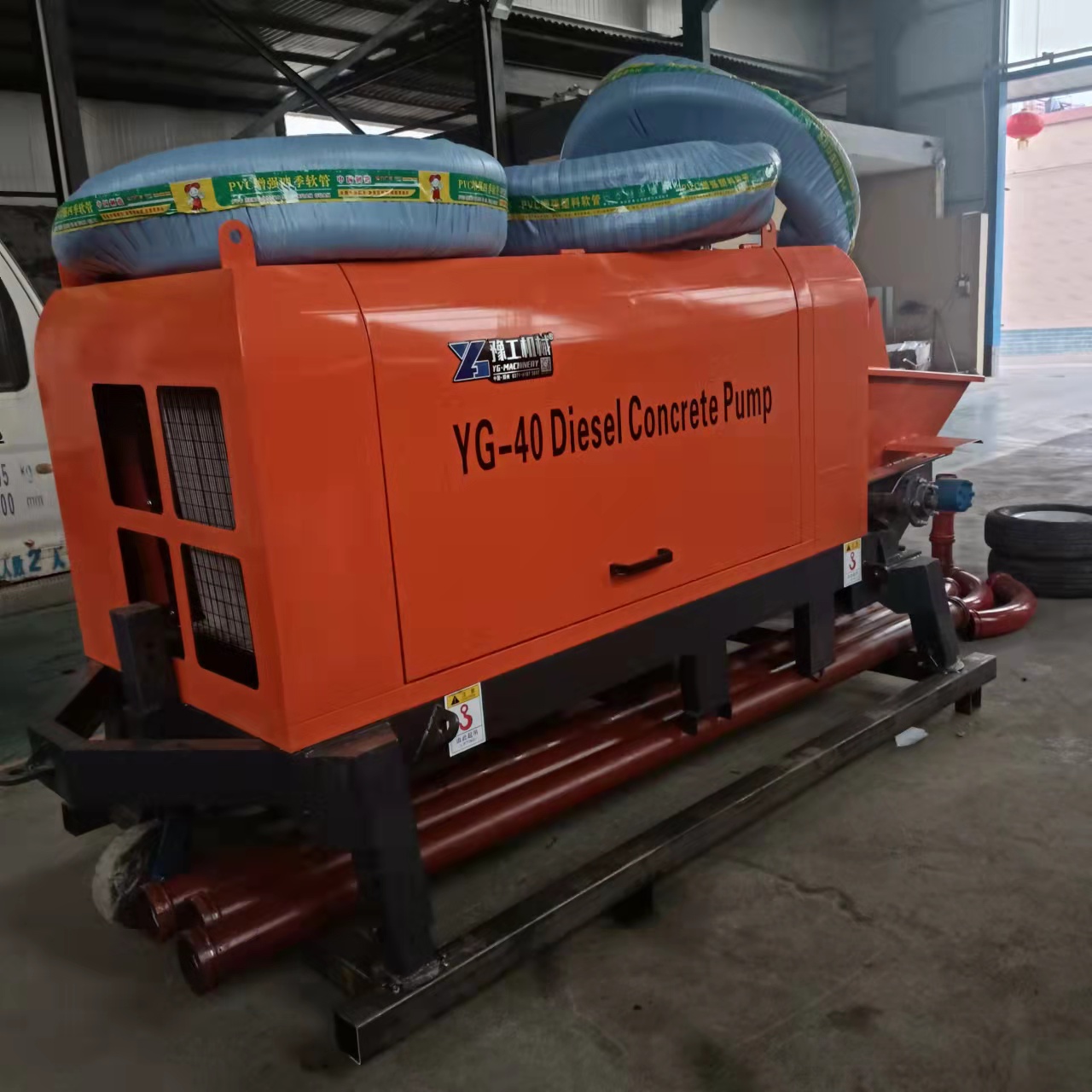
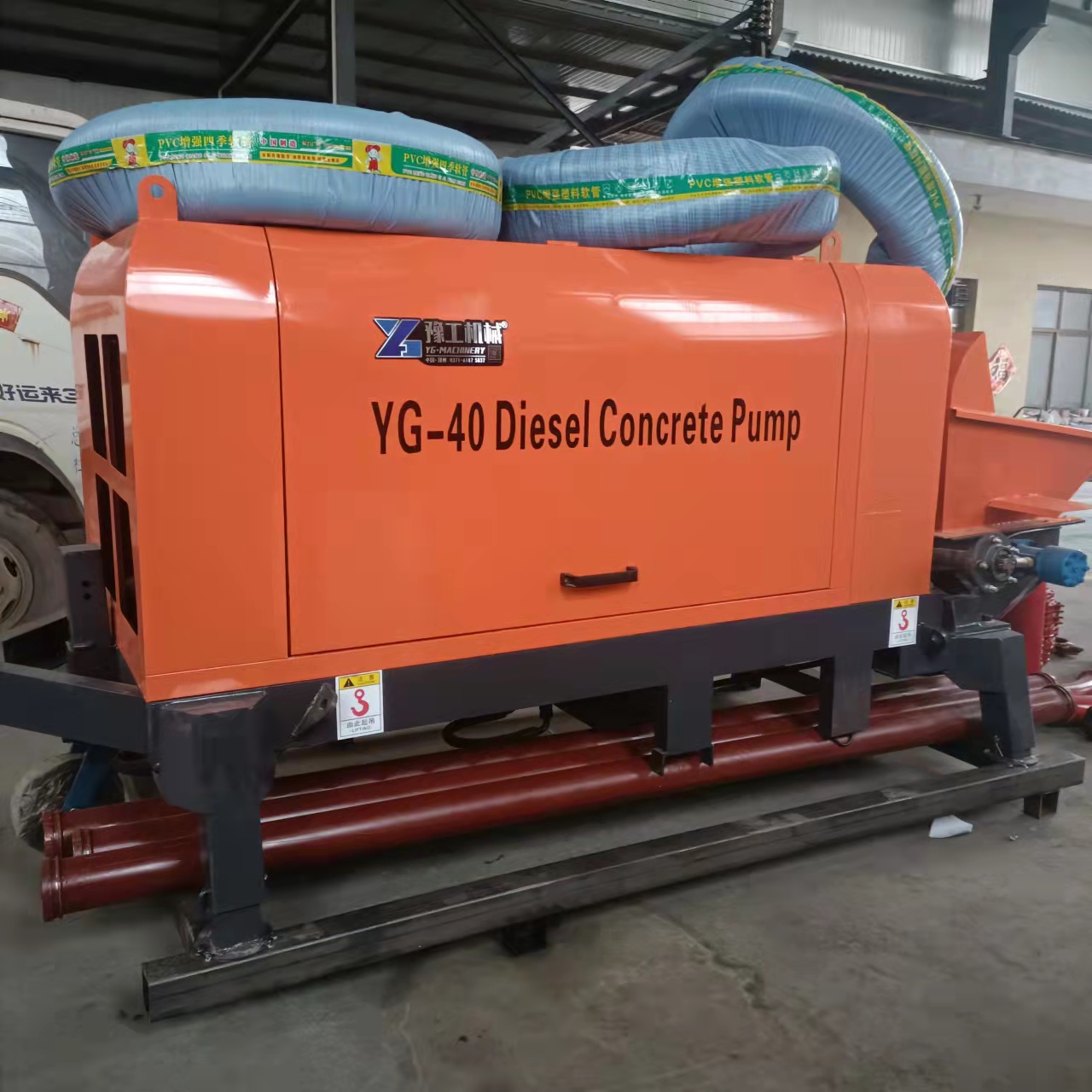
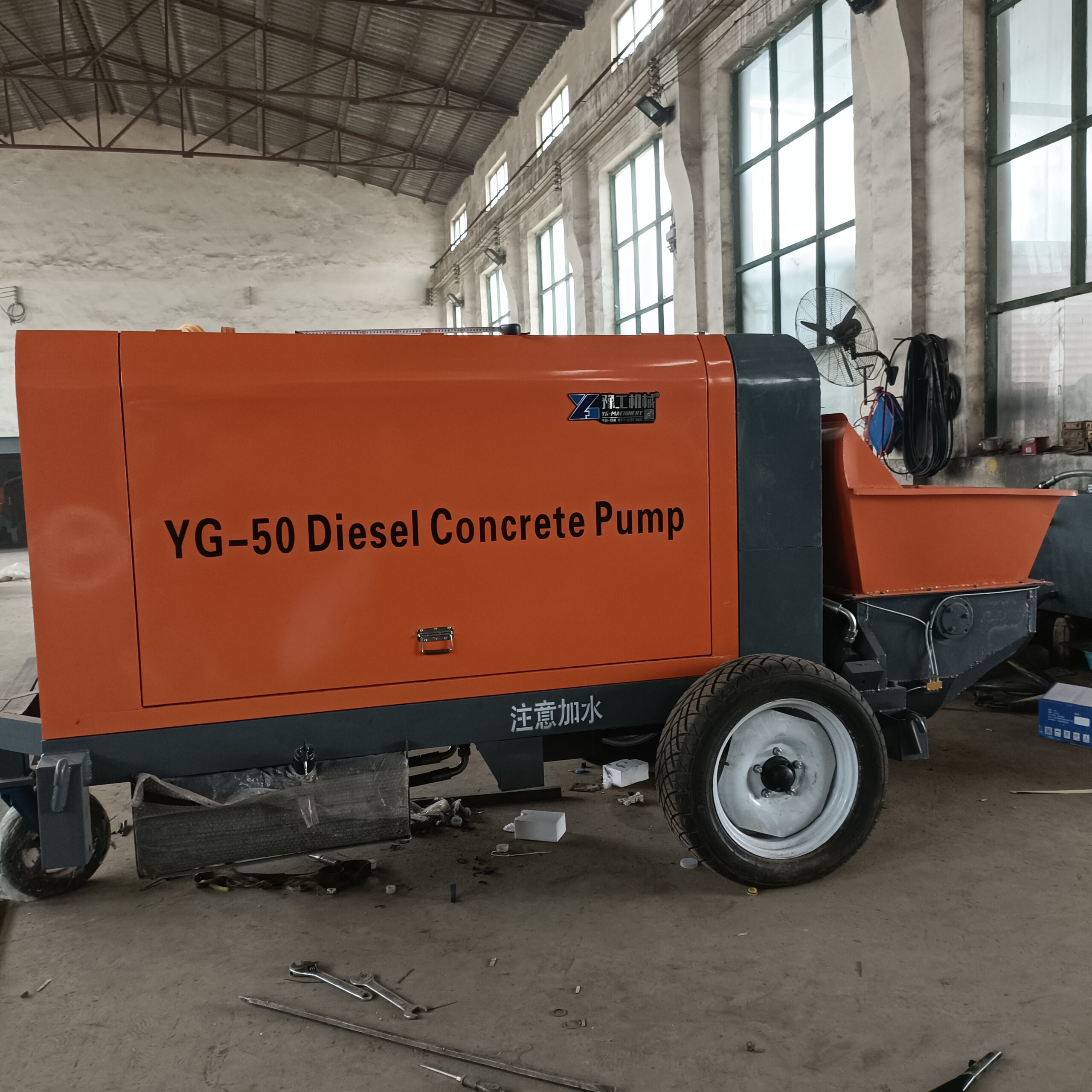
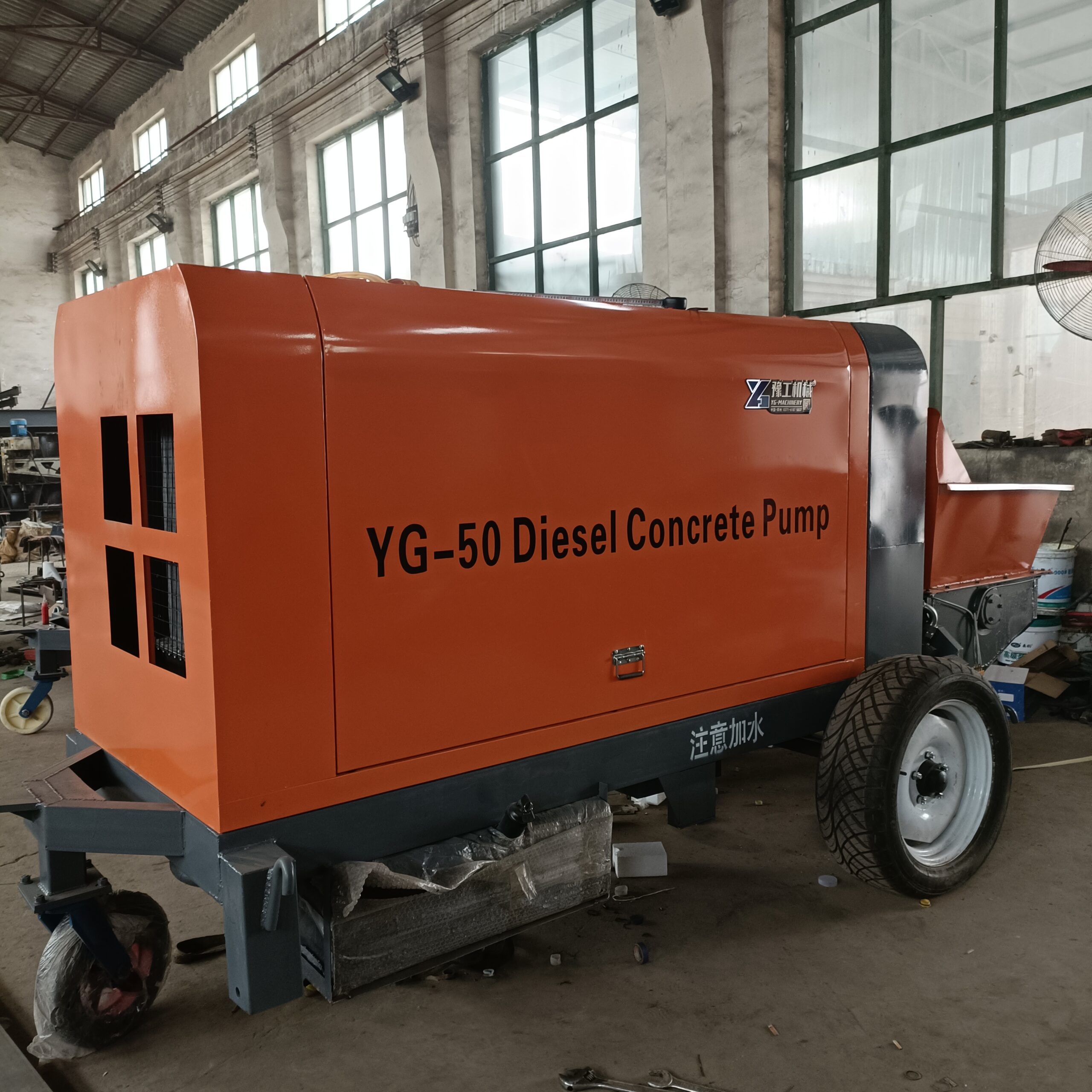
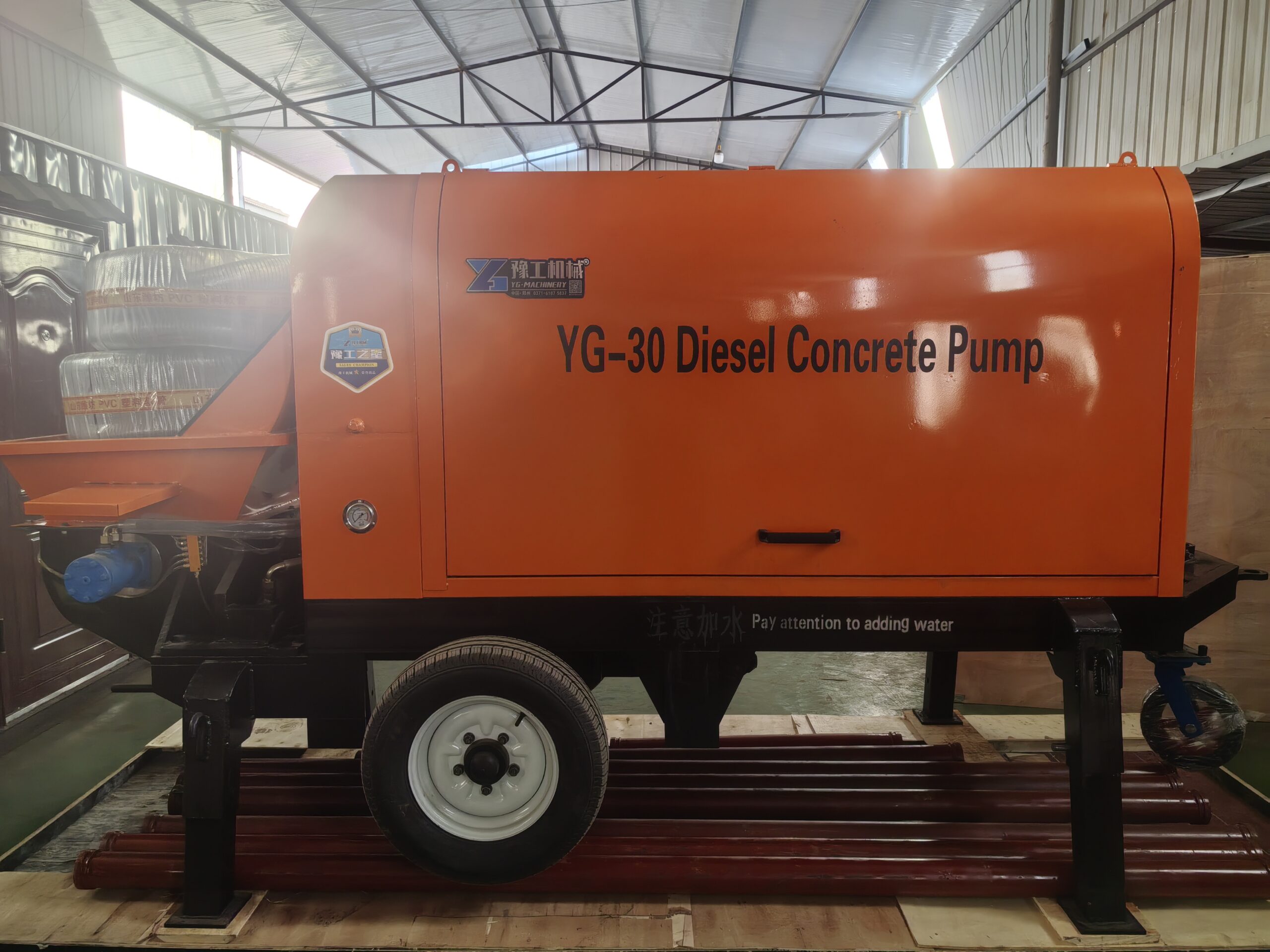
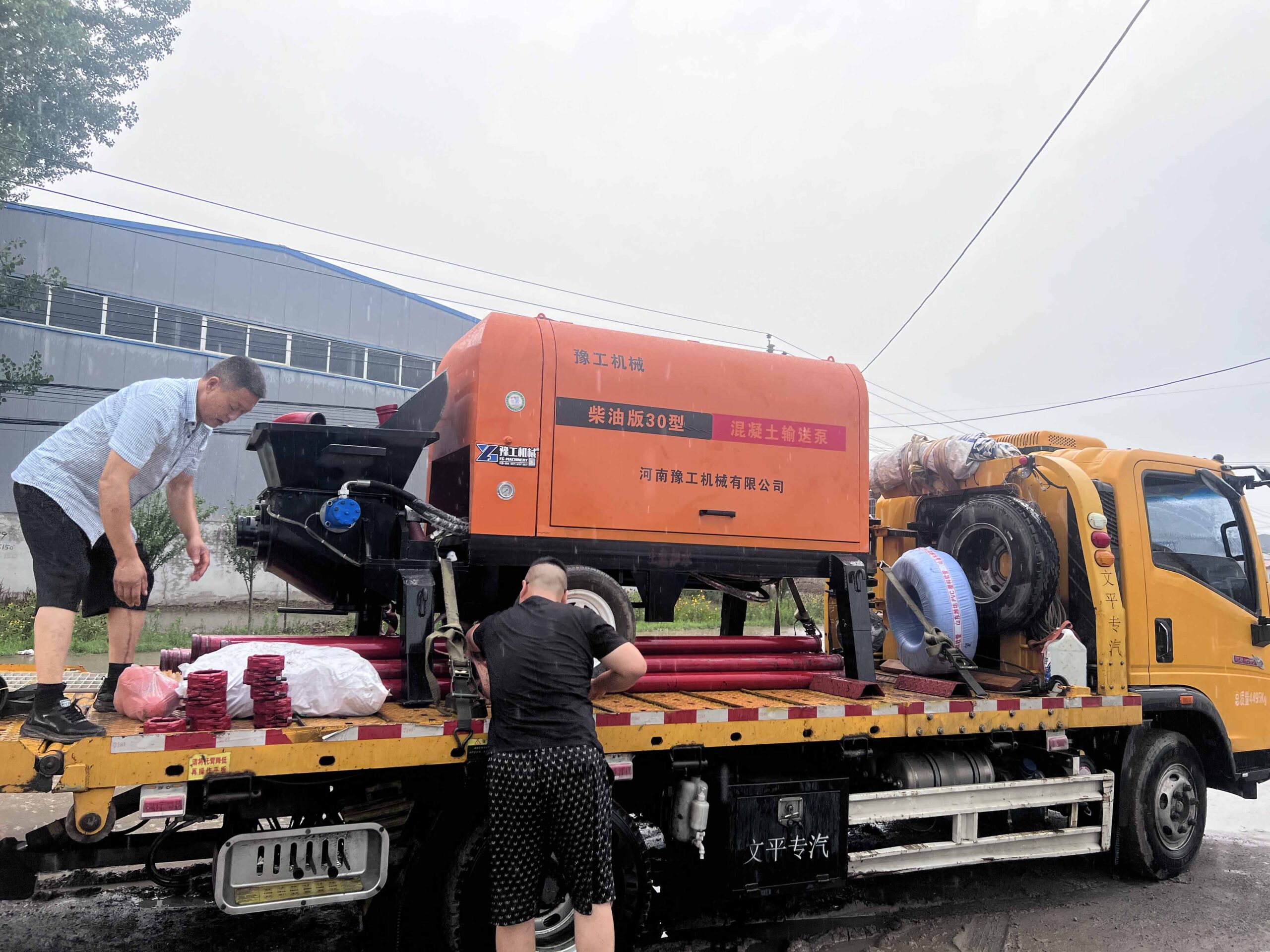
That power path explains why a diesel concrete pump is useful where the work area lacks a sufficiently sized electrical supply. It also explains why the engine is only one part of the selection: the hydraulic pump, concrete cylinders, valve, hopper and delivery pipes must all suit the mix and required route. The photos show YG pump-only units with their hopper, chassis and pumping assembly.
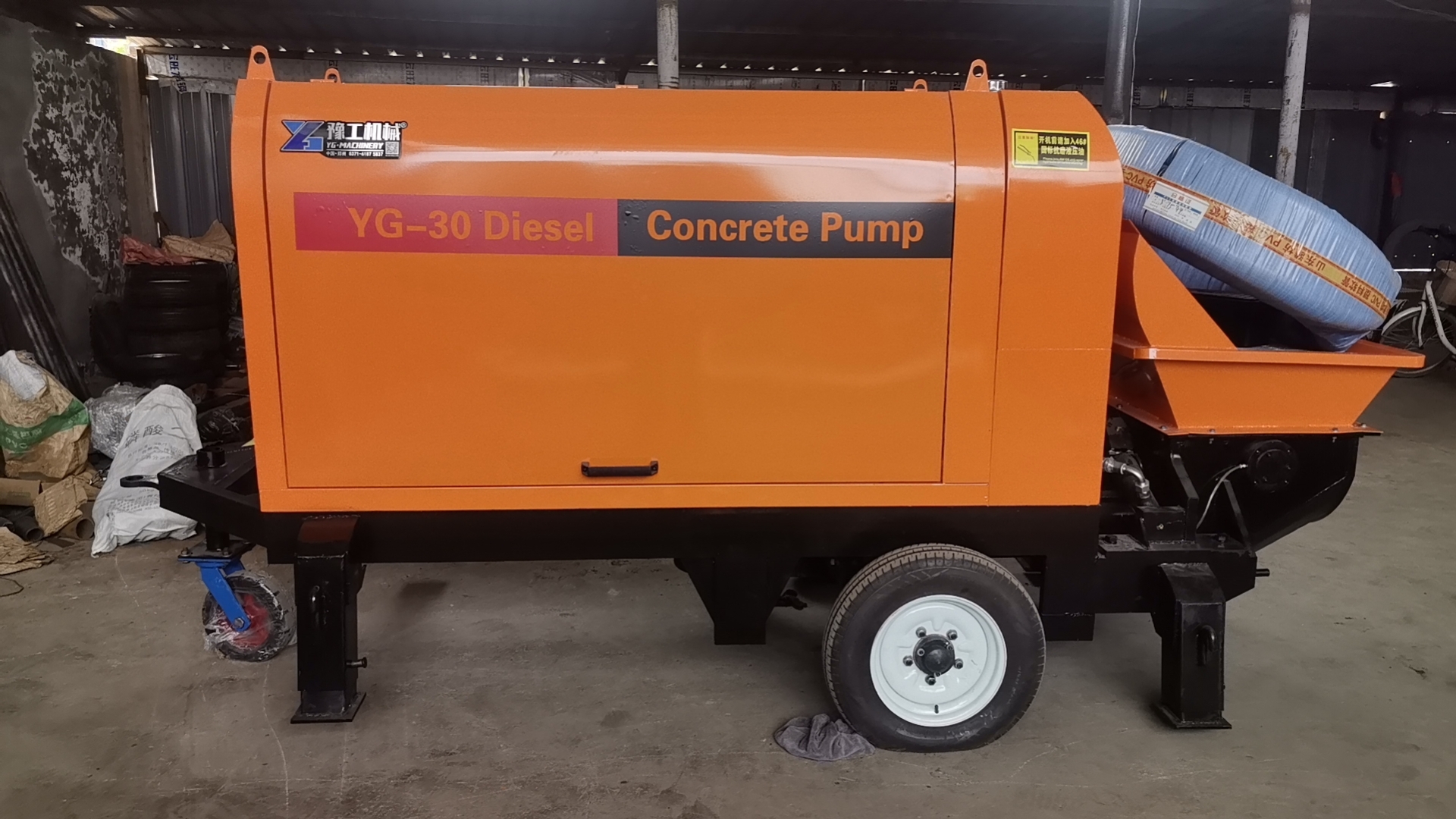
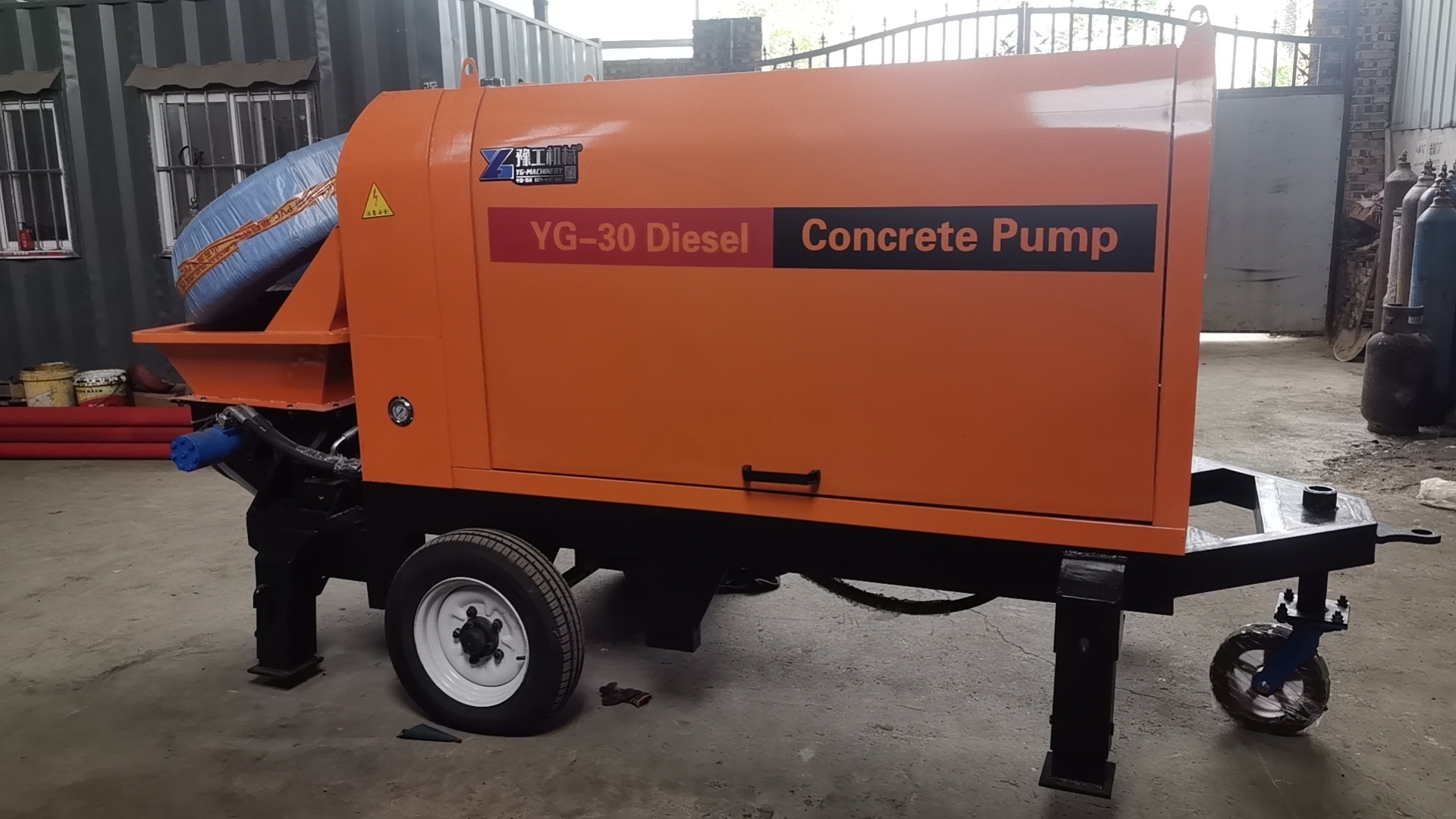
Which YG Diesel Concrete Pump Model Fits Your Pour?
The listed YG models step up in rated output and maximum outlet pressure. Treat those figures as model ratings, not as a promise of the same delivery rate on every job. Concrete grading, aggregate size, pipe diameter, vertical lift, bends and interruptions affect actual performance.
| Model | Diesel engine / power | Theoretical output | Maximum outlet pressure | Hopper capacity | Machine weight |
|---|---|---|---|---|---|
| YG-30 | Weichai 4105 / 56 kW | 15 m³/h | 20 MPa | 0.3 m³ | 2,000 kg |
| YG-40 | Huadong 4108 / 66 kW | 26 m³/h | 25 MPa | 0.4 m³ | 2,800 kg |
| YG-50 | Huadong 6105 / 99 kW | 30 m³/h | 30 MPa | 0.4 m³ | 3,300 kg |
The YG-30 is the lower-output option in this three-model comparison. The YG-40 and YG-50 have higher listed output and pressure, but those increases matter only if the required concrete, line and work cycle call for them. A higher-capacity machine also changes transport weight and the equipment package you need to position it.
How Should You Match Concrete Aggregate to the Pumping Line?
Check the largest aggregate in the actual mix before confirming a pump and pipe combination. The listed maximum aggregate size is up to 3 cm for YG-30 and YG-40. For YG-50, the available outlet/pipe configurations vary with aggregate: 80 mm for fine-stone concrete, 100 mm for aggregate up to 13 mm, and 125 mm for aggregate up to 24 mm. Confirm the selected cylinder, outlet and line as one configuration rather than treating pipe diameter as an independent accessory.
The route matters just as much. Provide the planned vertical lift, horizontal run, number and angle of bends, pipe diameter and final placement point. Every bend and constriction adds resistance; an unsuitable mix can separate or block the line. If the job requires a long route, ask the supplier to review that specific path and material before settling on the rated output alone.
What Does Diesel Drive Change at the Job Site?
Diesel drive can give the pump a self-contained power source when grid capacity is unavailable or unreliable at the pour location. That can simplify planning for remote or temporary work areas. The trade-offs are fuel supply, engine maintenance, exhaust, heat and operating noise. Confirm local emissions and indoor-use requirements before selecting a diesel machine for an enclosed or noise-sensitive site.
Compare the total operating arrangement, not only engine kilowatts. Consider daily pump hours, fuel access, service capability, ventilation, transport and the space needed for setup. If reliable electrical power is already available, ask for the comparable electric configuration and compare both the purchase package and expected site operating costs.
Is a Diesel Concrete Pump Suitable for a Small or Remote Project?
It can be a practical choice when the job needs pumped concrete but the work area cannot provide the required electric supply. Suitability still depends on whether the machine can reach the setup point, whether the concrete can be fed consistently and whether the planned pipe route is within the selected configuration’s limits.
Check the machine’s weight and transport dimensions against the unloading equipment and site access. The YG-30, YG-40 and YG-50 listed weights are 2,000 kg, 2,800 kg and 3,300 kg; plan lifting, trailer or vehicle capacity accordingly. A wheeled chassis does not by itself confirm road-towing approval, so verify the transport method and local requirements separately.
What Should You Confirm Before Buying a Diesel Concrete Pump?
Before requesting a final configuration, prepare these job details:
- Concrete type, mix consistency and maximum aggregate size.
- Target volume and the time available for each continuous pour.
- Vertical lift, horizontal distance, pipe diameter, bends and placement point.
- Available space for unloading, hopper feeding, operation and clean-out.
- Fuel availability, ventilation, noise limits and local emissions requirements.
- Destination, transport access, unloading equipment and requested delivery timing.
Then ask the supplier to state the exact pump model, engine, hydraulic configuration, rated output and pressure, approved material/pipe combination, included pipe and hose lengths, clamps, initial wear parts, packing dimensions and startup support. This lets you check that the quoted machine can be installed and used in the way your project requires.
For small-site model selection, compare the separate mini concrete pump for sale guide. It covers a different task and does not replace the diesel-specific model and drive checks on this page.
Diesel Concrete Pump FAQs
A diesel concrete pump moves concrete that has already been mixed. A mixer-pump includes a mixing function as part of the machine package. Confirm the equipment scope in the quotation because their components and workflow differ.
No. Rated output is a model figure. Concrete properties, aggregate, pipe diameter, lift, bends, feeding interruptions and clean-out affect the volume delivered during actual work.
No. Match the required output and pressure with aggregate size, outlet and pipe configuration, route, access and duty cycle. Engine power is only one part of the complete pump system.
The listed maximum is up to 3 cm for YG-30 and YG-40. YG-50 uses different outlet/pipe combinations for fine-stone, 13 mm and 24 mm aggregate. Confirm the exact mix and configuration before ordering.
The best diesel concrete pump is the one whose engine, hydraulic system and delivery line suit the material and site. Send the route and mix details with your model request so the proposed configuration can be checked before purchase.