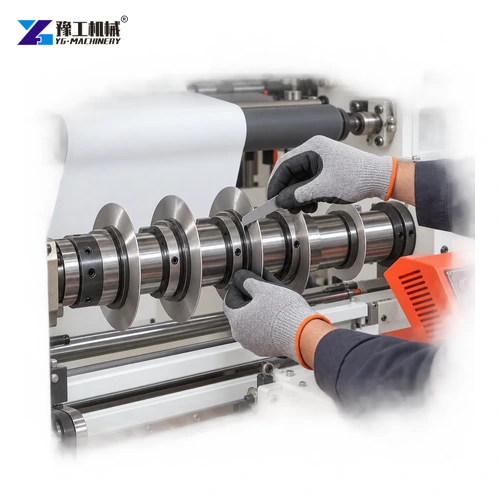
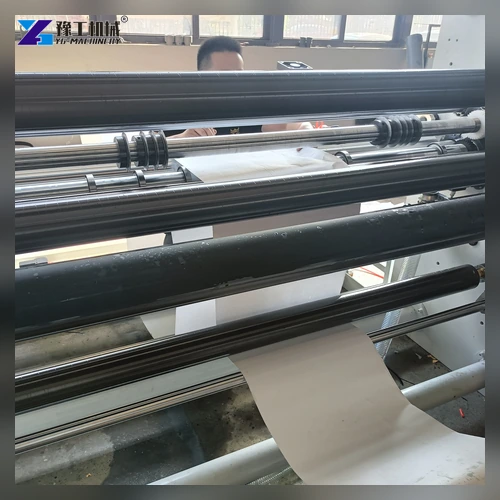
Correct upper and lower knife overlap supports a clean slit.
Knife spacing and clearance are set while the slitter is stopped.
A slitting machine blade should be selected from the web material, thickness, coating, required lane width and accepted edge condition. Blade choice belongs to the complete converting setup rather than a spare-parts decision made from diameter alone.
A buyer should send representative material and define the finished roll before confirming the knife station. YG then matches the cutting method, knife quantity, shaft arrangement, web support and rewinding configuration to the actual order. The same machine width can serve different products, but the approved knife package and operating recipe may be different.
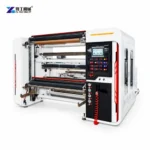
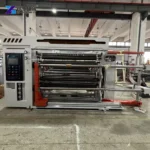
The paper slitting machine range provides the model envelope, while this guide explains how the knife decision affects cut quality and quotation preparation.
Match the Slitting Machine Blade to the Web Material
Begin with material identity, basis weight or thickness, coating, reinforcement, surface sensitivity and fibre or film direction. Kraft paper, thermal paper, coated stock, nonwoven fabric and laminated webs do not fail in the same way. A knife that produces a clean edge on dense paper can create feathering, heat, adhesive buildup or deformation on another web.
Record the parent-roll width and diameter, the narrowest lane, trim width, finished diameter and required output quality. If the material contains adhesive, abrasive filler or a fragile coating, include that information because it changes cleaning frequency and wear behaviour. Samples from the actual production lot are more useful than a generic material name.
Selection should also reflect the downstream process. A roll used for printing, coating, packaging or label conversion may have tighter limits for edge dust, curl, burrs and telescoping. Define the inspection method before choosing the knife so the trial has a measurable acceptance target.
Send the web material, thickness, coating and accepted edge sample so YG can review the cutting method.
Choose Circular Shear, Razor or Straight Slitting Blades
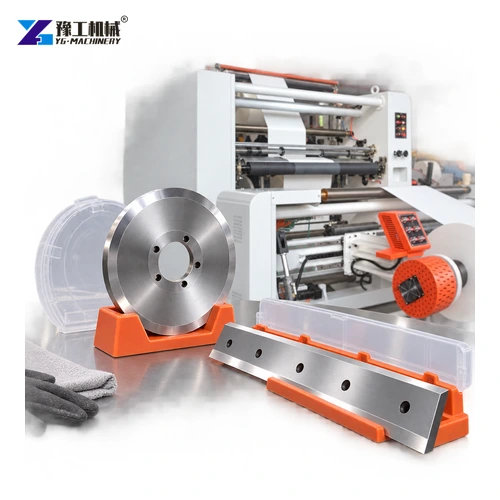
Circular shear knives use an upper and lower cutting edge that pass with controlled overlap and side clearance. They are a practical choice when the web needs a supported, scissor-like cut and consistent lane geometry. Knife sharpness, shaft runout, holder condition and axial position all influence the result; replacing only the upper knife will not correct a damaged lower edge or unstable holder.
Razor slitting uses a thin blade against a supported path or groove and can suit selected thin webs when the material and speed allow it. It is not automatically the cleanest method for every paper. Straight or guillotine-style blades solve different cut or sheet-converting tasks and should not be specified merely because a drawing shows a straight edge.
Compare methods with the real web at controlled speed. Inspect both sides of every slit, the dust level, the force required to separate lanes and the condition after rewinding. The selected method must remain compatible with guarding, blade handling, changeover and the number of lanes required in one pass.
Provide the lane widths and number of cuts to compare knife type, holder and shaft requirements.
Blade type should match the web material and cutting method.
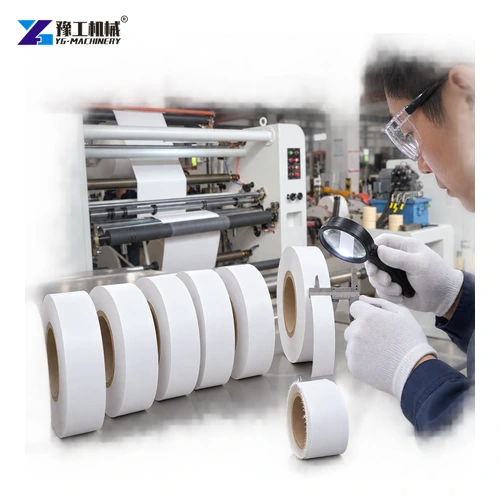
Inspect slit edges for smoothness, dust and feathering before acceptance.
Check Model Limits Before Setting Slitting Knife Width
YG-1300, YG-1600 and YG-1800 identify maximum web widths of 1300, 1600 and 1800 mm. Each model lists a 30 mm minimum slit-width reference, a 1400 mm maximum unwind diameter and a 1000 mm maximum rewind diameter. These values stay tied to the named model and must be considered together with the planned lane count and finished-roll handling method.
The minimum width does not define knife clearance or guarantee that every material can run at that lane width. A narrow roll can require different cores, spacers, winding torque and edge support. Likewise, the listed speed is an equipment limit; usable speed is established by stable tracking, clean cutting and acceptable rewinding on the project material.
Parameter
YG-1300
YG-1600
YG-1800
Maximum web width
1300 mm
1600 mm
1800 mm
Maximum unwind diameter
1400 mm
1400 mm
1400 mm
Minimum slit width
30 mm
30 mm
30 mm
Maximum rewind diameter
1000 mm
1000 mm
1000 mm
Slitting speed
Up to 350 m/min
Up to 350 m/min
Up to 350 m/min
Total power
24 kW
26 kW
30 kW
Power supply
380 V / 50 Hz
380 V / 50 Hz
380 V / 50 Hz
Machine weight
4000 kg
4500 kg
5500 kg
Overall size (L×W×H)
3300×3150×1930 mm
3300×3450×1930 mm
3300×3650×1930 mm
Use the complete model row when comparing capacity, power, weight and installation space. Do not combine the largest value from one model with the dimensions or power of another.
Set Slitting Machine Blade Clearance and Overlap
Clean shafts, spacers, holders and knife faces before setup. Contamination under one component can shift a lane or introduce runout. Install matched components in the approved order, measure cumulative width and confirm that every knife sits squarely before rotation. Never force a knife across a dirty shaft or use an unverified spacer to correct an arithmetic error.
Clearance and overlap must follow the knife system and material trial. Too little clearance can create rubbing, heat and rapid wear; too much can fold or tear the edge. Excessive overlap increases side load, while insufficient overlap may leave incomplete separation. Make one controlled adjustment at a time and record the result instead of changing pressure, tension and knife position together.
Turn the system through its approved manual check before guarded low-speed operation. Verify that adjacent knives, holders and trim paths cannot contact. Final tightening, guarding and restart follow the machine procedure and site lockout rules.
Share photographs of burrs, dust or uneven lanes with the setup record for a focused knife-station review.
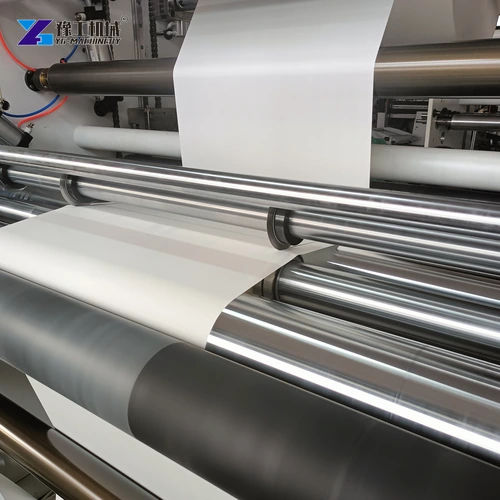
The web must remain flat and centered before it reaches the knife shaft.
Knife holders and shafts must be clean and securely locked before operation.
Use Slit Edge Defects to Diagnose the Knife Station
A burr, feathered fibre or rough edge can indicate a dull blade, unsuitable clearance, poor overlap, shaft movement or material variation. Edge dust may also increase when the web is dry, coated or unsupported. Compare the defect across all lanes: one repeating lane points toward a local knife or holder issue, while a full-width change may begin at tension, tracking or the parent roll.
Wavy edges and lane-width variation are not always blade faults. Check web guiding, roller alignment, tension stability and core position before grinding knives. A clean cut can still rewind badly if lanes receive uneven torque or if the cores are not aligned with the knife pattern.
Keep representative edge samples and identify their lane position, speed, material lot and knife set. This evidence helps distinguish wear from setup and makes the next changeover more repeatable. The slitting machine maintenance routine should preserve the same traceability.
Plan Slitting Blade Wear, Grinding and Changeover
Inspect blades for chips, rolled edges, corrosion, deposits and uneven polishing before installation. Store cleaned knives in protected racks or sleeves so cutting edges do not touch hard surfaces. Mark matched knife sets and spacers so components that have been qualified together are not mixed during a hurried changeover.
Grinding intervals cannot be set from calendar time alone. Material abrasiveness, contamination, lane count, speed, overlap and cleaning practice all affect wear. Remove a knife when measured edge quality or inspection limits require service; do not continue until a chipped edge damages the web or its mating component.
After grinding, verify dimensions, balance, edge geometry and compatibility with the holder system. A smaller reground diameter can change the available adjustment range. Record service history and trial results so purchasing can plan spare sets without assuming that every knife has the same remaining life.
Send the complete roll and slit pattern to receive a model, knife package and accessory quotation.
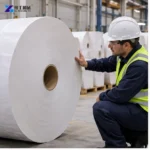
The parent roll core and material condition affect blade tracking and cut stability.
Stable roller alignment keeps the web square as it approaches the knives.
Specify a Slitting Machine Blade Package for Quotation
Prepare one file with material samples, parent-roll dimensions, core sizes, slit widths, trim, lane quantity, finished diameter, target speed and edge acceptance criteria. Add photographs of any current defects and state whether dust removal, static control or online inspection is required. This lets the machine, knife station and rewinding system be reviewed as one package.
Request the quotation to identify model, knife method, installed knife quantity, spare knife quantity, shafts, spacers, holders, trim handling, guarding, tools and test material. Keep optional parts on separate lines and require the final drawing to show the approved slit pattern. For a broader converting comparison, review the slitting and rewinding machine configuration before final approval.
The purchase decision is complete only when the knife package can make the required lanes and the winding system can accept them. Confirm utilities, loading equipment, finished-roll removal and operator training in the same technical review.
Slitting Machine Blade Selection for Clean Paper Edges FAQ
Which slitting machine blade is best for paper?
The choice depends on paper structure, coating, thickness, lane width and edge standard; a controlled sample trial is the safest decision method.
Does a narrower slit always need a thinner blade?
No. Knife geometry, holder spacing, shaft stiffness, core and rewinding control must be evaluated together.
What causes paper dust at the slitting knife?
Blade wear, clearance, overlap, web support, speed and paper condition can all contribute, so the full cutting path should be checked.
What information is needed for spare slitting knives?
Send the YG model, order reference, knife drawing or dimensions, material, quantity, holder details and clear photographs.
Prepare the Final Slitting Review
A reliable slitting machine blade decision connects material evidence, knife geometry, setup records and finished-roll inspection. Send the complete slit pattern and a representative sample so the YG team can verify the machine and knife package before production.