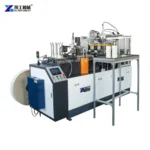
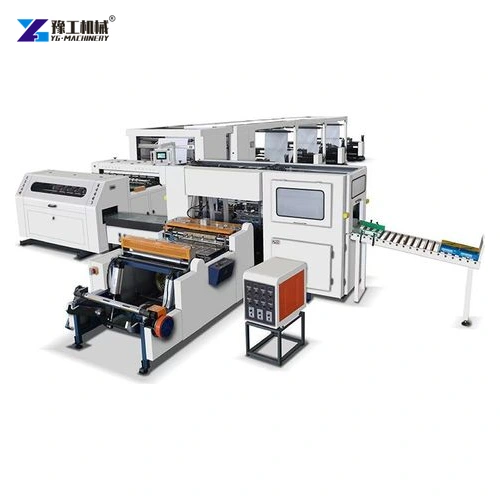
An A4 A3 paper cutting machine converts paper reels into sheets by combining lengthwise slitting with cross-cutting. It belongs in a paper-converting workshop: the incoming material is already manufactured paper, and the outgoing product is a stack of cut sheets. It is not a pulp-to-paper production line or a guillotine that trims an existing stack.
For a converter supplying both copy paper and larger sheets, the important question is how the machine changes between formats while keeping the web straight, the cut square and the delivery stack orderly. Reel width, slit layout, programmed cut length and sheet collection must work together. A machine selected only by its maximum cutting width can leave the workshop with unnecessary trim waste or a delivery section that cannot handle the intended sheet.
How An A4 A3 Paper Cutting Machine Converts A Reel
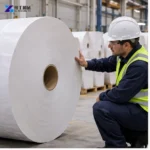
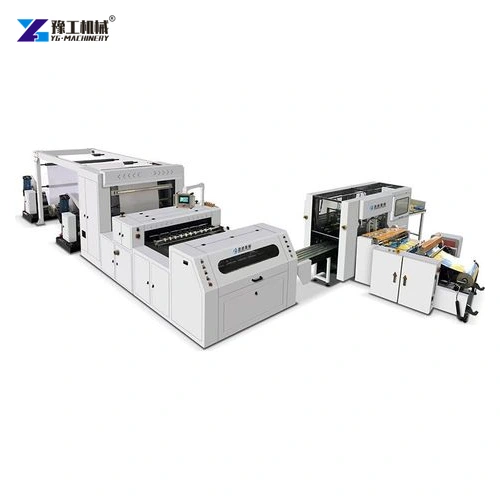
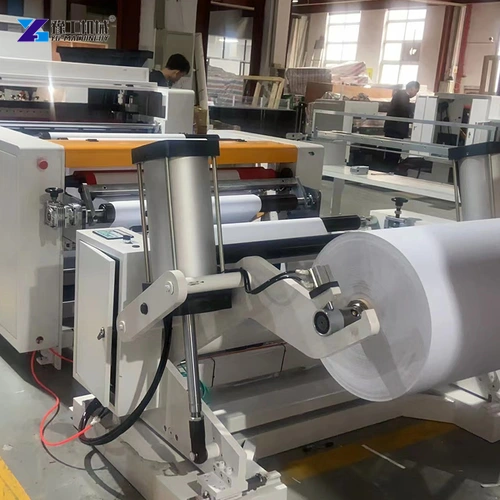
The unwinding section supports the reel and releases the paper web into the cutting section. As the reel becomes smaller, the conditions at the unwind change. Controlled web tension helps the paper enter the feed rollers without slack folds or excessive stretching. The objective is a stable moving web, not the highest possible tension.
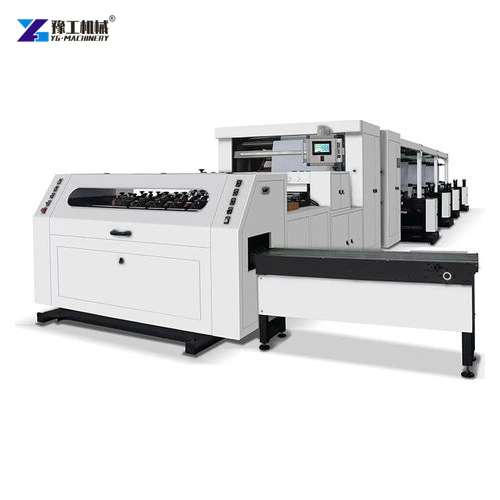
Lengthwise knives divide the web into lanes: parallel strips that become separate streams of sheets. The cross-cutting section then separates those strips at the selected feed length. Knife spacing sets sheet width; the paper fed between cross-cuts sets sheet length. Changing one setting does not automatically change the other. A converter moving between A4 and A3 needs a suitable slit layout and a delivery arrangement that handles the resulting sheets.
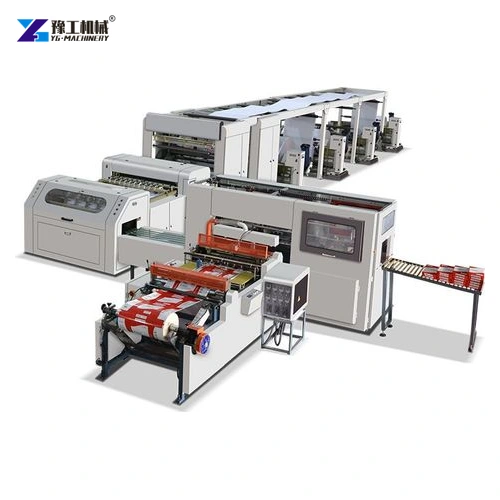
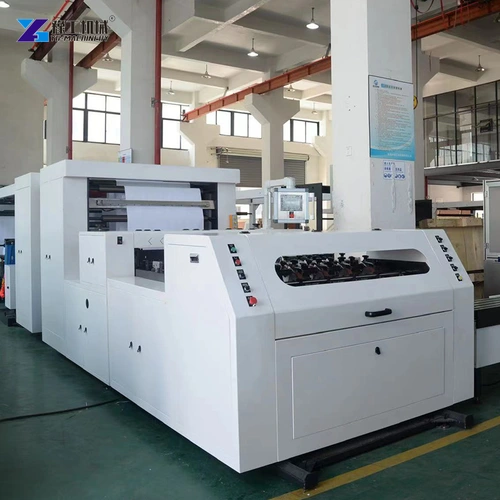
After cutting, the delivery section carries sheets away from the knife and collects them. A square cut can still produce an untidy stack if the sheets arrive unevenly or the guides are poorly matched to their size. Feeding, cutting and collection should therefore be assessed as one converting sequence.
Match the unwind, cutting and sheet collection sections to your paper conversion task.
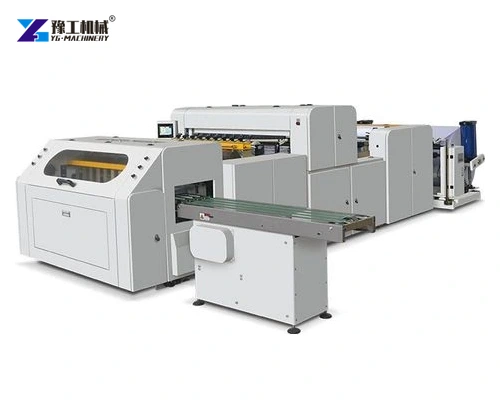
A4 A3 Paper Cutting Machine Specifications
The YG D-series roll-cutting configurations below differ principally in cutting width, installed power, weight and footprint. The dimensions are useful for planning installation; the maximum web width is a separate question from the finished sheet size.
| Parameter | YG-800D | YG-1100D | YG-1400D |
| Maximum reel diameter | 1,400 mm | 1,400 mm | 1,400 mm |
| Maximum cutting width | 800 mm | 1,100 mm | 1,400 mm |
| Cut-length range | 20–800 mm | 20–800 mm | 20–800 mm |
| Listed fixed-length precision | ±0.2 mm | ±0.2 mm | ±0.2 mm |
| Listed cutting rate | 10–150 cuts/min | 10–150 cuts/min | 10–150 cuts/min |
| Installed power | 4.5 kW | 4.5 kW | 5.5 kW |
| Approximate weight | 2,300 kg | 2,700 kg | 3,100 kg |
| Overall dimensions, L × W × H | 5,000 × 1,700 × 1,200 mm | 5,000 × 1,900 × 1,200 mm | 5,000 × 2,100 × 1,200 mm |
The cutting-rate figure counts cutting actions, not packed reams. Sheet output also depends on the number of lanes, the actual operating rate, paper behaviour and collection. Ream counting, wrapping and carton packing are separate functions whose inclusion changes the production line. Compare complete delivery arrangements rather than treating a cross-cutter as an automatically packaged-paper factory.
Compare the reel width and installation space for the required sheet formats.
Planning A4 And A3 Sheet Layouts
A4 measures 210 × 297 mm and A3 measures 297 × 420 mm. Either format can be oriented in more than one way relative to the web. That choice changes the slit width, cut length and number of lanes that fit across the reel. The available reel size and required grain direction should be considered together.
- Choose the sheet orientation. Decide which sheet dimension runs across the web and which follows the feed direction. Paper grain can matter to the customer’s subsequent folding or printing task, so orientation is more than a way to fit another lane.
- Establish the usable lane layout. Divide the usable web width into the selected sheet widths while allowing for the actual edge-trim and knife arrangement. The nominal reel width alone does not establish how many acceptable lanes the installed machine can produce.
- Match the cut length and delivery guides. Program the other sheet dimension and set the receiving section for that format. The larger A3 sheet has different collection behaviour from A4 even when both are cut from the same reel grade.
- Check the complete changeover. Slitter positions, cut-length settings, guides and counting arrangements all belong in the format change. Record settings for repeat orders so the next changeover starts from a defined setup.
For a layout example, three 210 mm strips occupy 630 mm across the web; a 297 mm cross-cut length produces A4 sheets in that orientation. Two 297 mm strips occupy 594 mm; a 420 mm cut length produces A3 sheets. These are geometric examples, not guaranteed lane counts or production outputs: edge trim, knife spacing, grain direction and the supplied delivery section still have to fit the actual reel and machine. This shows why the same maximum web width supports different layouts. Extra width adds value when regular orders can use it, rather than simply because the specification number is larger.
Review your A4 and A3 layouts together with the reels you plan to purchase.
What Controls Cut Quality And Stack Quality?
Three checks help locate a problem. Sheet length tests feed and cross-cut consistency, while width tests the lengthwise knife positions. Squareness means adjacent edges form right angles: a sheet can have the expected length yet be skewed. Check edge dimensions and the agreed squareness measurements, which may include comparing diagonals, rather than approving a stack from one length measurement alone.
In a telescoped reel, wound layers have shifted sideways and its end face forms steps instead of remaining flat. Displaced layers, damaged outer wraps or poor reel support can disturb the paper path before the knives. Curl and static can then interfere with sheet separation and alignment at delivery, particularly with thin sheets or changing workshop conditions. Follow the paper from unwind to stack when diagnosing a defect instead of adjusting the knife whenever the finished pile looks untidy.
Blade condition influences edge cleanliness. A dull or damaged cutting edge can leave fuzz or tearing that becomes visible during printing or packing. Blade inspection and replacement require the machine’s isolation and guarding procedures; operators should not reach into a moving feed or cutting section to correct a sheet.
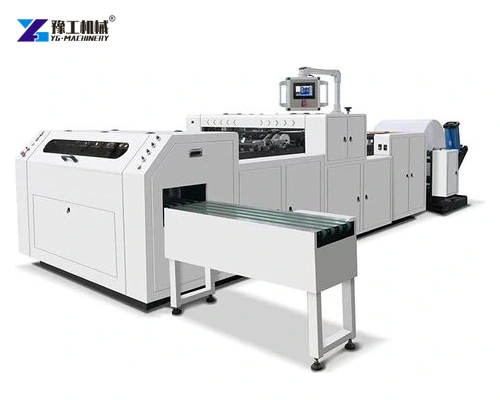
Where A4 A3 Roll-Cutting Equipment Fits
- Copy-paper converting. Reels are slit and cross-cut into office-paper sheets, followed by the specified counting and packing stages. The commercial target is consistent saleable sheets and packs, not simply a fast knife cycle.
- Printing-paper preparation. A converter supplies blank sheets for downstream printing. Sheet size, grain direction, edge quality and stack alignment influence how well those sheets feed through the next machine.
- Mixed-format sheet supply. A workshop produces several recurring formats from reel stock. Here, repeatable changeovers and sensible reel layouts can matter more than running one format at maximum nominal speed.
For related reel-converting equipment, see the paper slitting machine range. A slitter rewinds narrow reels; this cross-cutting configuration delivers separate sheets.
The correct configuration follows the workshop’s actual paper grades and regular order mix. A useful quotation identifies the reel specification, finished sizes, lane arrangement, collection method and whether wrapping is included. It should also separate the cutting machine from any additional packing equipment.
Describe the paper grade, format mix and packing arrangement for a defined equipment proposal.
A4 A3 Paper Cutting Machine FAQs
No. This equipment converts an existing paper reel into sheets. Pulp preparation and paper-web manufacture require a different production line.
A roll-to-sheet machine can produce both formats when its slitting and collection equipment supports the two layouts. A4 requires 210 × 297 mm sheets and A3 requires 297 × 420 mm sheets. Both lengths fall within the listed D-series cut-length range, but that range alone does not establish the supplied knife and delivery arrangement. Include both formats in the equipment specification and evaluate a changeover between them: reposition the slitters, change the cut length and reset the delivery guides.
No. Cuts per minute count knife actions. Ream output additionally depends on lane count, acceptable sheets, counting and packing capacity.
Use the intended paper grade and both regular sheet formats. Examine length, width, squareness, cut edges and stack alignment, including the first sheets after a format change.
Provide reel width and diameter, paper grade, required sheet formats, order mix, grain-direction needs and the intended delivery and packing arrangement.
Send the incoming reel specification, required sheet sizes and intended packing method to discuss a complete roll-cutting configuration.