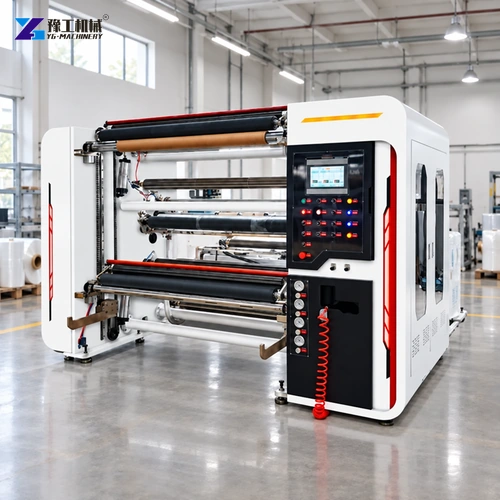
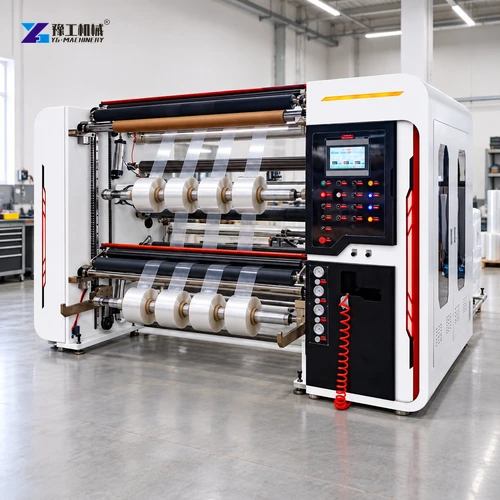
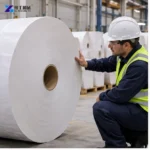
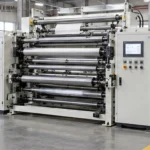
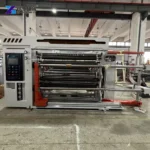
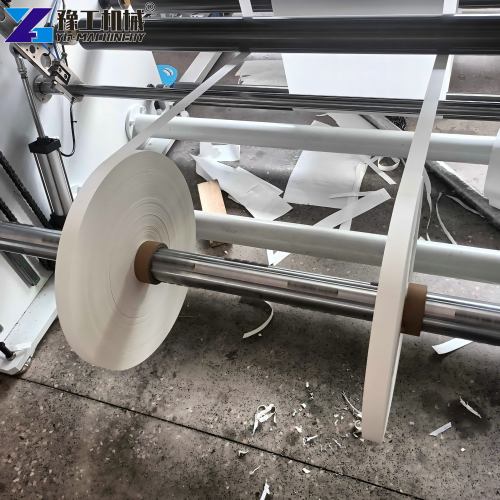
A complete roll-to-roll slitter rewinder prepared for film-width and roll requirements.
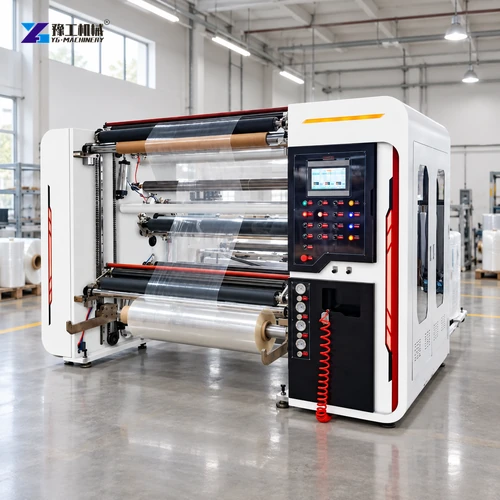
The film web follows a controlled roller path before slitting and rewinding.
A film slitting machine converts one wide parent roll into narrower finished rolls while controlling web position, knife action and rewinding tension. The buying decision starts with the actual film and finished-roll specification. Material type, thickness, coating, parent-roll size, lane pattern, core, finished diameter and accepted edge quality determine whether the machine can produce a stable order.
YG-1300, YG-1600 and YG-1800 provide three maximum web-width ranges. The correct model is not simply the widest frame. The machine, unwind, guide, knife station and rewind shafts must support the same job, and the factory must have enough power, floor space and roll-handling capacity for that configuration.
This page focuses on flexible packaging and other supported film rolls. Buyers comparing a broader converting system can also review the slitting and rewinding machine and the paper slitting machine range before submitting material samples.
Match the Film Slitting Machine to the Parent Roll
Record the polymer or laminate structure, thickness range, coating, print sensitivity, winding direction, static behaviour and maximum parent-roll mass. BOPP, PET, PE and laminated packaging webs can react differently to tension, heat, dust and knife contact. A generic description such as plastic film is not enough for a final setup because the same nominal thickness can behave differently after printing, coating or lamination.
Measure parent-roll width, diameter and core, then list every finished lane, edge trim and internal trim. The lane total must fit the usable web, and each finished roll needs a defined core, diameter, winding direction and tolerance. Send representative material from the real production range so the trial evaluates tracking, cutting and winding with the web the factory will actually run.
Send the parent-roll and finished-roll specification so YG can check the usable web and handling range.
Choose Knife Type and Slit Width for Packaging Film
Knife selection depends on the film structure and accepted edge. Razor, shear and other approved cutting arrangements do not produce the same result on every web. The supplier should review thickness, elasticity, coatings, adhesive layers, lane count and speed before fixing the knife method. A clean cut must remain stable at the required width without stretching, folding or creating unacceptable dust and burrs.
Set the lane pattern from a machine reference and verify the cumulative width before production. Knife holders, spacers and shafts must be clean, square and securely locked. A 30 mm minimum slit-width reference appears in the YG model data, but it is a model boundary rather than a promise that every film can run at that width. Narrow rolls also depend on core grip, rewind torque and web support.
Provide film samples, lane widths and edge requirements to review the knife and shaft configuration.
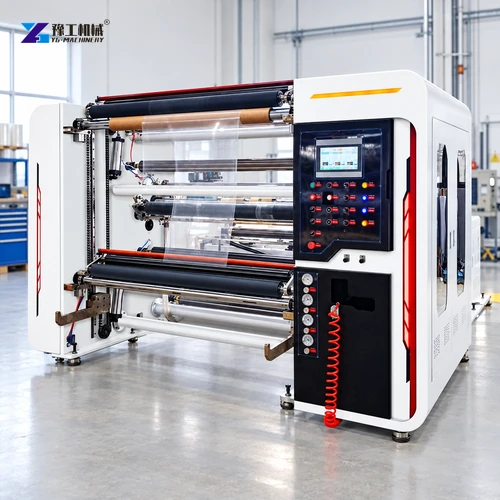
Stable guiding keeps the parent film centered before the knife station.
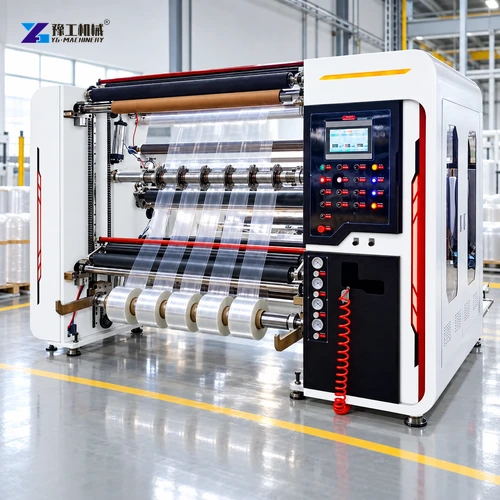
Knife position and web support establish the required finished widths.
Compare YG Film Slitting Machine Models
Select the model from the complete row of operating limits and installation data. Maximum web width, unwind and rewind diameter, power, weight and overall size belong together. The final quotation should identify the exact machine, installed knife arrangement, rewind shafts, loading method and optional accessories rather than combining individual values from different models.
Parameter
YG-1300
YG-1600
YG-1800
Maximum web width
1300 mm
1600 mm
1800 mm
Maximum unwind diameter
1400 mm
1400 mm
1400 mm
Minimum slit width
30 mm
30 mm
30 mm
Maximum rewind diameter
1000 mm
1000 mm
1000 mm
Slitting speed
Up to 350 m/min
Up to 350 m/min
Up to 350 m/min
Total power
24 kW
26 kW
30 kW
Power supply
380 V / 50 Hz
380 V / 50 Hz
380 V / 50 Hz
Machine weight
4000 kg
4500 kg
5500 kg
Overall size (L×W×H)
3300×3150×1930 mm
3300×3450×1930 mm
3300×3650×1930 mm
Control Film Tension from Unwind to Rewinding
Film tension changes as the parent roll becomes smaller and the finished rolls become larger. The control system must maintain a stable path through unwinding, guiding, cutting and rewinding without stretching thin material or allowing slack. Begin a new material at a controlled low speed, observe the web across the full width and record the approved settings only after all lanes track and rewind consistently.
Tension is not one universal number. Material modulus, thickness, lane width, roll diameter, acceleration and surface condition all influence the usable range. Check wrinkles, curl, edge wander and telescoping during starts, stops and speed changes. If one lane behaves differently, inspect core alignment, knife position and rewind torque before increasing global tension.
Aligned cores and controlled tension support even finished rolls.
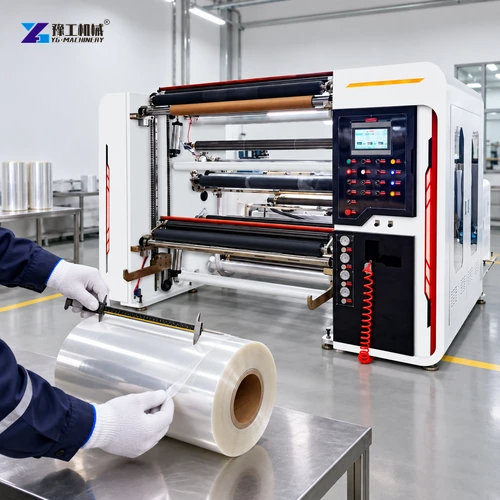
Width and slit-edge checks confirm the finished roll against the order.
Verify Guiding, Static Control and Web Cleanliness
The guide sensor must see a stable edge or printed reference and correct in the proper direction. Center the parent roll, inspect roller alignment and remove contamination before threading. A guide cannot compensate for a loose core, damaged parent roll or incorrect web path. Where printed film is sensitive, agree which surface may contact rollers and how it will be protected during loading and trial work.
Thin film can accumulate static and attract dust or interfere with handling. Define the material, line speed, factory environment and downstream quality requirement so suitable static-control and cleaning options can be reviewed. These items should be listed in the quotation when required; they should not be assumed from the basic machine model.
Share web-tracking, static and cleanliness requirements before optional equipment is fixed.
Measure each lane with the approved tool and inspect both slit edges for waves, chips, burrs, dust or deformation. Check roll hardness, end-face alignment, telescoping, wrinkles and core position. Samples should come from different lanes and stages of the run because a short first roll may not reveal changes caused by diameter growth or sustained speed.
The acceptance record should connect material lot, parent-roll data, lane pattern, knife set, tension recipe, operating speed and finished-roll results. A trial passes when the required rolls can be produced and handled repeatedly, not merely when the web moves through the machine. Keep retained samples and photographs with the job record for later repeat orders.
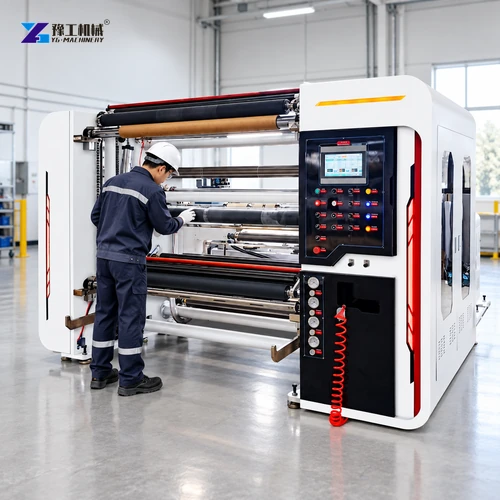
Rollers, shafts and holders are checked before the production trial.
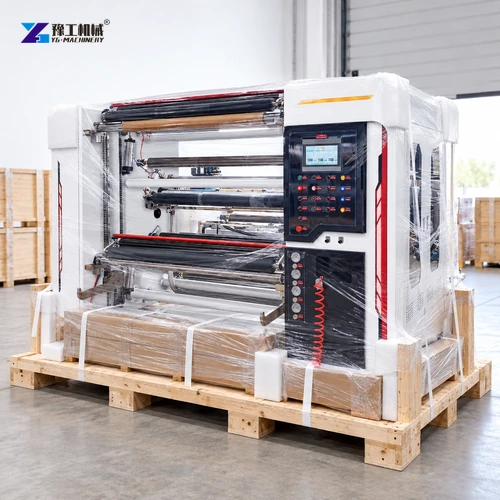
Packing scope should protect the machine, removable parts and control cabinet.
Prepare a Complete Film Slitting Machine Quote
Send film samples, material structure, thickness range, parent-roll dimensions and mass, cores, slit widths, trim, lane quantity, finished diameter, roll mass, target speed, edge standard and factory utilities. Add floor space, lifting equipment, unloading route and destination. If several films or lane patterns will be produced, provide a separate specification for each high-priority product.
Ask the quotation to list the machine model, unwind, guiding, knife method and quantity, rewind shafts, trim handling, static control where required, loading and unloading equipment, tools, wear parts, manuals, packing and test scope. The related slitting machine maintenance guide helps define spare and service planning after the working configuration is confirmed.
Send the complete job file and destination for an itemized machine and test quotation.
Film Slitting Machine for Flexible Packaging Rolls FAQ
Which films can a film slitting machine process?
The final range depends on the approved knife, tension and winding setup for the supplied film sample and structure.
Does the minimum slit width apply to every film?
No. The 30 mm reference is a model limit; material behaviour, core, knife method and winding stability must also be verified.
Should the machine start at its maximum listed speed?
No. Commission each important film and lane pattern at controlled speed, then increase only while edge and winding quality remain acceptable.
What should a buyer send for model selection?
Send film samples, parent and finished roll data, lane pattern, edge tolerance, target output, utilities, layout and handling limits.
Prepare the Final Film Slitting Review
A reliable film slitting machine selection joins material evidence, machine limits, web control and finished-roll acceptance. Submit the actual film range and roll schedule so YG can confirm one complete configuration instead of estimating from width alone.