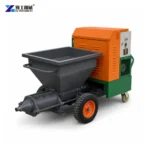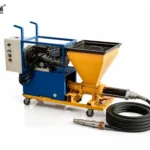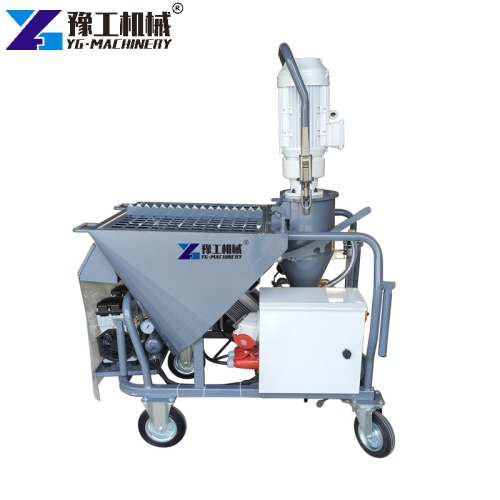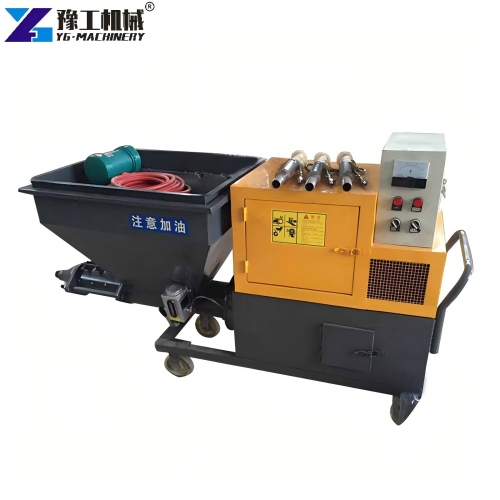
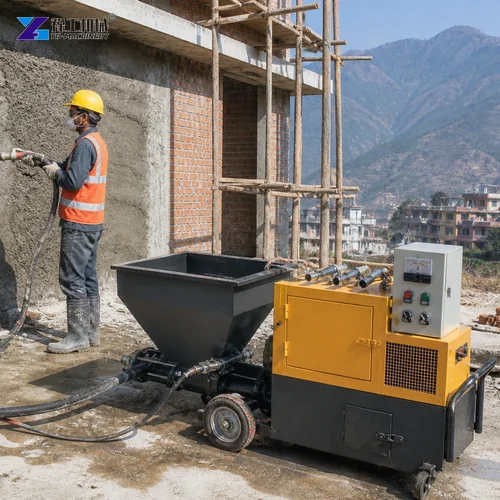
A compact Stucco Machine gives Nepal contractors a practical way to organize mortar delivery for interior and exterior wall-finishing work. YG Machinery builds the project proposal around the wall area, local mix, power supply, hose route, access conditions and finishing crew so the equipment package matches the actual operating plan.
The recommended configuration is rated at 3 cubic meters per hour, uses 380 V / 5.5 kW power and works at 2-5 MPa. A 50-liter hopper feeds material into a 32-millimeter conveying tube. These details help buyers coordinate the machine, local mortar, hose route and operator plan before ordering instead of selecting equipment from appearance alone.
Nepal Stucco Machine Project Objectives
The project solution is designed for contractors who want faster, more consistent mortar placement across multiple wall areas while keeping the equipment compact enough for practical site movement. YG Machinery coordinates the machine package with the mixing zone, wall sequence, hose path and finishing crew so every part of the workflow supports accepted surface quality.
The compact wheeled format can be positioned near a protected mixing zone, while the hose carries material toward the active wall. Planned productivity depends on preparation, material consistency, conveying distance, layer thickness, finishing capacity and cleaning discipline. Matching those conditions before shipment helps the selected configuration perform reliably on site.
For Nepal projects, the technical review should confirm available three-phase power, local sand grading, delivery access, vertical rise, replacement wear parts and remote technical support. YG specialists can use those details to refine the equipment scope, recommend compatible accessories and prepare practical startup guidance for the buyer’s crew.
Nepal Project Requirements For A Cement Spraying Machine
Begin with the wall area, substrate and required mortar system. Interior brick, block, rendered masonry and exterior work may use different preparation, layer design and curing. The equipment configuration should follow the specified material rather than forcing one recipe onto every surface. Send photos and a typical section so the technical discussion includes corners, openings and access restrictions.
Measure the practical hose path from the planned machine position to the furthest work point. Include stairs, scaffold levels, turns and protected crossings. The verified configuration lists different maximum distances for cement and mortar, so the buyer should identify which material applies to the project. Choose working reserve instead of planning every shift at the published limit.
Confirm 380 V power, frequency, phase, circuit protection and connection responsibility. A qualified local professional should approve the final supply. If three-phase power is not suitable, discuss another configuration before production. Do not rely on an adapter or generator without confirming voltage stability and starting requirements for the exact equipment.
Complete Stucco Machine Parameters For Nepal
The following table presents the complete confirmed parameter set for this recommended configuration. It covers machine capacity, power, pressure, conveying tube, aggregate, hopper, weight, dimensions, material ratio and conveying distances so buyers can review the full operating scope before requesting a quotation.
| Parameter | Verified Configuration |
| Output | 3 m3/h |
| Power Supply | 380 V / 5.5 kW |
| Working Pressure | 2-5 MPa |
| Conveying Tube Inner Diameter | 32 mm |
| Maximum Aggregate Size | Up To 4 mm |
| Particle Diameter Limit | Up To 5 mm |
| Hopper Volume | 50 L |
| Machine Weight | 320 kg |
| Machine Dimensions | 1650 x 750 x 1190 mm |
| Published Material Ratio | 1:1:3 Water, Lime And Sand |
| Cement Conveying Distance | 50 m Horizontal / 30 m Vertical |
| Mortar Conveying Distance | 60 m Horizontal / 40 m Vertical |
The 320-kilogram machine needs a planned unloading and movement method. Its 1650 x 750 x 1190 millimeter size should be compared with doorways, storage and the operating zone. The 50-liter hopper supports controlled feeding, while the 32-millimeter tube and aggregate limits make material screening and consistent mixing important parts of the site method.

Delivery And Receiving Checks For Nepal Buyers
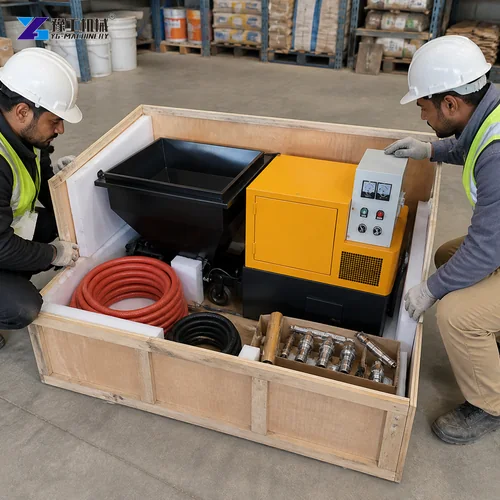
Before shipment, confirm the machine, hose length, nozzle, couplings, compressor requirement, tools, spare seals and wear parts included in the package. Request packing dimensions and gross weight for transport planning. The buyer should know who handles customs, unloading and movement from the delivery point to secure storage.
At receipt, inspect packaging before it is moved or discarded. Check the machine body, hopper, control enclosure, wheels, pump outlet, hose, nozzle and accessories against the packing list. Photograph visible damage and record missing components immediately. Keep moisture protection in place until the equipment reaches a dry, controlled area.
Compare the model plate and electrical information with the approved order. Rotate or inspect accessible parts only using the supplier’s receiving guidance. Do not start a machine that has damaged wiring, a deformed coupling or evidence of impact. A complete receiving record gives remote support staff useful evidence if a correction is needed.
Before approving final packing, assign each accessory to a numbered package and match it to a clear checklist. Mark fragile controls, hose connections and spare-part boxes for careful handling. This simple handover makes customs inspection, unloading and warehouse transfer easier because the buyer can confirm the complete scope without opening every package at an exposed construction site.
Site Setup For A Cement Plaster Spray Machine In Nepal
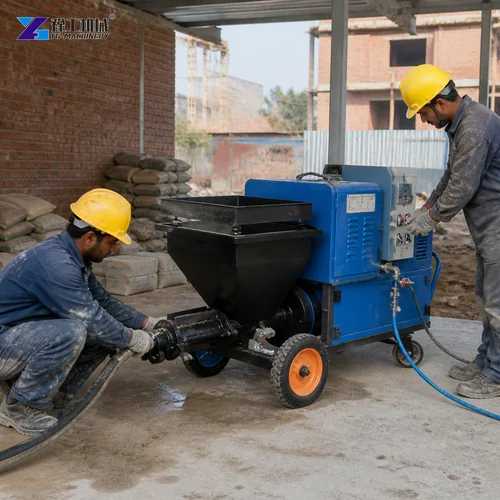
Prepare a level operating position close to the mixing area and clear of vehicle routes. Leave space for hopper loading, controls and cleaning. Route the hose in wide curves, support vertical sections and protect couplings at floor edges. The nozzle operator needs enough movement space to maintain a consistent angle without dragging the hose through fresh work.
Verify the local mortar with a representative trial. Screen sand where necessary and measure water, binder and additives consistently. The 1:1:3 water-lime-sand reference ratio helps with preliminary planning, but the final mix should follow the project’s approved material design and a test using local materials. Local wall requirements should be reviewed by the responsible technical parties.
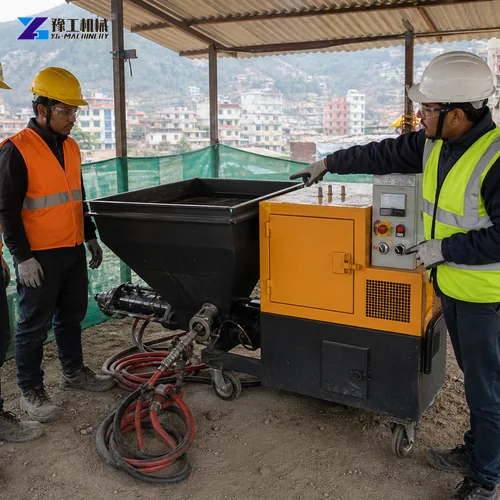
Connect the compatible air supply and inspect all clamps before wet material enters the system. Review startup, communication and emergency stop signals with the crew. The Cement Plaster Spray Machine should begin on a protected test panel where the team can confirm discharge, spray pattern, adhesion and finishing response.

Stucco Machine Workflow Benefits For Nepal Projects
The machine supports continuous mortar delivery through a controlled hose and nozzle system, helping the crew reduce repeated manual carrying and throwing across larger wall areas. A stable feed allows the nozzle operator to focus on spray distance, angle and coverage while the finishing team works to the planned layer and surface requirement.
Straightforward operation still benefits from formal operator guidance. The crew should understand material limits, controls, hopper safety, hose pressure, nozzle technique, blockage response and cleaning. A short checklist supports consistent startup and shutdown between shifts, while model information and technical support contacts help the site team communicate quickly when guidance is needed.
The strongest efficiency comes when mixing, pumping, spraying and finishing move at compatible rates. YG Machinery can help the buyer review crew roles, material flow and conveying conditions before startup. This balanced plan supports reliable use of the Stucco Machine without promising one fixed production result for every mix or worksite.

Maintenance And Support For A Nepal Stucco Machine
Clean the hopper, pump, hose and nozzle before mortar hardens. Release pressure and isolate the power supply before opening any connection. Inspect seals, wear surfaces and hose damage during cleaning. Keep a practical starter stock of the recommended wear parts so a routine replacement does not stop the project while an international shipment is arranged.
Record operating hours, unusual pressure, blockages, changed material and replaced parts. Photos and short videos can help a remote technician understand the system quickly. Use the exact machine configuration when ordering spares because similar components may differ in size or material.
The Cement Spraying Machine should be stored dry, clean and protected from unauthorized use. Coil the hose in wide loops, cover coupling faces and organize tools. Confirm warranty scope, remote guidance, spare-parts lead time and the escalation contact before the first production day.

Stucco Machine Commercial Planning For Nepal
A complete Nepal budget should identify the Stucco Machine, hose, nozzle, air supply, mixing equipment, spare parts, packing, freight and technical support as separate scope items. Compare the proposed Cement Spraying Machine configuration with the available power, unloading method and furthest hose route. Ask which components arrive ready to connect and which must be sourced locally. This prevents a buyer from approving a low equipment price without the compressor, couplings or wear parts needed for the first operating period.
Confirm Incoterms, destination point, production lead time, packing dimensions, warranty scope and the process for remote service. A Cement Plaster Spray Machine shipment should include a packing list and model-specific spare-parts reference. The buyer can then plan customs, inland transport, storage and commissioning before the cargo moves. Keep responsibilities in writing so the supplier, freight partner and local contractor understand who unloads, connects, trials and accepts the system.
Plan cash flow beyond delivery. Include electrical preparation, material trials, operator time, routine cleaning, wear components and contingency stock. A Cement Spraying Machine can support efficient placement when those supporting tasks are funded. A Cement Plaster Spray Machine that is maintained and supplied with the correct local mix is easier to keep productive across changing work areas. Compare the Cement Spraying Machine and Cement Plaster Spray Machine options against the same route, material and support checklist. Review the final scope with both purchasing and the site team before approving production.
How Nepal Buyers Can Prepare A Better Quote Request?
Send the destination, wall type, mortar recipe, maximum aggregate, required layer, horizontal and vertical reach, voltage, daily area, working hours and preferred power source. Add site photos showing access, mixing space and the hose path. This information lets the supplier compare the verified configuration with other models when the project needs more reach or another power option.
Ask for a clear delivered scope covering machine, compressor, mixer, hose, nozzle, accessories, spares, packaging, freight and support. Confirm the quoted Incoterm and buyer responsibilities. A complete scope makes budget approval easier and prevents an essential component from being discovered after the equipment reaches Nepal.
Review the new four-model product comparison, the plaster quality-control guide, the existing Philippines application page and the mortar sprayer overview. Together they help a buyer compare configuration, method and regional planning.
Stucco Machine FAQ
YG Machinery reviews the wall type, local mortar, required reach, power supply, access conditions, daily area and accessory scope before recommending the machine package. This project-based selection helps the buyer coordinate equipment, transport, startup and support.
The verified configuration is listed at 3 cubic meters per hour. Actual accepted wall area depends on material, layer thickness, hose route, operator technique, finishing and site organization.
The supplied configuration uses 380 V / 5.5 kW power. The buyer should confirm frequency, phase, protection and connection with qualified local professionals before startup.
The configuration supports mortar conveying up to 60 meters horizontally and 40 meters vertically. Cement conveying is rated at 50 meters horizontally and 30 meters vertically. Select working reserve for the actual route.
Send the material recipe, aggregate size, wall area, layer, required reach, power details, destination, access photos and accessory scope. A specialist can then recommend the suitable model and delivered package.
Request A Nepal Spraying Equipment Proposal
Share your Nepal project location, mortar recipe, wall area, conveying route and power supply. A YG Machinery specialist can compare the verified 3 m3/h configuration with the wider range and prepare a complete delivered-scope quotation.