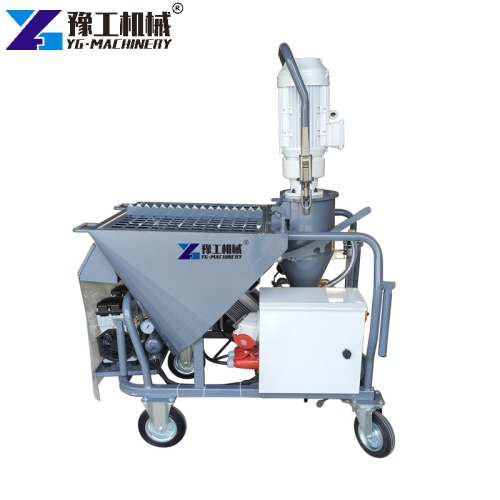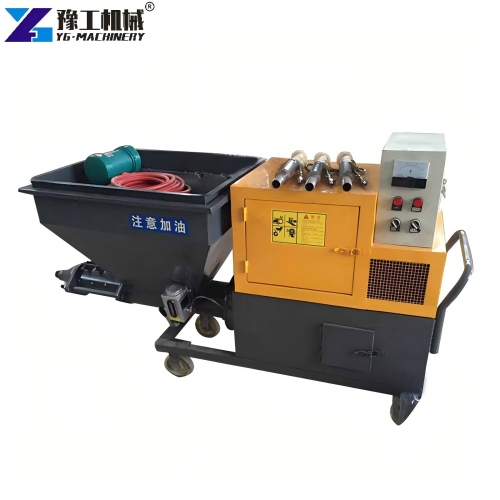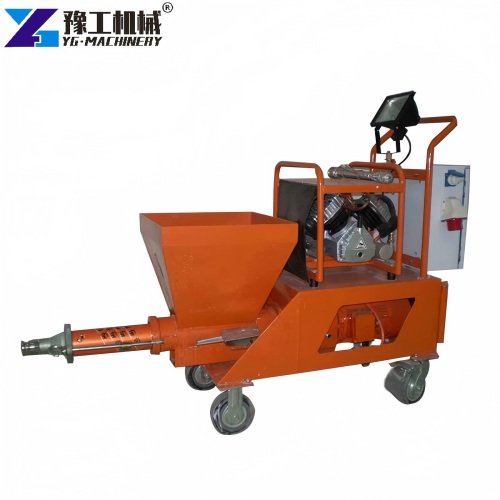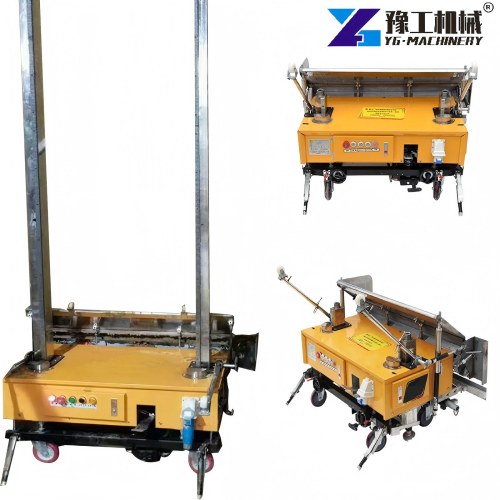
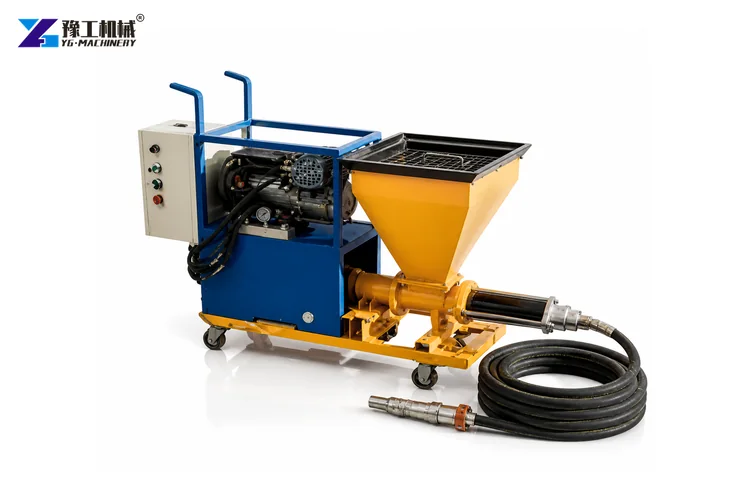
A Cement Plaster Spray Machine can place mortar quickly, yet surface quality still depends on material preparation, hose management, air supply, nozzle technique and finishing. The machine does not correct an unstable mix or an unprepared wall. This guide focuses on seven controls that crews can standardize before production: substrate readiness, aggregate grading, mixing consistency, equipment setup, spray pattern, thickness checks and complete cleaning.
The working system should be treated as one connected process. The mixer must supply uniform material, the Cement Spraying Machine must maintain steady delivery, and the nozzle operator must build an even coat that the finishing crew can handle. A Stucco Machine performs best when every handoff has a clear target and the team records settings that produced an acceptable test panel.
Why Cement Plaster Spray Machine Quality Starts Before Spraying?
Inspect the wall before equipment is started. Remove loose dust, oil, weak material and projections that prevent consistent coverage. Repair major voids and address active moisture or movement through the project specification. Confirm whether the substrate needs controlled dampening, a bonding treatment or another approved preparation. The correct method depends on the wall, mortar system and local construction requirements.
Define the required layer, reference planes and acceptance method. Mark corners, openings, service boxes and areas that need protection. A sprayed base coat still needs skilled finishing and thickness control. When the crew knows the target before wet material arrives, it can avoid repeated passes, unnecessary buildup and rushed corrections around edges.
Produce a representative test panel using the planned substrate, mix and equipment. Evaluate pump behavior, rebound, adhesion, wet thickness, finishing response and cured appearance. Keep the approved recipe and settings with the crew. A test panel turns an informal opinion into a practical reference for the first production area.

Complete Capacity Table For Cement Spraying Machine Models
Model choice affects the quality-control plan because pressure, reach and particle allowance change across the range. The table below includes all available values for YG-311, YG-511, YG-711 and the diesel version. Use it to identify which material and route must be trialed rather than assuming every configuration will behave the same way.
| Parameter | YG-311 | YG-511 | YG-711 | Diesel Version |
| Voltage | 380 V | 380 V | 380 V | Not Applicable |
| Rated Power | 4 kW | 7.5 kW | 3 kW | 12 hp |
| Particle Pass Diameter | Up To 4 mm | 3-4 mm | Confirm For Material | Up To 10 mm |
| Working Pressure | 3 MPa | 6 MPa | 7.5 MPa | 6 MPa |
| Horizontal Conveying Distance | 30 m | 50 m | 60 m | 60 m |
| Vertical Conveying Distance | 20 m | 30 m | 30 m | 30 m |
| Published Conveying Output | 60-80 m2/h | 80-100 m2/h | 80-100 m2/h | 100 m2/h |
| Machine Dimensions | 1750 x 450 x 800 mm | Confirm Before Order | 1600 x 500 x 700 mm | 1800 x 580 x 950 mm |
| Machine Weight | 160 kg | 350 kg | 180 kg | 280 kg |
A higher pressure value does not replace correct material. It may support a demanding route, but the mortar must still remain uniform and within the allowed particle size. Select reasonable reserve for the hose path and confirm any unlisted dimension before ordering. The completed technical sheet should identify the exact model, power option, hose and nozzle used for the approved trial.
Cement Plaster Material Grading And Mixing Control
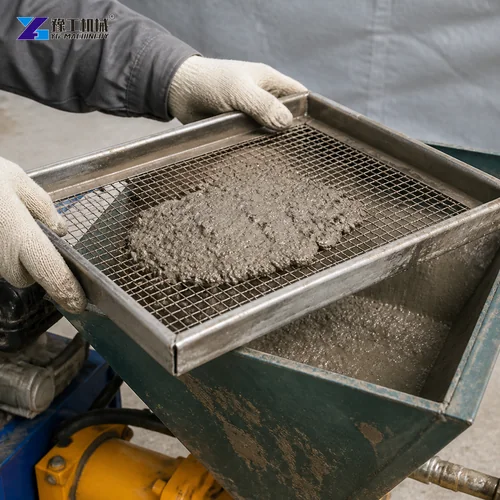
Start with consistent raw materials. Sand grading has a direct effect on pumpability, wear and surface texture. Screen material when site handling may introduce oversized particles or debris. The selected model’s particle limit is a maximum boundary, not a target grading. A smooth, stable distribution generally moves through the pump and hose more predictably than a mix containing isolated large particles.
Measure water and additives instead of adjusting by appearance alone. Keep the order of addition, mixing duration and batch size consistent. Too little water can increase pumping load, while excess water may reduce stability, change curing behavior and create a weak or uneven finish. Follow the approved material design and supplier guidance rather than using extra water as a quick response to difficult pumping.
Coordinate batch timing with the spraying rate. Material should not wait long enough to stiffen in the mixer, hopper or hose. Avoid mixing a new recipe while the previous material remains in the system unless compatibility has been confirmed. A simple batch record can note time, quantities, ambient conditions and observations without slowing the crew.

How To Set Up A Cement Plaster Spray Machine?
Place the unit on stable level ground close to the mixing station while preserving safe access to the hopper and controls. Protect the machine from falling debris and active vehicle routes. Inspect guards, couplings, hose condition, nozzle, air connection and electrical or engine systems before material loading. Confirm that the emergency stop and shutdown procedure are understood by both operators.
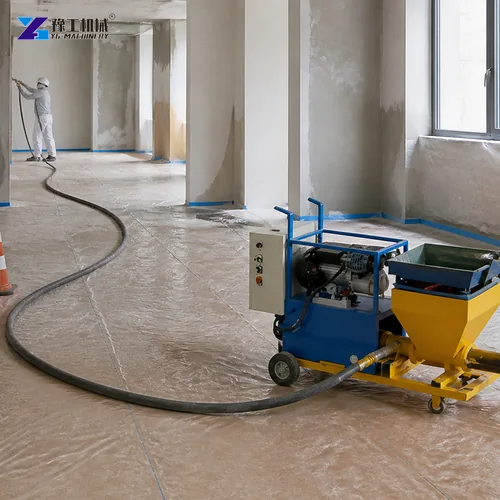
Route the hose in wide curves with the minimum practical number of sharp turns. Support vertical sections and keep couplings away from edges that can damage them. Use barriers where the route crosses a work path. A hose under pressure can move unexpectedly, so workers should not stand over couplings or pull the line by the nozzle.
Match the compressor and nozzle to the selected system. Stable air helps shape the spray, but excessive air can increase rebound and dust. Begin with the approved trial setting and change one variable at a time. The machine operator and nozzle operator need a clear signal for start, slow feed and stop so the wet process remains coordinated.
Nozzle Technique For Even Cement Plaster Coverage
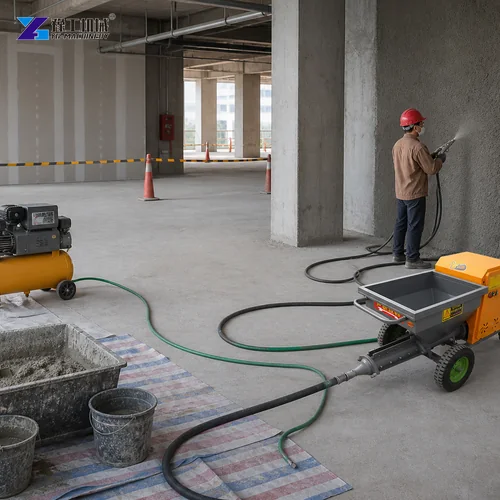
Hold the nozzle at a consistent working distance and keep it close to perpendicular where the wall geometry allows. Sweep at a controlled speed with overlapping passes. Large changes in distance create uneven impact and layer thickness. The operator should watch the wet coat, not only the nozzle, and adjust movement before ridges or thin areas grow across the section.
Build the required thickness using the approved pass sequence. Do not bury unstable material under another layer. Corners, recesses and service penetrations need deliberate movement because the spray angle changes. The crew can reduce waste by defining a practical boundary and placing protection where rebound is expected.
A Cement Plaster Spray Machine should feed the nozzle smoothly. Pulsation, a changing fan or sudden hose movement indicates that the material, pump, air or route needs attention. Stop safely before a minor irregularity becomes a blockage or a large defective area. Record the corrected setting when the pattern returns to the approved reference.

Stucco Machine Thickness And Surface Quality Checks
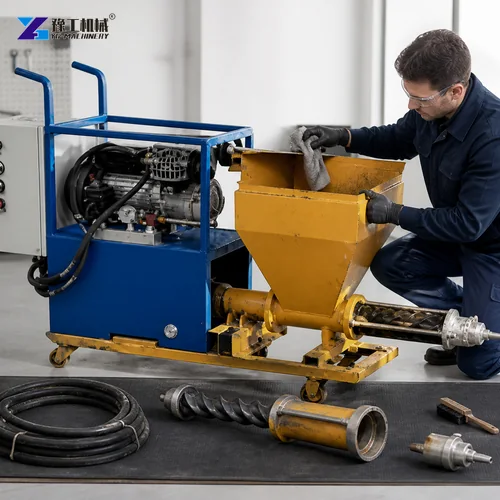
Check wet thickness at planned intervals and at locations where buildup is likely, including corners and transitions. Use reference guides, a straightedge or the project-approved method. The goal is controlled coverage, not an artificially smooth appearance immediately after spray. The finishing team needs enough material to establish the plane without removing excessive fresh mortar.
Inspect adhesion, hollows, cracking and curing behavior according to the specified schedule. Surface quality depends on substrate, layer design and curing as well as application. Protect new work from rapid drying, rain, impact and contamination using the method approved for the local material system. Do not promise a universal finish without reviewing the complete wall build-up.
The compact Stucco Machine process becomes easier to manage when the crew defines hold points. Approve the substrate, test panel, first production section and cured reference before scaling the daily area. These checks give the buyer evidence that increased speed is not replacing quality control.
Cleaning A Cement Spraying Machine After Work
Plan cleaning before the last batch is mixed. Stop material feed, process the remaining mortar and isolate the equipment according to the approved sequence. Release pressure before opening any connection. Never point a hose or nozzle toward a person, and never use compressed air in a way that can launch hardened material or cleaning components into an uncontrolled area.
Clean the hopper, screw-pump area, hose, couplings and nozzle until no wet material remains. Inspect seals, wear surfaces and guards while parts are accessible. Keep water and waste under control so cleaning does not contaminate finished work or drains. Replace damaged components before the next startup rather than leaving an informal note for another shift.
Store the hose in wide coils and protect coupling faces. Dry tools and organize spare parts. Record unusual pressure, blocked material, changed settings and replacements. Consistent cleaning protects the Cement Spraying Machine and gives the next crew a reliable starting point for the approved recipe.
Cement Plaster Spray Machine Trial And Handover
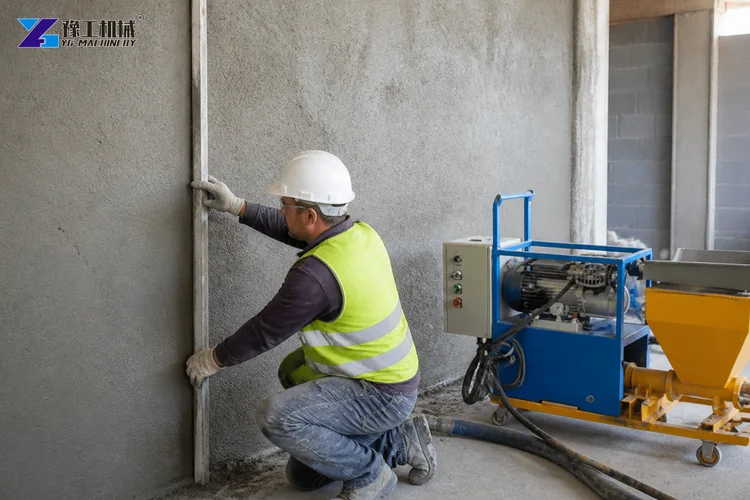
A representative trial should use the destination material, planned hose route and normal crew roles. Record the Cement Plaster Spray Machine configuration, measured batch recipe, mixing time, air setting, spray behavior, wet thickness, finishing response and cleaning result. The Cement Spraying Machine should run long enough to expose inconsistent feeding or heat-related changes, but the trial area should remain small enough to correct without costly rework. Approve a cured sample as well as the fresh appearance before releasing full production.
Handover should cover startup, normal operation, emergency stop, pressure release, blockage response, daily cleaning, wear inspection and spare-part identification. The Cement Plaster Spray Machine record should include model details and technical support contacts. Assign trained operators and keep the approved recipe near the mixing area. A Stucco Machine can then begin each shift from a known baseline instead of depending on memory or informal adjustment. This simple control also makes remote troubleshooting faster because the supplier can compare current conditions with the accepted trial.
Seven Controls For Reliable Daily Plaster Output
Use one short daily checklist: approve the substrate, verify screened material, confirm measured mixing, inspect the complete system, set the test spray, check thickness and finish, then clean and record the equipment. Assign a responsible person to each point. A checklist is useful only when the crew can stop and correct a failed condition before the next step.
Measure production as accepted wall area, not only material pumped. Rework, cleanup and waiting time belong in the daily review. Track which cause created each delay: material, mixing, power, air, hose route, spraying, finishing or access. After several shifts, the project can improve the true constraint instead of demanding more pump output from an already balanced system.
For equipment selection, compare the four cement spraying configurations, the real Nepal stucco machine solution, the existing mortar sprayer overview and the related GFRC sprayer. The best choice follows the material, finish, route and daily operating plan.
Cement Plaster Spray Machine FAQ
Blockages commonly relate to oversized particles, inconsistent mixing, a stiffening batch, damaged hose or an unsuitable route. Stop safely, release pressure and follow the approved clearing method before changing the material or settings.
Use the distance approved during the representative test panel and keep it consistent through each pass. The correct value depends on the nozzle, air, material and required layer, so one universal number is not reliable.
The equipment supports fast material placement, while skilled workers still control substrate preparation, thickness, edges, leveling, finishing and curing. Plan the spraying and finishing teams as one process.
Clean the hose completely at the end of work and before material can harden inside. Additional cleaning may be needed when changing materials, after an extended stop or when the approved operating procedure requires it.
Record the recipe, aggregate grading, mixing time, hose route, model, pressure behavior, air setting, nozzle technique, layer thickness, rebound, finish and curing observations. This record becomes the production reference.
Improve Your Cement Plaster Application Plan
Send the local material recipe, wall type, layer requirement, power supply, hose route and daily area. A YG Machinery specialist can recommend a suitable configuration and help define a representative material and equipment trial.