An excavator metal shear converts a standard carrier into a mobile cutting tool for scrap yards, demolition sites, and steel-processing work. The attachment uses hydraulic pressure to drive two blades through rebar, steel sections, pipes, and mixed metal waste. YG offers five models for excavators from 5 to 50 tons, allowing buyers to match attachment weight, opening size, shear depth, and cutting force to the job.

Excavator Metal Shear Parameters
| Model | Weight | Maximum Opening | Width | Height | Effective Shear Depth | Rotation | Working Pressure | Bottom Shear Force | Medium Shear Force | Tip Shear Force | Applied Excavator |
| YG-620 | 620 kg | 334.4 mm | 864 mm | 1,521 mm | 286 mm | 360° collision rotation | 235 bar | 81.2 T | 50.2 T | 32.2 T | 5–9 T |
| YG-1413 | 1,413 kg | 540 mm | 1,175 mm | 2,050 mm | 348 mm | 360° hydraulic rotation | 300 bar | 138.2 T | 80.2 T | 53.2 T | 10–19 T |
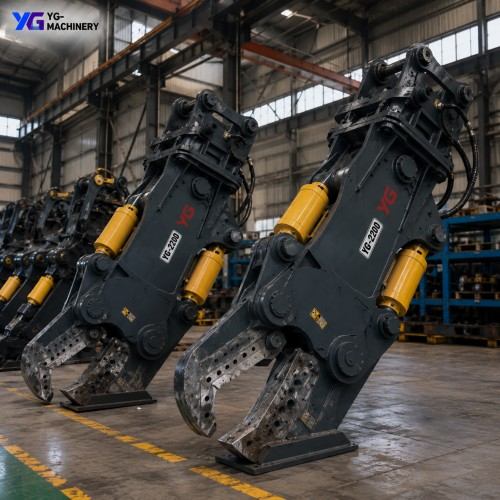
| YG-2200 | 2,200 kg | 500 mm | 1,370 mm | 2,380 mm | 486 mm | 360° hydraulic rotation | 320 bar | 171.2 T | 100.2 T | 75.2 T | 20–25 T |
| YG-2977 | 2,977 kg | 660 mm | 1,600 mm | 2,600 mm | 578 mm | 360° hydraulic rotation | 320 bar | 330.2 T | 189.2 T | 127.2 T | 28–35 T |
| YG-4052 | 4,052 kg | 801 mm | 1,700 mm | 2,700 mm | 736 mm | 360° hydraulic rotation | 320 bar | 387.2 T | 218.2 T | 147.2 T | 38–50 T |
The listed values provide a starting point for model selection. Final matching should also consider the excavator hydraulic system, boom configuration, connection method, and working position.
What Is an Excavator Metal Shear?
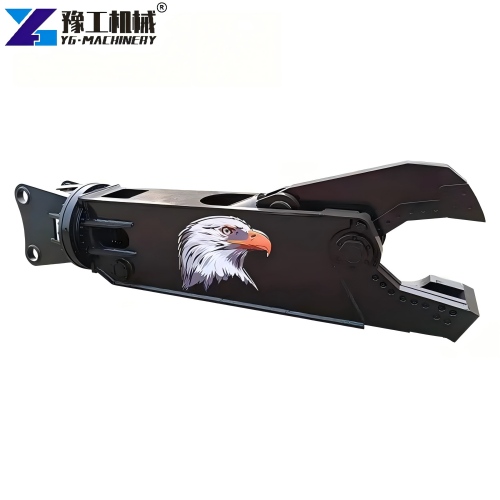
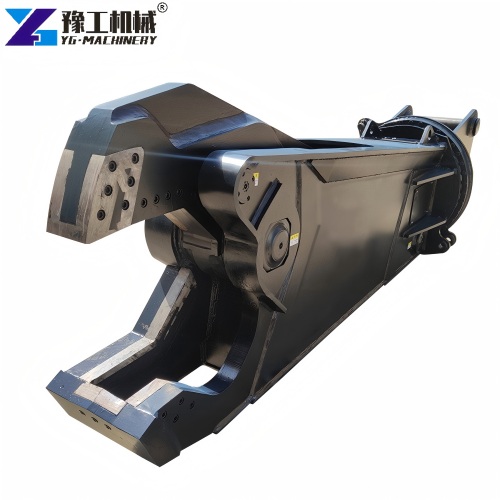
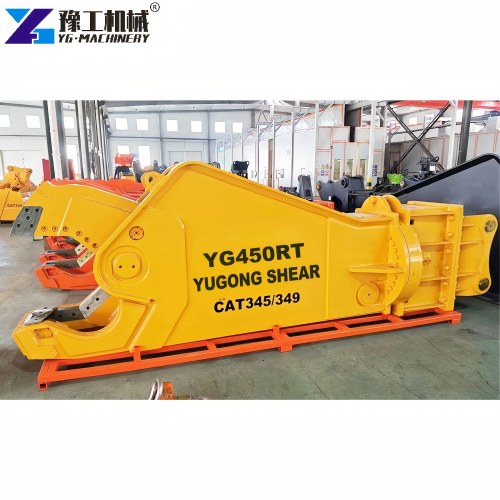
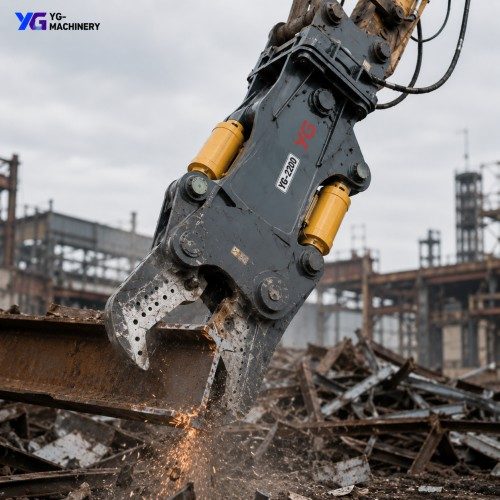
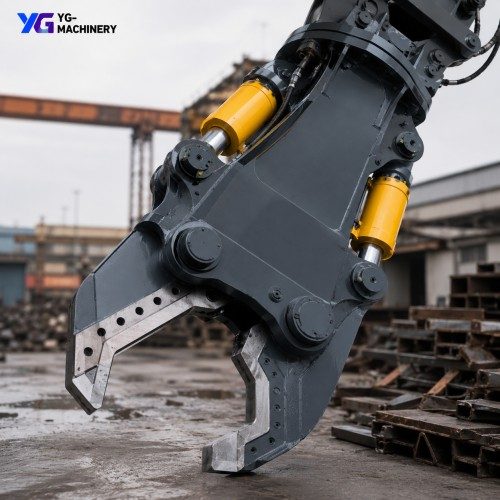
An excavator metal shear is a hydraulic attachment designed to grip and cut metal materials. Its jaw combines a wide opening with several force zones along the cutting area. The lower section provides greater force, while the tip gives the operator more control when positioning or starting a cut.
Unlike an impact attachment, the shear uses hydraulic cylinders to close the blades steadily through the material. This controlled cutting method is suitable for shortening long steel pieces, dismantling structural frames, and preparing scrap for loading or transport.
How Cutting Force Changes Along the Blades?
Cutting force varies at different positions inside the jaw. YG lists bottom, middle, and tip shear force because material placement directly affects the leverage available during cutting.
Bottom Cutting Area
The bottom section provides the highest cutting force. It is suitable for thicker or more resistant materials that can be positioned deeply inside the jaw. For example, the YG-4052 provides a listed bottom shear force of 387.2 tons.
Middle Cutting Area
The middle section balances cutting force with operating space. It is useful for repeated cutting when steel cannot reach the deepest part of the jaw. The YG-2200 provides 100.2 tons of force in this area.
Tip Cutting Area
The tip provides less force but gives the operator better positioning control. It can be used to start a cut, reach confined areas, or handle smaller pieces. Actual performance still depends on material grade, thickness, shape, and cutting angle, so the listed force should not be treated as a universal maximum cutting thickness.

How to Select the Correct Excavator Metal Shear?
Carrier tonnage is the first filter, but it should not be the only one. A correctly selected excavator metal shear must remain stable during lifting, rotation, positioning, and cutting.
Match the Excavator Weight
YG models cover five carrier ranges:
- YG-620 for 5–9 ton excavators
- YG-1413 for 10–19 ton excavators
- YG-2200 for 20–25 ton excavators
- YG-2977 for 28–35 ton excavators
- YG-4052 for 38–50 ton excavators
Do not select a heavier attachment only because it has greater cutting force. The excavator must safely carry and control the attachment at the intended working reach. Boom position and ground conditions should also be considered.
Check Hydraulic Pressure
Working pressure ranges from 235 to 320 bar across the five models. Before ordering, compare the attachment requirement with the excavator auxiliary circuit. Pressure, oil flow, hose size, and return-line arrangement should be confirmed together.
The available specifications provide working pressure but do not list the required oil flow. Oil-flow matching should therefore be confirmed with the supplier using the excavator make, model, and hydraulic information.
Compare Opening and Shear Depth
Maximum opening determines the external material size that can enter the jaw. Effective shear depth indicates how far the material can be positioned into the cutting area. A larger opening does not automatically make one model suitable for every application.
The YG-620 has a 334.4 mm opening and 286 mm effective shear depth. The YG-4052 increases these values to 801 mm and 736 mm. Buyers should compare these dimensions with the usual pipe diameter, beam width, or scrap size at the site.
Consider Rotation Type
Rotation helps the operator align the cutting area without constantly repositioning the excavator. The YG-620 is listed with 360-degree collision rotation, while the larger models use 360-degree hydraulic rotation.
Hydraulic rotation is useful when cutting direction changes frequently during dismantling or scrap processing. The exact piping, control method, and excavator connection should be checked before installation.
Typical Applications
A metal shear excavator is used where steel materials must be reduced before handling or transport. The attachment can support several types of work when the carrier, hydraulic system, and shear are correctly matched.
Scrap Metal Processing
Scrap yards can use the shear to shorten long steel sections and separate oversized metal waste. A metal shear excavator can move between working areas and reduce unnecessary material transfers.
After cutting, an Orange Peel Grab Bucket can handle irregular scrap, while a Hydraulic Magnet for Excavator can move steel plates, rebar, and other magnetic materials. Combining cutting, sorting, and loading attachments can create a more efficient scrap-processing workflow.
When comparing an Excavator With Scrap Shear For Sale, buyers should consider not only cutting force but also daily material types, dimensions, and the next handling step.
Structural Demolition
During controlled demolition, the attachment can help dismantle steel frames, beams, pipes, and reinforced components. Rotation allows the operator to approach material from different angles. Site procedures must still account for falling material, unstable structures, and restricted working zones.
Rebar and Mixed Metal Waste
Rebar, light steel sections, and mixed demolition scrap often have irregular shapes. A suitable opening and shear depth can help secure these materials before cutting. Operators should avoid placing too many loose pieces in the jaw at one time.
Excess material may shift during closure and affect cutting position. Smaller batches generally provide better control and reduce unnecessary side loading on the attachment.
Smaller Carrier Projects
A mini excavator shear can support confined sites where a large carrier cannot work efficiently. The YG-620 is intended for 5–9 ton carriers and may suit small scrap yards, factory interiors, or restricted demolition areas.
This mini excavator shear still requires hydraulic and stability checks. Attachment weight, boom reach, connection dimensions, and ground conditions all influence actual operation.
Operating Considerations
Good operation protects the blades, pins, hydraulic components, and excavator structure. Operators should position the material as deeply as practical when greater cutting force is required. Side loading, twisting, and using the attachment as an impact hammer can increase wear.
Before each shift, inspect hoses, fittings, blade fasteners, pins, and visible structural parts. Keep the cutting area clear of packed debris. Lubrication and blade-maintenance intervals should follow the supplier’s instructions and actual working conditions.
During cutting, personnel must remain outside the material-drop zone. Long steel sections can move suddenly when the final connection separates. The excavator should stand on stable ground with enough space for safe rotation and material handling.
Installation Information to Prepare
Accurate machine information helps the supplier select brackets, hoses, and hydraulic connections. Before requesting a quotation, prepare:
- Excavator brand and model
- Operating weight
- Auxiliary hydraulic pressure
- Auxiliary oil flow
- Pin diameter and center distance
- Quick-coupler details
- Main material type and approximate dimensions
- Required rotation method
When reviewing an Excavator With Scrap Shear For Sale, these details reduce interface and hydraulic-matching risks. Photos or videos of the usual material can also help the supplier understand the application.
Excavator Metal Shear FAQ
No. The tonnage range is only an initial reference. Hydraulic pressure, oil flow, boom geometry, coupler type, and machine stability must also be checked.
No. Maximum opening describes the available jaw space, not a guaranteed material thickness. Actual cutting results depend on material grade, profile, thickness, blade condition, and cutting position.
The bottom cutting area provides the highest listed force. Material should be positioned deeper in the jaw when greater force is required and site conditions allow safe handling.
The listed models provide 360-degree rotation. The YG-620 uses collision rotation, while the YG-1413 through YG-4052 use hydraulic rotation.
Provide the excavator model, operating weight, hydraulic pressure, oil flow, connection dimensions, and target material. Photos or videos of the usual material can also help with model selection.
Why Choose YG Machinery?
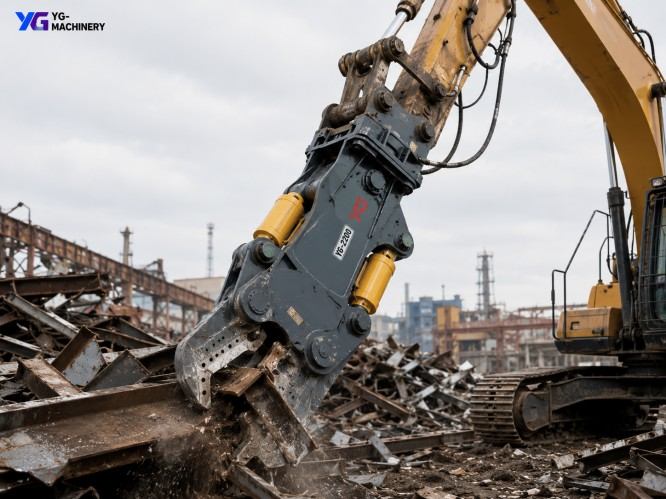
YG Machinery supplies five shear models for excavators from 5 to 50 tons. The available range includes maximum openings from 334.4 to 801 mm and listed bottom shear forces from 81.2 to 387.2 tons. Buyers can therefore compare models using measurable carrier, jaw, pressure, and force data.
The YG team can review your excavator information and working materials before recommending a configuration. Send the machine model, hydraulic data, connection dimensions, and application details to request a matched excavator metal shear quotation.