A down-the-hole drilling system only performs as well as its air supply. Buyers often compare drill rigs by hole depth, mast length, or engine power, then treat the compressor as a separate purchase. That approach can lead to slow penetration, poor hole cleaning, excessive fuel consumption, stuck tools, and unstable production. The better method is to match the DTH drill rig air compressor, hammer, bit, drill string, and site conditions as one working package.
This guide explains the selection process for quarrying, mining, foundation work, road construction, and water-related drilling. It focuses on the practical questions a procurement team should answer before requesting a quotation. Final sizing must still be confirmed against the hammer manufacturer’s air-consumption data, the drill-rig limits, local conditions, and applicable safety requirements.
Why Airflow Determines DTH Drilling Machine Performance?
In a DTH system, compressed air travels down the drill pipe and drives a piston inside the hammer. The piston repeatedly strikes the bit while the rig rotates the drill string. After powering the hammer, the air flows through ports in the bit and returns through the annular space between the drill string and the bore wall. This returning air must carry broken rock to the surface.
The compressor therefore performs two jobs: it supplies enough pressure for effective impact energy and enough flow to operate the selected hammer and clean the hole. Pressure and flow are related, but they are not interchangeable. A machine with adequate pressure but insufficient flow may run the hammer without clearing cuttings reliably. High flow at inadequate pressure may not deliver the hammer performance expected in hard rock or deeper holes.

Five Compressor Sizing Inputs for DTH Drilling
1. Hole Diameter
Hole diameter influences bit size, hammer size, annular area, and the volume of cuttings that must be lifted. A wider hole generally requires a larger hammer and more flushing air. Do not select the compressor from the smallest hole the rig can drill if most production will use a larger diameter. Define the normal diameter, the maximum occasional diameter, and the expected percentage of work at each size.
2. DTH Hammer Air Requirement
The hammer supplier’s performance chart is the primary sizing reference. It should state air consumption across an operating-pressure range. Confirm the exact hammer model rather than relying only on a nominal inch class. Internal design, wear condition, and bit configuration can change consumption. Add the requirements of auxiliary air users where applicable, but avoid arbitrary oversizing that has no engineering basis.
3. Drilling Depth and Hole Condition
Deeper holes increase the distance air travels and can make cuttings removal more demanding. Fractured formations may lose air into surrounding rock, while wet holes can create heavier material that is difficult to lift. Collapsing ground may restrict the annulus. Buyers should explain whether the application involves dry competent rock, water ingress, broken formations, casing, or changing layers. Depth alone does not describe the flushing challenge.
4. Site Altitude and Ambient Temperature
Compressor output and engine performance can change at altitude and in extreme temperatures. The useful value is the rated output under the expected site condition, not only a sea-level catalog figure. Provide the supplier with project elevation and temperature range so that derating, cooling capacity, winter preparation, and engine configuration can be reviewed.
5. Production Target and Utilization
A contractor drilling intermittently for anchors has a different duty cycle from a quarry operating continuously. State the target meters per shift, number of shifts, expected utilization, relocation frequency, and acceptable standby arrangement. A compressor that technically runs the hammer may still be unsuitable if it overheats, consumes excessive fuel, or cannot support the required working schedule.


DTH Drilling Airflow and Pressure Explained
Operating pressure supports the hammer’s impact action. Within the approved range, higher pressure can increase impact frequency or energy, but only when the hammer, rig, drill string, and compressor are designed for it. Never exceed the lowest pressure rating in the complete system.
Airflow is commonly expressed as cubic feet per minute or cubic meters per minute. It must cover hammer consumption plus reasonable system losses and the flushing requirement. Published units must be compared at equivalent reference conditions; a superficial conversion can be misleading if one figure represents free air delivery and another describes displaced volume.
Return velocity describes how quickly air moves upward through the annular space around the drill pipe. If velocity is too low for the cuttings and hole condition, material can accumulate, increase regrinding, slow penetration, and raise the risk of a stuck string. Exact requirements vary with particle size, density, moisture, bore geometry, and drilling method, so they should be checked by an experienced drilling specialist.
| Pressure | Weak hammer performance and reduced penetration | Higher cost and possible component incompatibility |
| Flow | Poor hole cleaning and cuttings accumulation | Extra fuel, weight, noise, and transport demand |
| Hose diameter | Pressure loss, heat, and restricted delivery | More weight and handling effort |
| Compressor duty | Overheating and unstable production | Low-load operation and unnecessary capital cost |
DTH Drilling Rig Hose and Pressure Losses
The compressor outlet rating is not automatically the pressure available at the hammer. Long hoses, small internal diameter, sharp bends, restrictions, worn couplings, leakage, and unnecessary connections can reduce effective delivery. Plan the shortest practical route without creating vehicle conflicts, crushing risks, sharp bends, or trip hazards.
- Use hose and couplings rated for the maximum system pressure.
- Confirm compatible connection standards before equipment arrives.
- Inspect restraints, seals, and hose condition before each shift.
- Protect the line from traffic and abrasive edges.
- Depressurize and lock out the system before disconnecting any component.


Integrated and Separate DTH Compressor Configurations
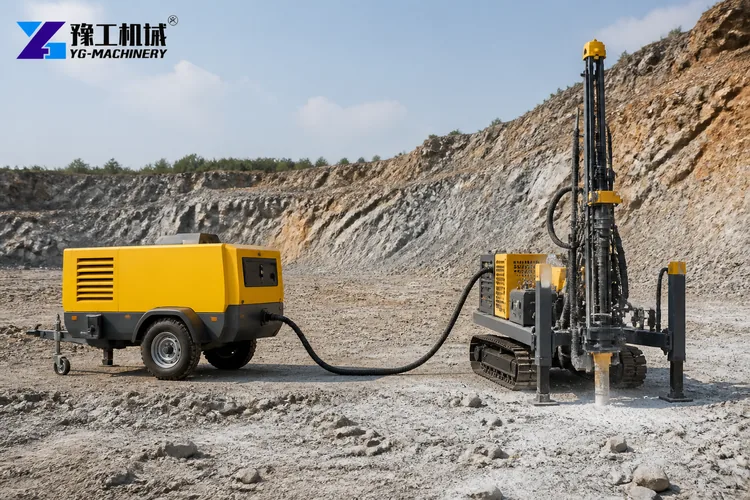
An integrated compressor can simplify mobilization because the air package moves with the rig. It may suit projects where rapid relocation and a compact fleet are priorities. However, the combined machine can be heavier, service access may be more complex, and the air package is less flexible when project requirements change.
A separate compressor allows one rig to be paired with different air capacities, and the compressor may support other equipment when the drill is idle. It also separates heat and vibration sources. The trade-offs include an additional towing or transport requirement, more hose management, and another engine or power unit to maintain.
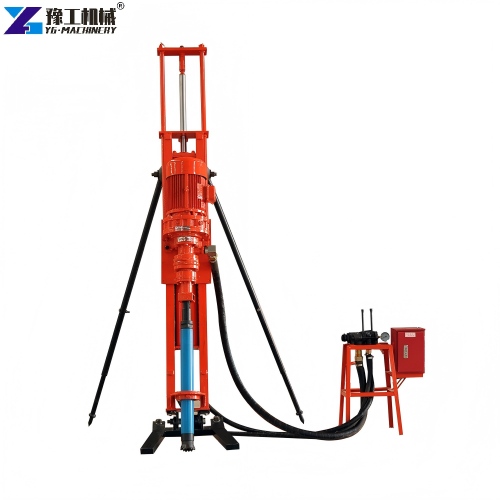
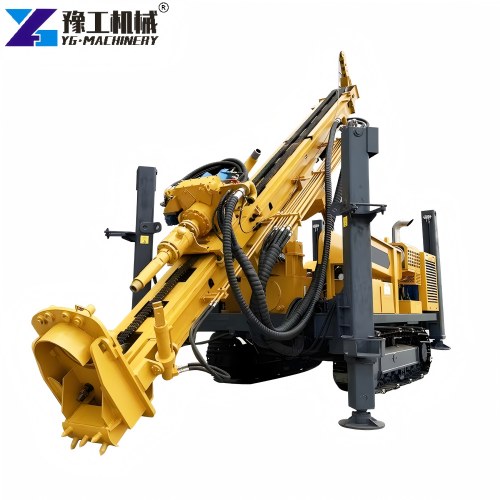
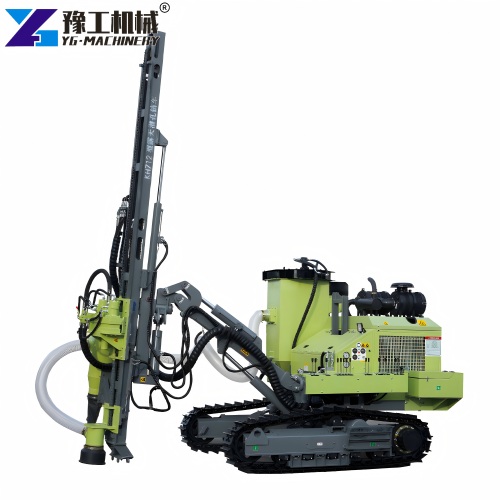
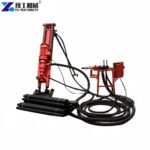
For an example of a mobile rock-drilling platform, review YG Machinery’s crawler DTH drilling machine. Projects needing sampling and high-quality cuttings recovery may also compare the operating concept of an RC drilling rig. These machines serve different objectives, so the drilling method should be selected before the air package.
DTH Drilling Air Quality and Dust Control
Dust, moisture, and incorrect lubrication shorten component life. Follow the hammer manufacturer’s lubrication instructions and verify whether an inline lubricator is required. In cold conditions, moisture can freeze in lines or controls. In humid environments, condensate management becomes more important. Do not improvise oil type or dosage.
At the collar, dry dust collection or water-assisted suppression may be required by the site. Dust control should be planned with the compressor demand because additional airflow, water injection, and filtration affect operation. The selected method must comply with the local exposure-control plan and must not create unstable ground around the rig.

DTH Drilling Rig Rod Handling Cycle
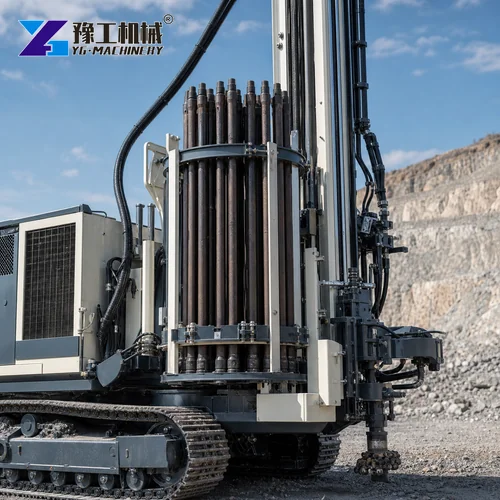
Compressor sizing attracts attention, but rod handling often controls practical output. Compare rod length, carousel capacity, breakout torque, coupling time, thread protection, and the procedure for adding or removing rods. Longer rods reduce the number of connections but require a suitable mast and transport plan. Automated handling can reduce manual exposure when it is used correctly, but it still requires an exclusion zone and trained operators.
Compressed Air System Maintenance for DTH Rigs
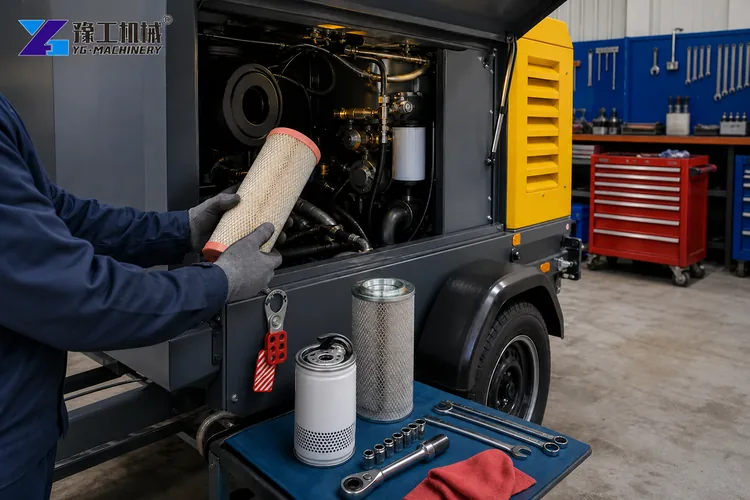
A compressor gradually loses effective performance when filters clog, coolers become dirty, oil condition deteriorates, belts or couplings wear, or leaks develop. Establish inspections around the manufacturer’s intervals and actual site dust load. Record operating hours, discharge temperature, pressure behavior, fuel consumption, and recurring alarms. Trends can identify a developing issue before production stops.
- Inspect air intake filters and clean cooling surfaces.
- Check compressor oil and separator condition as specified.
- Look for leaks at hoses, couplings, valves, and the drill string.
- Drain condensate using the approved procedure.
- Verify emergency stops, guards, and pressure-relief devices.
- Keep critical filters, seals, hose assemblies, and approved fluids on site.
Compare DTH Equipment Supplier Quotations
Two quotations are not comparable if one lists a compressor model while the other confirms performance for a specific hammer, altitude, and hole range. Ask each supplier to identify the assumptions behind the recommendation and the standard used for airflow ratings.
- Exact drill rig, hammer, bit, and compressor models.
- Rated pressure and free-air delivery under defined conditions.
- Expected derating at project altitude and temperature.
- Normal and maximum supported hole diameter.
- Hose size, length, couplings, restraints, and included accessories.
- Fuel-consumption information at representative load.
- Dust-control and lubrication configuration.
- Commissioning, operator training, warranty, and remote support.
- Recommended startup spares and normal parts lead time.
- Transport dimensions and total mobilization requirements.
Build a DTH Compressor Sizing Worksheet
Create one worksheet containing hammer model, bit diameter, target depth, drilling altitude, expected formation, required operating pressure, minimum hammer airflow, hose length, hose internal diameter and dust-control demand. Add the compressor manufacturer’s delivered flow at the required pressure rather than its free-air headline figure. This prevents a common purchasing error: comparing two machines at conditions that are not equivalent.
Include a loss and growth allowance agreed with the equipment supplier. The allowance should cover hose and coupling losses, normal leakage, filter condition, temperature and reasonable future tooling changes without encouraging extreme oversizing. Record fuel consumption at the expected load point, service intervals, ambient-temperature limits and transport dimensions. A documented comparison makes technical and commercial review much easier.
Finally, define an acceptance test. Confirm that the package reaches working pressure, maintains hammer performance during a representative hole and keeps discharge temperature and engine load within limits. Record penetration rate and fuel use in known ground. These observations provide a baseline for later maintenance troubleshooting.
DTH Rig Cost and Supplier Questions
Compare acquisition price with fuel, compressor oil, separator elements, filters, hose replacement, towing, downtime and local service. A smaller unit that operates continuously at its limit may consume tools and lose production; an excessively large unit can add capital, transport and fuel cost. The best selection delivers stable pressure and adequate flushing at the planned production rate.
Ask whether quoted flow is measured at the stated pressure, which ambient correction applies, what outlet size is supplied and whether an aftercooler or water separator is recommended. Confirm compatible lubricants, service kits, warranty coverage and expected parts lead time. For additional drilling options, browse the drilling equipment category and compare the small well drilling rig guide.
Send the completed worksheet with your inquiry. YG Machinery can then match the compressor, DTH hammer and rig as a system and explain any assumptions that affect performance.
DTH Drilling FAQ
Often yes, when the selected pressure and flow cover the approved operating ranges of the corresponding hammers and the compressor can run efficiently across those loads. Confirm each planned combination rather than assuming that a large compressor automatically suits every smaller tool.
No. Unnecessary capacity increases capital cost, fuel use, transport weight, service demand, and potentially low-load operation. Select a justified margin for known losses and operating conditions, not an arbitrary oversize factor.
Possible causes include insufficient flow, restricted hoses, leakage, worn hammer parts, dull bits, poor lubrication, cuttings accumulation, changing geology, incorrect feed or rotation settings, or misleading measurement at a point far from the hammer. Diagnose the whole system safely.
Provide hole diameter, maximum and normal depth, geology, water conditions, site elevation, temperature range, production target, power preference, transport restrictions, and any required dust-control method. Photos and a site layout can improve the configuration review.
Request a DTH Drilling Machine Recommendation
The most reliable quotation connects the project requirement to a complete rig, hammer, bit, drill string, and compressor package. Send YG Machinery your drilling conditions and target output. The team can help narrow the configuration, identify the information still needed, and prepare a project-specific proposal.