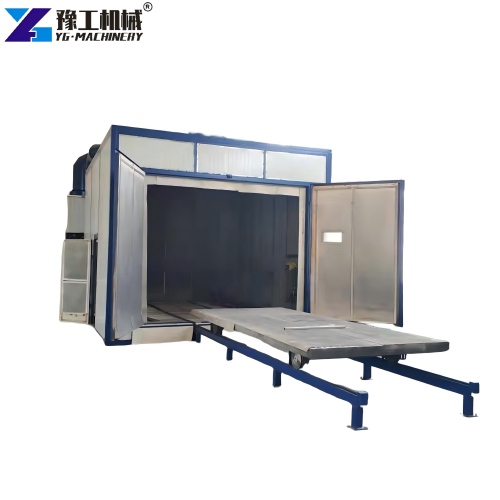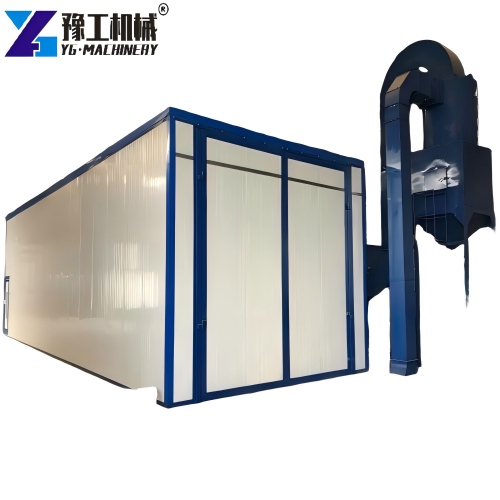

A wet blasting machine combines water, abrasive and compressed air to produce a controlled cleaning or finishing stream. The water cushions impact, carries fine media and suppresses airborne dust, which can make the process suitable for precision parts, molds, stainless components and surfaces that should not receive an aggressive dry profile. It is not automatically the best choice for every rust-removal job: workpiece geometry, required finish, drying, wastewater handling and daily volume still decide whether wet processing is practical.
YG offers pressure-vessel models from YG400 to YG1000 with published capacities from 0.26 to 1.0 m³. Vessel size mainly changes abrasive-slurry capacity and refill intervals. It does not replace the need to verify nozzle bore, pump circulation, air delivery and cabinet dimensions. The buyer should therefore define the surface result and production route before choosing a wet blasting machine by vessel diameter alone.
When the job needs dry abrasive recovery instead of a water-supported finish, a sand blasting chamber
is the more relevant comparison; portable outdoor work may instead suit a portable sandblaster.Which Surface Results Suit A Wet Blasting Machine?
Wet blasting is useful when the buyer needs controlled cleaning, deburring, cosmetic blending or a fine matte finish without the dust cloud associated with dry media.
Water can reduce embedded contamination and soften the cutting action, but the result still changes with media type, particle size, pressure, distance, angle and exposure. Ask for an approved sample that records all six variables instead of relying on a photograph of a clean part.
The process is less attractive when a heavy profile must be produced rapidly on very large steelwork or when the factory cannot dry parts promptly. Residual moisture can cause flash rust on carbon steel. Include rinse chemistry, corrosion inhibitor, drying temperature and the time between blasting and coating in the process plan. A good trial follows the part through inspection and the next manufacturing step, not only out of the cabinet.
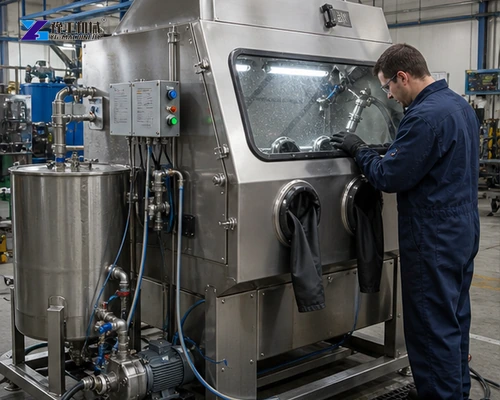
Send YG your workpiece material, present surface condition and required finish so the wet blasting process can be checked against the real part rather than a generic finish claim.
How Should Slurry Circulation And Air Supply Be Matched?
Two different utility checks govern repeatability: keeping the abrasive suspension consistent and maintaining the air delivered to the gun. A larger vessel solves neither problem on its own.
Slurry Mixing And Recovery
The slurry must remain mixed so abrasive concentration does not change between the first and last part. Check tank agitation, pump construction, line diameter, return flow and clean-out access.
Slurry concentration should be checked at defined intervals rather than adjusted from appearance alone. Compare the reading with pump flow, agitation and the condition of return screens. If finish changes during a shift, separate concentration drift from nozzle wear, air-pressure loss and part-loading variation before changing the recipe.
Dead zones in the tank allow media to settle, while an unsuitable pump can wear rapidly. The operator should be able to confirm concentration and replenish water or media without guessing.
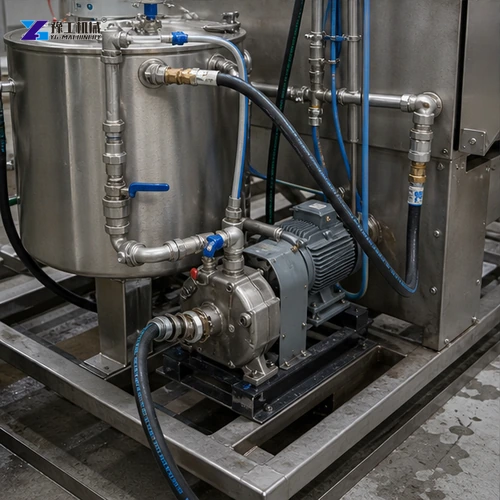
Delivered Air At The Working Nozzle
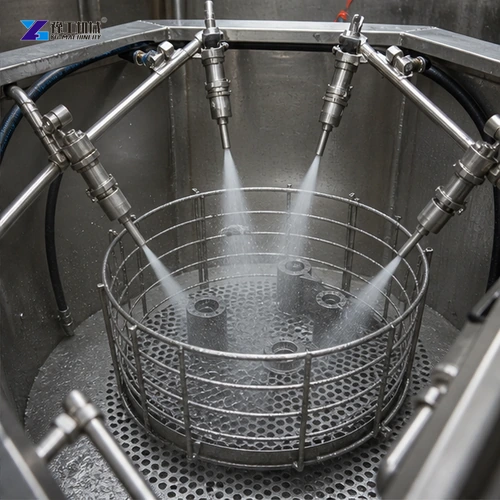
Compressed-air demand depends on nozzle bore, pressure and the number of active guns. The published 3 m³/min value is a starting reference for the YG pressure-vessel range, not a universal cabinet requirement. Verify delivered flow at working pressure after filters, dryers and hose losses. Moisture that is acceptable in a wet process can still damage valves or make control unstable if the air system is poorly maintained.
Measure delivered air at the machine while other major users are operating. Compressor nameplate capacity does not include pressure loss across dryers, filters, pipework and hoses. State nozzle bore and active-gun count, because a vessel can have adequate capacity while the air system prevents stable production.
Ask for the air requirement to be stated for the proposed operating configuration, including simultaneous guns. A quoted reference value is not enough if the sample trial used a different nozzle or supply. Record the machine-inlet conditions with the finish result so the factory installation can reproduce the test.
Share the nozzle count, available compressed air and planned shift time. YG can compare the utility demand with a practical slurry circulation arrangement.
REVIEW MY AIR AND SLURRY SETUP
How Do The Verified Vessel Sizes Change Wet Blasting Capacity?
The verified model table shows vessel diameter, height and volume.
YG400 through YG600 share a 0.26 m³ volume, while YG800, YG900 and YG1000 increase capacity to 0.6, 0.8 and 1.0 m³. Larger volume can extend run time between refills, but it also changes floor space, loading height and the quantity that must be circulated and cleaned at shutdown.
| Machine model | YG400 | YG500 | YG600 | YG700 | YG800 | YG900 | YG1000 |
| Vessel diameter (mm) | 400 | 500 | 600 | 700 | 800 | 900 | 1000 |
| Height (mm) | 1150 | 1150 | 1150 | 1250 | 1700 | 2000 | 2000 |
| Volume (m³) | 0.26 | 0.26 | 0.26 | 0.3 | 0.6 | 0.8 | 1.0 |
| Working pressure (MPa) | 0.4–0.8 | 0.4–0.8 | 0.4–0.8 | 0.4–0.8 | 0.4–0.8 | 0.4–0.8 | 0.4–0.8 |
| Nominal air consumption (m³/min) | 3 | 3 | 3 | 3 | 3 | 3 | 3 |
All listed models use a 0.4–0.8 MPa pressure range. Final pressure must be established through the required finish and workpiece tolerance. More pressure is not automatically better: it can increase media breakdown, edge attack and masking requirements. Confirm the complete package—vessel, cabinet or work area, pump, gun, nozzle, hoses, controls and filtration—because the vessel table alone is not a production specification.
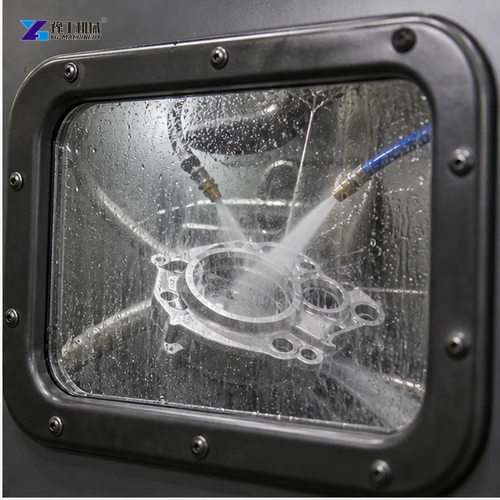

What Workpiece Tests Prevent A Poor Wet Blasting Purchase?
Choose normal production parts with realistic contamination, not specially prepared samples. Mark critical dimensions, sealing faces, threads and areas that must remain untouched.
For the finish trial, keep the same part alloy, initial contamination and masking used in production. Record abrasive type, concentration, nozzle, pressure, distance, angle and exposure. Inspect recesses and edges as well as the main face, then follow the part through rinsing and drying so flash rust or trapped media is not missed.
After processing, inspect cleanliness, profile or gloss, edge condition, trapped media and any dimensional change. Repeat the test across several parts to reveal whether the slurry and operator settings remain stable.
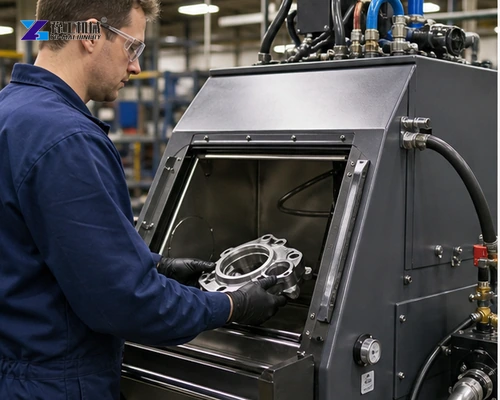
Time the full cycle: loading, masking, blasting, rinsing, drying, inspection and unloading. A faster blast stage can still produce lower daily output if drying becomes the bottleneck. If several alloys share the same equipment, establish media-change and contamination-control procedures. Keep the accepted sample and test record as part of the purchase specification.
Inspect pump seals, hoses, valves, cabinet visibility and drainage access during the trial. Maintenance time and safe cleanout affect usable shift output just as much as blasting time.
The acceptance record should name the processed sample, achieved finish, cycle time, rinse and dry method, consumables and inspection result. These details give operators a restart standard after cleaning or maintenance and give purchasing a measurable basis for approving the complete wet blasting package.
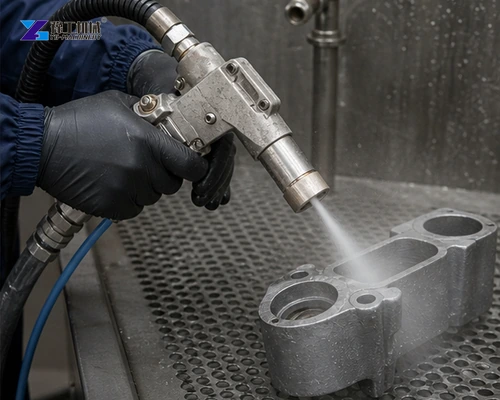
Compare quotations with one matrix covering workpiece, required finish, sample result, full cycle time, utility demand, cleanout, consumables and acceptance. This prevents a larger vessel or higher pressure claim from replacing evidence about the actual part and production route.
Send the approved finish, batch size and utility data when you are ready to compare a complete wet blasting configuration.
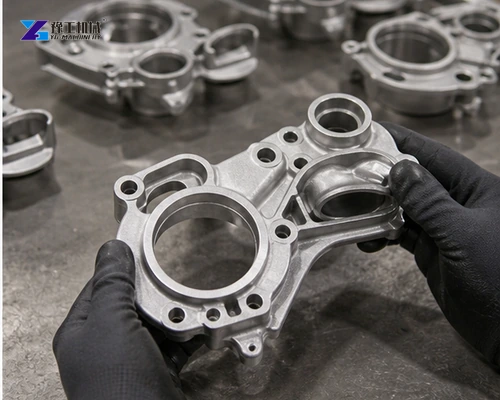
Wet Blasting Machine Buyer FAQ
It greatly suppresses airborne dust, but mist capture, enclosure ventilation and housekeeping are still required.
Yes, if rinsing, corrosion inhibition and prompt drying are planned to control flash rust.
Not by itself. Nozzle, pressure, abrasive, air delivery and exposure determine the treatment rate.
No. Media, concentration and chemistry must match the substrate and required finish.
Send parts, finish standard, volume, utilities, water and drainage limits, dimensions and destination.
A wet blasting purchase is ready for review when the approved surface sample, full rinse-and-dry cycle and utility conditions belong to the same test record. Use the form below to describe the part and finish, attach the inspection target and identify any water, drainage or drying restriction. The vessel range is a starting point; the complete process must satisfy that record.