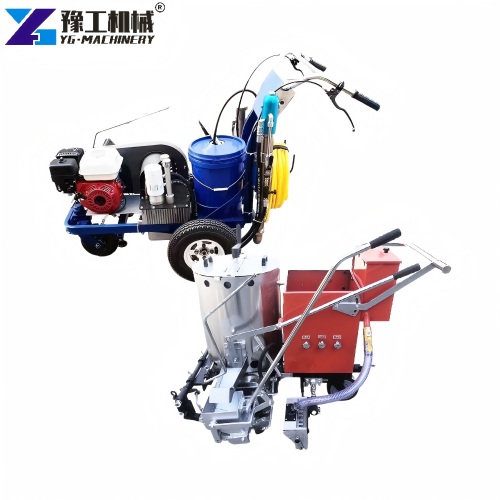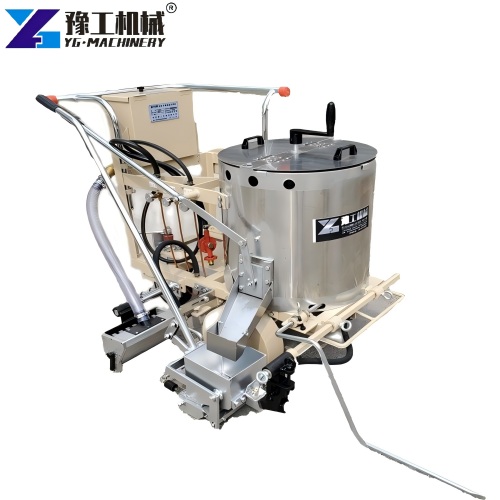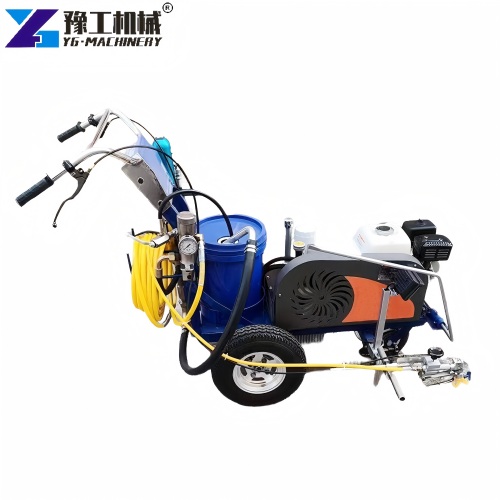
A thermoplastic line marking machine forms a hot-melt line through a mould or shoe; the YG-360 also has a synchronized glass-bead dispenser. Its output depends on how the mould, bead track and hot-material supply are matched to the road drawing and the project specification.
That match is practical, not abstract. A standard 150 mm mould does not automatically cover every line on a road plan, the 10 kg bead container is not a coverage rate, and the equipment quote must state how the thermoplastic is heated and replenished.
The YG-360 Forms a Hot-Melt Line, It Does Not Spray Cold Paint
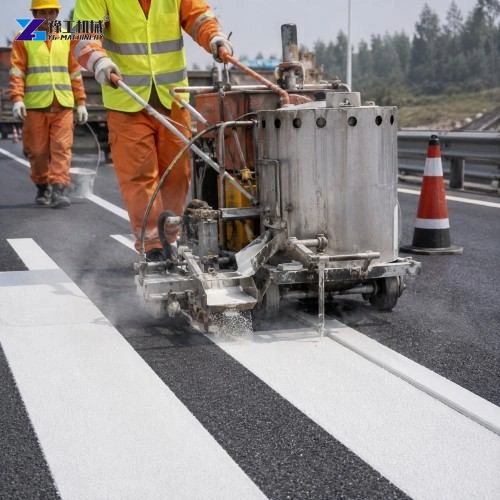
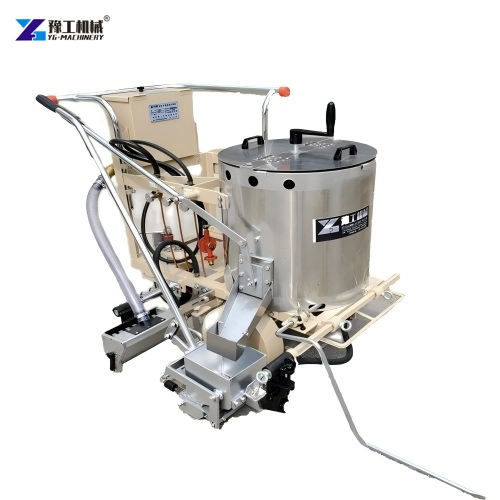
The YG-360 is a hand-guided thermoplastic line marking machine. It applies heated thermoplastic through a marking shoe or mould so the material is deposited as a defined line on pavement. Its two stainless-steel heating and insulation barrels have a combined listed capacity of 100 kg; the operator keeps the material workable, guides the machine along the layout and controls the mould at the road surface.
This is a different process from cold-paint spraying. A cold-paint machine pumps liquid coating through a gun. The YG-360 works with hot-melt marking material and a forming shoe, so it needs heating, temperature control, safe handling and a material transfer sequence appropriate to the job. The methods cannot be interchanged simply by changing a nozzle or setting.
The production line also includes people and equipment around the marker. Material must be heated and kept uniform, the route must be laid out, the mould must follow the intended width and geometry, and the crew may apply glass beads where the specification calls for them. The marking machine forms the line; it does not independently design the road layout or certify that the finished marking meets a jurisdiction’s acceptance requirements.
Identify the specified marking material and required line profile to review whether the hot-melt process fits the job.
Match YG-360 Mould Width to the Road Drawing and Line Profile
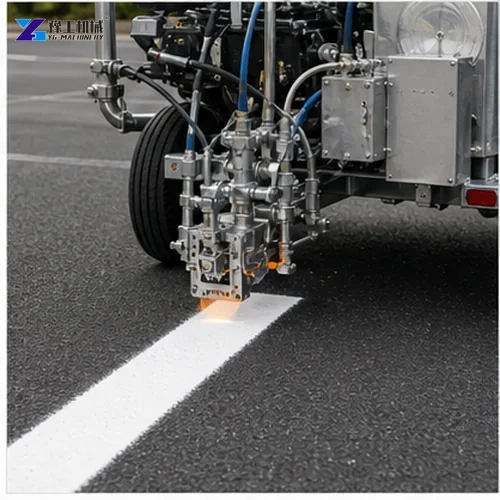
Start with the road drawing and list every required line width, skip pattern and work segment. YG lists a 150 mm standard marking mould and optional widths of 50, 100, 150, 200, 250, 350, 400 and 450 mm. These are specified options, not a continuously variable setting. A contract that includes several line widths may therefore require more than one mould configuration or a planned changeover.
Next, compare the line profile with the shoe. Long straight lane lines call for a stable, repeatable mould path; short parking lines and stop bars involve more starts and stops; a junction transition may require the operator to follow a curve or taper. The listed width addresses the line across the road, while the mould geometry and operator path determine how cleanly the line begins, ends and follows a turn.
Before full production, install the selected mould and make a test section using the specified material. Measure the actual line width and thickness with the project’s required method, check the edge and confirm that the shoe travels without material buildup or gaps. If a width is outside the listed options or a special profile is required, confirm the appropriate mould rather than assuming the standard 150 mm shoe can be adjusted to it.
- Extract line widths and profiles from the approved drawing or marking schedule.
- Map each run to the YG-360 standard 150 mm mould or a listed optional width.
- Plan mould changes where the route uses more than one width.
- Run and measure a trial section before marking the full production length.
Send the drawing with required line widths and patterns to compare the YG-360 mould options.
Coordinate the Glass-Bead Dispenser with the Marking Specification
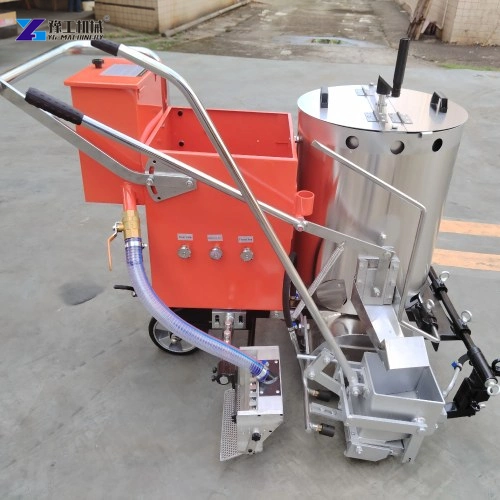
The YG-360 bead container is listed at 10 kg and its synchronized adjustable dispenser has a width range of 50–200 mm. Container capacity is the amount the hopper can hold; it is not the application rate, area coverage or a guarantee of nighttime visibility. The marking width and bead track are separate dimensions, so set the distributor to the specified bead zone instead of assuming it must match the mould width.
Glass beads are used in pavement markings because they return some headlamp light toward drivers when correctly embedded in the binder. Their performance depends on the bead specification, distribution and embedment in the thermoplastic, as well as the project’s measurement and acceptance rules. FHWA explains that bead amount, spread and embedment are affected by the application process; use the project specification to choose the bead type and application target rather than inferring them from the 10 kg container.
In practice, match the bead dispenser width to the line plan, load the specified bead type and set the release so coverage is even across the intended area. Then inspect a fresh trial section for gaps, piles and embedment before continuing. Beads applied too sparsely or unevenly can leave an inconsistent marking; an excessive deposit can also fail the intended finish. The buyer should not confuse the dispenser’s adjustable width with a certified retroreflectivity level.
For background on how beads contribute to nighttime visibility, see the Federal Highway Administration explanation of pavement-marking retroreflectivity. The road authority’s specification remains the controlling source for bead type and acceptance.
Plan Heating, Material Feed and the YG-360 Production Sequence
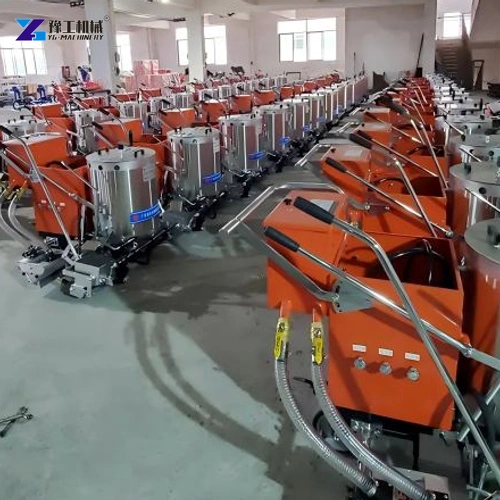
YG lists two stainless-steel heating and insulation barrels with 100 kg total capacity, manual mixing, LPG heating and an overall machine weight of 110 kg. The product page also refers to hot-melt kettle equipment. Because package descriptions can differ, the quotation should say whether the barrels on the YG-360 are the complete heating arrangement for the job or whether a separate kettle, transfer vessel or auxiliary unit is supplied as well.
A practical marking sequence is: prepare and heat the thermoplastic to the material supplier’s working condition; keep the melt mixed and free from contamination; transfer it safely to the applicator if the configuration requires transfer; fit the mould for the next line width; and maintain a steady travel pace as the material is placed. The heating and replenishment plan matters on long line runs because the crew must avoid interruptions that leave a cold or inconsistent section.
The material itself sets operating boundaries. Follow the thermoplastic supplier’s heating instructions and applicable safety controls; do not infer a working temperature from the machine’s capacity. Confirm how material is added, where it is heated, how the crew handles hot vessels and how much production can be completed before replenishment. That is the information needed to match the marker to a real production line rather than a single photo or hopper number.
Describe heating, material transfer and the planned work sequence to discuss the supporting equipment.
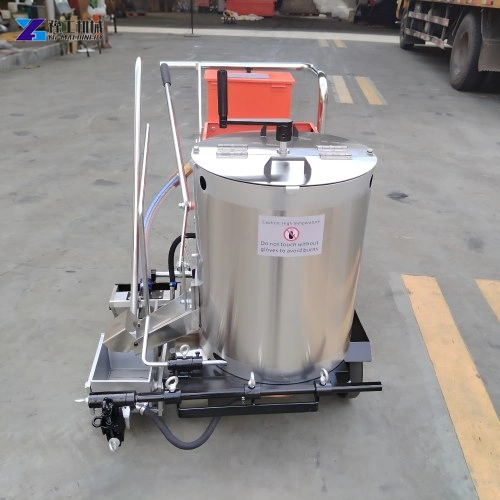
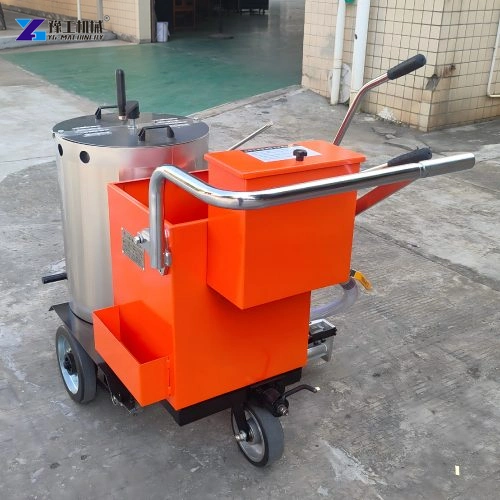
YG-360 Thermoplastic Line Marking Machine Parameters
The table identifies the YG-360—not the separate YG-360E variant—and keeps its mould, bead and material figures distinct. Optional widths are shown as a list because the product page presents separate width choices rather than a continuous range.
| Parameter | YG-360 thermoplastic road marking machine |
|---|---|
| Thermoplastic barrels | 2 stainless-steel heating/insulation barrels; 100 kg total capacity |
| Glass-bead container | 10 kg |
| Bead dispenser width | Synchronized; adjustable 50–200 mm |
| Standard marking mould | 150 mm |
| Optional marking widths | 50 / 100 / 150 / 200 / 250 / 350 / 400 / 450 mm |
| Marking thickness | 1–2.5 mm |
| Heating method | LPG |
| Dimensions | 1,250 × 900 × 950 mm |
| Weight | 110 kg |
See the thermoplastic road marking equipment range. The YG-360E is described separately and should not be mixed into this table.
When a Thermoplastic Line Marking Machine Fits the Project
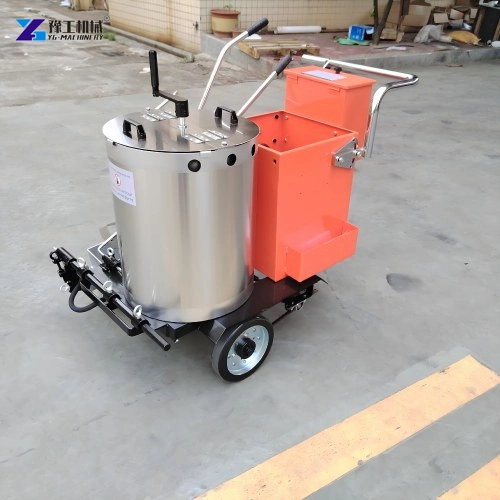
Choose the YG-360 when the marking specification calls for thermoplastic, a listed mould width matches the line plan and the crew can manage hot-material preparation and bead placement. The machine is suited to controlled road and paved-area line work where a hand-guided shoe can follow the planned route. It is not a spray machine for liquid paint and should not be purchased for a cold-paint project merely because both products make road markings.
A sound selection connects four elements: the material process, the mould profile, the bead arrangement and the supply sequence. If any one of them is left undefined, the machine may arrive with a workable engine and frame but not the mould or heating equipment needed for the specified line. Resolve those matches on the drawing and in the equipment scope, then verify them on a measured test section before production.
Request a configuration-specific offer covering the mould, bead arrangement and equipment needed for the planned route.
Thermoplastic Line Marking Machine FAQs
The YG-360 applies heated thermoplastic through a marking mould or shoe to form a defined pavement line. Its barrels hold up to 100 kg in total, and the published material thickness range is 1–2.5 mm.
YG lists a 150 mm standard mould and optional marking widths of 50, 100, 150, 200, 250, 350, 400 and 450 mm. These are discrete configurations, not an infinitely adjustable width range.
The YG-360 bead dispenser is synchronized with the line and has an adjustable width of 50–200 mm. The 10 kg container describes stored bead capacity, not bead application rate or guaranteed coverage.
The product page identifies the YG-360’s two 100 kg total stainless heating/insulation barrels and also discusses hot-melt kettle equipment. Confirm from the quotation whether a separate kettle or transfer arrangement is included in the specific package.
No. The YG-360 is a hot thermoplastic marking machine. Cold paint is pumped and sprayed through a different machine, such as a compatible cold-paint road marker.
Request a Project-Specific Quotation
Tell us the product configuration and the work it needs to perform so the team can review the scope against your project.