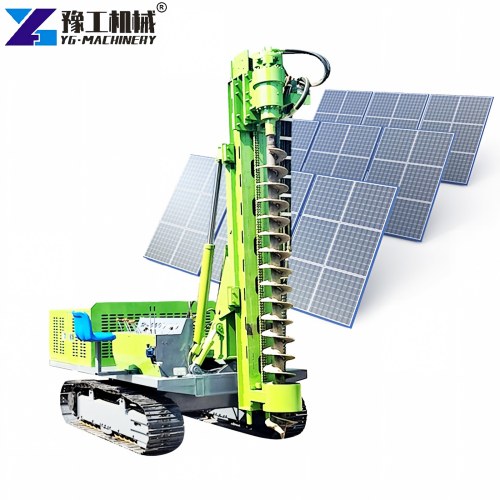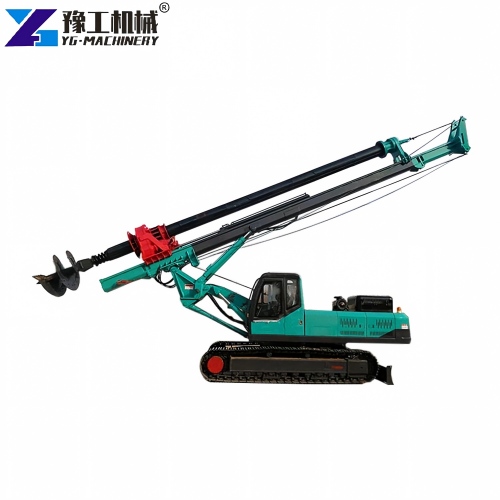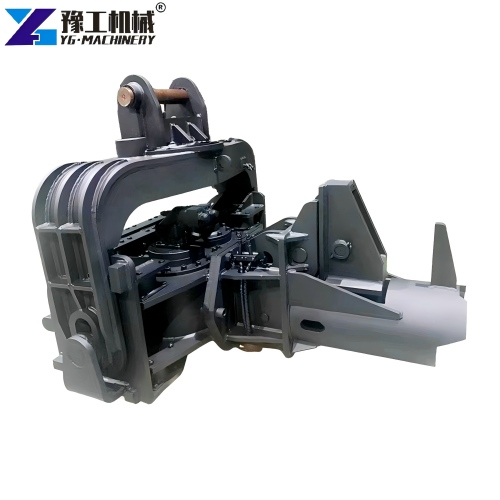
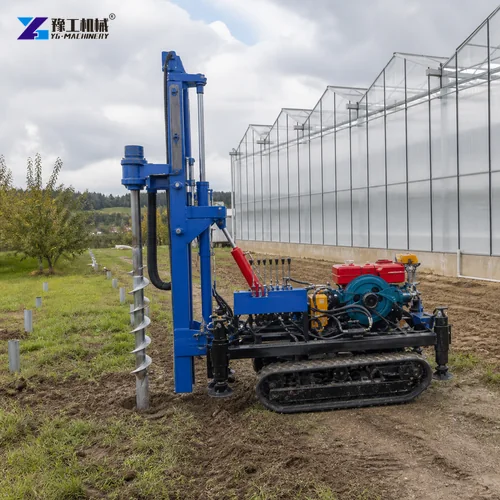

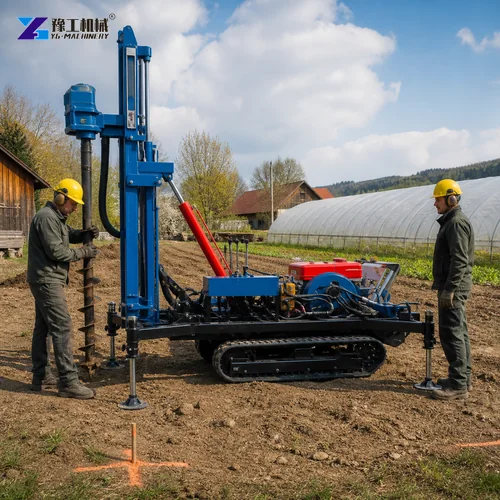
A southern German organic farm selected a YG Screw Pile Machine while expanding its vegetable greenhouse capacity. The project needed a foundation process that could move through repeated frame positions without waiting for concrete curing. The farm also wanted to limit soil disturbance around active agricultural operations. YG prepared the YG-32S crawler configuration with matching ground screws and an installation plan built around the greenhouse rows.
The supplied solution used a 32 HP engine, 3500 N.m rotary head and 20 MPa hydraulic system. Its 1.2-ton chassis could travel along the prepared farm route while four stabilizer legs supported installation. A Helical Pile Driver gave the crew a repeatable way to position and turn each foundation component. The Ground Screw Machine package also kept the work sequence dry and organized in an area where farm access remained important.
German Screw Pile Machine Project Requirements
The greenhouse expansion required many foundation points in straight rows. Each position needed to support the planned frame connection and remain accessible for inspection. The customer wanted a process that could begin framing without a long curing period and that would avoid moving large amounts of wet concrete through the farm. Repeated pile locations made crawler travel and a consistent installation sequence commercially attractive.
Access was part of the equipment decision. The route passed through an operating agricultural property, so the machine had to fit the available gates and work without blocking essential movement for long periods. The 2300 x 1300 mm chassis footprint gave the planning team a clear basis for route preparation, turning space and unloading. Piles and tools were staged by row to reduce unnecessary travel.
The project team also considered noise, spoil and surface disturbance. Screw foundations advance by rotation and do not require the same wet construction sequence as cast concrete. The selected method supported the farm’s environmental goals while keeping the foundation design and pile acceptance under professional control.

Complete Screw Pile Machine Specification For Germany
The complete YG-32S specification below was used to plan transport, site access, rotary operation and daily support. The German buyer reviewed the engine, torque, pressure, dimensions, travel system and working range together. Matching screw piles and drive tooling remained part of the same technical scope so the machine would arrive as a usable foundation package.
| Parameter | YG-32S Specification |
| Model | YG-32S |
| Rig Weight | 1.2 T |
| Dimensions (L x W x H) | 2300 x 1300 x 2200 mm |
| Engine Power | 32 HP |
| Rotary Head Torque | 3500 N.m |
| Hydraulic Oil Pump | Single Pump |
| Hydraulic Loading System | Cylinder Chain Pressure |
| Hydraulic Working Pressure | 20 MPa |
| Travel System | Crawler Gearbox |
| Travel Speed | 7-15 km/h |
| Cooling System | Hydraulic Cooler |
| Carriage Travel | 2.8 m |
| Piling Height | 1-3 m |
| Borehole Diameter | 50-300 mm |
| Borehole Depth | 1-30 m |
| Air Consumption | 6 m3/min |
| Suitable Rock Range | Medium Hard Rock, F=8-12 |
| Hydraulic Stabilizer Legs | 4 |
| Climbing Ability | 35 Degrees |
The 3500 N.m rotary rating supported the approved greenhouse screw-pile configuration. A 2.8-meter carriage and 1-3 meter piling height suited the planned installation process, while the crawler gearbox supported movement between rows. The 35-degree climbing rating was not treated as a general site permission; the customer prepared a stable route and level working areas before installation.
Why The Farm Selected A Ground Screw Machine?
The farm compared foundation speed, access, soil impact and the next construction step. Concrete foundations would have introduced excavation, material delivery, wet work and curing into the greenhouse schedule. The screw-pile approach allowed the crew to install engineered foundation points and move directly toward frame connection after the required checks were complete.
A Ground Screw Machine also suited the repeated layout. The operator could move along one row, install the marked points and then enter the next row using the prepared route. This reduced random movement across cultivated areas. The pile package arrived with the drive connection and handling method identified, helping the receiving team organize tools before production began.
The decision remained project-specific. The customer used the approved pile design and installation criteria rather than assuming every soil or greenhouse could use the same component. YG’s role was to match the machine, drive interface and support package to the supplied foundation plan and destination conditions.
Screw Pile Machine Delivery And Receiving
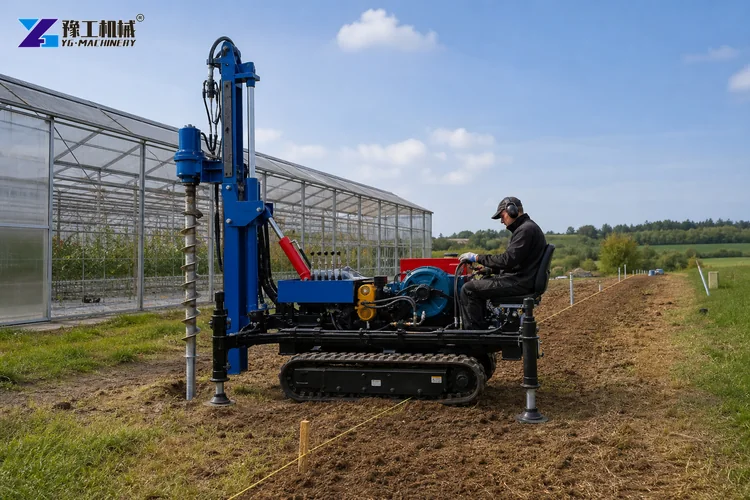
Before shipment, the commercial scope separated the base machine, matching screw piles, drive tools, spare parts, packaging and transport documents. The receiving plan identified the unloading equipment and storage area. Piles were supported to prevent rolling or damage, and drive faces remained protected from contamination. The buyer checked model plates and package quantities before installation materials were distributed by row.
The customer inspected hydraulic hoses, stabilizers, tracks, mast guides, rotary head and control functions during receiving. Any transport issue could then be documented before the machine entered production. Fuel, routine service items and local safety controls were prepared in advance. This shortened the gap between unloading and the supervised startup.
Operator guidance covered travel, positioning, stabilizer setup, rotary control, normal shutdown, emergency stop, daily inspection and tool changes. The team practiced the sequence without applying full installation load. A clear handover helped the farm workers understand which adjustments belonged to normal operation and which conditions required technical review.
Helical Pile Driver Setup On The Greenhouse Rows
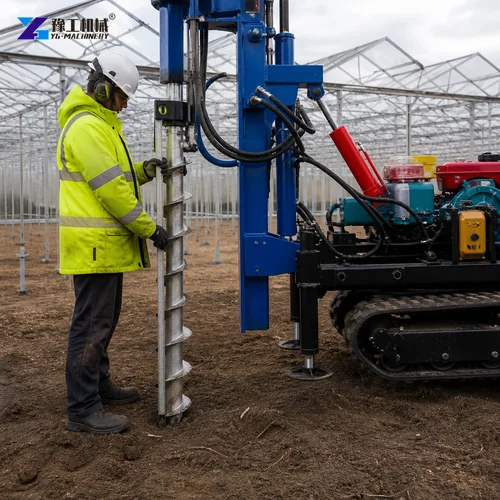
Survey points and finished connection levels were established before the machine entered each row. The crew checked underground services, ground bearing and the space needed to handle the pile. The crawler approached from the same direction where possible. Stabilizers were deployed on prepared surfaces and the mast was aligned before the drive adaptor engaged the foundation component.
A Helical Pile Driver needs coordinated roles. The operator controlled the machine, a spotter protected the exclusion zone and another team member recorded the installation data. Piles were inspected outside the operating area. The crew did not guide a rotating component by hand or stand beneath suspended hardware. Agreed signals kept the sequence clear around the farm’s ongoing activity.
The first installations were used to confirm the approved method in the site conditions. Alignment, penetration, torque response and finished level were reviewed before the team increased the production rhythm. This kept speed connected to acceptance rather than allowing the schedule to outrun quality control.
Greenhouse Foundation Installation And Records
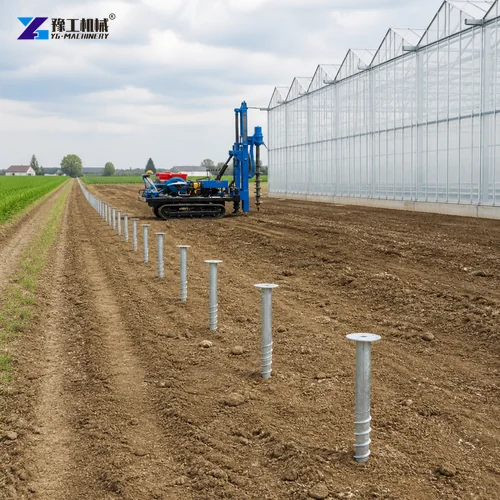
Each pile position received an identifier linked to the greenhouse layout. The record captured the pile type, installation depth, final level, torque response and any project-required observation. Photographs supported the record where useful. Daily review helped the team identify a change in ground response or alignment before it affected an entire row.
Completed foundations were protected from vehicle impact until the greenhouse connection was installed. The customer checked position and connection height before releasing frame work. The screw foundation method limited the amount of spoil and wet material in the work area, which supported orderly movement through the agricultural site.
The farm completed the greenhouse foundation installation within a few days and moved to framing sooner than expected. The customer reported limited noise and soil disturbance during the work. These results reflected the approved pile design, organized layout and trained crew as well as the machine itself. The same planning discipline remains important for any German project considering this method.
Screw Pile Machine Support For German Conditions
Destination planning included operating temperature, fuel, transport regulations, manuals and routine service. A hydraulic cooler supported controlled machine temperature, while daily cleaning kept soil away from service points. The customer tracked engine and hydraulic maintenance by working hours and kept the specified filters, seals and connection wear parts available.
German buyers should also address local machinery, environmental, worker-safety and foundation requirements with qualified professionals. The equipment quotation can provide technical data and documents, but the project team remains responsible for permits, engineered piles, ground assessment and the approved installation method. Early document review prevents commercial questions from delaying delivery.
Remote technical support is more effective when the operator records symptoms, pressure, temperature, working hours and clear photographs. The machine identification and exact drive setup should accompany every request. This information helps a YG specialist distinguish normal wear, tooling issues and site conditions without relying on a vague description.

Commercial Value Of The German Ground Screw Project
The project value came from the complete sequence: compact transport, organized pile delivery, repeatable row installation, limited wet work and a faster transition to greenhouse framing. The machine did not remove the need for design or inspection. It helped the customer execute the approved foundation method with less disruption to the farm than the original concrete-based plan.
The Ground Screw Machine also created future value because the farm team received operator guidance and a defined maintenance routine. With the correct pile and engineering review, the same equipment can support later greenhouse or agricultural structure work. Ownership planning included drive adaptors, wear parts and service access rather than focusing only on the initial machine price.
For another German buyer, the strongest commercial comparison should include accepted piles per shift, mobilization, excavation, concrete logistics, curing, site cleanup and the next construction activity. A Screw Pile Machine can be attractive when the full project sequence benefits, even if the equipment is not the lowest single line item in the foundation budget.
German Delivery Documents And Commercial Handover
The buyer reviewed the packing list, machine identification, operating manual, maintenance schedule and available shipping documents before dispatch. Local import, insurance and site requirements were assigned to responsible parties. This prevented the physical delivery from arriving before the farm was ready to unload, store the piles and complete the supervised startup.
Commercial handover also defined spare parts, technical contacts and the information required for a service request. The farm kept working-hour records and inspection notes with the equipment file. A structured record helps the supplier identify the exact configuration and gives the owner a clear maintenance history when the machine returns for another greenhouse phase.
Request A Screw Pile Machine Proposal For Germany
Send the project location, soil report, pile drawing, design loads, torque criteria, depth, quantity, row spacing, access, slope and target schedule. Add site photographs and the required connection level. YG can review the YG-32S operating range, drive tooling, screw-pile package, spare parts, shipment and startup support for the German destination.
Review the YG-32S product page, the new installation planning guide, the existing solar pile driver option and the excavator-mounted pile driver range. These pages help a buyer compare machine format, planning requirements and project scale.
Screw Pile Machine FAQ
The farm used the YG-32S crawler configuration with matching screw piles. It has a 32 HP engine, 3500 N.m rotary head, 20 MPa hydraulic pressure and four stabilizer legs.
The customer wanted a fast greenhouse foundation process with limited wet work, noise and soil disturbance. The selected system also supported an orderly row-by-row installation plan.
The farm completed the foundation installation within a few days. The schedule benefited from prepared access, staged piles, repeated rows and a direct transition toward greenhouse framing.
Suitability depends on the pile design, ground, torque criteria, loads, access and local requirements. Share the project documents so the machine and foundation system can be reviewed together.
Provide soil information, pile drawings, design loads, torque, depth, quantity, layout, access, destination and desired delivery scope. A YG specialist can then prepare a matched proposal.
Plan A German Screw Foundation Project
Share your German project drawings, soil data, pile schedule, torque criteria and site access. A YG Machinery specialist can prepare the YG-32S configuration, matching drive tools, pile package and delivery proposal.