Slitting machine price changes with the width of material the machine handles, the way it controls the web and the work needed to load and remove rolls. A wider machine can accommodate a larger parent roll, but that extra width has value only when the order mix uses it. The useful comparison is therefore an investment in a specific converting task, not simply the lowest equipment figure.
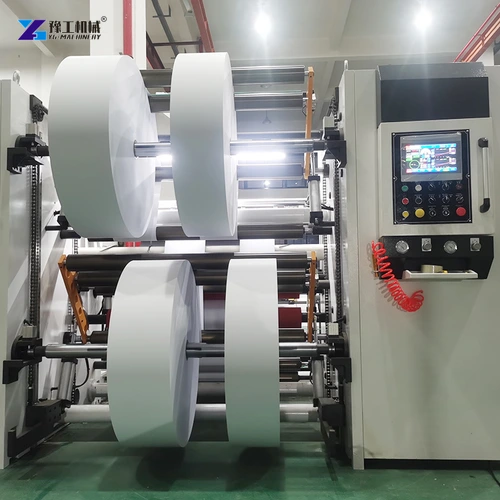
For a paper or film converter, the machine separates a wide web into narrower lanes and rewinds them for the next operation. Packaging suppliers, printers and paper-product workshops need different combinations of slit width, roll size and winding quality. YG offers several configurations in its slitting and rewinding machine range. This price discussion concerns web converting, rather than a heavy steel-coil slitting line. A fixed selling-price range would hide differences in configuration and delivered scope; the following cost relationships explain why offers differ.
What Does the Slitting Machine Price Actually Buy?
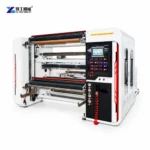
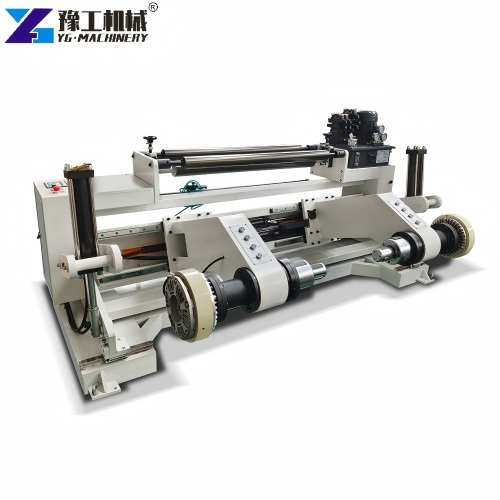
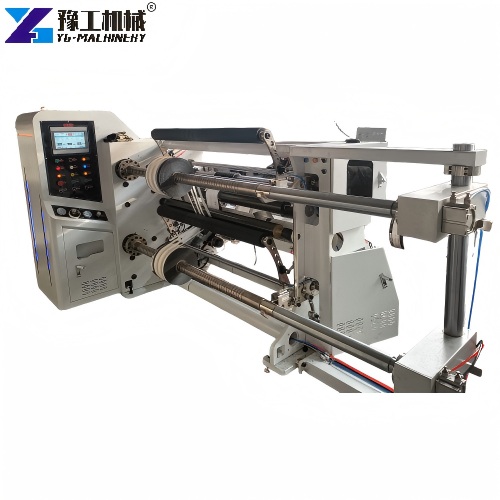
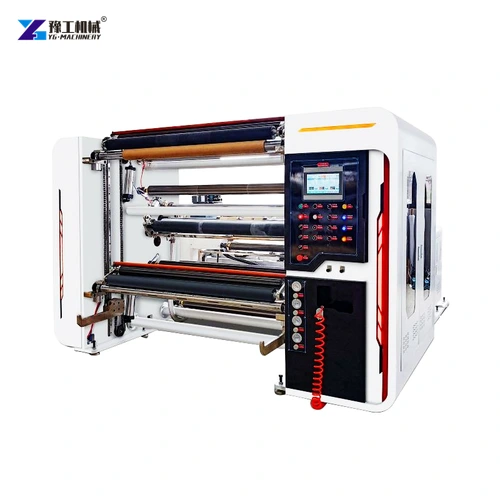
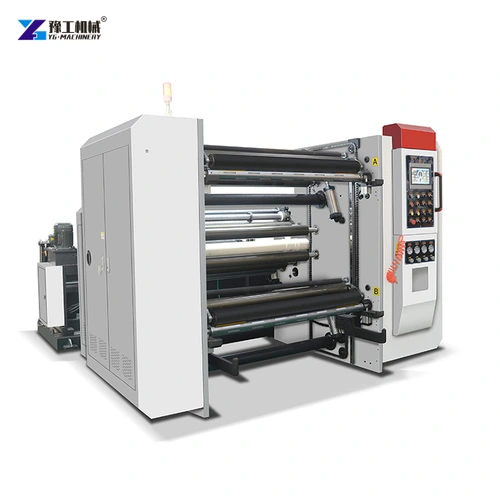
The base machine buys a connected unwinding, cutting and rewinding process. The unwind holds the parent roll and releases material. Guide rollers carry the web through the knife station, where the selected blade arrangement separates it into lanes. The rewind forms those lanes into usable rolls. Controls coordinate this movement so the material remains manageable from the start of a roll to its end.
That equipment boundary matters financially. A machine supplied with a basic roll-loading arrangement is a different investment from a package that includes handling aids, additional shafts, specialised knives or downstream roll unloading. Similarly, an edge-guiding or tension-control requirement can alter the proposal. These functions should solve a real converting difficulty, such as repeated web wander or an unstable finished roll, rather than being added as vague automation features.
The customer is paying for the ability to supply a finished roll that works in the next process. A roll that telescopes, has damaged edges or unwinds poorly can create costs downstream even if it was produced quickly. Product quality and handling therefore belong in a slitting machine price comparison alongside mechanical capacity.
Parent-Roll Width Changes the Investment and Material Yield
Maximum working width affects the size of the machine and the parent rolls it can accept. Greater width can allow more finished lanes in one pass, but only when the desired slit widths fit together. A converter running mainly narrow parent rolls may gain little from buying unused width, while a workshop purchasing broad rolls may be restricted by a smaller machine.
Consider a hypothetical order for five finished lanes, each 240 mm wide. Their combined width is 1200 mm before any edge trim is allowed. That lane plan fits within a 1300 mm maximum width only if the actual parent roll and trim requirements also fit. It does not demonstrate a particular machine’s production output. For another order mix, the remaining width could become saleable material, retained stock or waste; the commercial effect depends on which widths customers actually buy.
Compare several normal orders rather than one ideal layout. Record the parent width, finished widths and usable leftover material for each. This reveals whether a larger model increases saleable output or merely processes more trim. The same exercise explains why two businesses with similar monthly material consumption can sensibly choose different machine widths.
Share your parent-roll widths, finished lane sizes and normal order mix to compare a suitable working width.
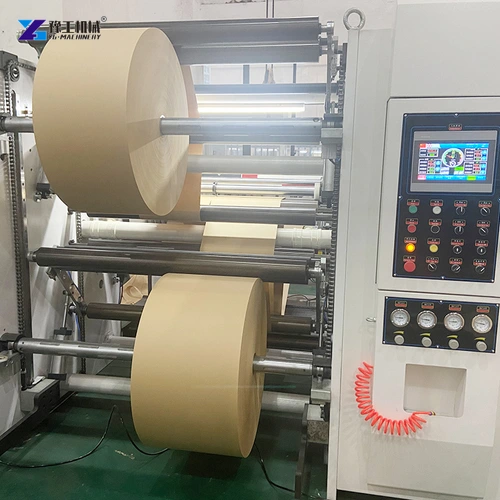
YG Slitter-Rewinder Specifications for Cost Comparison
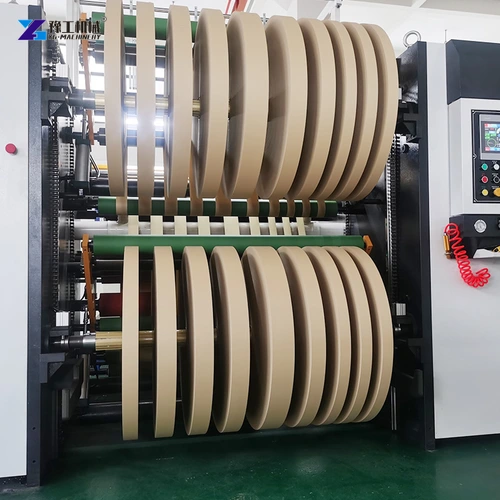
These configurations establish the roll envelope, electrical requirements and equipment footprint. Their speed limit is a machine specification, not a guaranteed rate for every paper, film or winding job. Use the material and finished-roll requirements to choose within the envelope before comparing the price of optional functions.
| Model | YG- 1300 | YG- 1600 | YG- 1800 |
| Maximum width | 1300 mm | 1600 mm | 1800 mm |
| Maximum unwinding diameter | φ1400 mm | φ1400 mm | φ1400 mm |
| Minimum slitting width | 30 mm | 30 mm | 30 mm |
| Maximum rewinding diameter | φ1000 mm | φ1000 mm | φ1000 mm |
| Speed | ≤350 m/min | ≤350 m/min | ≤350 m/min |
| Total power | 24 kW | 26 kW | 30 kW |
| Power supply | 380 V / 50 Hz | 380 V / 50 Hz | 380 V / 50 Hz |
| Weight | 4000 kg | 4500 kg | 5500 kg |
| Overall dimensions (L × W × H) | 3300 × 3150 × 1930 mm | 3300 × 3450 × 1930 mm | 3300 × 3650 × 1930 mm |
The larger machine requires more floor width and has a different power and handling requirement. Its listed overall dimensions are not the whole workshop allocation: roll loading, finished-roll removal, operator access and maintenance space also need room. Assess the proposed installation as a working route from incoming parent roll to outgoing product, not just an outline on the floor.
Provide the roll dimensions and required floor-space constraints for a configuration-specific comparison.
Tension and Knife Requirements Affect More Than Purchase Cost
Material behaviour changes what a slitter must control. A relatively stiff paper web, a thin flexible film and an adhesive-coated web do not respond identically to pull, contact and cutting. The control and knife arrangement should maintain a suitable web path while producing an edge and winding structure accepted by the next process. Paying for an unsuitable configuration can turn a low purchase figure into persistent scrap and rework.
Knife-related cost includes the suitable blade system, any additional sets needed for changeovers and wear-item replacement. A workshop producing many slit widths may spend significant time adjusting and checking the knife station. A business repeating one stable order may place greater value on repeatable settings than on frequent configuration changes. The slitting blade selection guide explains the cutting decisions separately; a price proposal should identify the knife system being supplied.
Tension performance is valuable when it protects saleable material. Poor winding can lead to loose rolls, wrinkling or lateral displacement. Compare offers using a trial of the intended material and inspect both slit edges and finished rolls. This links the cost of control features to the defect they address, without assuming that every advanced option is necessary for every workshop.
Describe the paper or film and the required finished-roll quality to review tension and knife requirements.
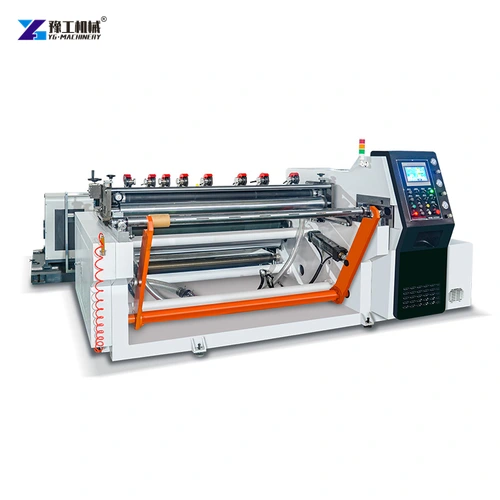
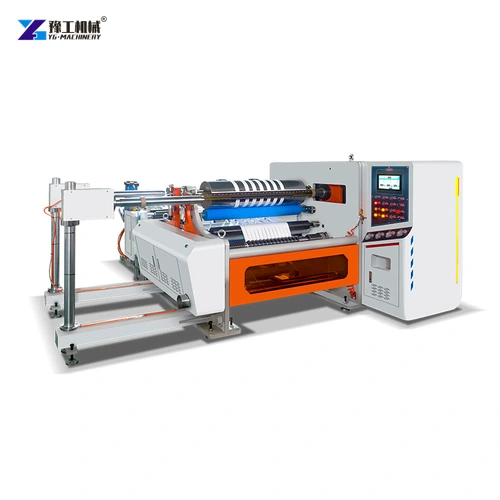
How Do Roll Changes Affect Slitting Machine Price and Output?
A higher running-speed specification cannot eliminate the time spent loading rolls, threading material, setting knives and removing finished product. Short orders contain more of these interruptions per saleable metre. For that workload, a handling improvement may create more practical value than a higher nominal speed that is rarely sustained.
A simple workshop observation is useful: time one complete order from loading to finished-roll removal, not only the interval when the web is moving. Separate running time from setup, roll exchange and inspection. If the operator repeatedly waits for lifting equipment or finished-roll space, the limiting stage is outside the cutting action. Buying a faster machine without changing that stage may leave the same queue.
The investment priorities consequently differ. Long repeat runs favour stable continuous operation. Frequent width changes favour accessible adjustment and an orderly changeover process. Heavy or awkward rolls may justify a suitable loading solution. Ask for those functions as explicit scope items rather than assuming the word ‘automatic’ includes them all.
Calculate Workshop Cost per Accepted Roll
Slitting machine price is the starting investment; accepted-roll cost also includes material loss, labour, energy, consumables and the use of workshop space. Keep these costs separate before combining them. Otherwise a cheap machine-only offer can appear comparable with a package that already includes installation or essential handling equipment.
For a defined production period, divide the total costs assigned to converting by the number of accepted finished rolls, or use accepted metres when roll lengths vary. State the measurement basis consistently. Include rejects and trim in the material account, but do not count the same loss again as a separate full material purchase. Distinguish electrical nameplate power from measured consumption: the installed power rating alone is not the energy bill for a shift.
- Initial investment: machine configuration, selected accessories and agreed supply scope.
- Installation and logistics: packing, freight, unloading, positioning and electrical connection where excluded from the offer.
- Production costs: labour, measured energy use, knives, consumables and routine maintenance.
- Quality and utilisation: trim that cannot be sold, rejected rolls, changeover time and demand actually available for the machine.
The result is a comparison between realistic workshop arrangements. Use the same material, order mix and acceptance standard for each proposal. A larger model is justified when its extra capability reduces a real constraint or supports confirmed orders, not simply because its maximum width is higher.
Request an itemised scope covering the machine, handling equipment, installation and routine wear items.
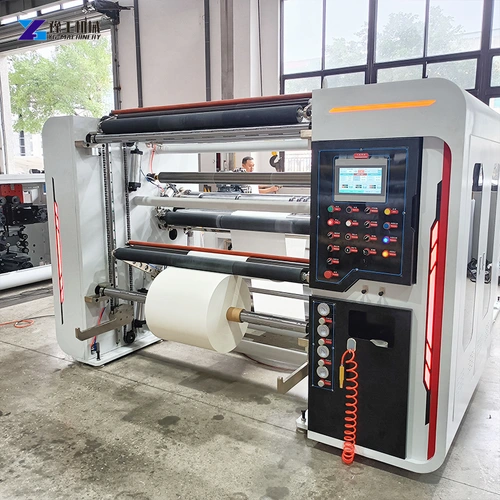
Slitting Machine Price FAQs
The price depends on the selected machine width, roll handling, knife arrangement, control requirements and delivered scope. Compare itemised offers for the same material and finished-roll task; a machine-only figure and an installed package are different investments.
Extra width can add useful lanes when the parent-roll and order widths fit. If normal orders leave that width unused or create unsaleable trim, a larger model may add investment without reducing accepted-roll cost.
Workshop output includes loading, threading, knife changes, inspections and unloading. Material limits also affect running speed. Compare accepted production over a complete order rather than using the maximum speed alone.
Identify knife sets, shafts, roll-loading or unloading equipment, controls, packing, delivery and installation responsibilities. Include only the items required for your task, and keep exclusions visible so the proposals can be compared fairly.
These specifications describe a web slitter-rewinder configuration. Steel-coil slitting requires its own material-thickness, coil-weight, knife-arbor and handling assessment. Use a machine proposal for the actual material rather than transferring paper or film limits to metal coils.
Choose the Investment Around Your Repeat Orders
The right slitting machine price corresponds to a machine that converts your normal parent rolls into accepted products without unnecessary width, unsuitable controls or avoidable handling delays. Start with the repeating order mix, establish the material and roll envelope, then compare the installed scope and cost of accepted production. This makes the final choice a workshop decision rather than a contest between headline quotations.
For a configuration-specific quotation, include the material, parent-roll dimensions and the finished widths you produce most often.