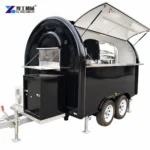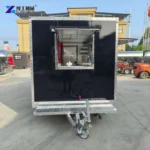
Before opening a serving window, a trailer has to stop being a vehicle and become a stable place to work. The hitch and running gear get it to the venue. Parking supports, access doors, electrical connections and the sales opening then determine how it operates during a shift. At closing time, that arrangement has to return to a secure transport condition.
A mobile concession trailer supports market traders and caterers throughout the working day. YG supplies configurable catering trailers with different sizes and running-gear arrangements. Understanding the change between travel and service connects those choices to everyday use.
Travel Hardware and Parked Support Do Different Jobs
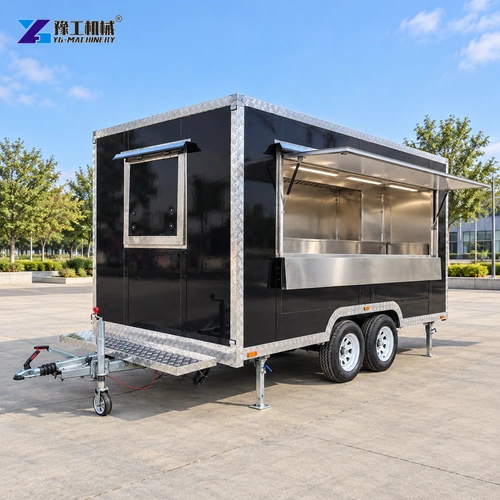
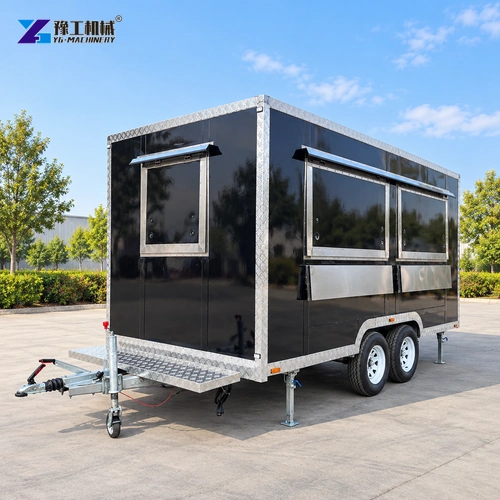
The towing connection transfers forces between the trailer and its towing vehicle. The axle and suspension carry the trailer during movement, while the tires maintain contact with the road. Parking supports serve another purpose: they help establish the intended stationary operating arrangement. They should not be confused with the axle’s carrying capacity or treated as permission to place a trailer on unsuitable ground.
The total load includes the body, installed equipment, stored supplies and liquids. Changing the equipment package can therefore affect more than the available counter space. The towing vehicle, connection, running gear and loaded configuration must be considered together. A mobile concession trailer that is easy to position when empty may behave differently once its working equipment and supplies are aboard.
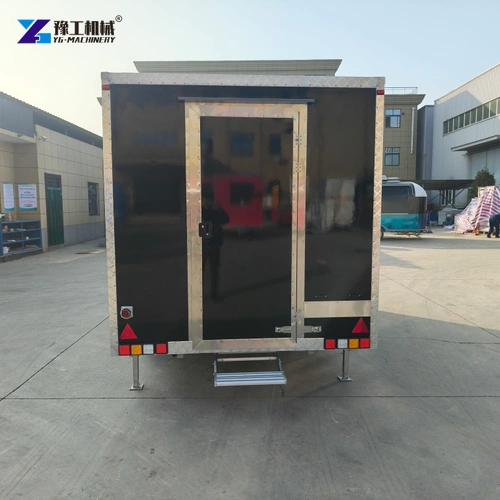
For service, choose a location that allows the unit to sit in its specified operating position, with access for staff and customers. Keep the entry door separate from the customer queue where the venue permits it. Wheels alone do not establish permission to tow or trade in a location. Road registration, towing suitability and trading authorization are separate matters governed by the actual configuration and local requirements.
Describe the towing and parked operating arrangements to discuss the trailer running gear and support scope.
Opening the Mobile Concession Trailer for Customers
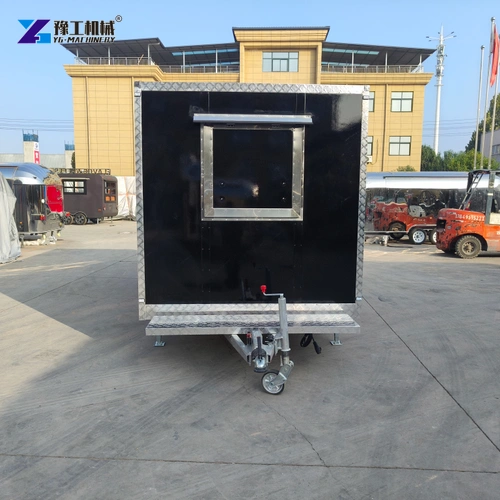
The serving window changes the side of the trailer into a customer interface. Its height and clear opening affect how staff pass orders, communicate and reach the service counter. An upper hinged panel may provide an overhead surface when open, but its appearance does not establish a wind rating or the conditions in which it can remain raised. The operating instructions for that opening still matter.
Window sealing also has a different role in each state. During travel or storage, the closed opening must seat correctly against its perimeter. During service, the moving panel, catches and any supports need to remain clear of the work area. Check the complete opening movement rather than only its appearance when fully open. A nearby sign, temporary canopy or door can interfere with that movement.
YG configurations can include a selling window with a waterproof sealing strip, and window dimensions can be customized. The mobile kitchen food trailer range provides additional body and kitchen options. For this part of the design, the useful starting point is the handover position: where staff stand, where the customer approaches and how the opening closes after the shift.
Share the serving-window layout and trading pitch so customer access and operator space can be considered together.
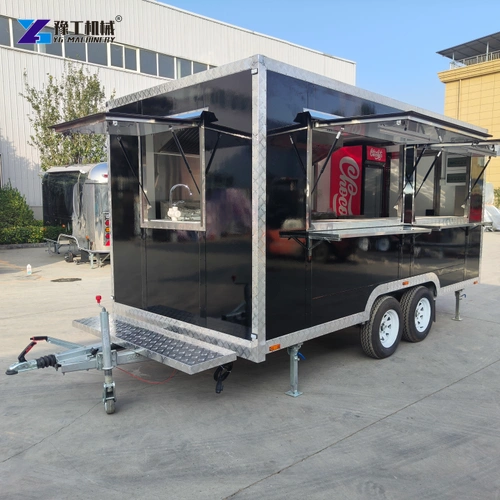
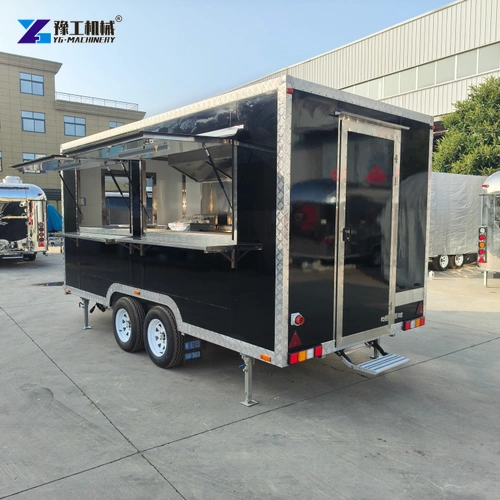
Mobile Concession Trailer Sizes and Running Gear
| Model | Body dimensions L × W × H | Total dimensions L × W × H | Axles | Brake |
| YG-300RD | 300 × 210 × 210 cm | 350 × 210 × 250 cm | One | No |
| YG-350RD | 350 × 210 × 210 cm | 450 × 210 × 250 cm | Two | Yes |
| YG-400RD | 400 × 210 × 210 cm | 500 × 210 × 250 cm | Two | Yes |
| YG-500RD | 500 × 210 × 210 cm | 580 × 210 × 250 cm | Two | Yes |
| YG-600RD | 600 × 210 × 210 cm | 700 × 210 × 250 cm | Two | Yes |
Body dimensions describe the enclosure, while total dimensions describe the overall envelope. Both matter for access and parking. The trading bay must also accommodate staff access and the opening window, not just the closed body.
The running-gear differences are model-specific. Do not transfer the axle or brake specification of one mobile concession trailer to another because their bodies look similar. A mini food trailer may suit a smaller operation, but its loaded configuration and equipment package still need to match the intended towing and stationary use.
Lighting, Water and Electrical Connections During a Shift
Service lighting helps staff see the working area and customers identify the counter. Tail, brake and turn lights serve the trailer while it travels. These are separate systems with different purposes. Interior brightness does not tell the operator whether the road lights function, and a working tail lamp does not establish that the kitchen has an adequate electrical supply.
The electrical package must suit the installed appliances and the available supply at the venue. Heating equipment, refrigeration and lighting create different demands. Connection points should be accessible without routing cables through the staff entrance or customer handover area. Their arrangement is part of the equipment configuration, not a detail to improvise after the trailer arrives.
A mobile concession trailer can also carry clean and waste water tanks with a small pump serving the taps. The two water streams need separate storage and appropriate handling. Tank capacity affects how long the intended washing routine can continue before replenishment or emptying. A compact tank package may be convenient for movement, but it should not be assumed sufficient for every trading pattern or local hygiene requirement.
List the lighting, water and electrical equipment needed during a trading shift.
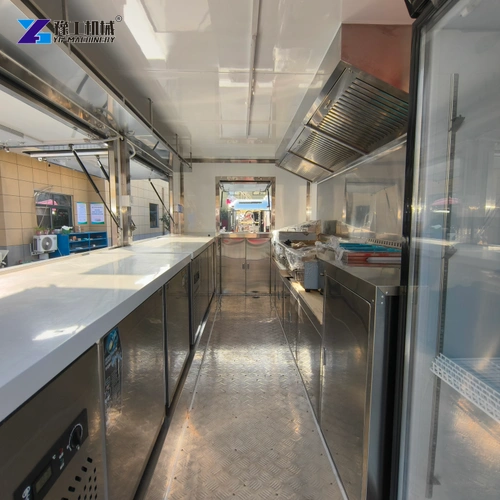
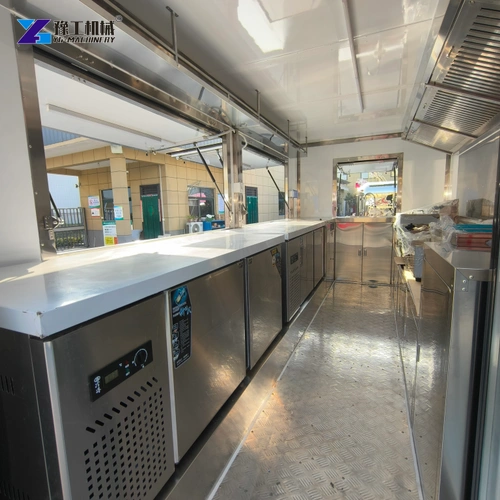
Closing the Serving Body Before Moving
Closing a mobile concession trailer involves both the visible body and the equipment inside. A window that is closed but not secured can still move during travel. Loose supplies or unrestrained appliances can also create problems even when the exterior looks ready. The final walk-around needs to cover the actual openings, installed equipment and connections used during that shift.
A practical changeover follows a deliberate sequence:
- Stop service and make the cooking and electrical equipment safe according to its operating instructions. Allow the required cooling time before handling or enclosing hot equipment.
- Remove food residues and clean the working surfaces with suitable products. Stainless-steel surfaces should be rinsed as appropriate and dried, rather than left with salty or acidic deposits.
- Deal with water and waste, secure movable equipment and stored supplies, and disconnect external services correctly.
- Close and secure the serving opening and access doors. Complete the specified checks of parking supports, towing connection, tires and travel lights before movement.
The sequence follows the installed equipment. A hot-food kitchen needs a different shutdown routine from a drinks trailer.
A Trailer Body That Supports Repeated Trading
The daily cycle reveals where customization is useful. A sheltered entry, a different window position, additional storage or accessible utility connections can make a repeated task easier. Each change also has consequences for body layout, weight distribution or access. It is better to evaluate those consequences together than to treat every extra item as an independent benefit.
For a mobile concession trailer, the strongest configuration is the one that supports the operator’s actual pattern of movement and service. Explain how often it moves, how the venue supplies power and water, and how orders pass through the window. Those conditions give the body and equipment discussion a clear purpose without turning it into a catalogue of unrelated accessories.
Request a trailer-body proposal covering the service openings, utilities and repeated changeover between travel and trading.
Mobile Concession Trailer FAQs
A conventional concession trailer is towed rather than self-propelled. Its towing arrangement must suit the actual loaded trailer and vehicle, while motorized food vehicles are a different product configuration.
The RD models have different running-gear specifications. The configuration table identifies the axle count and brake arrangement for each model, so similar body styling should not be used as the basis for that comparison.
The permitted use depends on the opening assembly and weather conditions. An overhead panel should be operated within its specified limits, and its appearance alone does not establish safe wind or rain performance.
Tank suitability depends on the washing routine, trading duration and applicable requirements. Clean-water supply and waste-water storage must both be considered, rather than sizing only the fresh-water tank.
Installed equipment varies by the ordered package. Confirm the appliance list, utility connections and storage arrangement for the selected trailer instead of assuming that one photographed installation defines every unit.
Make the Changeover Part of the Configuration
Choose the trailer as a working body with two clear states: secured for movement and arranged for service. The connection, supports, window, utilities and closing routine should all support that change. A well-defined operating pattern makes the configuration discussion more useful than choosing by exterior color or kitchen length alone.
Include the intended trading pattern, venue utilities and preferred body size for a trailer configuration discussion.