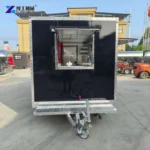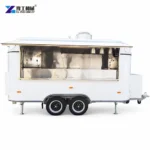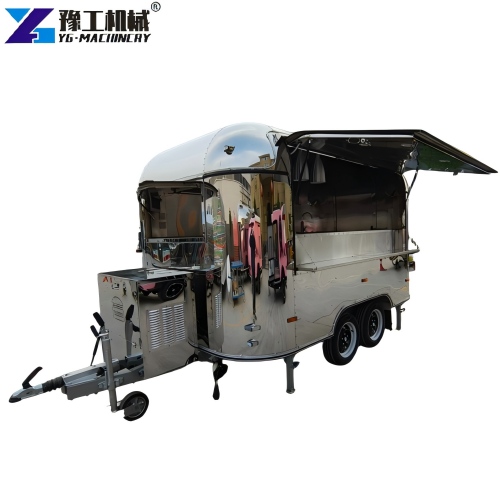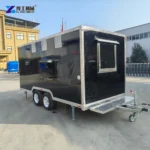
Food trailer cost starts with the vehicle, but a useful opening budget follows the kitchen all the way to its first service. A towable shell, a fitted cooking trailer and a business ready to trade are different purchase scopes. Their prices cannot be compared fairly without separating the equipment included, the work remaining and the expenses outside the manufacturer’s supply.
The practical question is where the money creates a usable kitchen. Body size provides space; appliances perform the menu; power, water and ventilation allow those appliances to work. Delivery and the trading location add another layer. A custom YG trailer’s quotation should identify these parts so the buyer can build the opening budget around the agreed supply.
Separate the Trailer Purchase From the Opening Budget
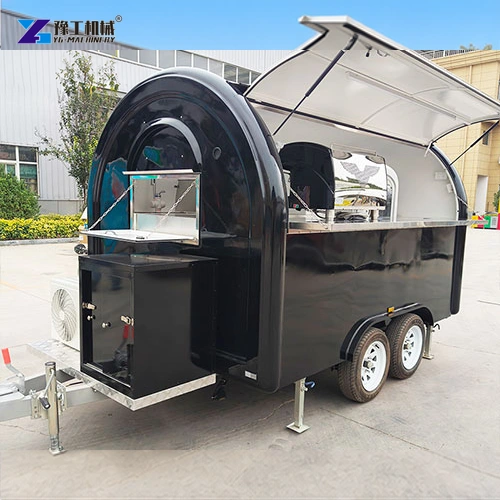
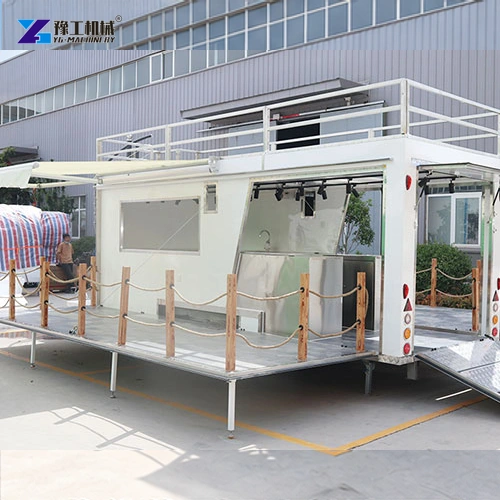
The trailer purchase covers the agreed manufactured unit and fitted equipment. The opening budget also includes bringing it to the destination, preparing the operating location and obtaining the supplies needed to serve customers. Keeping these layers separate makes food trailer cost easier to control. It also stops an attractive vehicle price from being mistaken for the full amount needed to start trading.
Use a budget with clearly named items:
- Trailer body, chassis, service windows, access and agreed basic interior fittings.
- Menu equipment such as refrigeration, cooking appliances, extraction and beverage equipment.
- Power and water arrangements needed at the intended trading location.
- Packing, freight, unloading and any destination-side transport or installation work.
- Business setup, local approvals, initial ingredients, packaging and operating reserves.
This is a cost structure, not a claim that YG supplies every item. Some expenses belong to the trailer manufacturer, others to transport providers or the business itself. Allocate each item once. If a fitted refrigerator is already included in the vehicle quotation, do not add the same refrigerator again in the appliance budget.
Describe the menu and opening plan so the trailer purchase can be separated from the wider business setup.
How Body Length Affects Food Trailer Cost and Kitchen Space
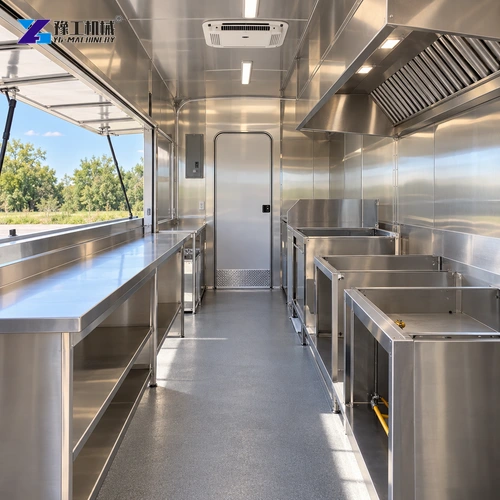
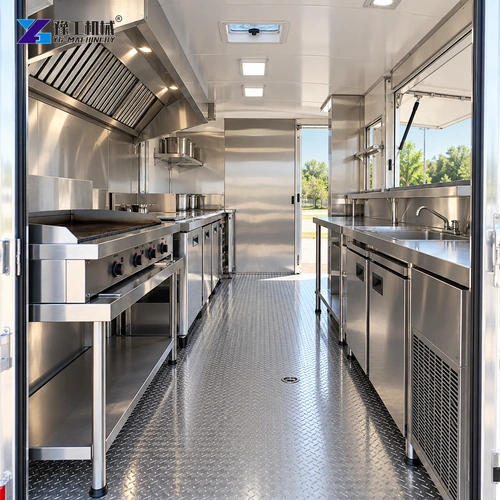
A longer body can accommodate more preparation, storage and cooking positions. Its value depends on whether the menu uses that space. Buying additional length to install appliances that rarely run creates an avoidable expense, while choosing a cramped body can force staff to share incompatible work positions. Compare the working arrangement before treating length as the only price variable.
Body shape and service structures also matter. A straightforward serving hatch, a customized exterior and a folding service platform require different fabrication scopes. Their appearance can attract attention, but they should be evaluated alongside the usable kitchen. The trailer must still allow appliance access, safe storage and practical cleaning. Decorative spending should not displace the functions needed for the menu.
For a compact kitchen baseline, compare the YG mini food trailer family with the actual appliance arrangement. A serving-focused mobile pizza trailer represents a different menu discussion; an oven and its installation needs can change the space and utilities required even when the body size appears similar.
Send the equipment layout and preferred body length to compare usable kitchen space.
YG-400RD Food Trailer Body and Fitting Specifications
| Specifications | YG-400RD |
| Model | YG-400RD |
| Body dimensions, L × W × H | 400 × 210 × 210 cm |
| Total dimensions, L × W × H | 500 × 210 × 250 cm |
| Axles | Two |
| Brake | Yes |
| Chassis construction | Steel frame; square tubes 100 × 50 × 4 mm and 60 × 40 × 2 mm |
| Suspension | Five-leaf springs with axle; rust-resistant protective coating |
| Standard chassis speed specification | 40 km/h; specially made chassis option 80–100 km/h |
| Body wall frame | Square tubes 40 × 60 × 2 mm |
| Exterior wall | Painted galvanized sheet |
| Insulation layer | 5 cm |
| Interior wall | Stainless steel |
| Standard selling window | One front window, 2000 × 1100 mm; other sizes available |
| Window sealing | Waterproof sealing strip |
| Electrical fittings | General control, automatic power-failure protector, ceiling and serving-window LED lights, sockets and tail-light signals |
| Floor layers | 2 mm embossed aluminum, 10 mm plywood or PVC, and 1 mm galvanized sheet |
| Wheels | Two axles, four wheels, 14- or 15-inch tires and one guide wheel |
| Water sinks | Double sinks with hot/cold taps; three-compartment option |
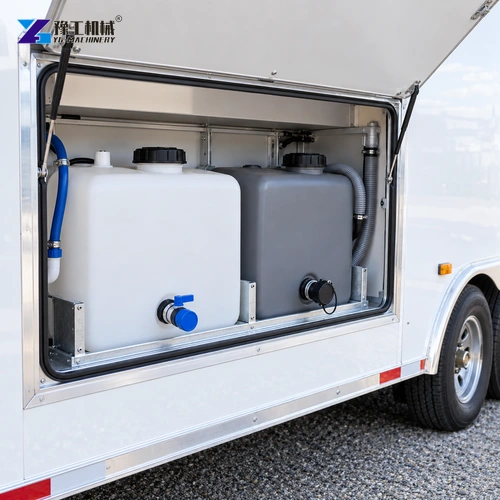
| Water tanks | Freshwater and wastewater tanks; standard 25 L per tank, other capacities available |
| Water pump | 12 V mini pump with on/off control |
These body and fitting specifications provide a defined starting point for comparing kitchen packages. Cooking appliances are a separate menu-dependent choice. Transport planning must use the complete loaded towing arrangement and applicable road requirements, not interpret the chassis speed specification as a universal towing permission.
Cooking and Refrigeration Can Change Food Trailer Cost Substantially
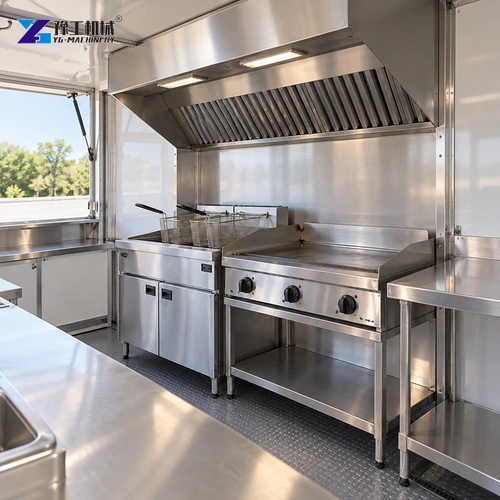
The cooking line links several purchases. A fryer or griddle needs its installation space, service connections and an appropriate ventilation arrangement. Adding another hot appliance may therefore affect the counter, hood and utilities as well as the appliance price. Compare the complete installed function rather than choosing the cheapest standalone equipment item.
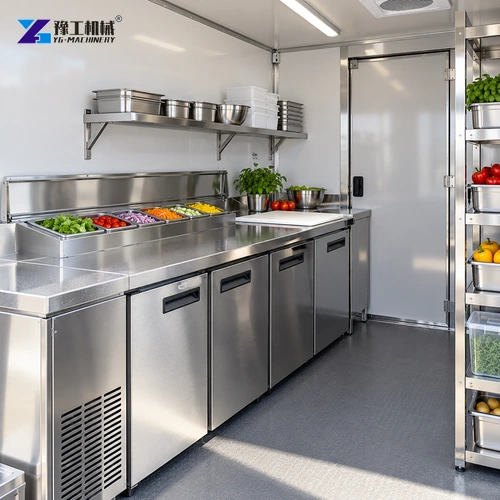
Refrigeration is equally menu-dependent. A coffee business storing milk needs a different arrangement from a kitchen carrying chilled ingredients through a full event. Refrigerator size, access and placement affect both the equipment package and preparation flow. Door clearance matters: a refrigerator that fits under a counter but obstructs the aisle can make an otherwise inexpensive layout difficult to use.
For example, a drinks-and-pastry menu may prioritize beverage equipment, chilled storage and display space. A burger-and-fries menu shifts investment toward cooking, extraction and assembly. Neither needs every possible appliance. YG’s mobile coffee configuration offers a relevant comparison when the business centers on drinks rather than a broad hot-food menu.
List the cooking and refrigeration appliances required for the menu to obtain an equipment breakdown.
Utilities and Delivery Add to Food Trailer Cost
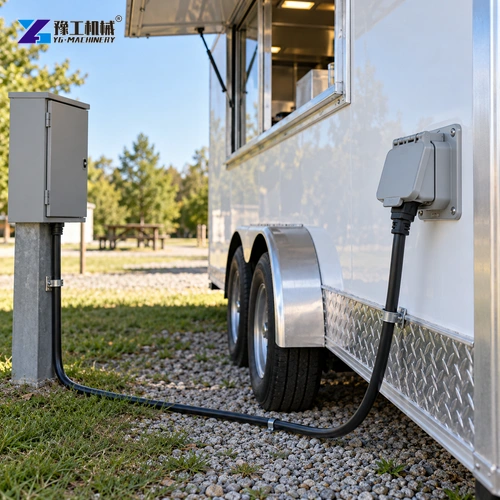
Power demand comes from the equipment operating together. A refrigerator, coffee machine and cooking appliance can create a different supply requirement from a simple snack counter. The electrical arrangement should follow the installed equipment and the supply available at the venue. Do not count a generator as automatically included because a photograph shows a complete trailer.
Water storage and wastewater handling add both hardware and operating considerations. Larger tanks can reduce refill interruptions, but their filled weight and placement affect the layout. The relevant expense is the arrangement needed for the washing routine, plus practical access to refill and empty it. A low tank price does not resolve a site with inconvenient water access.
Delivery depends on the manufactured unit, packing method, destination and unloading arrangements. Compare quotations on the same delivery basis. Factory pickup and delivery to the trading location are not interchangeable offers. Avoid inventing a shipping allowance from body length alone; the actual shipment and destination conditions determine that part of food trailer cost.
Compare Like-for-Like Kitchen Packages
A useful comparison identifies what each proposal delivers at the same stage of readiness. Describe the body configuration, installed appliances, utilities, included fittings and delivery boundary. Then identify any work left for the buyer. Differences become visible without assuming that a higher or lower headline price represents better value.
Review service access as part of the investment. Cleaning behind cooking equipment, replacing a pump or reaching electrical protection should not require removing unrelated kitchen fittings. A layout that makes ordinary maintenance awkward can create operating costs after purchase. Keep the discussion specific to the installed equipment rather than adding generic claims about low maintenance.
The goal is a kitchen package that supports the chosen menu and trading setting. Keep optional presentation features separate from essential preparation, cooking and hygiene functions, then decide which additions genuinely support the business.
Request an itemised offer with matching body size, appliances, utilities and delivery scope.
Food Trailer Cost FAQs
It depends on the agreed supply package. A basic trailer and a fitted cooking kitchen cover different equipment. Compare the included appliances and installation scope before comparing the total price.
Their body construction, serving arrangements, appliances and utilities may differ. Compare the installed functions and delivery basis rather than assuming equal length means equal equipment.
Yes. Transport and unloading belong in the opening budget even when they are quoted separately from the manufactured trailer. Record who supplies each part to avoid omissions or double counting.
Yes. Defining the menu helps select the stations actually needed. This avoids purchasing a broad cooking range when the business mainly requires beverage preparation, refrigeration or a limited snack line.
Not necessarily. Consider the remaining appliances, fitting work, utilities and delivery needed to create the intended kitchen. A shell price alone cannot represent the complete opening investment.
Budget for the Kitchen You Need to Operate
Food trailer cost becomes useful when every budget item has a clear purpose and supply boundary. Start with the menu, decide the working layout, and separate the manufactured trailer from destination and business-opening expenses. This creates a practical comparison without inventing a price or paying twice for the same item.
Send the menu, preferred body size, appliance needs and delivery destination for a clearly scoped proposal.