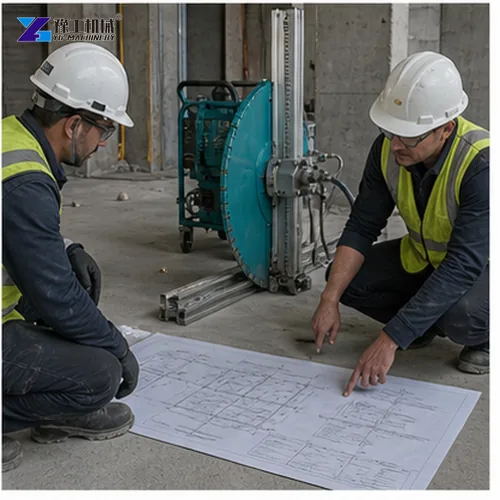
Choosing between hydraulic and electric wall cutting equipment affects site setup, achievable depth, transport, utilities and maintenance. This evidence-based comparison uses complete published model specifications to help contractors match the system to the job.
This guide covers complete parameters, setup, safety, operating cost and purchasing checks. Explore the YG construction machinery range or send your project details for model selection.
Hydraulic Wall Saw Vs Electric Wall Saw: What Is The Main Difference?
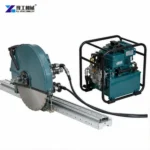
A hydraulic wall saw receives power from a separate pump through hydraulic hoses. An electric wall saw places an electric motor on the saw system and uses a compatible control unit. Both use guide rails and diamond blades to make precise openings, but their site utilities, transport weight and maintenance routines differ.
The correct choice depends on concrete thickness, reinforcement, available power, water, working duration and access. A wall cutting machine must also fit the lifting plan and slurry controls. Comparing only motor ratings overlooks the support equipment that determines whether production can start on time.
Document the assumed concrete thickness, steel density and access condition beside every capacity calculation. This gives purchasing, engineering and site teams one shared baseline and prevents a catalogue maximum from being treated as guaranteed production under every condition. Apply this check whenever the Hydraulic Wall Saw Vs Electric Wall Saw is moved to a new work area or configured for a different opening.
When Is A Hydraulic Wall Saw The Better Choice?
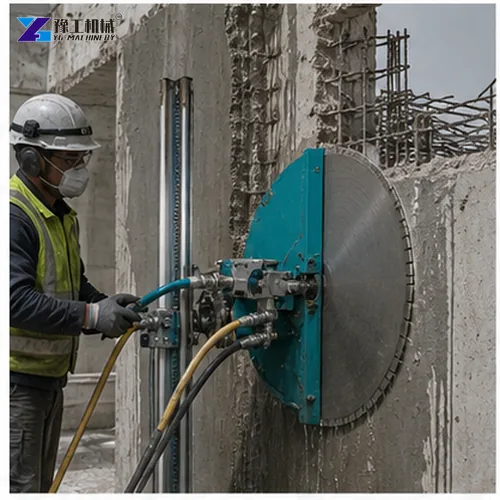
Hydraulic systems are suited to heavy cutting where high pressure, robust power delivery and large blades are required. Published YG600 and YG700 models provide blades up to 1400 and 1600 mm and maximum cutting depths of 620 and 730 mm. The separate pump can remain outside a constrained cutting zone.
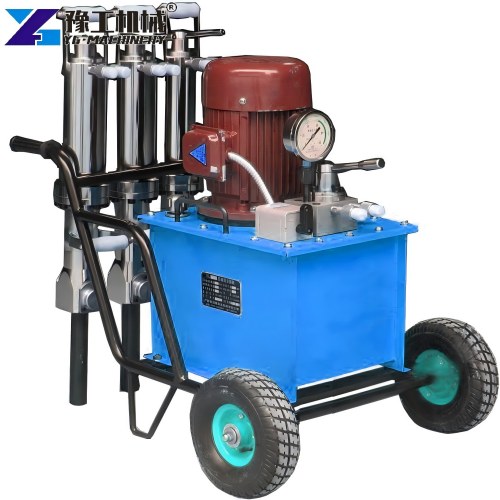
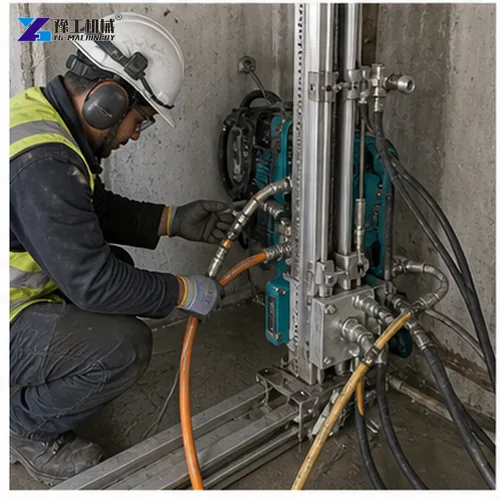
A hydraulic wall saw requires space for the power pack, correct hose routing and disciplined contamination control. Buyers should consider total transported weight, hydraulic oil management and service capability as well as cutting depth.
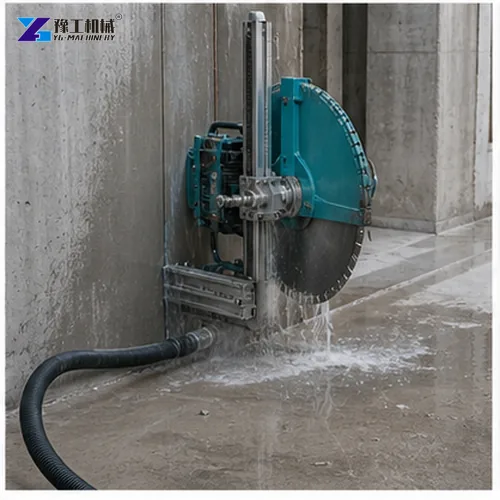
Request a representative cutting trial or video that shows rail fixing, blade engagement, water control and the finished edge. Record blade specification and operating settings during the trial so the observed result can be compared with the planned application. Apply this check whenever the Hydraulic Wall Saw Vs Electric Wall Saw is moved to a new work area or configured for a different opening.
When Is An Electric Wall Saw The Better Choice?
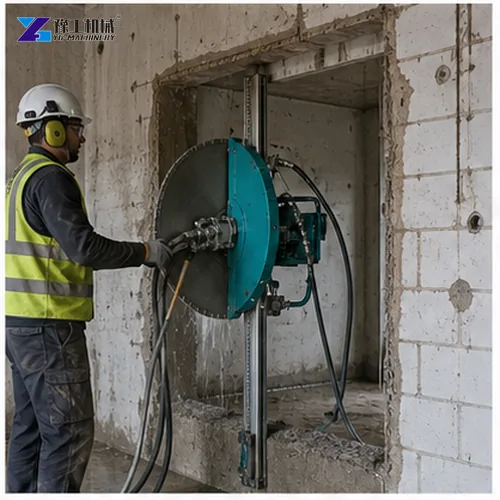
Electric systems can simplify setup where the site has a stable compatible supply. Published electric models weigh 35 to 45 kg and cover 320 to 520 mm cutting depths. They eliminate a separate hydraulic pump but still require cooling water, electrical protection and safe cable routing.
An electric wall saw is attractive for doorway, window and service openings when the required depth falls within the selected model. Confirm phase, voltage, frequency and distribution capacity before ordering; a connector alone does not prove the site can carry the operating load.
Include every auxiliary item in the technical review: rails, anchors, guards, hoses or cables, water connectors, control equipment, installation tools and recommended consumables. Missing accessories often create more commissioning delay than the primary machine itself. Apply this check whenever the Hydraulic Wall Saw Vs Electric Wall Saw is moved to a new work area or configured for a different opening.
Complete Hydraulic Wall Saw Specifications
Use the complete hydraulic table to compare pump and saw requirements at the same time. Pressure, flow, blade range and total handling weight belong in one purchasing decision.
| Parameter | YG600 | YG700 |
| Power | 25 kW | 30 kW |
| Cooling | Air / water | Air / water |
| Rated Voltage | 380 V, 50 Hz | 380–420 V, 50–60 Hz |
| Pressure Stages | 3 | 3 |
| Maximum Operating Pressure | 200 bar / 20 MPa | 210 bar / 21 MPa |
| Oil Flow | 30–80 L/min | 40–100 L/min |
| Pump Dimensions | 600 × 650 × 1050 mm | 500 × 520 × 1100 mm |
| Pump Weight | 220 kg | 140 kg |
| Blade Diameter | 800–1400 mm | 800–1600 mm |
| Maximum Cutting Depth | 620 mm | 730 mm |
| Saw Maximum Pressure | 180 bar / 18 MPa | 200 bar / 20 MPa |
| Saw Maximum Oil Flow | 100 L/min | 100 L/min |
| Gearing | Gear | Gear |
| Saw Speeds | 450 / 950 / 1300 rpm | 450 / 850 / 1200 rpm |
| Saw Dimensions | 400 × 420 × 400 mm | 400 × 420 × 400 mm |
| Saw Weight | 38 kg | 39 kg |
Assign inspection responsibility before equipment reaches site. The responsible person should approve the structure, layout, anchors, utilities and section-removal method, then record changes made during cutting. Controlled records make later quality review and troubleshooting much faster. Apply this check whenever the Hydraulic Wall Saw Vs Electric Wall Saw is moved to a new work area or configured for a different opening.
Complete Electric Wall Saw Specifications
The electric table shows all published comparison fields. Depth increases with blade diameter while rated speed decreases across the three configurations.
| Parameter | YG800 | YG1000 | YG1200 |
| Automation | Manual | Semi-Automatic | Full Automatic |
| Maximum Cutting Depth | 320 mm | 420 mm | 520 mm |
| Blade Diameter | 800 mm | 1000 mm | 1200 mm |
| Power / Voltage | 7280 W / 220 V | 7580 W / 220 V | 7880 W / 220 V |
| Blade Speed | 400 rpm | 380 rpm | 350 rpm |
| Machine Weight | 35 kg | 38 kg | 45 kg |
| Dimensions | 55 × 55 × 78 cm | 55 × 55 × 88 cm | 55 × 55 × 98 cm |
Production estimates should include setup, scanning, rail relocation, blade changes, slurry collection and concrete removal. Calculate usable openings per shift rather than blade travel alone. This produces a realistic labor plan and prevents unsafe pressure to accelerate the final release cut. Apply this check whenever the Hydraulic Wall Saw Vs Electric Wall Saw is moved to a new work area or configured for a different opening.
How Do Setup Time And Access Compare?
Hydraulic equipment adds a pump and hoses but allows the power source to be positioned away from the cut. Electric equipment reduces auxiliary hardware, although its motor, controller and cables still need protected access. Narrow stairs, elevators and occupied interiors can make component weight more important than nameplate power.
Create a route survey before choosing either concrete wall saw. Measure doors, stairs, slab capacities and anchor locations. Include blade handling and removal of concrete sections; the wall saw machine is only one part of site logistics.
Prepare a maintenance schedule based on operating hours and observed condition. Inspect fasteners, rail surfaces, feed components, seals, connectors, guards and emergency controls. Keep critical wear parts clean and identified so replacements can be installed without mixing incompatible components. Apply this check whenever the selected wall saw system is moved to a new work area or configured for a different opening.
Which System Has Lower Operating Cost?
Electricity, hydraulic maintenance, diamond blade consumption, setup labor, water treatment and downtime all affect cost per completed opening. An electric unit may have a simpler energy path, while a hydraulic unit may finish deep demanding cuts with fewer repositioning steps.
Calculate cost using accepted openings rather than machine hours. Record setup, cutting, blade changes, slurry collection and repair time. The lower purchase price is not automatically the lower wall cutting cost.
Treat water and electricity as engineered site services. Confirm supply capacity, protection, hose or cable routing and isolation points before work. Keep connections outside standing water and protect routes from vehicles, sharp edges and falling concrete sections. Apply this check whenever the selected wall saw system is moved to a new work area or configured for a different opening.
How Should Buyers Compare Wall Saw Quotations?
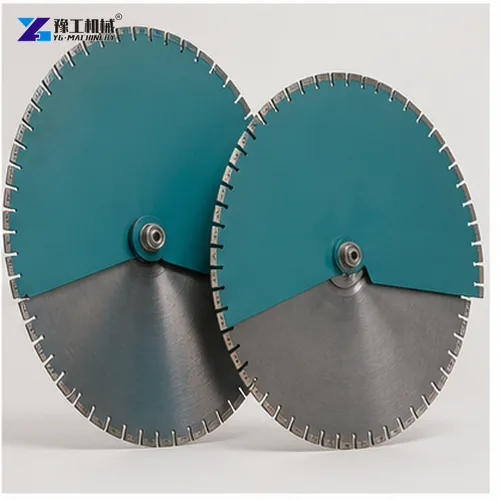
Give every supplier the same wall thickness, opening schedule, reinforcement, site utilities, operating hours and destination. Require the blade, rail length, anchors, guards, cables or hoses, controls, tools, spares and training to be listed separately.
Ask for an acceptance test using representative concrete where possible. Confirm documentation, remote support and parts lead times. A transparent scope makes hydraulic wall saw vs electric wall saw quotations commercially comparable.
Compare suppliers using a written compliance matrix. Mark each requirement as included, optional, excluded or requiring local preparation. This simple document exposes scope differences and gives the buyer a reliable basis for technical approval and final contract discussion. Apply this check whenever the selected wall saw system is moved to a new work area or configured for a different opening.
Which Wall Saw Should You Choose?
Choose hydraulic when deep cuts, large blades and demanding duty justify the pump system. Choose electric when required depth, site power and mobility favor a lighter configuration. In either case, verify structural support, wet-cutting controls and removal methods before purchase.
YG Machinery can compare both systems against your project. Send drawings, thickness, maximum opening, utilities, working environment and destination for a configuration based on actual constraints.
Commissioning should progress through visual inspection, no-load checks, controlled trial cutting and acceptance of a measured opening. Train more than one operator in setup, normal adjustment, cleaning, fault response and safe shutdown, then keep the approved settings with the equipment. Apply this check whenever the selected wall saw system is moved to a new work area or configured for a different opening.
Hydraulic Wall Saw Vs Electric Wall Saw FAQ
Not automatically. Compare delivered pressure, flow, blade range, cutting depth and duty requirements for the specific models.
Yes. Published wall saw systems use cooling water to manage blade temperature and suppress dust.
Electric models remove the separate hydraulic pump, but access decisions should use the weight and dimensions of every delivered component.
Yes, with a suitable diamond blade and controlled feed. Reinforcement can reduce cutting rate and change blade selection.
Request A Hydraulic Wall Saw Vs Electric Wall Saw Recommendation
Send YG Machinery your drawings, wall thickness, reinforcement details, required openings, site utilities and destination. We will compare the published parameters and prepare a suitable Hydraulic Wall Saw Vs Electric Wall Saw configuration and quotation.