Floor tolerances affect forklift travel, rack installation, automated handling, coating performance and the owner’s perception of quality. A laser screed can improve elevation control and placement productivity, but strong results still depend on specification, slab design, concrete consistency, logistics, finishing and testing. This guide connects those decisions for contractors and equipment buyers.
Use it as a planning framework, not as a substitute for the project specification, machine manual or qualified engineering advice. Requirements vary by country and facility. The best outcome comes from agreeing on the measurement method before work and then managing each pour as a controlled production process.
Concrete Floor Flatness and Floor Levelness Explained
Floor flatness describes short-interval surface waviness, while floor levelness describes how the elevation changes over longer distances. They are related but not interchangeable. A slab can have a smooth local surface yet slope across the building, or it can meet an elevation target while containing localized waves. Specifications should state the required measurement system, test timing, test area and acceptance criteria rather than using the word flat as an undefined promise.
For random-traffic floors, F-number systems are commonly used to quantify flatness and levelness. Defined-traffic aisles may require a different profile method based on the path of the material-handling vehicle. The project team must identify the operational need first: conventional forklifts, very-narrow-aisle trucks, robotic equipment, high-bay racking or a general manufacturing floor can demand different tolerances.
Before the next pour, convert this topic into a short checklist with a named responsible person and a recordable acceptance point. That discipline makes quality repeatable across crews and shifts, and it gives the project team evidence for resolving questions without relying on memory.
How a Laser Transmitter Controls Screed Elevation
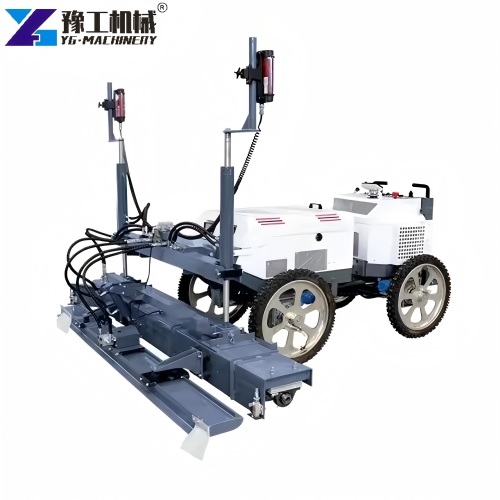
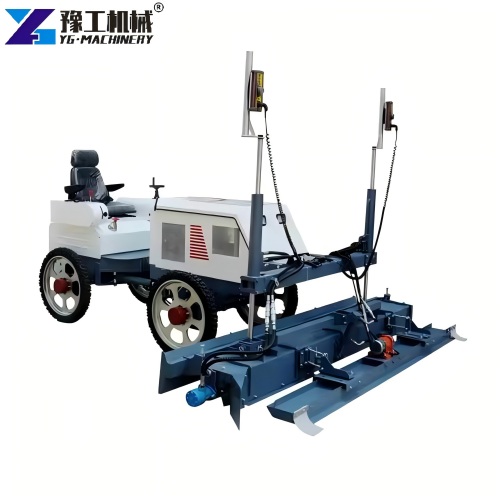
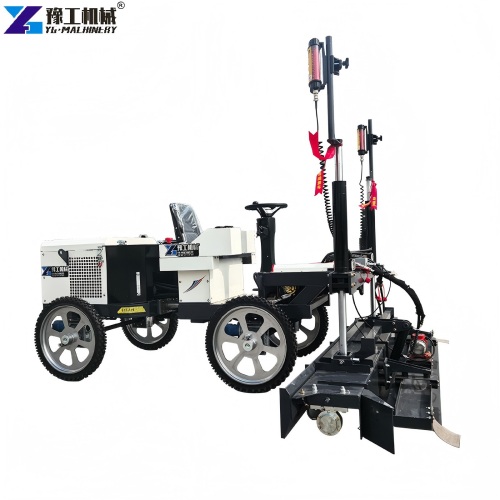
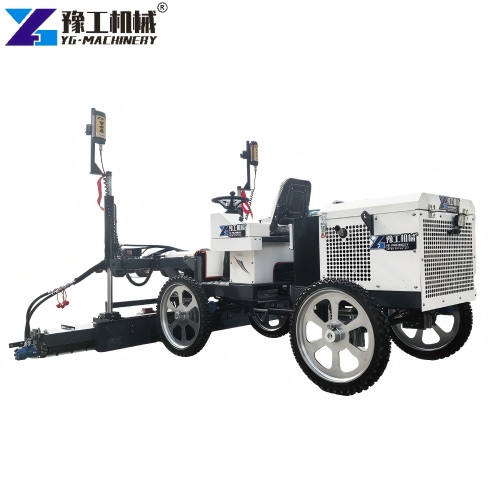
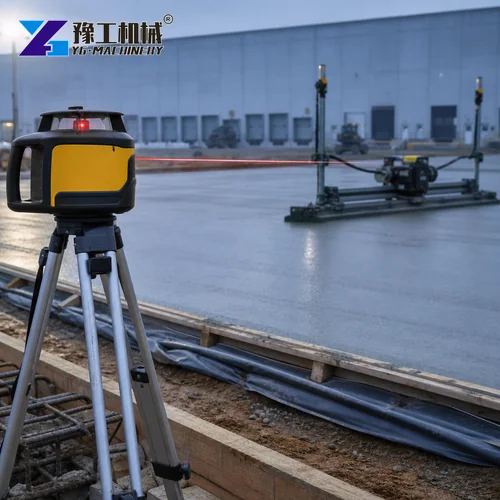
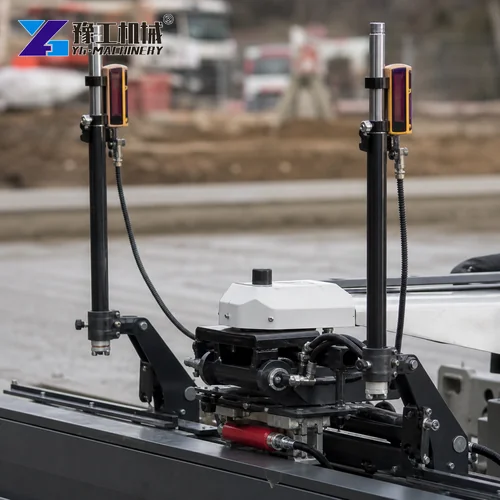
A laser transmitter establishes a reference plane across the pour area. Receivers on the screed head detect that plane, and the control system adjusts hydraulic elevation while the machine strikes off concrete. The process reduces dependence on numerous manual grade points and can produce consistent elevation over large placements when the reference, machine and concrete supply are properly managed.
The machine does not correct every upstream problem automatically. A disturbed transmitter, blocked signal, incorrect benchmark, receiver fault, unsuitable concrete consistency or rushed placement can still create errors. Calibration checks, an independent benchmark and continuous quality observations remain essential. See our concrete laser leveling machine overview for available configurations.
Set Concrete Floor Flatness Specifications
Translate the owner’s operational needs into measurable acceptance criteria. Confirm whether the floor is random traffic or defined traffic, the required test standard, minimum local values, overall values, sampling frequency, excluded areas and responsible testing party. Clarify how construction joints, penetrations, ramps and intentionally sloped zones will be treated.
Agree on test timing because concrete curling, shrinkage and environmental exposure can change later readings. Document the reference benchmark and elevation datum. A pre-pour conference should bring together the owner, designer, concrete supplier, flooring contractor, testing agency and laser screed operator so responsibilities are clear before trucks arrive.
Plan Industrial Concrete Floor Joints and Access
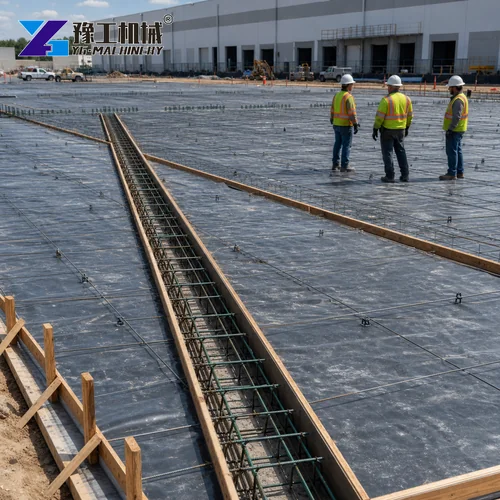
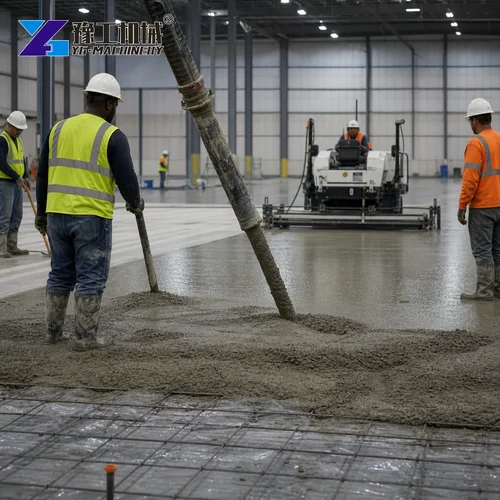
Lay out pour strips around machine reach, concrete delivery, finishing capacity and joint design. The screed must approach each area without crossing unsupported reinforcement, colliding with columns or trapping itself behind fresh concrete. Provide stable travel routes and turning space, and coordinate pump hoses so they do not interrupt receiver line of sight or drag through finished work.
Construction joints often become the most visible transitions in the floor. Install forms, dowels and load-transfer assemblies securely at the correct elevation. Prevent movement during discharge and vibration. Joint layout should follow the structural design and rack or traffic plan; moving a joint merely for production convenience can create long-term operational problems.
Control Concrete Supply for Laser Screed Work
Continuous, predictable concrete delivery lets the laser screed operate at a stable pace. Large gaps between trucks can create cold joints, while excessive discharge can bury reinforcement or force the machine to rush. Coordinate batch intervals, pump capacity, backup plans and communication between the batch plant and placement crew.
Consistency matters as much as speed. Changes in slump, air content, aggregate moisture or admixture timing affect strike-off and finishing behavior. Do not add uncontrolled water at the site. Follow the approved mix design and testing plan, and adjust production through authorized procedures when weather or transport conditions change.
Set and Protect the Laser Transmitter Grade Reference
Set the transmitter on a stable tripod outside vibration, traffic and splash zones. Verify it against a known benchmark and check the working range and line of sight. Protect the tripod with barriers, but do not place protection where it blocks the beam. If the unit is moved or struck, stop and re-establish the reference before continuing.
Large buildings, temperature gradients and equipment limitations may require multiple setups or careful validation. Make independent elevation checks at planned intervals instead of relying only on the machine display. Record transmitter height and benchmark readings so the team can diagnose any discrepancy.
Operate the Concrete Laser Screed Head Consistently
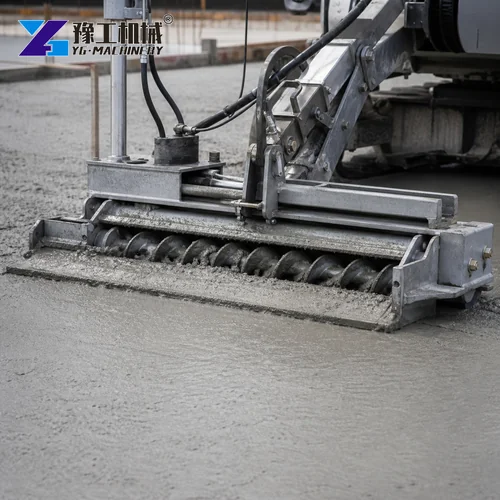
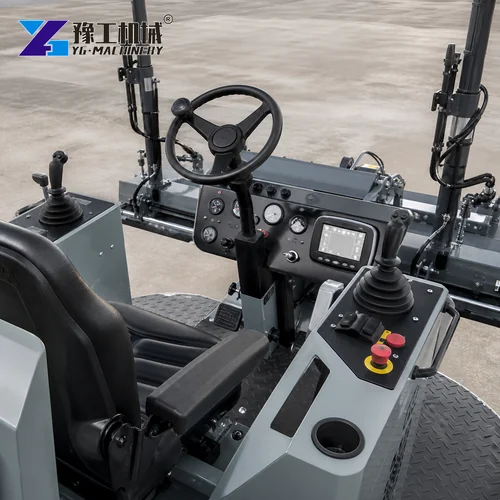
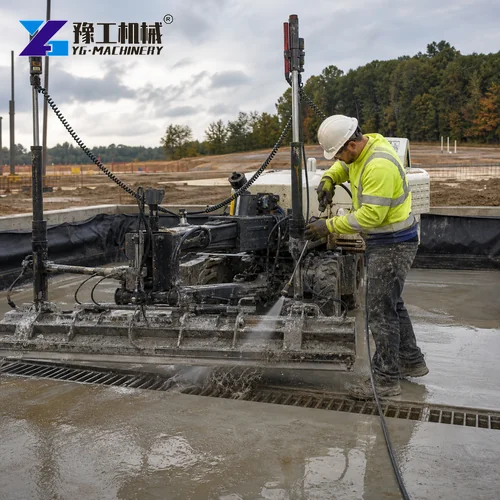
Maintain an even head of concrete in front of the screed and avoid overloading the auger. The operator should coordinate machine speed, vibration and elevation response with concrete condition. Sudden steering changes or stopping in one location can leave ridges and depressions that later finishing may not fully remove.
Receivers must remain clean and securely mounted. Inspect cables, hydraulic connections and mechanical wear before the pour. A low-speed trial area can confirm calibration and crew coordination. The operator should watch both the reference system and the material behavior rather than assuming automation will compensate for poor placement.
Coordinate Industrial Concrete Floor Finishing
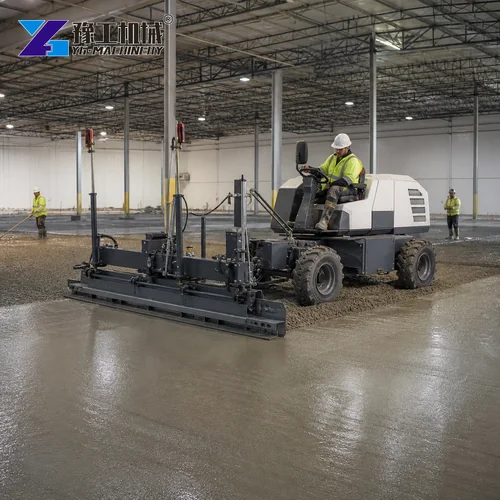
Laser screeding is one stage of a complete floor process. Bull floating, edge work, curing and power troweling must follow at the right time. Starting finishing too early can trap bleed water or damage the surface; starting too late can prevent proper closure. Crew size and equipment capacity should match the planned placement rate.
Avoid aggressive hand correction that creates localized waves after the screed has established grade. Use planned check points and correct defects while the concrete remains workable. Edges, columns and narrow areas outside machine reach need a controlled manual method tied to the same elevation reference.
Measure Floor Flatness and Floor Levelness
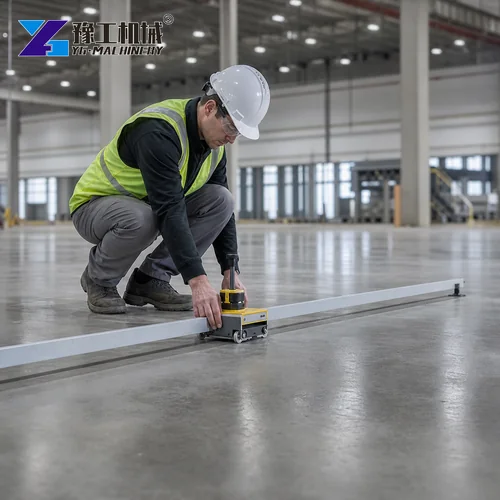
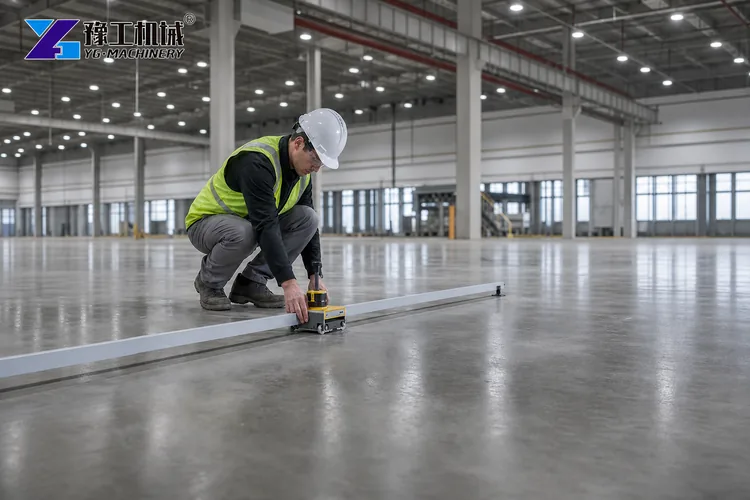
Use a qualified testing agency and calibrated equipment appropriate to the specified method. Measurements should follow the required sampling pattern and exclude only areas permitted by the specification. Testing promptly after finishing provides feedback while production practices can still be adjusted for later placements.
Review both overall and minimum local results. A satisfactory average can hide a small area that disrupts high-speed vehicles or rack installation. Map low-performing zones to pour sequence, concrete batch, crew activity and machine settings. This turns test data into process improvement rather than a pass-or-fail document filed at project closeout.
Prevent Industrial Concrete Floor Defects
Ridges can result from inconsistent material head, abrupt machine movement or later finishing. Low spots may come from poor concrete distribution, settlement or incorrect control. Surface tearing can reflect timing, mix behavior or equipment setup. Cracking is influenced by restraint, joint spacing, curing, reinforcement and drying—not solely by the screed.
A useful troubleshooting process separates elevation errors from surface-finish defects and structural movement. Check records, test maps, batch tickets and environmental conditions. Correct the root cause before the next placement. For equipment and project budgeting, review our laser screed price guide and laser screed for sale page.
Laser Screed Maintenance and Calibration
Clean the screed head immediately in a designated washout area before concrete hardens. Inspect augers, strike-off components, vibration system, receiver masts, wiring, hoses, tires and safety devices. Hardened buildup changes weight and geometry, interferes with inspection and increases maintenance time.
Follow the manufacturer’s calibration procedure and service intervals. Maintain hydraulic fluid, filters, engine or battery system and pivot points. Keep a pre-pour checklist and fault history. A machine that starts every morning reliably and holds calibration protects both productivity and floor quality.
Select the Right Concrete Laser Leveling Machine
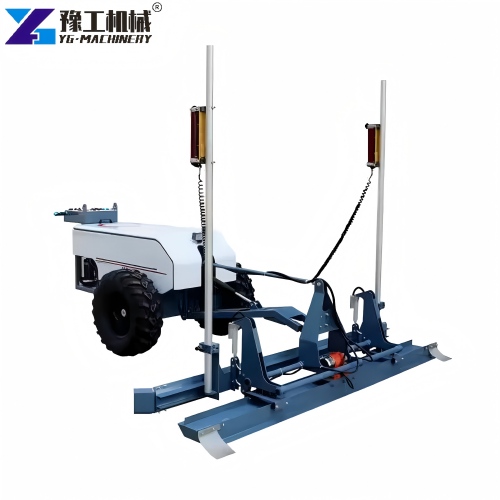
Compare working width, boom reach, maneuverability, traction, power source, receiver arrangement, output and transport dimensions against the project type. A large ride-on unit supports high-volume slabs, while compact machines can suit restricted areas. Selection should consider total daily workflow, not only theoretical square meters per hour.
Ask the supplier for training, manuals, wear-parts lists, warranty terms and service response. Calculate ownership cost from labor savings, achievable placement rate, maintenance, transport and expected utilization. The article value of a laser screed machine explains the broader business case.
Laser Screed FAQ
No. It improves grade control, but the specified profile, joint layout, concrete, finishing, testing and operator practice all affect the result. Defined-traffic superflat floors require a project-specific method.
Follow the project standard and specification. Testing is commonly performed soon after finishing and before later changes obscure production feedback; the parties should agree on timing before placement.
Only when range, line of sight, stability and manufacturer limits allow it. Large or obstructed sites may need validated repositioning or multiple controlled setups.
Provide slab area, daily target, pour-strip dimensions, tolerance requirements, site access, concrete delivery method, power preference, transport limits and project location.
Request a Concrete Laser Leveling Machine Recommendation
Share your slab drawings, target production and floor specification with YG Machinery. We can compare machine size, reach, working width and configuration for your application.