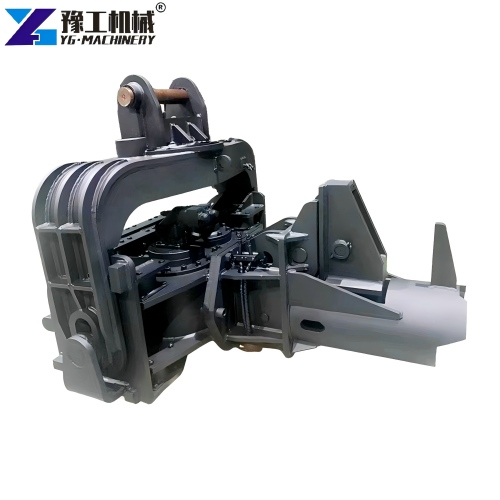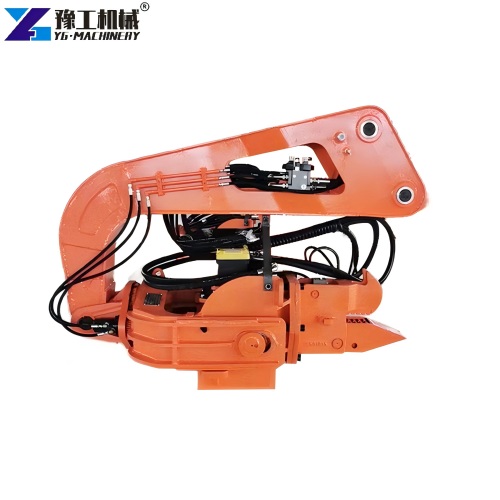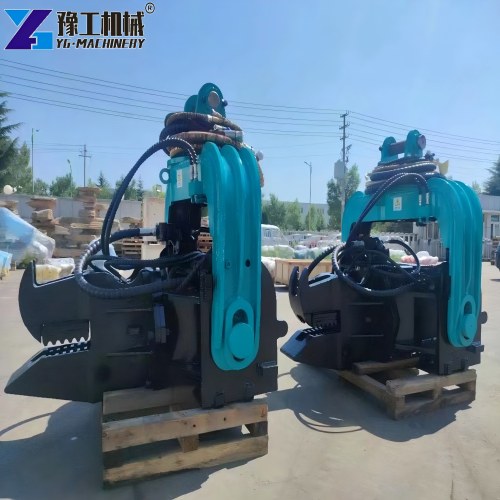

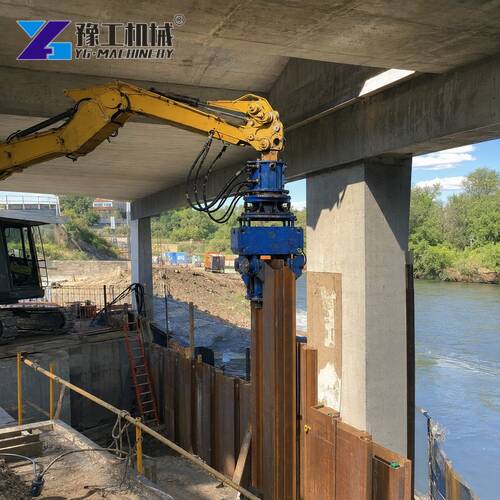
A side grip vibratory hammer is a hydraulic piling attachment mounted on an excavator arm. Its side clamps pick up sheet piles, H-piles, or pipes directly from the ground. The vibration unit then drives or extracts the pile without repeated impact. This arrangement reduces the need for a separate crane during many piling projects.
Unlike a top-grip hammer, the attachment can hold a long pile near its middle. The excavator operator can lift, rotate, position, and drive the pile from the cab. This method is useful where overhead clearance, road width, or equipment access is limited. Actual performance depends on soil, pile size, hydraulic output, and correct operating technique.
Side Grip Vibratory Hammer Technical Parameters
Available configurations generally match excavators from 15 to 50 tons. Centrifugal force, clamp force, hydraulic flow, and attachment weight increase with carrier size. The following ranges support preliminary project planning. Final specifications must follow the selected supply model and excavator compatibility review.
| Parameter | Typical Configuration Range |
|---|---|
| Suitable Excavator Weight | 15–50 ton |
| Eccentric Moment | 3.1–7.6 kgm |
| Centrifugal Force | 310–772 kN |
| Vibration Frequency | 2300–3100 rpm |
| Side Clamp Force | 335–565 kN |
| Bottom Clamp Force | 385–650 kN |
| Suggested Working Pressure | 300–350 bar |
| Hydraulic Oil Flow | 130–400 L/min |
| Rotation | 360° |
| Tilt Angle | ±30° |
| Attachment Weight | 1950–4050 kg |
Carrier weight alone cannot confirm a suitable configuration. Excavators with similar operating weights may have different pump capacity, pressure settings, and arm limits. Mounting dimensions and available auxiliary lines must also be checked. Complete carrier data helps prevent weak vibration, slow movement, overheating, or difficult installation.


How Does the Attachment Drive and Extract Piles?
The excavator hydraulic system powers the vibration motor, clamp cylinders, and positioning mechanism. Side arms first grip the pile around a suitable middle section. Rotation and tilt functions help the operator raise and align the material. The pile toe is then placed at the marked position before vibration begins.
Counter-rotating eccentric weights create vertical cyclic force inside the vibration case. This movement reduces friction between the pile surface and surrounding soil. Attachment weight and controlled excavator pressure help advance the pile into the ground. The operator can change to the bottom clamp when the side arms approach ground level.
Pile extraction follows a similar sequence in reverse. The bottom or side clamp holds the installed pile securely. Vibration reduces soil resistance before the excavator applies gradual upward force. Sudden pulling should be avoided because it can cause slipping, pile deformation, or carrier instability.
Suitable Pile Types and Applications
A side grip vibratory hammer can handle several pile profiles when fitted with suitable clamps. Standard side arms commonly work with interlocking steel sheet piles. Customized jaws may support tubular piles, H-sections, or selected timber piles. Contractors should confirm pile dimensions, material strength, length, and individual weight before work begins.
Common pile types and projects include:
- Interlocking steel sheet piles
- Temporary excavation support systems
- H-piles and structural steel sections
- Round steel pipe piles
- Riverbank and shoreline reinforcement
- Road and bridge retaining works
- Removable piles for temporary structures
Vibratory installation does not suit every soil condition. Loose sand, silt, and some soft clay layers usually allow easier penetration. Dense gravel, hard lenses, and large underground obstructions may slow the process. Pre-drilling, water assistance, or another method may be necessary after geotechnical review.
Main Advantages of the Side-Grip Design
A conventional top-grip hammer often needs lifting equipment to raise a long pile first. The hammer then connects near the pile head. A side grip pile driver can pick a horizontal pile from the ground and rotate it into position. This reduces lifting steps and lowers the required vertical clearance.
Important operating advantages include:
- Direct side pickup with less dependence on a separate crane
- Full 360-degree rotation for pile orientation
- Up to 30-degree tilt for complex positioning
- Side and bottom clamps for a complete driving sequence
- Cab control that reduces manual pile handling
- Driving and extraction with the same attachment
- Better access beneath bridges and inside restricted sites
These features do not replace site safety controls. The rotating pile requires a clearly marked movement area. No worker should stand beneath the pile or within its swing path. Underground services, overhead lines, and neighboring structures must be checked before piling starts.


How to Match the Hammer With an Excavator?
Correct matching requires both hydraulic capacity and lifting stability. Attachment weight, pile weight, and working radius create the total front load. An oversized unit may restrict reach or reduce stability. An undersized hammer may lack the force needed for the selected pile and soil.
Provide these details when requesting a quotation:
- Excavator brand, model, and operating weight.
- Maximum auxiliary hydraulic pressure and available flow.
- Stick-end dimensions and pin diameter.
- Attachment limit and carrier lifting chart.
- Pile profile, length, and weight.
- Soil type, target depth, and expected output.
- Available headroom, access width, and swing area.
Excavators from 15 to 20 tons generally suit lighter attachments and moderate piles. Carriers between 20 and 32 tons serve many urban and road projects. Machines from 32 to 50 tons can support stronger units for longer or heavier piles. The final choice must remain within the carrier manufacturer’s limits.
Side Grip Hammer Compared With a Top-Grip Hammer
Both designs use vibration to reduce soil resistance. However, their pile handling methods differ. A top-grip hammer has a simpler arrangement and works well with pre-positioned piles in open areas. A side grip vibro hammer can pick, pitch, drive, and extract material with one excavator.
Top-grip equipment may be practical when a crane is already available and headroom is unrestricted. Side-grip equipment is more useful beneath bridges, near overhead restrictions, or along narrow streets. Contractors should compare access, pile length, equipment availability, and crew requirements. Purchase price alone does not show the complete project cost.
Standard Operating Procedure
Before operation, inspect the grip arms, jaw inserts, hoses, pins, vibration case, and rotation unit. Confirm that the mounting system and hydraulic connections are secure. Test clamping, release, rotation, tilt, and vibration without a load. Stop immediately if the attachment leaks, moves unevenly, or produces an unusual sound.
Follow these basic operating steps:
- Clear the work zone and mark the pile movement area.
- Park the excavator on stable ground with adequate bearing capacity.
- Grip the pile at the recommended position and confirm full jaw contact.
- Lift and rotate the pile slowly to prevent uncontrolled movement.
- Position the pile toe and check alignment.
- Start vibration gradually while applying steady downward force.
- Change to the bottom clamp when required near ground level.
- Stop vibration at the target depth and release the pile carefully.
The operator should monitor pile alignment, oil temperature, and carrier stability throughout the cycle. Do not use the grip arms to force a badly misaligned pile sideways. If penetration stops at a hard layer, identify the cause before applying more force. Another ground treatment method may be required.

Maintenance and Wear-Part Control
Jaw inserts experience high contact pressure and repeated sliding. Worn teeth reduce clamping force and increase the risk of pile movement. Inspect the jaw profile, retaining bolts, and cylinder action regularly. Replace damaged wear parts before they affect secure handling.
The vibration case, bearings, and hydraulic motor require scheduled inspection. Hoses must not rub continuously against piles or sharp steel edges. Lubricate pins, rotating parts, and designated joints at the recommended intervals. Small leaks or excessive clearances should be corrected before the next shift.
Remove mud and metal debris after each project. Release hydraulic pressure before maintenance or storage. Place the attachment on a stable support in a dry area. Service records help users prepare jaw inserts, seals, and common hydraulic parts before replacement becomes urgent.
Factors Affecting Side Grip Vibratory Hammer Price
Side grip vibratory hammer price depends on centrifugal force, clamping capacity, carrier class, hydraulic motor, and control system. Larger attachments need heavier vibration cases, stronger arms, and more robust rotation assemblies. Freight also changes with equipment weight and shipping distance. Special pipe clamps, quick couplers, spare jaws, and hydraulic lines affect the package price.
Buyers should compare complete working systems instead of the hammer body alone. Valve groups, mounting brackets, hoses, and commissioning support all influence installation success. Clear excavator data, pile dimensions, and soil information allow a more accurate proposal. They also reduce unexpected modification costs after delivery.

Why Choose YG Machinery?
YG Machinery provides selection support for side grip vibratory hammer projects using excavator, pile, and site information. Mounting brackets, pins, hydraulic lines, and clamp configurations can be matched to the carrier. Each attachment is checked for clamping, rotation, vibration, and hydraulic connection before shipment.
Customers can also receive operating guidance, wear-part recommendations, international shipping, and after-sales support. For rock excavation, review our Drum Cutter Machine. Metal demolition contractors can explore Hydraulic Shears For Excavator. Send your excavator model, pile size, soil condition, and target depth for a project-based recommendation and quotation.