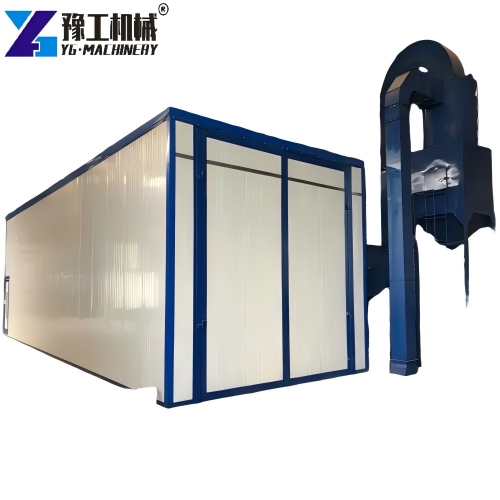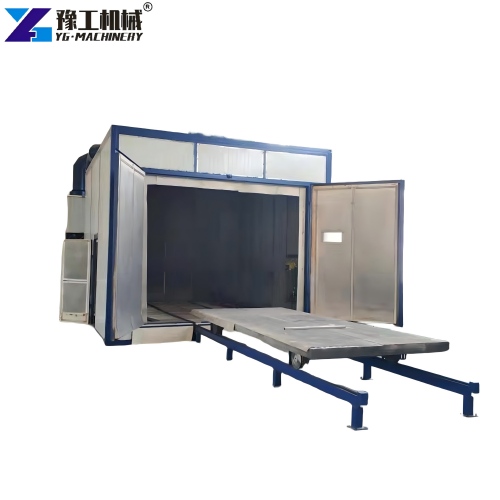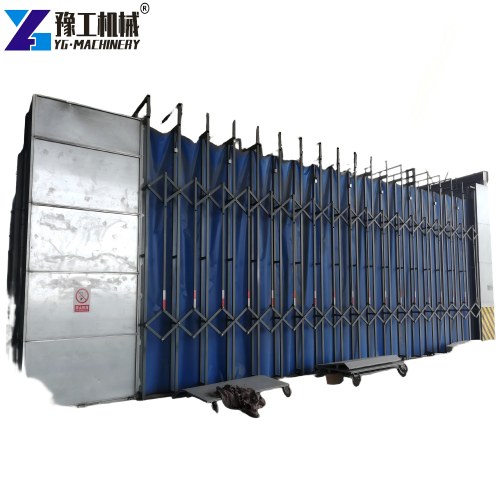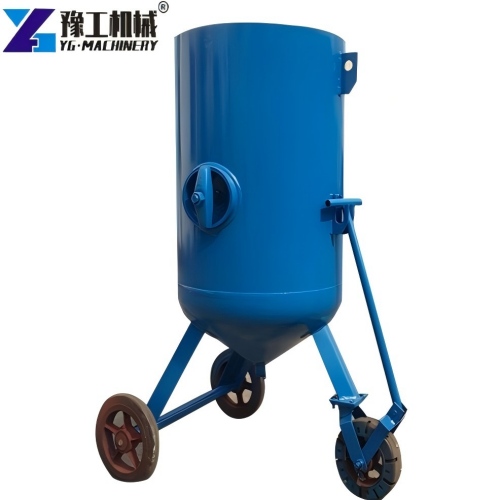
A sandblasting room removes rust, scale and selected coatings by directing fast-moving abrasive at a workpiece inside a contained working space. Its useful output is a prepared surface, not simply a part that looks cleaner. The abrasive, compressed-air supply, recovery system and ventilation must work together to produce that surface repeatedly.
For a workshop considering a sandblasting room for sale, understanding those systems explains why two similarly sized enclosures can perform very differently. A steel frame may need access to welds and internal corners, while plate work may require a controlled surface profile before coating. The YG sand blasting chamber is the related equipment family; the sections below explain what happens inside the room and which equipment functions support it.
How A Sandblasting Room Removes Rust And Prepares Steel
In air blasting, compressed air carries abrasive through a blast nozzle and accelerates it toward the surface. Particle impacts detach corrosion and scale and can remove coatings suited to the selected process. They also change the texture of the underlying metal. That texture is important because subsequent coatings need an appropriate surface, not the roughest surface the equipment can produce.
Abrasive shape, size and hardness influence the result. Angular particles generally cut differently from rounded particles, which tend toward a peening action. The material also needs to suit the substrate and subsequent finish. An abrasive used on contaminated or unsuitable material can introduce problems into later work, so reusability alone is not enough to establish suitability. A sandblasting room for sale should therefore be considered with its intended abrasive and coating process, rather than as a universal cleaning box.
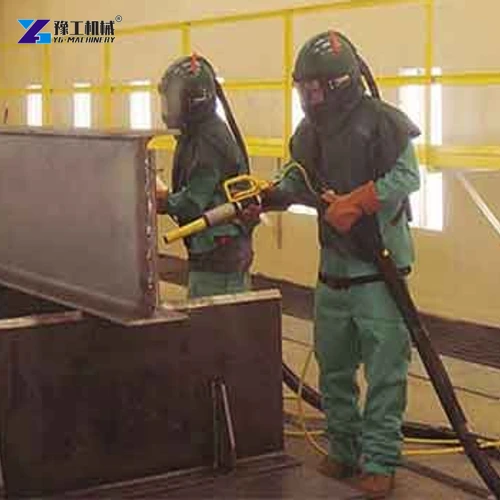
Nozzle position changes how the impact energy reaches the part. Distance changes the spread and concentration of the blast pattern; angle changes how particles strike flats, weld toes and corners. Moving too slowly can concentrate treatment in one area, whereas moving too quickly may leave untreated patches. There is no single pressure, angle or travel speed that is correct for every metal thickness, abrasive and coating requirement.
Thin panels deserve particular attention because aggressive or uneven treatment can distort them. Complex welded structures have a different problem: an outside face can look finished while a sheltered flange or recess still retains corrosion. The operator needs access that permits controlled treatment of each required face. A larger nozzle does not solve a surface hidden behind a support or an inaccessible joint.
The abrasive and blasting arrangement should produce the surface your steel treatment requires.
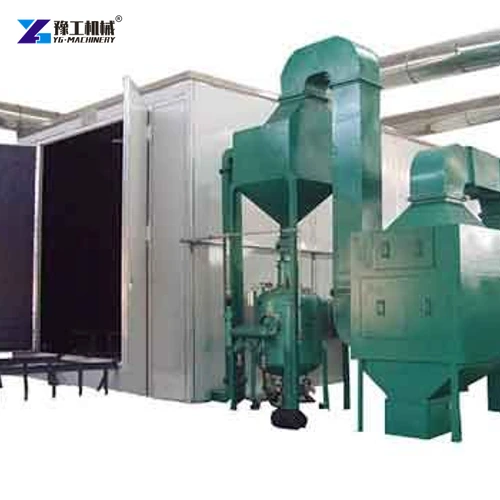
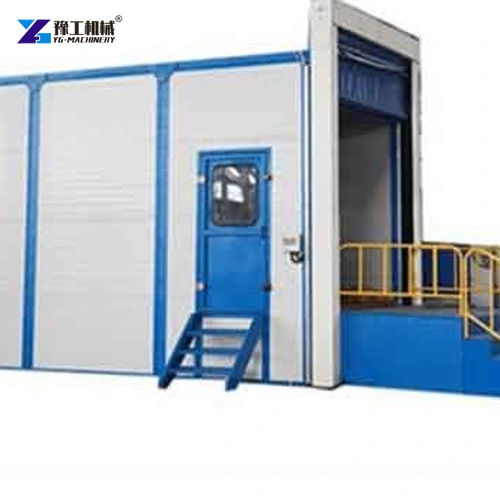
YG Sandblasting Room Sizes And Working Space
YG identifies the following room configurations by enclosure dimensions, associated workpiece size and gun quantity. The enclosure must accommodate both the workpiece and the space needed for blasting and material handling. Dimensions are listed as length × width × height.
| Room dimensions | Associated workpiece dimensions | Guns |
| 6,000 × 6,000 × 5,000 mm | 3,000 × 3,000 × 2,500 mm | 2 |
| 8,000 × 6,000 × 6,000 mm | 5,000 × 3,000 × 3,500 mm | 2 |
| 10,000 × 6,000 × 6,000 mm | 7,000 × 3,000 × 3,500 mm | 2 |
| 15,000 × 8,000 × 6,000 mm | 12,000 × 5,000 × 3,500 mm | 2 |
| 18,000 × 8,000 × 6,000 mm | 15,000 × 5,000 × 3,500 mm | 4 |
| 18,000 × 10,000 × 8,000 mm | 15,000 × 7,000 × 5,500 mm | 4 |
The gap between room dimensions and workpiece dimensions is functional space. The part needs supports, the operator needs access, and hoses need routes that do not interfere with the work. A frame standing on a trolley can occupy considerably more space than the bare fabrication. Door openings and rail positions also have to accommodate that supported assembly, not just its drawing dimensions.
Room size affects how a blast system can be arranged, but does not establish the load capacity of the floor, grating or trolley. A heavy fabrication needs an engineered supporting path independent of assumptions about the collection floor beneath it. Nor does a four-gun arrangement automatically double production: several nozzles require sufficient air capacity, coordinated working positions and effective extraction around the actual workpiece.
For a sandblasting room for sale intended for long beams, length is only one part of access. Cross-bracing, undersides and welded intersections can require repositioning. An arrangement that permits surfaces to be exposed safely is more useful than one that merely allows the beam to enter. The sand blasting booth selection page offers related enclosure context.
Compressed Air And Abrasive Feed In A Sandblasting Room
The compressor supplies the air that does the blasting work, but the pressure displayed at the compressor is not necessarily the pressure available at the nozzle during operation. Undersized lines, restrictive connections and leakage reduce the useful supply. Demand also changes with nozzle size, wear and the number of active guns. An air system that appears adequate with one fresh nozzle may struggle when several nozzles operate together.
Nozzle wear matters because the bore enlarges with abrasive service. Air demand can rise even though the operator has not changed the machine setting. The resulting pressure loss can be mistaken for poor abrasive or an ineffective blast pot. Inspecting nozzles against their permitted wear condition helps separate an air-demand problem from a material-feed problem; the equipment instructions determine the replacement limit.
Water and oil contamination create another set of problems. Compressed air can carry moisture that condenses as it cools through the distribution system. Damp abrasive may clump and feed unevenly, while oil contamination can compromise the surface being prepared. Air treatment needs to address conditions at the equipment, not simply the presence of a separator somewhere beside the compressor. Drying, filtration and drainage must be selected for the actual installation.
More abrasive is not always better. Excessive feed can overload the air stream, while insufficient feed reduces useful impacts. A stable, correctly adjusted stream is different from a visibly heavy stream. Changes to abrasive type or grade can require a different feed setting and recovery adjustment. A sandblasting room for sale should include compatible blast equipment and controls rather than leave these relationships undefined.
Breathing air is a separate safety requirement, not a convenient branch that can automatically be taken from the process-air line. Operator respiratory protection and its air supply must meet the applicable requirements for the task. Exhaust gases, compressor contamination and the material being removed all need assessment by competent personnel. Room ventilation cannot substitute for suitable personal protection.
Match the gun arrangement with a stable, treated compressed-air supply.
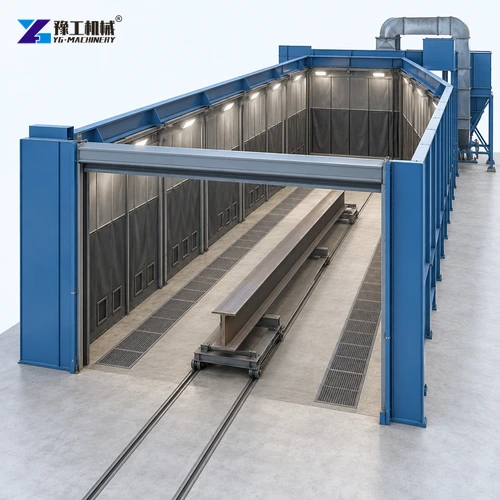
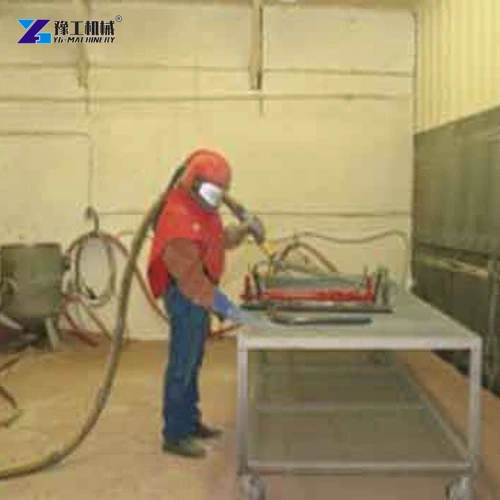
Abrasive Recovery And Dust Extraction In A Sandblasting Room
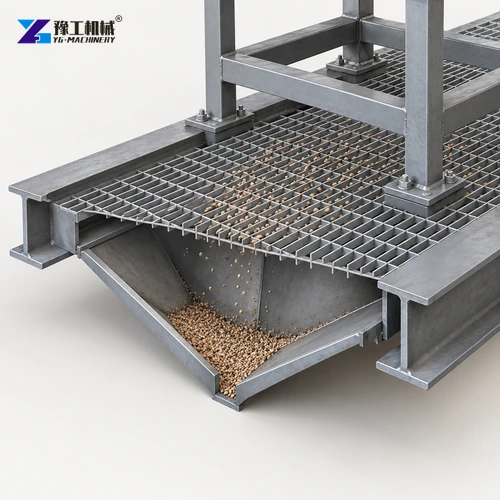
After impact, the working floor receives reusable abrasive, broken particles and removed surface material. Recovery collects that mixture and conveys it toward separation. Depending on the installation, collection may be manual, mechanical or pneumatic. Full-floor and partial-floor systems differ in how much material reaches recovery directly and how much must be moved from inactive areas.
Separation is what makes a recovered abrasive stream useful again. Oversize debris and worn fines should not simply circulate indefinitely through the blast pot. A matched recovery and cleaning system returns usable material while directing unwanted material to the appropriate waste stream. The separating arrangement must suit the abrasive: equipment designed around one material’s density and particle behaviour should not be assumed suitable for every other medium.
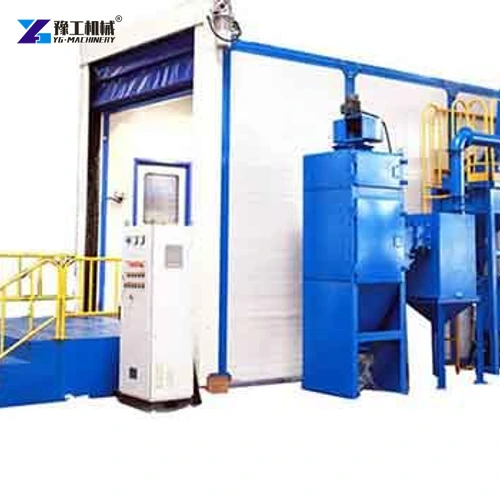
Dust extraction has a different job. It draws contaminated air from the enclosure through the specified collection and filtration system, supporting containment and visibility. It is not the same as picking heavy abrasive off the floor. A recovery conveyor cannot replace an extractor, and a dust collector is not automatically a complete abrasive recycling system.
The workpiece can obstruct airflow, especially when plates or deep structures divide the enclosure. Filter loading, blocked ducts, damaged seals and inappropriate operating practices can also reduce performance. A dust cloud should not be dismissed as unavoidable evidence that blasting is productive. The system needs inspection and commissioning under its intended working conditions, with doors and extraction operated as specified.
For a sandblasting room for sale, these functions should be identified separately: collection, conveying, abrasive cleaning and airborne-dust removal. Their operating and maintenance requirements affect how consistently the room can keep working. Waste and dust from old coatings may have hazards that clean-steel abrasive does not, so disposal and protection decisions must follow the actual material assessment.
Recovery and extraction need to suit the abrasive and the material being removed.
Sandblasting Room Surface Quality And Routine Care
Successful blasting must satisfy the subsequent surface-treatment requirement. Visual cleanliness and surface profile are different properties. A visibly clean part may have an unsuitable texture; a rough part may still retain contamination. The coating specification determines the required condition and inspection method rather than the operator’s preference for a particular appearance.
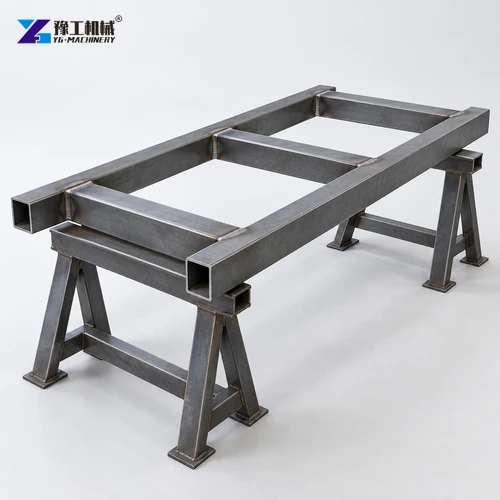
Oil and grease should be addressed by a suitable preparation process instead of relying on abrasive impact to redistribute them. Welded assemblies need attention to corners, pockets and contact points beneath supports. Where repositioning is required, lifting and support arrangements must protect both the part and the people working around it. Inspecting only the easiest outside face misses exactly the locations where incomplete preparation can persist.
After blasting, residual dust and trapped abrasive need suitable removal before the next process. Cleaned steel also needs handling that avoids fresh contamination. Exposure conditions and delays can affect the surface, so the transfer to coating belongs in the workshop process. An enclosure does not by itself protect a prepared part indefinitely after it leaves the controlled work area.
Routine care focuses on the parts exposed to wear and contamination: hoses, couplings, nozzle, valves, enclosure liners, recovery components, filters and door seals. Inspection or maintenance requires the manufacturer’s isolation and depressurization procedures; a blocked abrasive line must never be treated as harmless because delivery has stopped. Training, protective equipment and maintained controls are essential parts of operating a sandblasting room for sale.
The useful result is repeatable preparation across the whole workpiece. Stable air and abrasive delivery, accessible surfaces, effective recovery and maintained extraction contribute to that result together. Choosing a sandblasting room for sale around these functions produces a more meaningful specification than comparing enclosure length or gun count alone.
Bring the room, preparation process and maintenance needs together in one equipment specification.
Sandblasting Room For Sale FAQs
No. Recovery collects and processes spent abrasive for potential reuse. Extraction removes contaminated airborne material through the specified filtration system. Each function needs equipment suited to its task.
Air demand may exceed the available supply, or lines and connections may restrict delivery. Enlarged worn nozzles and simultaneous gun operation can increase demand. Diagnose the operating air system rather than only the compressor’s gauge.
No. Abrasive type, density, size and contamination affect recovery and separation. The selected equipment and the surface-treatment process must both suit the abrasive.
No. Visual cleanliness and profile are different properties. The required surface condition and its inspection should follow the subsequent coating specification.
No. Supports, hoses, working positions and access occupy additional space. YG size configurations list a smaller associated workpiece envelope, and the actual supported assembly still needs a coordinated layout.
Tell us the steel workpiece, existing surface condition and intended finish to discuss a suitable blast-room configuration.