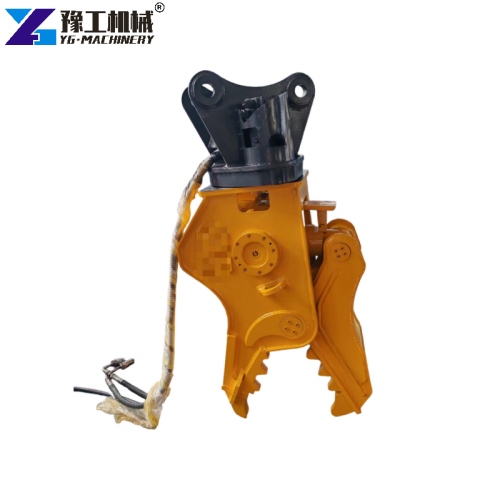

A concrete crusher attachment for excavator turns a standard carrier into a controlled demolition and recycling tool. Hydraulic jaws crush reinforced concrete and expose embedded steel without repeated hammering. Contractors can process walls, slabs, beams, columns, and demolition rubble with the same excavator. This approach reduces secondary handling and makes material sorting easier at the job site.
YG Concrete Crusher Models and Technical Data
YG Machinery supplies five hydraulic pulverizer models for excavators from 6 to 80 tons. Carrier weight provides an initial selection range, but it is not the only factor. Hydraulic pressure, mounting dimensions, arm capacity, and the target material must also be checked. The following data helps buyers compare the available models.
| Parameter | Unit | YG400 | YG600 | YG800 | YG1000 | YG1700 |
|---|---|---|---|---|---|---|
| Total Length | mm | 1642 | 1895 | 2168 | 2218 | 3150 |
| Total Width | mm | 1006 | 1275 | 1376 | 1598 | 2100 |
| Blade Length | mm | 120 | 150 | 180 | 200 | 240 |
| Maximum Opening Height | mm | 587 | 718 | 890 | 1029 | 1400 |
| Upper Jaw Width | mm | 215 | 280 | 290 | 380 | 400 |
| Lower Jaw Width | mm | 458 | 586 | 588 | 720 | 812 |
| Maximum Shear Force | kN | 380 | 650 | 1650 | 2250 | 2503 |
| Working Pressure | bar | 280 | 320 | 320 | 320 | 320 |
| Attachment Weight | kg | 670 | 1350 | 1750 | 2750 | 4709 |
| Suitable Excavator Weight | ton | 6–9 | 10–15 | 18–26 | 26–30 | 50–80 |
These figures are intended for preliminary model comparison. Final compatibility depends on the exact excavator configuration and operating conditions. YG can check the carrier data before confirming the mounting plate, pins, and hydraulic connections.

How Does a Concrete Crusher Attachment Work?
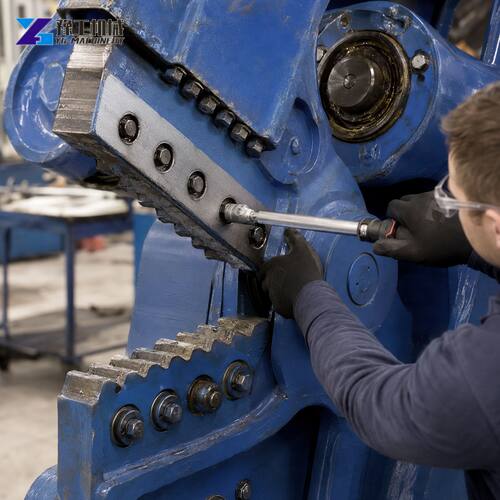
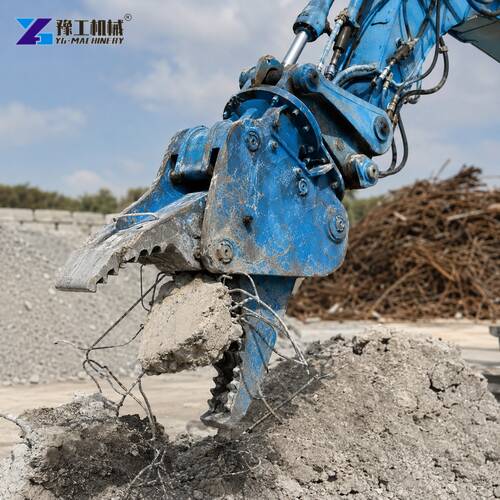
The excavator hydraulic system supplies power to the attachment cylinder. Pressurized oil moves the piston and closes the movable jaw against the fixed jaw. Projecting teeth concentrate force and penetrate the concrete first. The wider jaw sections then reduce the material into smaller pieces.
Alloy blades near the jaw base cut exposed reinforcing steel. This combined action allows the excavator concrete crusher to break concrete and separate rebar in one working cycle. After opening the jaws, the operator can grab another section and continue processing. A hydraulic rotation option can improve positioning around walls, beams, and irregular rubble.
Suitable Demolition and Recycling Projects
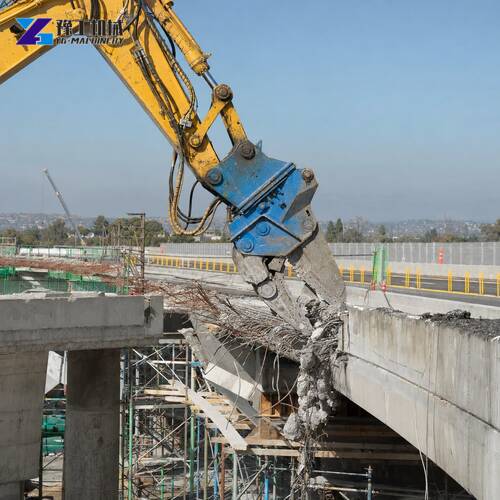
A concrete crusher attachment for excavator supports both structural demolition and secondary material reduction. It is useful when a project requires controlled breaking, reduced impact, or steel recovery. Thick, heavily reinforced structures require careful review before model selection. Jaw opening and available force must match the actual component size.
Common applications include:
- Demolishing concrete walls in residential and commercial buildings
- Crushing floor slabs, beams, columns, and precast components
- Processing reinforced concrete from bridge renovation projects
- Reducing oversized rubble before loading or screening
- Separating steel bars from broken concrete
- Preparing demolition waste for transport and recycling
- Completing controlled removal during partial renovation
Main Structure and Operating Benefits
The performance of a hydraulic concrete pulverizer depends on more than maximum force. Jaw geometry, steel quality, cylinder protection, and service access also affect long-term productivity. Well-positioned teeth improve the initial bite into hard surfaces. A wide opening helps the tool engage larger structural sections.
Important structural features include:
- A high-strength steel body for repeated demolition loads
- Projecting crusher teeth that concentrate force at the first contact point
- Integrated alloy blades for cutting exposed reinforcing bars
- A large jaw opening for different component thicknesses
- Reinforced pins and bushings for stable jaw movement
- Serviceable wear areas that simplify inspection and parts replacement
How to Match the Attachment With an Excavator?
Carrier weight is the first selection condition for a concrete crusher attachment for excavator. An attachment that is too heavy can affect balance, reach, and lifting stability. A very small tool may not provide enough capacity for the target structure. Buyers should also confirm auxiliary pressure, oil flow, connection dimensions, and working radius.
YG400 and YG600 support compact and medium carriers from 6 to 15 tons. YG800 and YG1000 cover common demolition excavators from 18 to 30 tons. The heavy YG1700 matches 50–80 ton carriers and provides a 1400 mm opening.
Provide the following details when requesting a model recommendation:
- Excavator brand, model, and operating weight.
- Auxiliary hydraulic pressure and oil flow.
- Stick-end dimensions or existing pin measurements.
- Concrete component type and thickness.
- Rebar diameter, density, and expected daily output.
- Required rotation system or quick coupler configuration.
Accurate carrier information helps YG confirm the attachment weight, jaw size, and connection design. It also reduces the risk of modification after delivery. Photos of the excavator arm and target material can support a more precise recommendation.
Concrete Pulverizer, Breaker, or Hydraulic Shear?
A hydraulic breaker uses impact energy to break concrete, pavement, foundations, and rock. It is often selected for initial reduction of thick or hard material. A concrete pulverizer for excavator closes its jaws around the material instead. It is more suitable for controlled demolition, rebar separation, and secondary processing.
Hydraulic shears are designed mainly for steel beams, pipes, frames, and other metal sections. Their blade geometry is not intended for regular concrete crushing. Buyers handling scrap steel can review Hydraulic Shears For Excavator for relevant models. Projects requiring continuous cutting of rock or concrete surfaces may use a Drum Cutter Machine for precise excavation and profiling.
Safe Operating Procedure
Before work begins, inspect the structure and establish a controlled exclusion zone. The operator should check the jaw body, pins, hoses, fittings, teeth, and blades. Cracks, loose parts, or hydraulic leakage require correction before operation. After installation, test jaw movement at low speed without a load.
Follow these operating steps:
- Clear the danger area and keep unnecessary personnel away.
- Check excavator stability, hydraulic lines, and mounting pins.
- Test jaw opening, closing, and rotation at low pressure.
- Begin at the edge or at the position defined by the demolition plan.
- Keep material within the effective jaw area instead of prying with the tips.
- Process large components in layers without exceeding the rated capacity.
- Confirm the drop zone before releasing broken material.
- Stop the machine and release hydraulic pressure before inspection.


Maintenance and Wear-Part Inspection
Concrete dust and repeated loading gradually wear the teeth, blades, pins, and bushings. Daily inspection should include welds, fasteners, hoses, and hydraulic connections. Uneven jaw closure or increased clearance can indicate excessive wear. Slow movement may also reveal a hydraulic or mechanical problem.
Lubricate pins and designated grease points according to the operating instructions. Adjust or replace worn blades before steel-cutting performance declines. Keep hoses away from sharp rubble and maintain a suitable bend radius. After work, remove attached concrete and store the tool on stable ground in a dry location.
Factors Affecting Concrete Crusher Attachment Price
The price of a concrete crusher attachment for excavator depends on carrier class, tool weight, jaw dimensions, rotation configuration, and mounting design. Large models require more high-strength steel and larger hydraulic components. Freight costs also increase with attachment size and shipment distance. Spare blades, hoses, pins, and quick couplers change the final package price.
Buyers should compare complete configurations instead of the attachment body alone. Incorrect matching can lead to extra modification costs or unstable operation. Provide accurate excavator data, target material details, and project schedules when requesting a quotation. Clear information supports a more reliable recommendation and shipping estimate.
Why Choose YG Machinery?
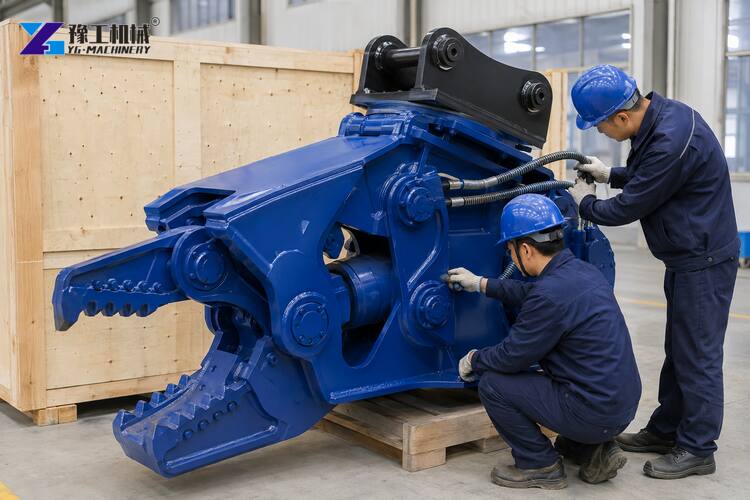
YG Machinery supplies concrete pulverizers for excavators from 6 to 80 tons. Our team reviews carrier specifications, component size, and the intended working conditions before recommending a model. Mounting plates, pins, and hydraulic lines can be matched to the supplied excavator information. Each attachment is inspected before shipment to confirm jaw movement and hydraulic connections.
Customers can also receive model guidance, wear-part recommendations, international shipping support, and after-sales assistance. Send your excavator model, hydraulic data, concrete thickness, and reinforcement details to our team. We will recommend a suitable concrete crusher attachment for excavator and prepare a project-based quotation.