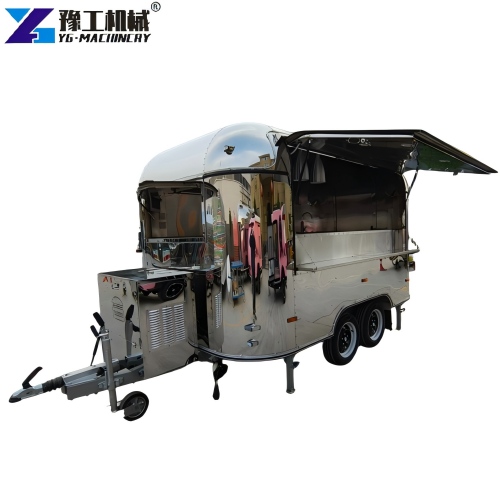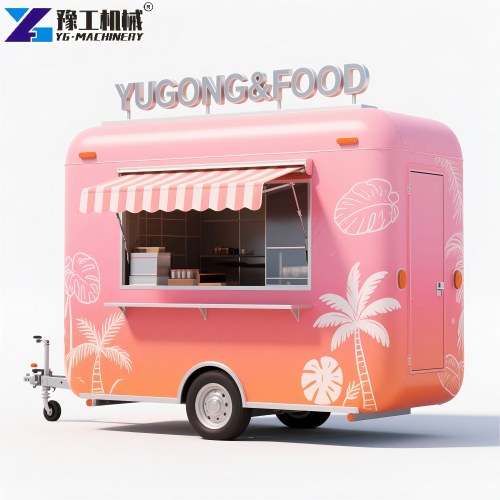
Ice cream trailer layouts should follow the way each order is served. Packaged products need accessible freezer storage, scooped products need a serving cabinet and utensil space, and soft serve needs a dispensing position with suitable utilities and cleaning access.
An ice cream trailer selling wrapped frozen products needs a different interior from one dispensing soft serve. Both sell ice cream, but the first retrieves finished stock while the second produces each serving at a machine. That difference changes refrigeration, equipment access, cleaning work and the way the operator moves between storage and the serving window.
Choose the service format before fixing the trailer length or filling a floor plan with appliances. Useful ice cream trailer layouts connect the actual menu to the equipment and working space it needs. It should support the full service period, including replenishment and closing work, rather than look complete only when every cupboard is shut.
Ice Cream Trailer Layouts for Packaged Frozen Stock
Wrapped bars, cones and other finished frozen products move from delivery storage into the trailer’s freezer and then to the customer. The operator’s repeated task is finding and retrieving the requested item while preserving the storage conditions specified for the product.
Freezer access is therefore part of the working layout. A chest lid needs clearance above it; an opening door occupies aisle space; removable baskets or drawers need room for handling. Those movements should be assessed with a person at the serving position, not as isolated rectangles on an empty floor plan.
Stock organisation also affects service. Separate products so the operator can identify and retrieve them without repeatedly moving unrelated cartons. Reserve a defined replenishment path from the entrance to frozen storage. If delivery cartons have to sit in the only aisle, the freezer may have enough volume while the trailer lacks useful working space.
The freezer is selected for the products and intended environment, including door-opening frequency and ambient conditions. A trailer body length is not a refrigeration-performance specification. Its interior arrangement must leave the ventilation and service clearances required by the selected appliance.
Choose the stock-storage and retrieval arrangement for the packaged-product menu.
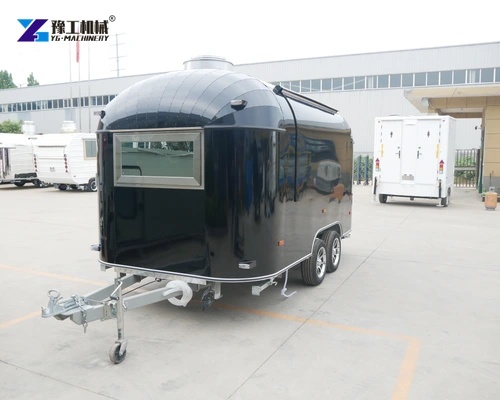
Ice Cream Trailer Layouts for Soft Serve
A soft-serve machine freezes a suitable prepared mix and dispenses individual servings, rather than simply holding finished wrapped products for retrieval. The service position brings together the machine, cups or cones, ingredients and any toppings used by the menu. The operator repeats that sequence for each order, making short, unobstructed movements particularly valuable.
The machine also needs access beyond its dispensing face. Filling, inspection and the manufacturer’s cleaning procedure can involve panels, removable parts and working space around the equipment. Cabinets or shelving must leave the selected machine’s filling opening, ventilation openings and service panels accessible. Fitting the machine’s body into the available space is only part of the installation; operators also need to reach those points during normal work.
Heat rejection is another layout factor. An air-cooled machine needs its specified airflow path; a water-cooled machine has different service requirements. These are appliance-specific choices. Enclosing either type without accounting for its requirements can undermine an otherwise attractive service counter.
The electrical proposal must use the actual machine rating, voltage, frequency and starting or operating characteristics, together with the remaining trailer loads. A general trailer voltage option does not establish that a particular soft-serve machine is included or that the supply package has been sized for it.
Allow for the selected dispensing machine’s filling, cooling and service access.
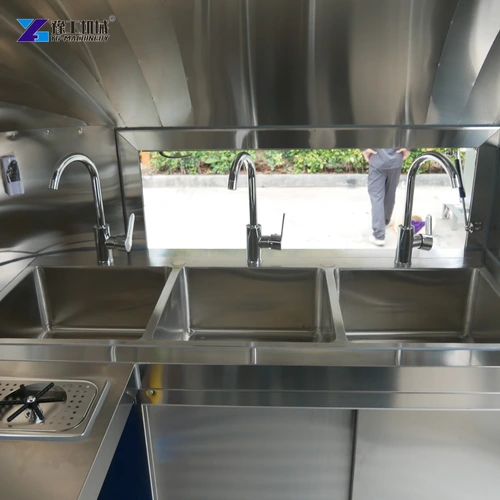
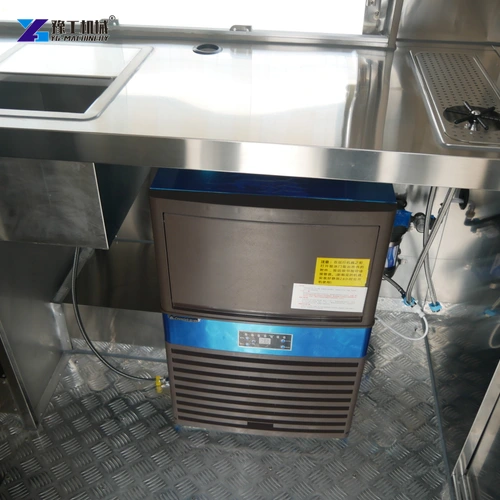
YG Ice Cream Trailer Configuration Parameters
| Parameter | YG customised ice cream trailer |
| Available body-length range | 3–11 m |
| Listed voltage options | 110 V / 220 V / 380 V |
| Sales-window arrangement | One or two windows; size customised |
| Work surface | 304 stainless steel workbench with cabinet |
| Floor | Non-slip aluminium floor |
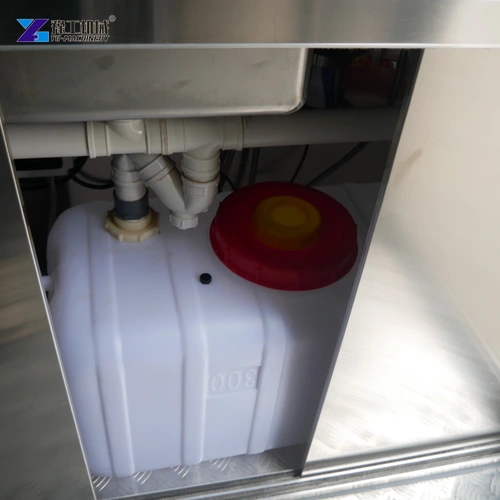
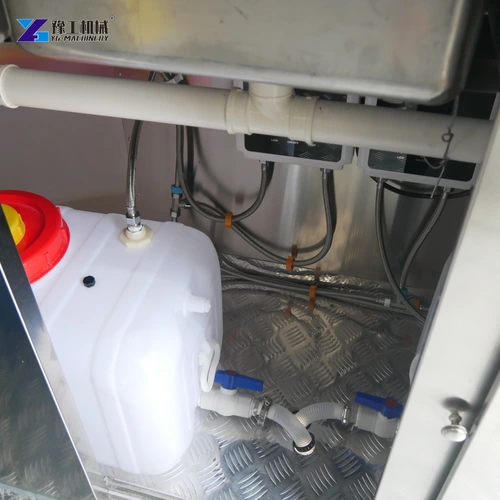
| Water arrangement | Clean-water and wastewater tanks, with sinks |
| Axle arrangement | Torsion axle |
| Refrigerator | Optional equipment |
In ice cream trailer layouts, these configuration choices describe the trailer rather than a list of installed appliances. The voltage alternatives are selected for the destination and equipment package, not three interchangeable supplies available to every appliance. The final electrical design follows the actual appliances installed.
Length has a similar relationship to layout. Additional body space can accommodate more storage or separate tasks, but the useful result depends on where equipment, doors and people are placed. Equipment weight and its position also enter the completed trailer’s loading and towing assessment; external length alone cannot establish that assessment.
Compare an interior plan showing the selected refrigeration or dispensing equipment, open doors and service access, sink use and an unobstructed operator position. This makes the trailer parameters meaningful to the chosen service format.
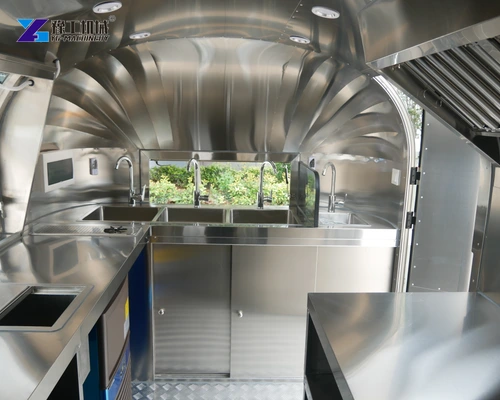
Three Ice Cream Service Formats Create Different Workflows
- Wrapped frozen products. The main sequence is retrieve, hand over and replenish. Prioritise accessible frozen stock and a short route to the window; protect the aisle from delivery cartons and open freezer doors.
- Scooped ice cream. The operator works between the serving cabinet, containers, utensils and toppings. Cabinet access and the applicable utensil-cleaning arrangement become central to the work position, while backup stock needs its own suitable storage.
- Soft serve and finished desserts. Dispensing is followed by toppings or assembly. Put those supplies within a practical sequence while preserving machine filling, cleaning and service access. Extra menu items should be assessed as additional tasks, not only as additional equipment footprints.
The three layouts also use counter space differently:
| Service format | Main working position | Space that must remain available |
| Wrapped frozen products | Freezer access connected to the handover window | Lid or door movement, product retrieval and replacement cartons |
| Scooped ice cream | Serving cabinet beside cups, cones and utensils | Scooping movement, topping preparation and the applicable utensil-cleaning arrangement |
| Soft serve | Dispensing machine beside cones, cups and finishing ingredients | Hopper filling, required cooling airflow or services, cleaning and maintenance access |
For wrapped stock, a customer order is mainly a retrieval task: identify the product, open storage and hand it over. For a sundae, the operator dispenses, adds ingredients and completes the serving before handover. Locating the freezer or dispenser near the window can shorten movement, but a sundae operation also needs a clear assembly surface. That is why the same trailer body can require different counter and cabinet arrangements for the two menus.
A mixed menu combines these workflows. For example, one operator retrieving wrapped products can obstruct another assembling a dessert if both need the same narrow section of counter. A second window may separate customer handover points, but it does not create a second internal working aisle or duplicate the appliances.
Evaluate a representative order from storage to handover, followed by a replenishment task. That exposes conflicts hidden by a plan showing only stationary equipment. The aim is not maximum appliance count; it is a service format the available people and space can actually support.
Compare the menu sequence with the available work positions and aisle.
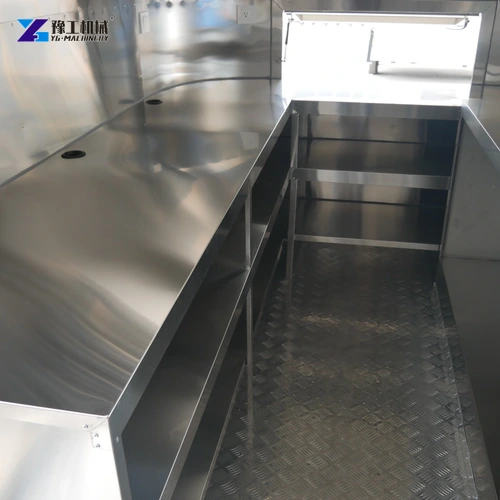
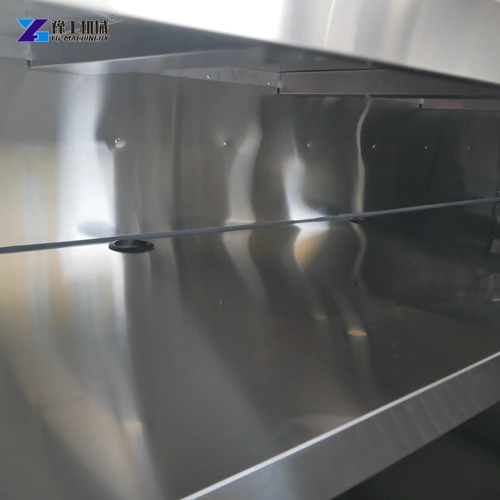
Cleaning And Closing Work Belong In The Layout
The workday continues after the last sale. Packaged-product service still requires suitable cleaning and management of remaining frozen stock. Scooping and soft-serve operations add food-contact utensils, containers or machine components that need the applicable cleaning and sanitation procedures.
Plan where these tasks occur and where cleaned items are kept. The sink arrangement must support the intended operation and local requirements. Water supply, wastewater capacity and space for washing and storing utensils follow the menu, appliances and cleaning process rather than a generic trailer category.
Access for servicing deserves the same attention. Refrigeration components and dispensing equipment should be reachable according to their instructions without dismantling unrelated fixed furniture. A service opening that is blocked during use can turn a small maintenance task into a much larger interruption.
For an ice cream trailer purchase, settle the principal service format, select the appliances and then compare the interior layout with that equipment in place. That sequence connects the menu to refrigeration, utilities, operator movement and closing work. It is more useful than choosing body length first and trying to fit every possible dessert business inside it.
Allow space for replenishment, cleaning and appliance maintenance in the interior plan.
Ice Cream Trailer Layout FAQs
A soft-serve layout needs a dispensing position, ingredient handling, suitable utilities, cooling provision and cleaning access. These are additional functions to plan when converting an arrangement built mainly around wrapped frozen stock.
No. Product organisation, lid or door clearance and the retrieval path also affect service. Storage volume helps only when the operator can use it effectively.
The trailer is customised and refrigeration is listed as optional. The proposal should identify each selected appliance and its associated installation scope.
Two windows can separate ordering and handover. Inside, the plan still needs distinct work positions and clear access to shared storage or equipment; otherwise both operators may continue to need the same section of aisle.
An air-cooled machine needs the specified room-air intake and warm-air discharge path. A water-cooled machine instead needs the water services and discharge arrangement specified for that appliance. This changes the utility and ventilation plan as well as the space occupied by the machine; use the actual selected model’s requirements.
Tell us the menu, intended appliances and number of operators for a furnished trailer layout. Photos show body and interior configurations; dessert appliances are selected separately. See the ice cream food trailer overview for related equipment.