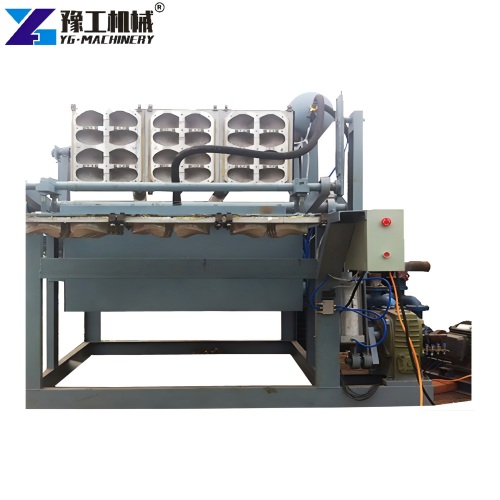
Egg tray machine price depends on whether the quotation covers only the forming machine or the production stages needed to deliver finished trays. The YG-1*3 is listed at 1,000 pieces per hour with three forming moulds, but forming is only one stage between recovered paper and packed egg trays.
A meaningful comparison follows the product through pulping, moulding, drying and handling. This explains why the rated machine capacity is not the same as saleable factory output—and why two offers with the same model name may include very different line scope.
Why Egg Tray Machine Price Depends on the Line Boundary
An egg tray machine price depends on what the buyer means by “machine.” The forming unit that creates wet trays is only one stage in a molded-fibre production line. Waste paper must be pulped and screened, slurry must be controlled, wet blanks must be formed and then dried before finished trays can be inspected, stacked and packed. A quote for the forming machine alone is not comparable with a quote for a complete line.
The YG-1*3 is listed at 1,000 pieces per hour with three forming moulds. That number describes the rated forming configuration; it should not be read as a promise that 1,000 dry, accepted trays will be stacked every hour throughout a shift. Dryer capacity, slurry consistency, changeovers, downtime, trimming and rejected pieces all affect usable production.
The central price question is therefore where the supplied system begins and ends. Does it include pulping? What drying method is quoted? Are conveyors, moulds, controls, hot pressing or stacking included? Once the boundary is clear, buyers can compare the same production stages instead of choosing from two headline figures that cover different equipment.
What the YG-1*3 Egg Tray Forming Machine Does
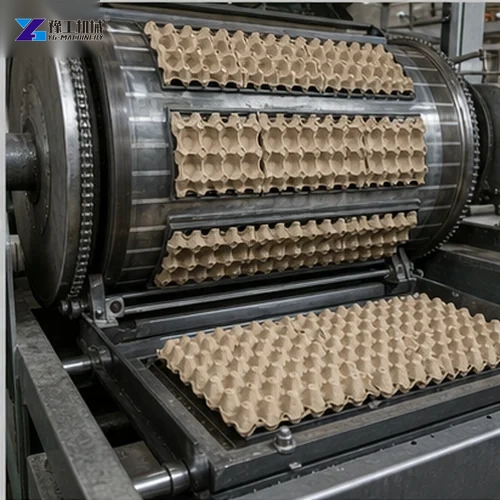
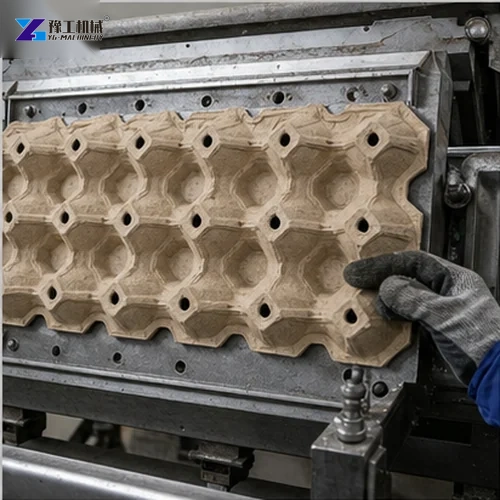
In the forming stage, prepared pulp slurry is drawn against a shaped mould, usually through vacuum, to create a wet molded-fibre blank. The mould gives the tray its cells, rim and overall form. The blank then has to release from the forming surface and move to the drying stage without folding or losing shape. That is the specific job of the forming unit; it does not convert raw waste paper directly into finished, packed egg trays.
Three moulds are listed for the YG-1*3. The mould geometry determines the product format, so a buyer should connect the machine choice to the tray design, egg count and packing method. A mould for one tray layout is not automatically suitable for another package simply because both hold eggs. If the buyer expects to change products, mould replacement, forming timing and downstream handling should be discussed as part of the design.
This separation is useful when evaluating price. The forming machine establishes the wet-shape capacity and mould pattern. The pulp system determines whether slurry arrives consistently; the dryer determines whether wet blanks can move through at a matching rate. A bottleneck in either stage can leave the rated forming output unrealized.
Specify the required tray format and forming scope before comparing a bare forming machine with a complete line.
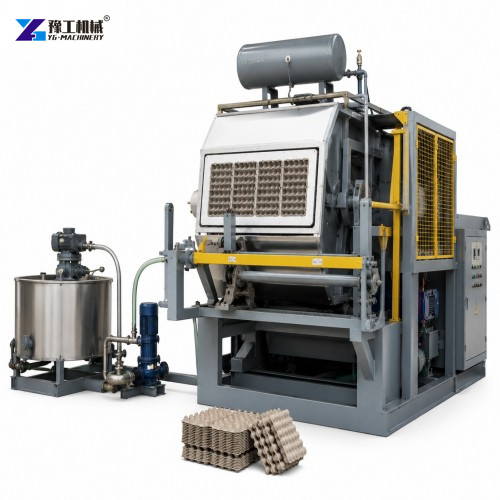
YG-1*3 Egg Tray Machine Model and Published Parameters
These figures belong to the YG-1*3 model, not to a generic egg-tray line. The capacity is the manufacturer’s listed forming rate; staffing, power and mould count describe the same model configuration.
| Parameter | YG-1*3 |
|---|---|
| Listed forming capacity | 1,000 pieces/hour |
| Forming mould quantity | 3 |
| Total power | 40 kW |
| Listed workers | 3–5 |
Compare these values with the YG egg-box and egg-tray machine range. They should not be mixed with the capacities or mould counts of larger models. If the project needs a complete factory line rather than the forming machine, define the dryer and pulp-system scope as additional configuration.
Pulp Preparation Affects Both Egg Tray Quality and Operating Cost
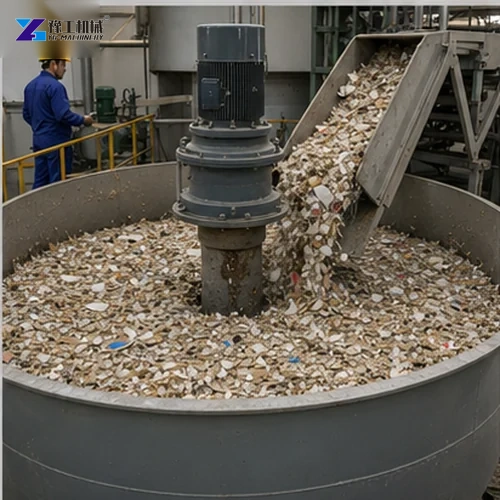
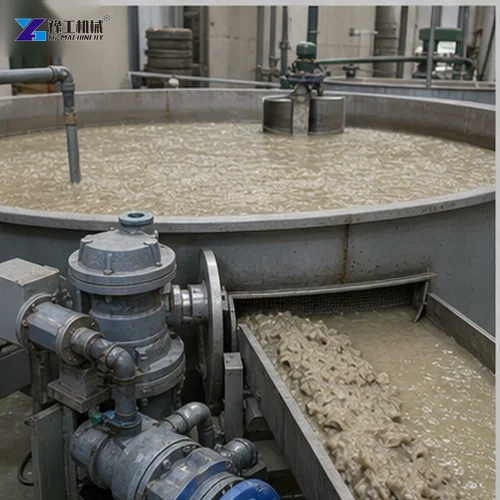
Pulp preparation begins with the recovered paper source and the condition of the feedstock. Mixed paper, coatings, tape and contaminants may require sorting or additional screening. The paper is broken down in water, screened and adjusted to a workable concentration before it reaches the forming tank. If fibre is uneven or slurry concentration varies, trays may form inconsistently, drain differently or arrive at the dryer with different moisture loads.
Water circulation, pulper size, screening, storage tanks and pumping arrangements can all sit outside the forming machine. Their size should be related to the expected production cycle and the raw material available at the plant. A small forming machine supplied with a poorly matched pulp system may stop while operators correct consistency; an oversized preparation package adds cost and floor space without improving the forming mould itself.
Pulp quality also influences the tray’s strength and surface. Fibre mix, additives, water conditions and mould geometry all affect how the wet blank holds shape. These are process variables, not just machine accessories. When comparing machine price, identify which pulp-preparation stages are included and whether the plant already owns equipment that can be reused.
Describe the recovered paper feedstock and proposed slurry preparation so the upstream equipment scope is clear.
Mould Format Determines Which Egg Tray the Line Can Produce
The mould is the direct link between the buyer’s packaging design and the finished tray. Cell count, egg orientation, rim form and stack geometry determine how the tray protects the product and how it nests with the next tray. A mould made for a specific format cannot be assumed to produce every carton, flat or egg count without a verified replacement mould and matching process settings.
Before finalizing an order, compare a sample or drawing of the required tray with the mould arrangement and the way wet blanks transfer to drying. Confirm how a mould change is handled, whether it is included in the offer and how long a changeover affects production. A change in product can also alter the stacking height, packaging method and warehouse space needed for finished goods.
These details explain why a low forming-machine price may not be the lowest useful investment. If the mould does not match the buyer’s packaging standard, the line will not produce the intended saleable product. The buyer needs the exact mould scope, not just the number of moulds listed for the machine.
Send a tray sample or drawing and the formats you need to produce to discuss the mould arrangement.
Drying Capacity Separates Forming Output from Saleable Output
Wet egg trays must lose moisture and hold their shape before handling and packing. Natural drying and mechanical drying create different space, energy and process requirements. Natural drying may need more floor area, racks and suitable ambient conditions; a mechanical dryer adds equipment, fuel or power consumption, controls and maintenance. Neither option should be compared only by the forming machine’s hourly capacity.
If the dryer cannot accept the wet blanks as quickly as the forming machine produces them, trays accumulate and operators must slow or stop the forming stage. If the drying conditions are uneven, the final strength and moisture can vary across a batch. A complete line quote should therefore state the drying method, its rated handling scope and the equipment that transfers trays between stages.
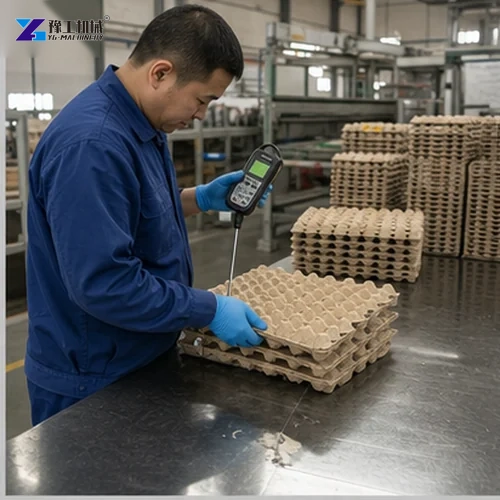
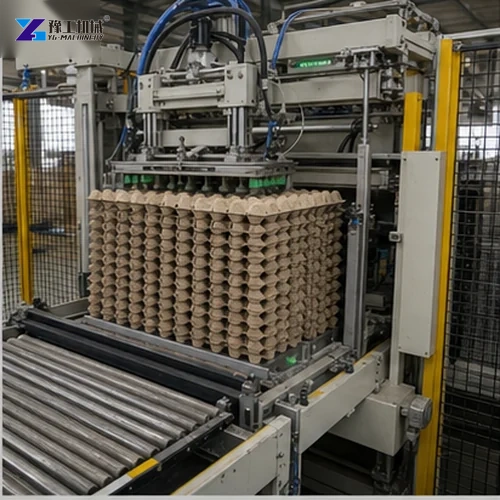
After drying, inspection and stacking also take time. Cracked, misshapen or insufficiently dry trays should not count as good output. The useful production figure is the quantity that passes the buyer’s quality criteria and is ready to pack, measured over the actual operating schedule—not simply the mould cycle at the forming machine.
State the intended drying method, available space and handling arrangement to compare finished-tray output.
Compare Egg Tray Machine Packages by Included Production Stages
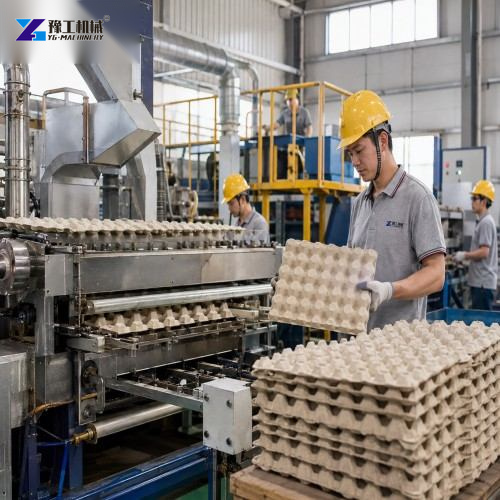
A clear quote can be organized around the production flow: pulping and screening, slurry transfer, YG-1*3 forming, drying, optional hot pressing and finished-tray handling. For each stage, record the machine, mould or conveyor included and identify which utilities and installation work remain local. This makes it possible to compare a forming-machine-only offer with a complete line without mistaking the two for equivalent packages.
- Forming scope: confirm YG-1*3, three moulds and the tray format.
- Pulp scope: list pulper, screening, tanks, slurry movement and water circulation.
- Drying scope: specify natural or mechanical drying and how wet blanks reach it.
- Finishing scope: identify optional hot press, stacking, inspection and packing equipment.
- Installation scope: separate controls, foundations, electrical work, commissioning and training.
The offer should keep each stage visible and avoid treating optional components as standard. This also helps a buyer identify whether existing equipment can be reused safely and at a compatible capacity.
Request a breakdown of pulping, forming, drying and handling equipment rather than a single unspecified machine price.
When the YG-1*3 Is the Right Egg Tray Price Comparison
The YG-1*3 is a relevant starting point when the target is the listed 1,000-piece-per-hour forming configuration and a three-mould tray format. Its price is meaningful when the buyer also knows how pulp is prepared, where wet trays are dried and how acceptable product is inspected and packed. Without those stages, the machine capacity is only one part of the manufacturing plan.
Compare complete scopes around the packaging design and the plant’s expected operating pattern. A stable single tray format may need a different mould plan from a business that changes its product mix. A site with limited drying space may require a different downstream system from a plant that can use natural drying. Those actual differences—not generic profit claims—are what make a quote useful.
Egg Tray Machine Price FAQs
YG lists the YG-1*3 as a three-forming-mould configuration with a rated capacity of 1,000 pieces per hour. Pulp preparation, drying, hot pressing and finished-tray handling should be identified separately in the quoted line scope.
No. It is the listed capacity of the forming configuration. Pulp quality, mould cycle, downtime, drying capacity, rejection and packaging affect saleable output.
The product table lists three forming moulds for the YG-1*3. The tray design must match the installed mould; a different product format may require another mould or configuration.
The pulp system, dryer, moulds, conveyors, hot press or stacking equipment, controls, installation and utility scope can change the total investment. Compare packages with the same line boundary.
The installed mould defines the product shape. This article covers the egg-tray configuration; confirm any other product mould, material and process with the manufacturer rather than assuming it is included.
Request a Project-Specific Quotation
Tell us the product configuration and the work it needs to perform so the team can review the scope against your project.