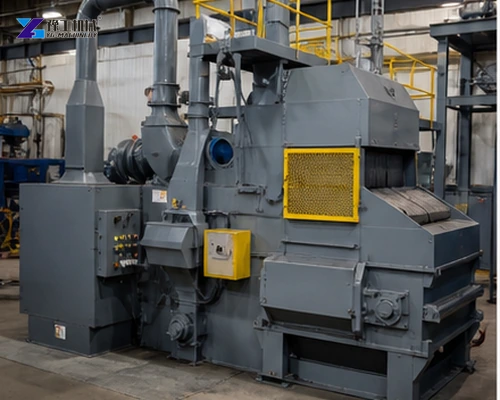
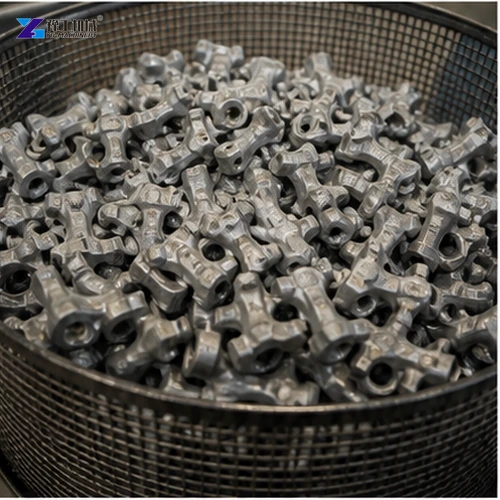
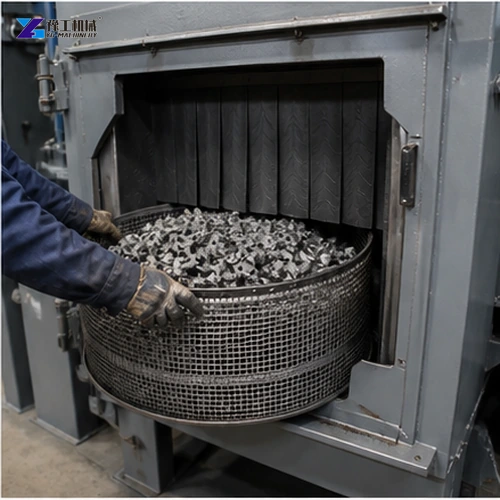
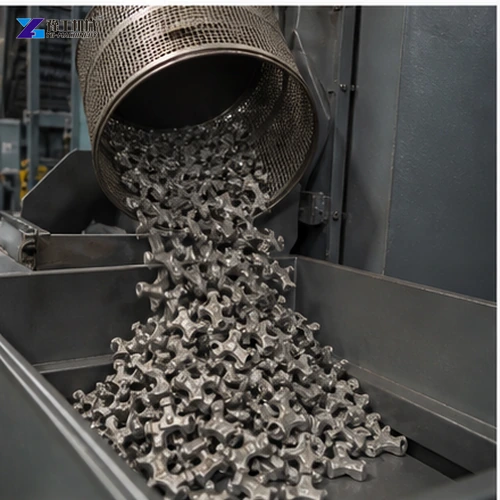
A tumble belt shot blasting machine cleans many small metal parts as one controlled batch. The belt continuously presents new surfaces to the blast stream, but the same movement can cause part-on-part impact, nesting and edge damage. Selection therefore starts with the part family and an accepted batch recipe, not chamber volume alone. A machine that cleans castings quickly may be unsuitable for thin stampings, threaded pieces or parts that can hook together.
The buyer should define batch mass, individual part mass, dimensions, material, initial contamination, final cleanliness and allowable cosmetic damage. The sample trial must use a realistic mixture and fill level because one isolated part behaves differently from a production load. The useful result is a recipe linking load, blast time, wheel settings and separation to the accepted finish.
A tumble belt system serves small robust parts, while larger continuous products belong in industrial shot blasting equipment with a conveyor; delicate or suspended parts may fit the separate hanger machine process.
Which Parts Can Safely Tumble Together?
Group parts by hardness, section thickness, geometry and damage sensitivity. Heavy castings can bruise lighter pieces; long parts may bridge the chamber; hooks and deep recesses may nest or trap shot.
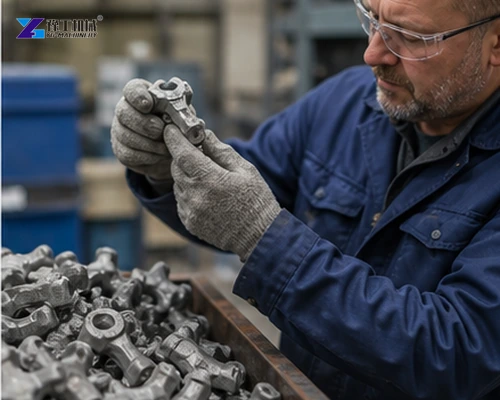
Define maximum individual mass as well as total batch mass. Photograph known reject modes and include protected threads, machined faces and thin edges in the inspection plan. If tumbling itself causes unacceptable contact marks, stop and evaluate a hanger, table or continuous handling method.
A part-family trial should include the items most likely to damage one another, not only the most robust casting. Keep protected surfaces and known reject examples visible in the inspection record. If the family changes, approval should be reconsidered rather than inferred from the previous batch mass.
Send part dimensions, unit weight, material and fragility details so the batch can be checked for safe tumbling.
Weigh the production load and record the fill level rather than loading by eye. Establish loading, wheel start, blast duration, belt movement, blow-off and unloading in a fixed sequence.
Trial the most difficult contamination and inspect parts from different positions in the batch. Increasing time cannot correct every problem: nested parts may remain shadowed while exposed edges are overblasted. Adjust load, orientation and media before assuming more exposure is the solution.
Use a weighed batch and fixed fill level to establish the recipe. Record blast time, wheel current, belt motion and complete load-to-discharge cycle. Compare parts from different positions to reveal shadowing or uneven turnover.
Send the part families, batch mass and damage restrictions. YG can help separate products that can share a repeatable recipe from those requiring a different process.
How Do Belt Movement And Media Flow Affect Coverage?
The belt must lift and turn parts without pinching them at gaps or throwing them against the chamber. Inspect belt construction, perforation, tracking, tensioning and replacement access.
Inspect belt tracking, tension, perforation, wear and clearance around edges. The belt must turn the load without pinching small parts or creating damaging drops. Maintenance access and replacement time belong in the capacity calculation.
Wheel position and abrasive flow should cover the rolling bed across the usable width. A stable ammeter reading does not prove uniform coverage; examine parts from the center and edges and check recesses. Record wheel current and blast time with the accepted sample for future troubleshooting.
Provide the batch weight, cleaning target and available cycle time to review a repeatable loading and blasting recipe.
Which Parameters Must Be Confirmed Before Quotation?
Published model values were not available for this exact subtype in the approved source set, so the table deliberately lists the parameters that YG must confirm against the proposed configuration. No unverified capacity is presented as fact.
Parameter to confirm
Evidence required
Working chamber
Usable width, diameter and loading opening
Batch capacity
Maximum mass for specified part family
Individual part limit
Mass and dimensions
Tumble system
Belt material, speed and tracking
Blast system
Wheel power, quantity and shot flow
Recovery
Elevator, separator and storage capacity
Dust control
Required airflow and filter arrangement
Utilities
Installed power and compressed air
Discharge
Separation method and unloading height
Require working chamber dimensions, permissible batch and individual mass, belt material and speed, wheel power and shot flow, dust airflow, recovery rate, installed power, loading height and unloading method. Final figures belong in the signed proposal and acceptance record.
Do not accept a capacity quoted without a part-family condition. Ask whether it refers to permissible mechanical load, useful chamber volume or an output demonstrated on an agreed batch. Those meanings are different, and a comparison remains incomplete until the supplier states which one applies.
Continuous turnover exposes different surfaces
How Are Shot And Parts Separated After Blasting?
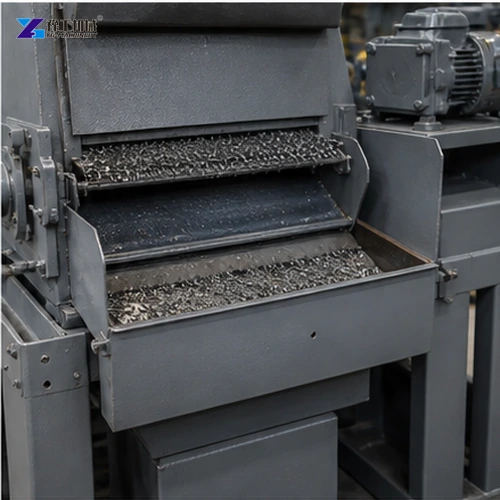
The unloading route should separate reusable abrasive before parts reach the next operation. Check screen opening against the smallest part and media, and identify clips or narrow items that could escape.
Verify the screen and separator against the smallest part and circulating shot. Measure retained abrasive after discharge and define the safe clearing method for blockages. Consecutive acceptance batches should prove both cleaning consistency and part protection.
Deep holes may retain shot and need controlled vibration, inversion or air cleaning. Collecting hot or oily parts can also contaminate the recovery circuit. The proposal should state separation equipment, residual-shot limit and how operators safely clear a blockage.
Review loading height, bin handling, hot-part risk, noise and dust exposure with the operators who will run each batch. Ergonomics can become the bottleneck in a manual cell.
Share daily volume, part mix and discharge requirements to compare the verified machine parameters with the production plan.
How Is Accepted Output Calculated For A Mixed Batch Schedule?
Batch economics should be calculated from accepted kilograms or parts per complete cycle, including load preparation, blasting, discharge, separation and inspection. Do not multiply chamber volume by an assumed cycle count. Use the trial mass and observed cycle, then apply realistic availability for belt checks, wheel wear, media additions and changeovers. If part families require different recipes, estimate them separately. This reveals whether one flexible machine can meet the mix or whether frequent cleaning and setup consume the apparent capacity.
Retain examples of acceptable finish and unacceptable contact damage for operator training. Visual references, recipe records and weighed loading make troubleshooting faster when a new casting lot or media condition changes the batch result.
Keep changeover losses visible for each family. A recipe with a short blast stage can still occupy the machine longer because loading, separation or inspection takes more time. Compare accepted parts at discharge, including any rework, with the planned shift requirement before assuming another nominal capacity will solve the bottleneck.
What Does A Useful Batch Acceptance Test Include?
Run several consecutive batches at the agreed mass, not one light demonstration. Measure cycle time from loading to cleared discharge and inspect cleanliness, profile, dents, bent features, trapped media and batch-to-batch consistency.
Verify dust containment, guarding, interlocks, emergency stops and safe maintenance. Retain an accepted part and recipe sheet. Production staff can then recognize whether later variation comes from the incoming parts, media mix, belt, wheel wear or incorrect loading.
Record the permitted variation across consecutive batches and identify who may release production after a failed result, so the acceptance standard remains usable after commissioning.
The final scope should state the approved part family, batch mass, cycle, wheel and belt settings, recovery arrangement, discharge method, spares and consecutive-batch acceptance criteria.
Provide representative parts and the proposed acceptance method when you are ready to confirm a tumble belt machine configuration.
Submit sample-part photos and the acceptance standard so YG can prepare a practical tumble belt configuration.
Only after a realistic trial proves that part contact and belt movement do not deform them.
Can Different Parts Share One Batch?
Only when their mass, geometry and finish requirements are compatible.
Why Is Shot Left Inside Parts?
Cavities and holes can retain abrasive and may need a defined inversion or air-cleaning step.
Why Are No Universal Capacity Figures Shown?
The exact YG subtype data must be verified before quotation; unconfirmed values are not presented as specifications.
The batch trial should establish both surface quality and freedom from unacceptable contact damage. Provide representative parts, the intended batch mix and the measured cycle in the form below. Exact YG model capacity and utility figures remain to be verified; this draft must not be treated as a complete numerical product specification until that evidence is available.