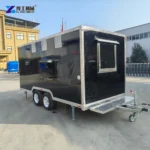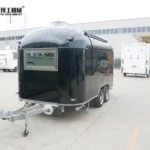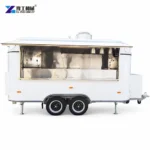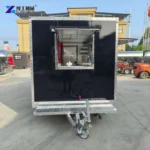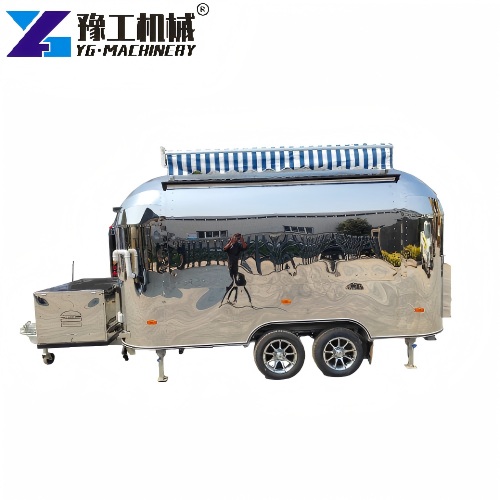
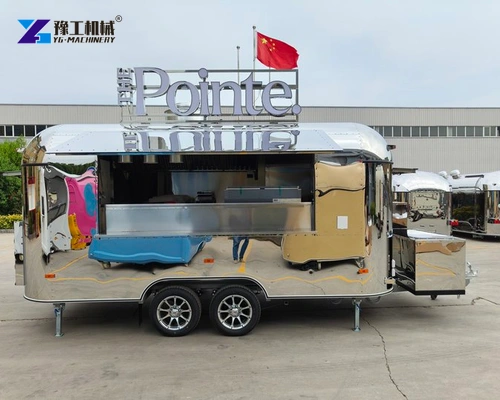
A hot dog concession trailer needs more than a cooker and a sales hatch. Sausages must reach the intended serving condition, buns need their own treatment, toppings need an organized assembly space, and finished orders must reach the customer. A large heating appliance can still leave a slow service if opening buns and finishing each order occupy the same crowded counter.
The equipment choice should follow the actual menu. A short menu of identical hot dogs has a different working pattern from grilled sausages with several toppings and cooked side dishes. This guide compares those product-specific tasks so an enclosed trailer can be configured as a useful working kitchen rather than simply filled with appliances.
Hot Dog Concession Trailer Heating Equipment Should Match the Product
Roller grills, griddles and water- or steam-based equipment transfer heat differently. That difference affects the product finish and the operator’s work. The appliance must be suitable for the food’s supplied condition and intended process; equipment described for holding food should not automatically be treated as a cooker for raw sausages.
- Roller-grill service. Heated rollers contact and turn suitable cylindrical products, bringing different parts of their surface into contact as they rotate. This provides a visible pickup line, but usable capacity depends on sausage length and diameter as well as the appliance. Replenishment must fit the selected unit’s approved cooking or holding function, so available display space is not automatically ready-to-serve stock.
- Griddle-based service. A sausage rests against a flat hot surface and is repositioned to obtain the intended contact finish. That gives the operator a different task from tending a roller line. Onions, buns or other menu items may use the same surface, reducing the area available to sausages. A combined menu therefore needs a deliberate allocation of the heated surface and a separate place to assemble finished orders.
- Water or steam-based service. A water bath transfers heat through the surrounding water; a steamer uses hot moist air and steam around the food. These arrangements do not create the same dry contact finish as a griddle. The selected appliance determines whether it cooks, reheats or holds the intended product. Water access, drainage and cleaning also become part of the trailer layout, rather than treating the unit as another dry countertop appliance.
The choice is therefore about the food and serving method, not a claim that one appliance always produces more orders. A hot dog concession trailer with cooked sides or several sausage types may need a different appliance mix from a simple single-product menu. Its ventilation and utility design must follow the actual selected equipment.
Describe the sausage product and serving method so the heating equipment can be matched to the menu.
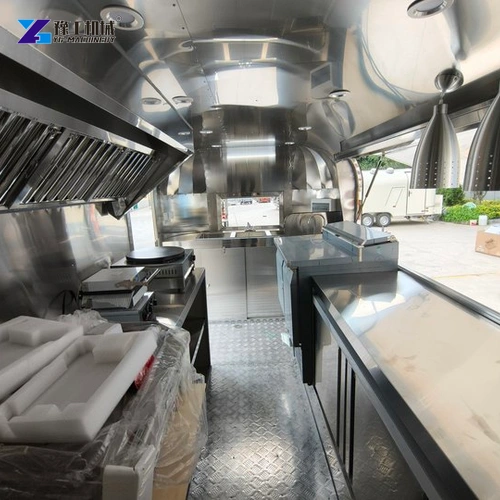
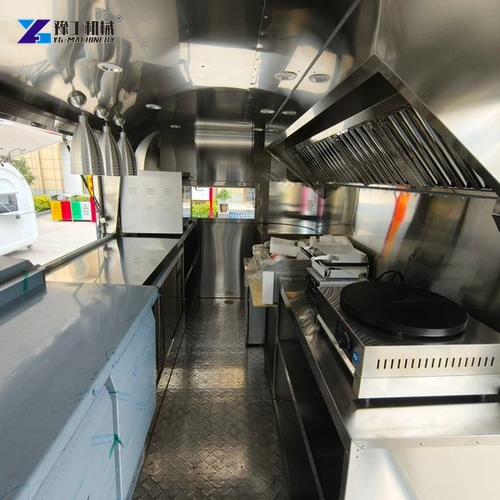
Bun Finishing and Topping Assembly Determine the Completed Order
The heating stage supplies only one component of a finished hot dog. Bun opening or warming, adding the sausage, portioning toppings, wrapping and handing over the order all occupy time and counter space. These actions should connect in a short, understandable sequence instead of competing for the same small patch of worktop.
Bun treatment affects both texture and assembly. Dry warming and a moisture-controlled drawer do not expose the bread to the same conditions: moisture can help limit drying, while excessive moisture can leave buns too soft for the intended service. Compare the actual bun in the selected appliance rather than choose by drawer volume alone. Stock should be accessible for replenishment without obstructing the bun pickup used for each order.
Toppings add another layer. A basic sauce choice requires less individual assembly than several salads, cheese options and cooked additions. Containers need to be accessible without staff repeatedly reaching across the hot equipment or completed orders. Where ingredients require temperature-controlled storage, their appropriate storage and replenishment arrangement has to be included rather than treating every topping as a room-temperature condiment.
Packaging and handover should complete this sequence. If the payment point occupies the only finishing counter, food preparation and customer transactions can interfere with each other. Even a modest menu benefits from distinct positions for food assembly, packaging and order collection.
For a broader kitchen comparison, the mobile kitchen food trailer page describes the surrounding product family. The hot-dog-specific decision is how these few repeated actions work together through an actual order.
Identify the bun, topping and packaging choices to compare a practical finished-order arrangement.
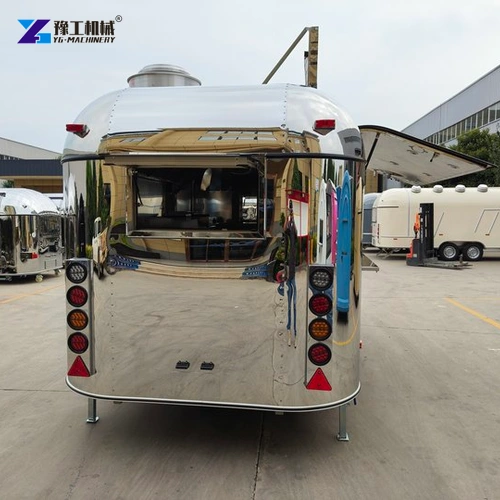
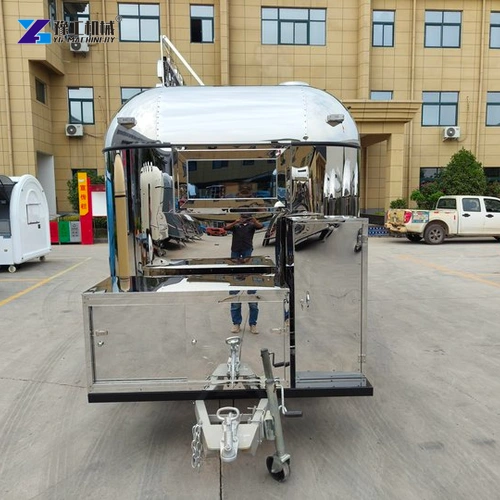
Hot Dog Concession Trailer Specifications
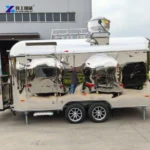
Two YG RD bodies provide concrete size options for equipment planning. Body dimensions describe the kitchen shell, while total dimensions describe the larger trailer envelope. The RD table compares square-body options; the stainless-steel round-body photographs illustrate a different kitchen arrangement with its own dimensions and equipment schedule.
| Parameter | YG-300RD | YG-350RD |
| Body length × width × height | 300 × 210 × 210 cm | 350 × 210 × 210 cm |
| Total length × width × height | 350 × 210 × 250 cm | 450 × 210 × 250 cm |
| Listed axle arrangement | One axle | Two axles |
| Brake entry | Not fitted in the listed configuration | Fitted in the listed configuration |
The two bodies share a stated width, so added length does not automatically produce a wider aisle. Equipment depth, opposite counters and door movement still determine the usable working space. A larger heating appliance can consume the additional length without improving the handover area if the arrangement is not considered as a whole.
Axle count and the presence of a brake are configuration entries, not proof of payload, towing compatibility or road approval. The final equipment, stock and water contribute to the loaded trailer. The actual chassis ratings and the destination’s requirements need to be matched to that completed configuration by the responsible parties.
A hot dog concession trailer offer should distinguish the body from the installed kitchen equipment. Worktops, sinks, cooking appliances, refrigeration, ventilation and utility connections should be identified in the schedule. The food trailer cost discussion explains that wider buying scope without turning a body dimension into a complete operating package.
Compare the named body dimensions with the actual appliance list and required kitchen layout.
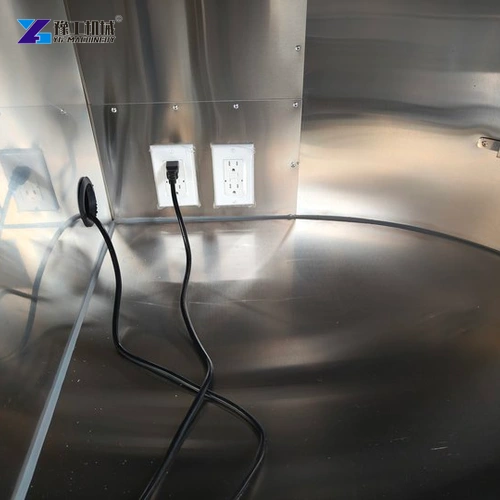
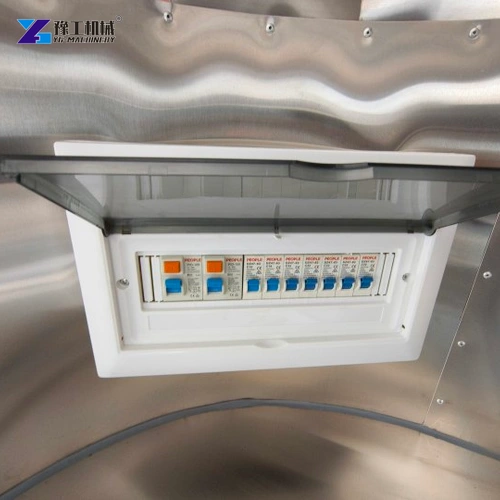
Power, Washing and Storage Must Support the Hot-Dog Menu
Heating and assembly rely on three supporting services. They should be planned around the chosen menu and appliance arrangement, not added after every counter position is occupied:
- Energy and ventilation. The cooker, bun warmer, refrigerator, water heater and lighting may operate together, so their equipment ratings and simultaneous demand define the supply requirement. Gas appliances need their specified gas and ventilation arrangement; electric appliances need a matching supply and protection. Qualified professionals must coordinate that installation. A separately selected generator also needs an installation and exhaust arrangement suitable for the occupied kitchen and customer area.
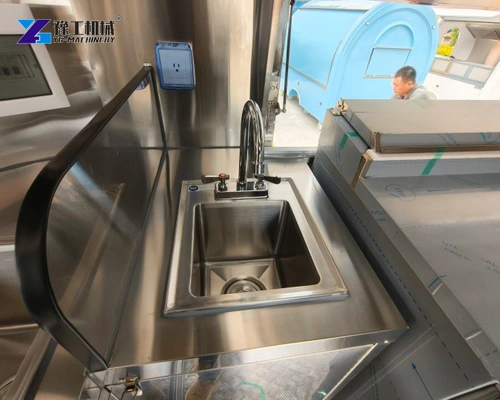
- Washing and clean preparation. Handwashing, food-contact equipment cleaning and dirty-item handling perform different jobs. The sink and work-surface arrangement must support those jobs under the applicable local requirements. A menu using raw ingredients alongside ready-to-eat toppings also needs appropriate storage, separation, handling and cleaning to protect against cross-contamination. The visible number of sinks alone does not establish that the kitchen provides every required function.
- Refrigerated stock and replenishment. Temperature-controlled ingredients need suitable storage and a route back to the assembly position. Opening the refrigerator should not block the main passage during normal service. Water filling, wastewater handling and end-of-service cleaning also need accessible provisions, so restocking and cleaning remain possible after the customer rush.
These services support the same food sequence described above: prepare and heat the product, finish the bun and toppings, then package and hand over the order. The selected trailer is the equipment for that operation; permission to trade and the required food-handling controls remain subject to the actual menu and jurisdiction.
List the selected appliances and washing needs so power, water and ventilation can be included in the equipment scope.
Hot Dog Concession Trailer Applications Have Different Order Patterns
The same menu can create different equipment demands depending on how customers arrive and how orders are finished. These examples describe possible operating patterns, not completed YG projects or promised sales results.
- Sports or entertainment intervals. Orders can arrive in a concentrated wave. The equipment comparison should connect available product, bun access and a short finishing sequence. A large display of sausages offers little benefit if every order then waits for packaging at one obstructed point.
- Industrial-estate or workplace lunch service. A narrower daily menu can make a repeatable assembly arrangement useful. Stock replenishment and the changing pace of orders matter alongside heating. The kitchen should support the selected lunch period without assuming that a full appliance surface represents continuous customer demand.
- Private or mobile catering with customized toppings. Orders may vary more in finishing than in the sausage itself. Additional topping choices need accessible ingredients and a deliberate assembly position. This menu can justify more finishing space even when the heating equipment is smaller than on a high-volume fixed-menu trailer.
These differences bring the selection back to the product. The right heating method, bun treatment and assembly space should work as one system within the selected body. A hot dog concession trailer is most useful when those repeated actions are supported clearly, with its actual appliances and services specified rather than implied by the exterior appearance.
Hot Dog Concession Trailer FAQs
No. The food’s supplied condition, desired finish, menu and approved appliance function determine whether rollers, a griddle or another heating arrangement is appropriate.
No. Bun preparation, toppings, packaging and handover can limit completed orders. The heating and assembly stages need to be planned together.
Body dimensions identify the kitchen shell; total dimensions describe the larger trailer envelope. Plan the appliances, counters and aisle within the selected body’s actual usable interior, then use total dimensions for the trailer’s overall space requirements.
Socket count alone does not establish available capacity. Appliance ratings, simultaneous demand and the complete electrical installation need professional coordination.
No. The final equipment and operation must be reviewed against the applicable local requirements. Trailer supply and business approval are separate matters.
Share your menu, heating preference and intended service pattern. Include the destination, body preference and appliances required so the proposed trailer and kitchen scope can be identified clearly.