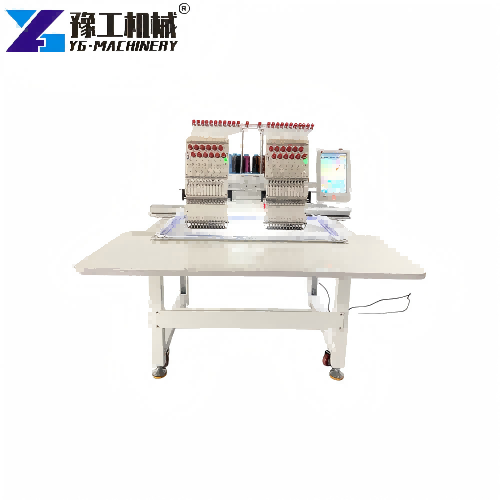
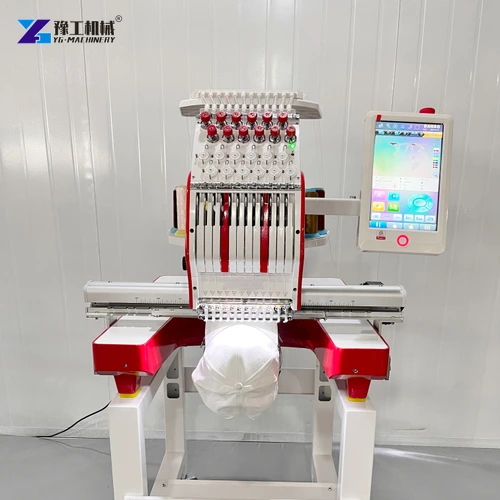
A multi needle embroidery machine for sale combines a programmed stitching head with a moving embroidery frame. The head forms stitches; the frame positions the fabric so those stitches become lettering, outlines and filled shapes. Understanding those two movements explains more about the machine than needle count alone, including why fabric support, thread preparation and the design file affect the finished result.
For a small embroidery workshop, the machine is not simply a faster way to move a needle. It is a system of thread paths, needle positions, frame movement and control instructions. This guide explains that system, compares two YG configurations and shows how common materials and workholding accessories change the way the equipment is used.
How A Multi Needle Embroidery Machine Forms A Design
In a typical lockstitch embroidery head, the needle carries the upper thread through the fabric. A hook below the needle plate catches the thread loop and interlocks it with the bobbin thread. The take-up movement draws the stitch into the material. Repeating that sequence produces individual stitches; the movement of the frame determines where the next stitch is placed.
The frame moves in two horizontal directions according to the design instructions. A short sequence of closely placed stitches can outline a shape, while other stitch arrangements build satin borders or filled areas. The machine does not interpret an ordinary picture as a finished embroidery program: the design needs stitch positions, a sewing order and appropriate thread changes. Poor design preparation can therefore create dense, stiff areas or uneven edges even when the machine is operating correctly.
Multiple needles keep several upper threads prepared on one head. The selected needle position supplies the thread for its part of the design; the needles do not all sew the same garment simultaneously. A single-head machine still works on one mounted item at a time. Needle positions can reduce repeated rethreading, but they do not replace the operator’s decisions about the thread, material and stitch program.
On a multi needle embroidery machine for sale, the important relationship is synchronization. The needle and hook must form the stitch while the frame follows the programmed path without dragging or obstructed movement. If a heavy garment pulls against the frame, the machine may command the correct position but the material may not stay equally well supported. That is why a clean thread path and stable workholding matter alongside the machine’s electronic controls.
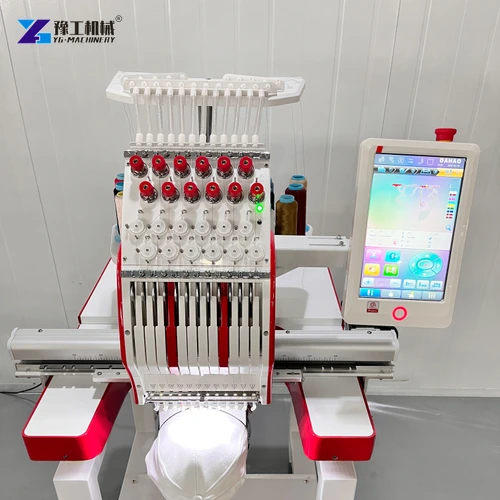
The stitching head, thread paths and frame motion work together to form the design.
YG Multi Needle Embroidery Machine Specifications And Embroidery Area
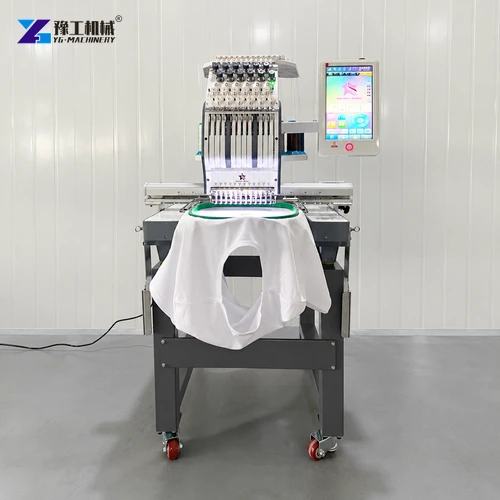
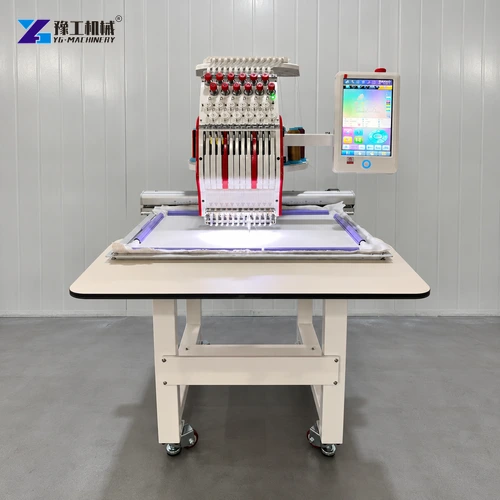
YG0901 and YG1501 are single-head configurations with different needle options and embroidery areas. The table describes their specified machine configurations, not the dimensions of every optional frame.
| Parameter | YG0901 | YG1501 |
| Embroidery heads | 1 | 1 |
| Needles | 9 | 12 / 15 |
| Display | 8-inch LCD | 10-inch LCD |
| Operating language | Customizable | Customizable |
| Embroidery area | 200 × 300 mm | 360 × 510 mm |
| Maximum stitching speed | 1,000 stitches/min | 1,200 stitches/min |
| Machine weight | 140 kg | 170 kg |
| Packing dimensions | 830 × 680 × 1,000 mm | 840 × 840 × 950 mm |
Embroidery area is the maximum specified stitching field. The usable area on a garment also depends on the selected frame and the opening through which the garment is mounted. A design must fit both the machine’s embroidery range and the usable opening of the selected frame. The surrounding garment must also remain clear while the frame moves. A wide machine field does not make the opening of a small pocket wider.
The speed figures are maximum stitch rates. A dense design with many short stitches, trims or colour changes will not have the same production rhythm as a simpler design with longer uninterrupted sequences. Loading, framing and checking the garment also take time. A workshop should therefore compare the actual design and handling cycle rather than divide a whole order by the maximum stitches-per-minute figure.
When assessing a multi needle embroidery machine for sale, more needles and a larger embroidery area solve different problems. Needle positions provide prepared thread choices; embroidery area limits the size of the programmed work. A modest logo may fit either configuration, while a large jacket-back design can make the stitching field more important. Neither specification alone establishes the frame or attachment needed for a particular finished item.
Fabric Preparation On A Multi Needle Embroidery Machine
Woven Fabric, Stretch Fabric And Backing
Embroidery draws many stitches into a small area. The fabric needs enough support to resist that concentrated thread load. Stable woven fabric, soft knitted garments and thick pile fabrics respond differently, so the backing and workholding should follow the material rather than a single workshop habit.
Stretch fabric is particularly easy to distort if it is pulled tightly while being framed. After stitching, it can relax and gather around an embroidery area that was sewn under tension. A suitable stabilizer helps support the stitches without relying on excessive stretching. The aim is a flat, supported sewing area, not the tightest possible hoop. The exact backing and needle/thread combination should follow the material and the machine’s instructions.
Pile fabrics introduce a different problem: stitches can sink into the surface or lose definition among the fibres. Their support and any suitable topping need to be chosen for that surface. Adding more stitch density is not a universal cure because it can increase stiffness and thread demand. A representative sample should reproduce the garment construction as well as the fabric texture.
Thread Paths And The Mounted Garment
Each active thread needs its intended path through guides, tension components and the needle. A thread that catches on a cone or misses a guide does not behave like a correctly threaded path with a slightly different tension setting. Bobbin installation is equally important because the lower thread is part of every stitch, not an optional supporting supply.
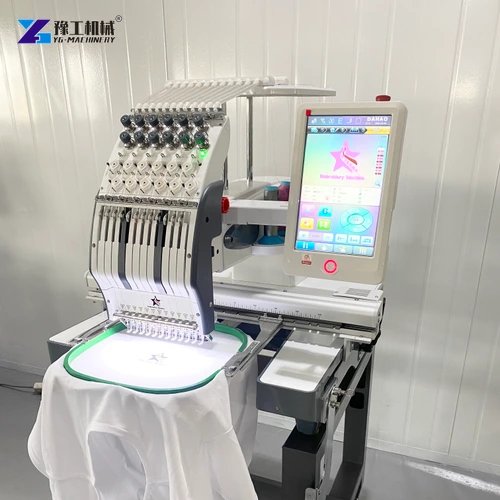
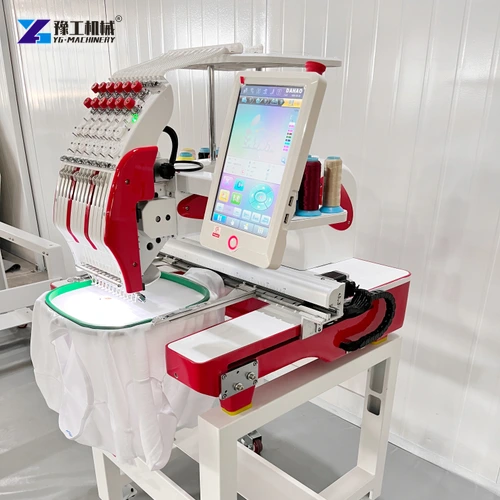
For a multi needle embroidery machine for sale, garment handling is part of practical usability. The hoop supports the embroidery area, while the rest of a shirt or bag must remain clear of the needle and frame. Do not allow a back panel, pocket or lining to be caught under the intended surface. These physical checks explain why a flat fabric sample cannot answer every question about embroidering a completed garment.
Fabric support and the selected frame should suit the garments your workshop embroiders.
Thread Breaks, Puckering And Misalignment In Multi Needle Embroidery
Thread breaks, fabric distortion and misregistered colours are different symptoms. Treating all three as a reason to tighten or loosen the same control can hide the actual cause. Stop the operation and use the machine’s prescribed safe procedure before touching the needle area, removing tangled thread or changing needles.
A repeated thread break can be associated with a restricted thread path, unsuitable or damaged needle, thread condition or an inappropriate setting for the fabric and design. The location and timing of the break matter. A problem that follows one needle position suggests a different investigation from a problem that appears only on a dense section of the design. Increasing machine speed is not a remedy for either.
Puckering points attention toward fabric support, thread tension and design density together. Excessive upper tension can draw the fabric or bring bobbin thread to the face, but poor backing or stretched hooping can produce distortion without a simple tension-only explanation. A sample check should change one relevant factor at a time so that an improvement has an identifiable cause.
Misalignment occurs when later stitches do not meet their intended earlier positions. Fabric movement within the frame, a slipping mounting arrangement, an obstructed garment or an unsuitable design sequence can contribute. Keep the distinction between machine movement and fabric movement clear. Repeating the same job on another garment without correcting the cause can repeat the same defect.
Routine care on a multi needle embroidery machine for sale includes the specified cleaning and lubrication of its own mechanisms, correct handling of bobbins and replacement of unsuitable or damaged needles. Lint management matters around the stitch-forming area. Lubrication points and intervals are model-specific; general embroidery knowledge is not a reason to oil every visible moving part or adjust the hook mechanism without the required instructions.
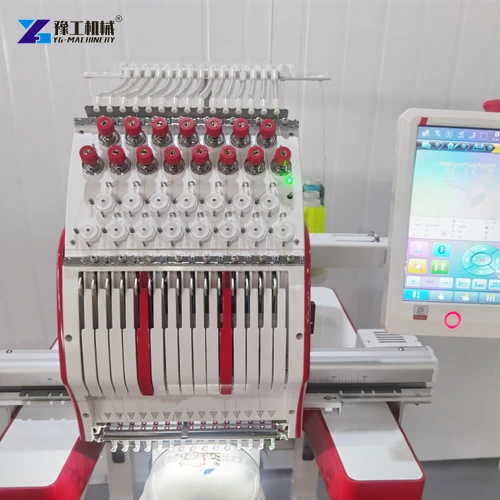
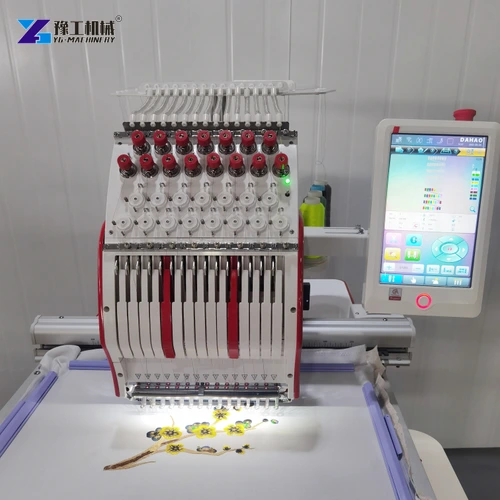
A representative design and fabric sample help assess stitch quality before repeated orders.
Multi Needle Embroidery Accessories For Flat Work And Caps
A flat frame holds fabric in a plane while the embroidery mechanism moves it across the stitching field. Different frame sizes give different usable areas and mounting options. Choosing an unnecessarily large frame can make supporting a small design more difficult, while a frame that is too small cannot accommodate the required stitching path. The appropriate size is the one that supports the intended work within its permitted area.
A cap arrangement has a different mechanical task. The curved cap needs an appropriate driver and frame so that the crown is presented to the needle. The seam, bill and available sewing area restrict how a design can be placed. A cap attachment should therefore be treated as a specific compatible accessory, not as a feature guaranteed by having multiple needles. Availability for the selected YG configuration belongs in the actual equipment package.
Consumables also affect everyday operation: embroidery thread, bobbins, suitable needles and backing must support the fabric and design. Keeping a repeatable combination for a recurring job makes later sample checks more useful. A new thread or garment material can change the result even when the design file has not changed.
The shirt embroidery equipment article provides related garment context, while the multi-colour embroidery overview explains the wider machine family. A useful multi needle embroidery machine for sale should be understood through its stitch-forming mechanism, embroidery area, material preparation and actual workholding accessories—not merely a list of prepared thread colours.
Specify the compatible flat frames, cap equipment and consumables with the selected machine.
Multi Needle Embroidery Machine For Sale FAQs
They provide several prepared upper-thread positions. The selected needle sews its part of the design; needle count does not mean several garments are embroidered simultaneously on one head.
It is the specified stitching field. The selected frame has its own usable area, and a finished garment must still be mounted with other layers and obstructions clear of the needle and frame movement.
Fabric support, stretched hooping, thread tension and design density can all contribute. Diagnose the relevant combination rather than assume that one tension adjustment will correct every case.
No. Design complexity, short stitches, thread changes, trims, framing and handling affect the complete job. Maximum stitch rate is not a guarantee of garments per hour.
No such assumption should be made. The compatible driver and frame need to be identified for the exact machine and included explicitly in the selected package.
Tell us the garment material, design size and flat or cap embroidery work you need to discuss a suitable machine configuration.