A small egg tray making machine is useful when its forming arrangement matches the trays a business actually needs to sell. Short orders add a complication: the machine may spend part of the working day changing product, restarting material flow or waiting for the next production stage. Choosing equipment only by pieces per hour misses that order pattern.
For a workshop handling repeat orders in several tray formats, the central decision is which products can be made with a confirmed mould package and how those products move through drying and handling. The YG-1*3 provides a specific small forming configuration to assess. It does not make every tray shape automatically, and its rated forming output is not the number of accepted dry trays ready for delivery.
Egg-Tray Cell Geometry Decides Which Orders the Machine Can Serve
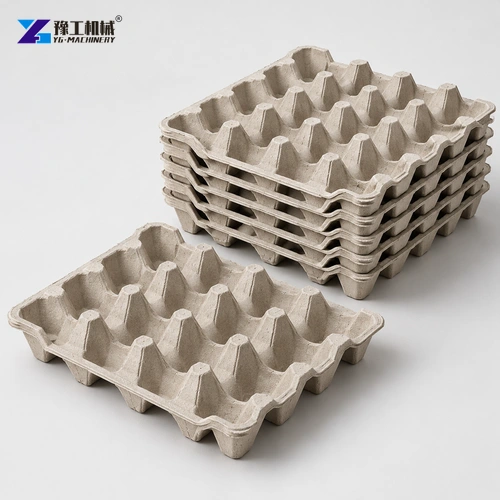
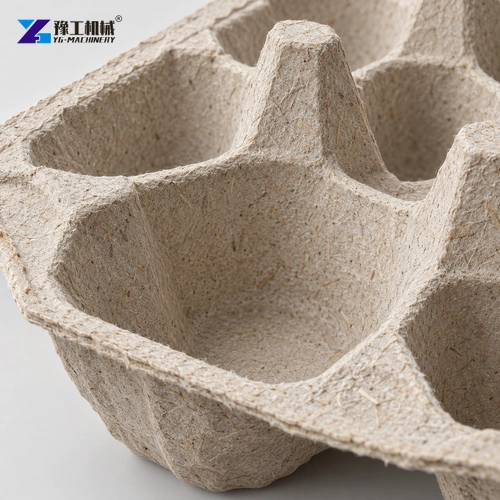
An egg tray is a shaped support system, not simply a sheet with cavities. Cell walls locate individual eggs, raised partitions separate neighbouring positions, and the rim supports handling and stacking. Changing cell depth or spacing can change how the customer’s egg sizes sit in the package, even when the total cell count stays unchanged. The required product geometry should therefore lead the mould decision.
For a small egg tray making machine, flexibility means making specified saleable formats with matched tooling, not making every pulp package on demand. An open tray and a hinged carton have different shapes and downstream requirements. A workshop serving several egg producers should compare their actual approved packages before ordering multiple mould sets that may produce superficially similar, but commercially different, trays.
For example, regular orders for two tray formats may be easier to organise as separate production batches than as frequent alternating runs. The right grouping depends on confirmed customer demand, material preparation and downstream space. This is a planning example, not a claim that one schedule will improve every factory’s output.
YG-1*3 Small Egg Tray Making Machine Configuration
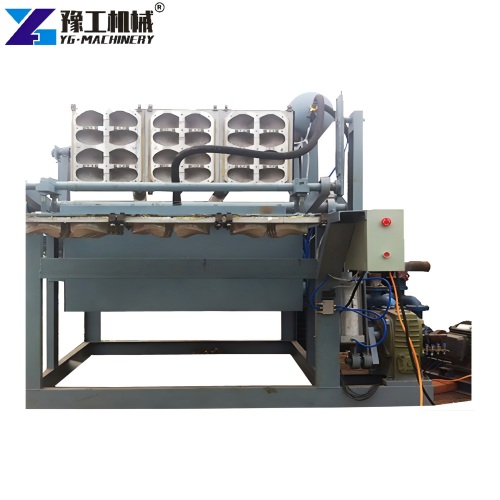
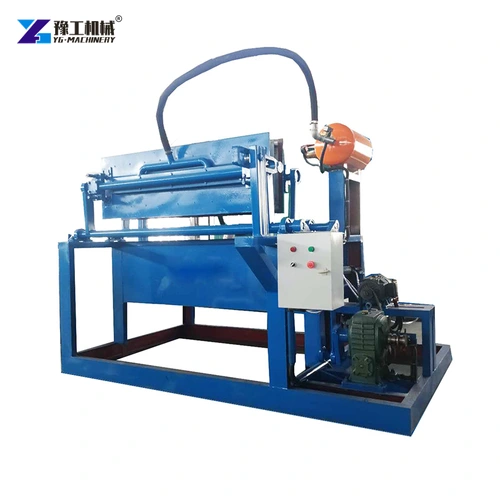
The YG-1*3 is a small forming configuration with three forming moulds. The figures below describe that machine configuration. They should not be mixed with the output or installed power of a larger automatic production line.
| Parameter | YG-1*3 |
| Listed forming capacity | 1,000 pieces/hour |
| Forming mould quantity | 3 |
| Listed total power | 40 kW |
| Listed operating personnel | 3–5 |
The forming-capacity entry is a rated machine figure. Actual accepted output depends on the product, pulp condition, operating interruptions, drying and rejection rate. The personnel entry likewise describes the listed arrangement; a complete factory may need other tasks covered. Use the YG egg forming equipment range to establish the product relationship before comparing a quotation.
For short runs, the table is only the starting point. Ask whether the offer includes the moulds for each required tray and what other equipment is necessary for the chosen production route. Compare equivalent supply scopes, keeping the forming unit separate from a quotation for an entire plant.
Keep the YG-1*3 forming configuration and included supporting stages explicit.
Forming and Transfer Moulds Must Handle the Same Wet-Tray Geometry
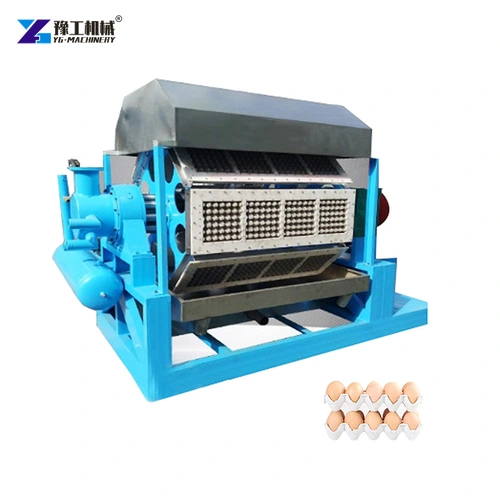
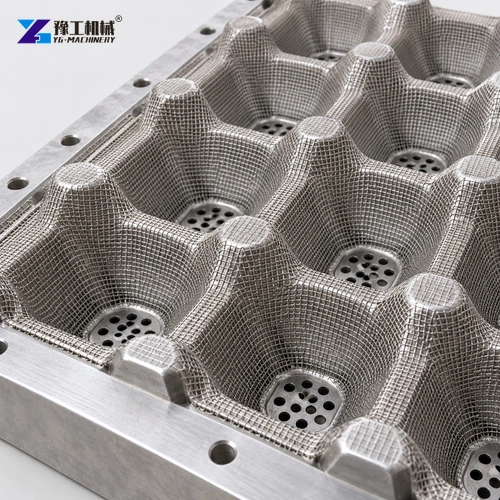
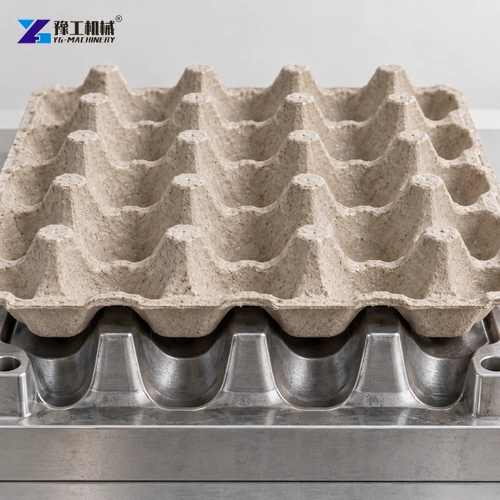
Wet-pulp forming deposits fibres against a shaped permeable mould as water is removed. The fibre mat acquires the tray’s contours, but the freshly formed product still needs support. Where a matched transfer mould is used, its geometry must receive the same cavities, partitions and rim without damaging that wet shape. A mould change is therefore more than exchanging a surface carrying a different cell count.
Three forming moulds on the YG-1*3 do not mean three arbitrary customer products can be loaded and switched automatically. The mould quantity describes the configuration; the intended format and matched transfer arrangement still have to be specified. For a small egg tray making machine serving short orders, the useful question is which verified product set can be changed over and accepted, not how many moulds appear in the table.
A deep cavity and a shallow rim also present different drainage and release conditions. A product that leaves the forming surface but deforms during transfer is not a successful format change. Compare complete wet samples through the agreed receiving and drying arrangement. A supplier’s demonstration of another tray shape cannot establish acceptance of the customer’s required geometry or a fixed changeover time.
Match forming and transfer tooling to the required tray format.
Wet-Tray Support Matters Before Drying Builds Handling Strength
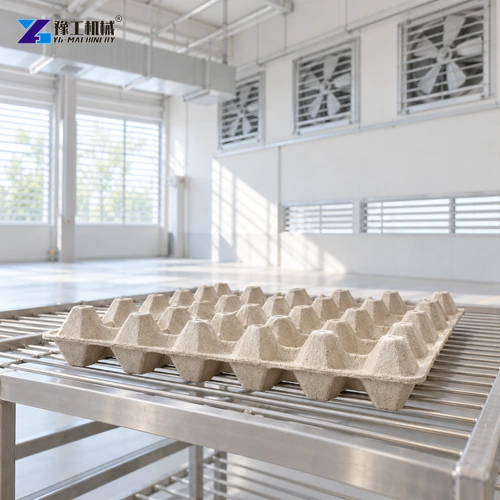
A fresh fibre mat contains water and is more vulnerable to handling distortion than the finished dry tray. Supporting it through transfer and drying is therefore part of preserving the moulded shape. A bent rim or distorted pocket can persist into the finished package; downstream drying should not be treated as a universal correction for a poorly handled wet blank.
Short orders bring different wet-tray geometries into the same receiving area. Their support and residence requirements may differ, so increasing forming output can simply create more fragile work-in-progress. Where one format occupies the available drying capacity, the next mould change does not instantly create room for another batch. This is a physical production constraint, not just an administrative scheduling issue.
When evaluating the forming equipment, consider where wet trays wait, how they are supported and how the next batch enters the same space. The relevant area is more than the machine footprint. It includes movement between stages and a place to inspect the product without blocking production.
Compare wet-tray support and drying with the expected order pattern.
Dry Egg-Tray Nesting and Separation Determine Packing Usability
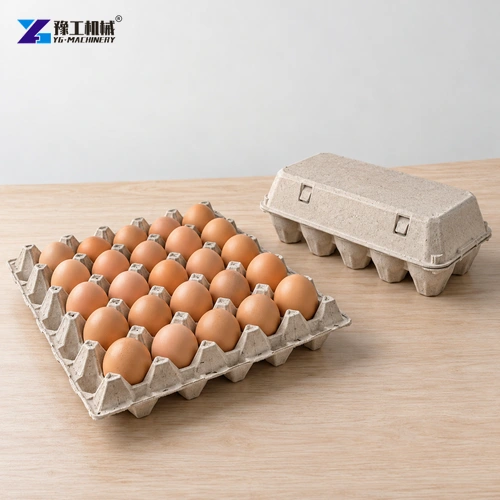
A tray must protect the intended eggs and work in the customer’s packing routine. Trays that nest too tightly can be difficult to separate; distorted rims or inconsistent pockets can interfere with stable stacking. These are finished-package issues that may not be apparent while watching the forming mould cycle. A small egg tray making machine should be evaluated through the dry product, not solely by counting wet blanks.
Use an agreed dry reference package to compare cell arrangement, rim shape and repeated nesting. Where a customer specifies load or transport performance, use the agreed test rather than inventing a universal strength target. Recycled-fibre feedstock and finished geometry need consistent control; adding nominal machine capacity does not compensate for a product that the packing line cannot use reliably.
A small egg tray making machine can serve poultry packaging businesses and workshops supplying local egg producers, provided its actual product configuration fits the order. Other moulded-pulp products require their own tooling and process assessment. Do not treat fruit trays, cup carriers or closed egg cartons as automatically included in an egg-tray equipment purchase.
Short-Order Egg-Tray Production Needs a Verified Format Set
A workshop repeating one accepted format mainly needs consistency from pulp to dry tray. Adding a second format introduces another mould-and-transfer combination and another finished reference. This expansion is not equivalent to buying extra output from the same tool. The egg tray production line describes a broader equipment scope; the forming unit and its approved product set should remain identifiable within any offer.
For a small egg tray making machine serving short orders, product flexibility is valuable only when each format can pass through forming, supported transfer, drying and packing. The YG-1*3’s listed capacity provides one production reference, while the verified mould set determines which actual orders that capacity can serve. That distinction makes the comparison specific to the workshop’s packages rather than a generic search for more pieces per hour.
Build a proposal around the actual packages and verified mould set.
Small Egg Tray Making Machine FAQs
Potentially, with compatible mould and transfer arrangements. Each required product must be checked against the selected machine; arbitrary mould interchangeability is not assumed.
The listed figure is forming capacity. Drying, interruptions, inspection and rejection affect the accepted finished output.
Product changes and downstream handling occupy time and space. Compare the normal run length and product mix alongside rated forming output.
No. A different finished product requires a confirmed mould and process configuration. Establish its geometry and any additional stages separately.
Identify the forming configuration, required moulds and included supporting stages. Keep drying and pulp-preparation scope explicit so competing offers can be compared fairly.
Describe the required tray formats, typical order sizes and available drying arrangement.