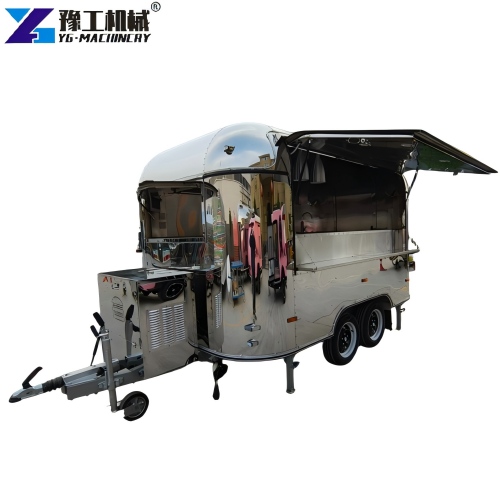
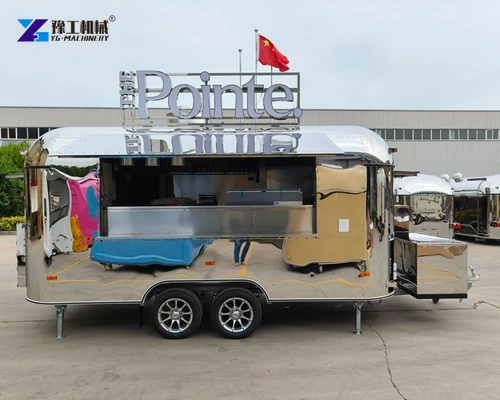
A BBQ catering trailer needs to connect a slow cooking process with a much faster serving process. A batch of barbecue may take far longer to prepare than a customer is willing to wait for a sandwich or portioned meal. The useful kitchen arrangement therefore distinguishes cooking, appropriate cooked-food holding, carving or portioning, and final order assembly. A large grill alone does not create that complete service system.
The first equipment decision is where the barbecue is actually cooked. A business cooking raw ingredients on the trailer has different space and utility needs from one receiving cooked products through an authorised supply arrangement. An external cooking unit creates another relationship between the cooker, protected food handling and the enclosed kitchen. These alternatives should shape the trailer specification before body length or exterior branding becomes the main discussion.
Separate Barbecue Production From the Order Line
The production side turns ingredients into cooked food. The service side turns available food into individual orders. When those functions share one small worktop indiscriminately, carving, bread preparation, packaging and ingredient handling compete for the same surface. A clearer arrangement gives each stage an identifiable place and controls how food moves between them.
Batch production and customer orders run at different rhythms. Cooked meat needs a defined position for cooked-food holding equipment until portioning, while the active order line needs small, accessible supplies of bread, sides and packaging. Replenishing that position from the holding equipment separates batch movement from individual assembly. Holding equipment and procedures must suit the food and applicable requirements; a spare worktop beside the cooker does not perform that function.
Consider a sandwich order. The barbecue reaches the portioning position, the portion goes to prepared bread and accompaniments, and the completed order moves to packaging and handover. If the customer window also serves as the carving bench, payments and food preparation can interrupt one another. Separating their work positions can be more useful than increasing the size of the cooking appliance.
That sequence should also accommodate replenishment. Staff need to replace food, packaging and ingredients without repeatedly crossing the active order line. A trailer that works well for a short demonstration may become crowded when supplies must be replenished during a long event. The regular service pattern is therefore a better design input than the appearance of an empty interior.
Map the transition from barbecue production to finished orders.
Three BBQ Catering Trailer Operating Arrangements
- Cooking and serving within the specified trailer kitchen. The cooking equipment, extraction, working clearances, utilities and food-handling stations all occupy the same body. Their combined demands determine how much usable space remains for portioning and assembly. The selected appliances must be assessed as an actual installation.
- An external cooker supporting an enclosed service kitchen. The relationship between the two units becomes part of the operating site. Food must move through a suitable protected handling arrangement, while customers, staff and replenishment traffic need their own workable routes. An external cooker does not remove the need for an organised service interior.
- Barbecue cooked in a separate authorised kitchen and delivered to the trailer. The trailer receives the cooked barbecue and performs the specified cooked-food holding, portioning and order-assembly work rather than the original cooking stage. Access for food deliveries and transfer into the specified cooked-food holding equipment become central, with food controls defined for that supply and service arrangement.
The distinction concerns how the business operates, not a universal claim that one layout suits every menu. A sliced-meat plate, a filled sandwich and a selection of grilled items use different combinations of surfaces, appliances and service ware. Identify the regular products and the actual preparation route before assigning kitchen space.
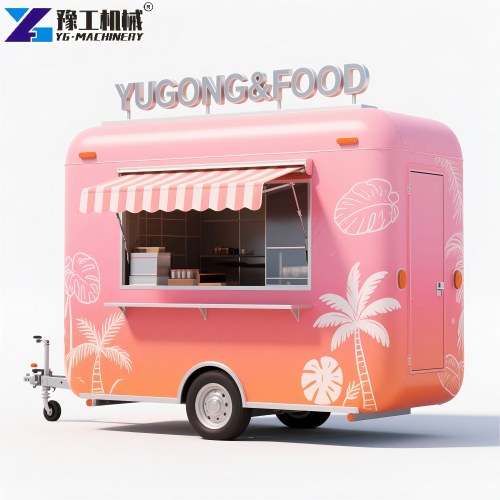
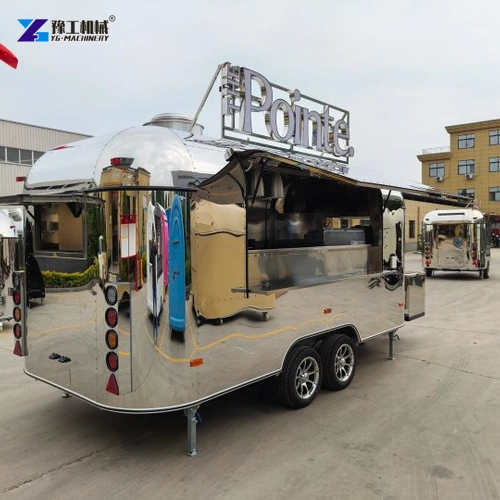
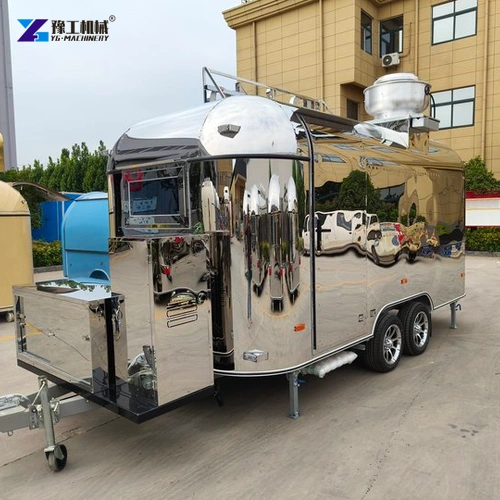
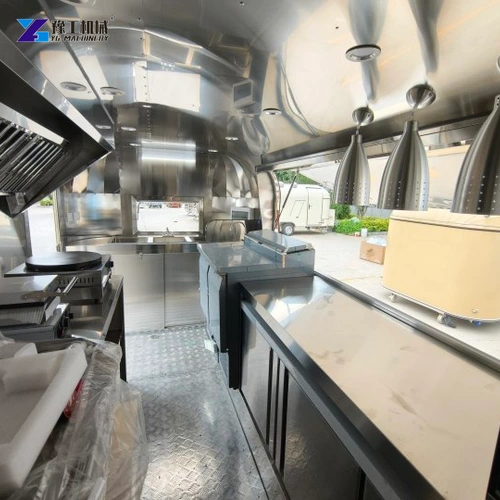
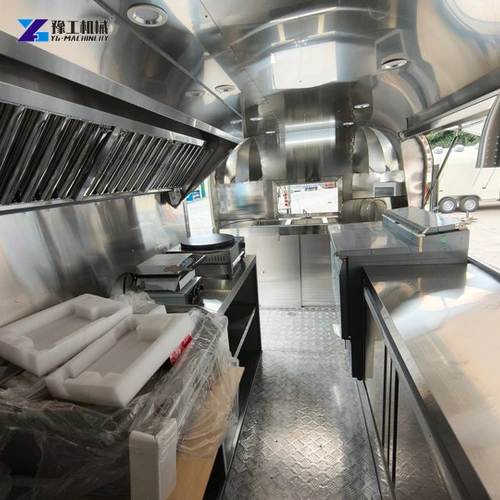
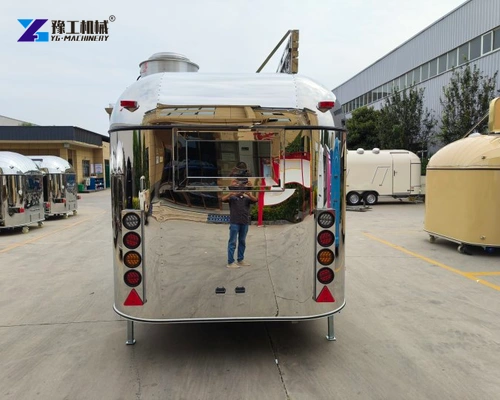
The photographs show different catering-trailer and interior configurations, not a promise that all pictured appliances are standard BBQ equipment. A proposed kitchen needs its own appliance list and installation arrangement. Cooking duty and extraction should be assessed together, particularly when solid-fuel or other high-heat equipment is being considered.
Choose the cooking and cooked-food delivery arrangement for the menu.
YG BBQ Catering Trailer Body Parameters
The YG RD body configurations below provide a dimensional comparison for planning the enclosed kitchen. They describe the trailer body rather than a complete fitted BBQ production specification. The rounded stainless-body photographs represent a different configuration from these named RD examples.
| YG trailer body model | Body dimensions, L × W × H | Total dimensions, L × W × H |
| YG-300RD | 300 × 210 × 210 cm | 350 × 210 × 250 cm |
| YG-350RD | 350 × 210 × 210 cm | 450 × 210 × 250 cm |
| YG-400RD | 400 × 210 × 210 cm | 500 × 210 × 250 cm |
Body length gives a starting envelope, not a direct count of appliances or staff. Refrigeration, worktops, cooking equipment and the aisle all consume space within it. Their doors and service access also need clearance. Two trailers with the same body length can therefore have different usable order lines.
Total dimensions matter when arranging storage and the trailer’s operating site, but the working site extends beyond the trailer outline. Access to doors, customer queuing, replenishment and any external equipment need their own space. The selected kitchen and the location should be assessed together rather than treating the parked footprint as the complete event setup.
For transport, the mass and distribution of the completed fit-out must suit the supplied trailer and towing arrangement. Adding heavy appliances or tanks after choosing the body can change that assessment. Body dimensions alone establish neither a legal road approval nor a permitted laden mass; those belong to the actual completed vehicle and destination requirements.
Utilities Must Support Cooking, Holding and Cleaning Together
Separate continuous service loads from intermittent tasks when listing the installed appliances. Refrigeration and holding equipment may operate while an order is assembled; a water pump or another appliance can add demand during the same period. The installation must support the permitted simultaneous use, rather than just the appliance with the largest individual rating. Competent personnel must design and inspect the electrical or fuel installation for the actual equipment and destination.
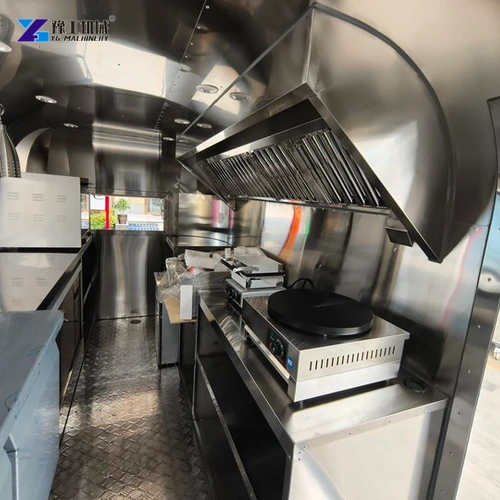
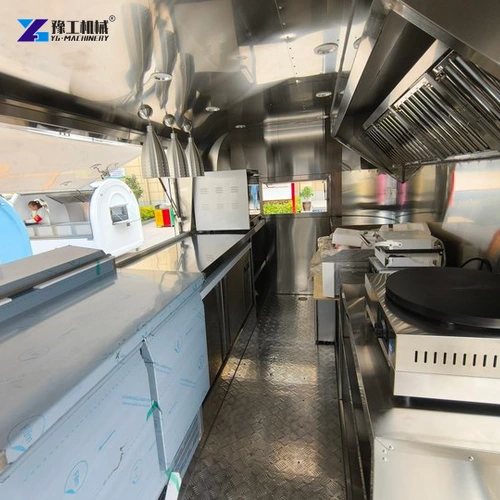
Ventilation follows the cooking duty. Smoke, heat and grease from the selected appliances affect the extraction arrangement and its maintenance access. A visible hood in a photograph does not identify its capacity for a different cooker. The appliance installation should determine the extraction design, rather than choosing a cooker simply because it fits beneath an existing hood.
Water and waste arrangements support handwashing, cleaning and the specified food-preparation tasks. Their usable capacity and replenishment plan should follow the operating period and equipment requirements. A sink count by itself does not establish compliance, and larger water tanks also affect the vehicle’s laden arrangement.
Keep these systems accessible for their prescribed checks and service. Storing packaging in front of a service panel or using the only clear aisle for replenishment can make an otherwise plausible layout difficult to operate. The goal is not to add every possible appliance; it is to make the selected production and order sequence work with its supporting systems.
Match the appliance list and simultaneous power, fuel and water demands to the trailer utilities.
Three BBQ Order Patterns That Reveal Trailer Layout Conflicts
Test orders at the busiest shared positions, not only along an empty aisle. Mark where meat is portioned, sides are added and packaging is closed. Then run the relevant order patterns below while another person replenishes supplies or opens the equipment doors. This exposes competition for the same surface and movement space.
- Sandwich orders: bring portioned meat, bread and accompaniments to one assembly position, with wrappers ready at its exit. If carving and wrapping use the same small surface, one task waits for the other; separate their working areas within the available line.
- Plated meals: leave room for the container and each side portion before final handover. Side containers, lids and utensils need accessible positions so completing a plate does not repeatedly interrupt meat portioning.
- Mixed orders: reserve a clearly defined collection position for items finishing at different times. Keep that temporary assembly space out of the replenishment route and away from payment activity, so waiting items do not spread across every preparation surface.
The mobile BBQ trailer range provides the related product context. A specific proposal should connect body configuration to the cooking route, appliance schedule and order line described here. It should distinguish the trailer, kitchen installation and any external cooking equipment as separate supplied items.
Choose a BBQ catering trailer around the transition from batch production to individual orders. When food supply, work surfaces, utilities and handover have clearly defined roles, body size becomes a useful design choice. Without that sequence, a larger trailer can simply provide more space for the same unresolved bottleneck.
Review representative customer orders before finalising the fitted kitchen.
BBQ Catering Trailer FAQs
The appropriate kitchen arrangement depends on the menu and permitted food-preparation process. On-trailer cooking, an external cooker and receiving prepared food create different equipment and handling requirements. Specify the actual route rather than assuming they are interchangeable.
They are different tasks with different space demands. A defined portioning position prevents order collection and payment activity from competing with the work needed to prepare the food for assembly.
No. The menu, equipment, working positions and replenishment pattern determine useful service capacity. A longer body helps only when its space resolves the actual restriction in that sequence.
Its suitability depends on the actual appliance and cooking duty. Heat, smoke and grease affect the required installation. Assess extraction with the selected equipment rather than assuming compatibility from appearance.
It should distinguish the body, installed cooking and holding equipment, preparation surfaces, utilities and any external unit. Connect those items to the menu and agreed preparation route, with destination requirements assessed for the completed installation.
Describe the barbecue menu, preparation route, appliance needs and destination requirements for a fitted trailer proposal.