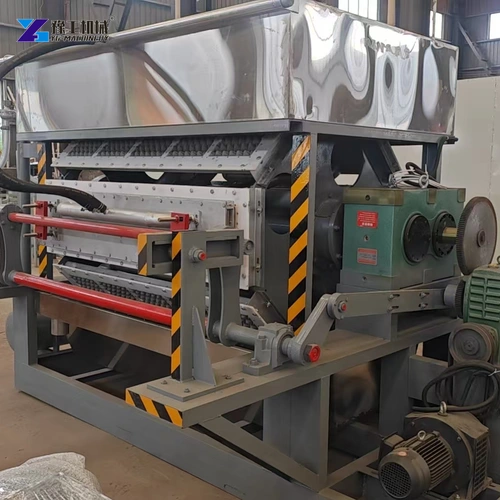
An egg carton making machine must produce more than a set of egg pockets. A retail carton also needs a lid, a folding connection and a closure that work together after drying. Those features make the product different from an open transport tray, even when both begin as moulded paper pulp.
For a packaging producer, the useful starting point is the closed carton that the egg packer will use. Its pockets protect and locate the eggs, while the lid and closure must align without damaging the shell. Work backwards from that product to the forming mould and any subsequent finishing equipment, rather than assuming a tray’s rated output transfers directly to a lidded carton.
Egg-Carton Moulds Must Define the Complete Open Shape
During pulp forming, a screened mould contacts the prepared fibre suspension. Suction draws water through the screen while fibres collect against its surface, building the wet product wall. The mould’s raised and recessed areas shape the pockets, lid and connecting region of a one-piece carton. A transfer stage then moves the fragile wet blank toward drying while supporting its shape. The complete open blank therefore matters as much as the outside dimensions of the closed pack.
This is why a carton is not simply an egg tray with a cover added to the equipment list. The mould arrangement must accommodate the product’s geometry and provide the appropriate forming and transfer surfaces. A wider open blank may use the forming area differently from a compact tray.
Pocket count alone does not define that geometry. Two cartons holding the same number of eggs can have different pocket spacing, lid depths, rim shapes and closure details. The egg size range and packing method influence those dimensions. Selecting a generic mould by the number of eggs can leave the buyer with a pack that looks familiar but does not fit the intended use.
An open-and-closed carton drawing connects these requirements. The open view defines the moulded surfaces and fold connection; the closed view defines lid clearance, rim alignment and closure engagement. Using both views keeps the forming and finishing tools tied to the same pack geometry.
Start with the complete open and closed carton drawing.
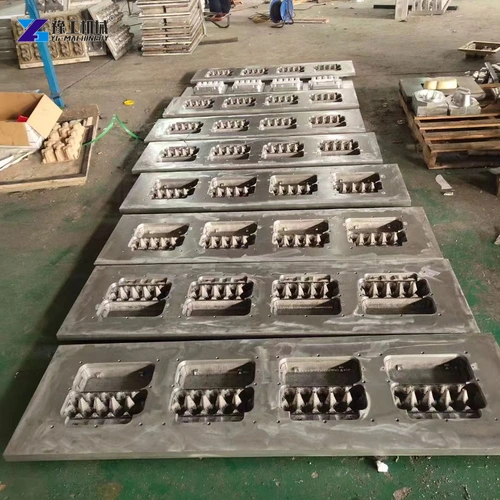
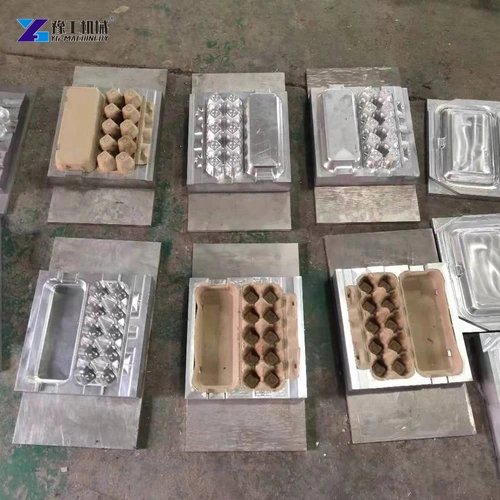
The Hinge, Lid and Closure Need to Work Together
The hinge region concentrates the fold between the lid and pocket section. Its profile and fibre distribution influence where the carton bends: a bulky or uneven region can make the lid twist instead of following the intended fold line. The neighbouring lid and base need enough shape stability to remain aligned as that connection flexes. Together, those features turn one open moulded blank into a closable pack.
The lid needs clearance over the intended eggs while aligning with the rim of the carton base. If the fit is wrong, pressing the lid closed may distort the carton or load the eggs. The closure then needs to retain the lid in the intended condition. A closure that works on an empty sample does not establish its behaviour with the intended egg size and packing arrangement.
Three checks keep sample evaluation specific:
- Pocket fit. Place representative eggs in the intended positions and examine support and separation. Egg count does not establish that the pockets suit the size range being packed.
- Lid movement. Examine how the lid approaches its closed position and whether the hinge region allows the movement without unintended twisting or tearing.
- Closure engagement. Check that the intended locking features align with the carton loaded as specified. Do not compensate for a geometry problem by treating excessive closing force as normal operation.
Pocket fit, lid movement and closure engagement describe three connected functions of the finished carton. A pocket that holds the egg too high changes lid clearance; a hinge that twists changes where the locking features meet. Evaluating the loaded carton as one pack exposes those interactions. Handling, stacking and distribution tests then assess how that finished geometry performs beyond the closing operation.
Review lid clearance and closure fit with representative eggs.
Forming, Drying and Finishing Have Different Roles
Forming establishes the wet fibre geometry, including the pockets and lid profile. Drying removes water so the moulded-fibre carton becomes firm enough for subsequent handling. Where the selected carton process includes hot pressing, a matching pair of finishing tools applies heat and pressure to refine the dried shape and surface. Forming and finishing therefore use different tooling for different stages of the same product.
As water leaves the blank, the fibre network contracts and the product can change shape. Uneven moisture or thickness across the lid, rim and base can produce uneven movement, affecting how the lid meets the closure. The drying route and support arrangement therefore need to deliver consistent blanks to the next operation, with particular attention to the surfaces that must meet when the carton closes.
Matching hot-press tools constrain the product while applying the finishing action to its surfaces. Depending on the specified process, later operations can include edge finishing, printing or labelling. Each needs the carton to arrive in the intended condition and orientation. The final equipment list should identify these stages separately from the forming unit.
In a line with separate drying and hot pressing, each stage must supply a consistent blank to the next. Forming controls fibre placement, drying controls moisture removal and dimensional change, and matched finishing tools refine the surfaces that must meet. Other pulp-packaging routes can combine forming and heated drying differently. The useful equipment comparison identifies the actual process route and the condition of the carton at each transfer.
Stage-by-stage handling is important because the blank changes condition along the line. After forming it is wet and fragile; after drying it is firm enough to handle but may have changed dimensions; any specified matched finishing tools act on that resulting shape. Supporting and transferring the blank appropriately at each stage helps preserve the hinge, lid and rim until their final fit can be assessed.
Compare how the formed blank changes through drying and the selected finishing stage.
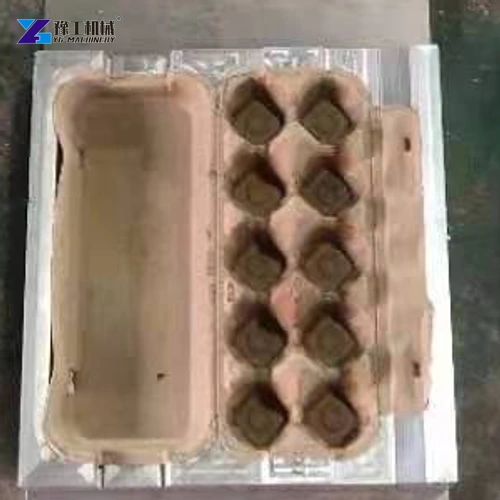
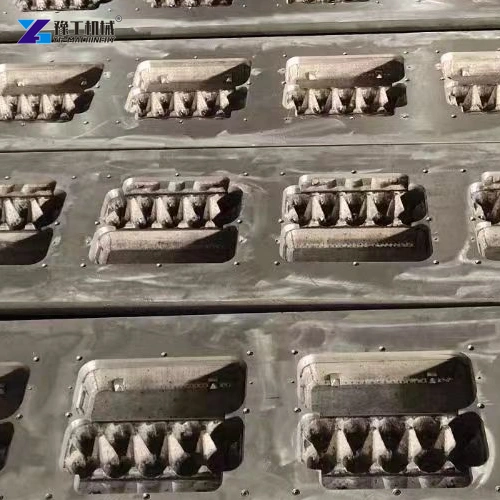
YG Egg Carton Making Machine Parameters
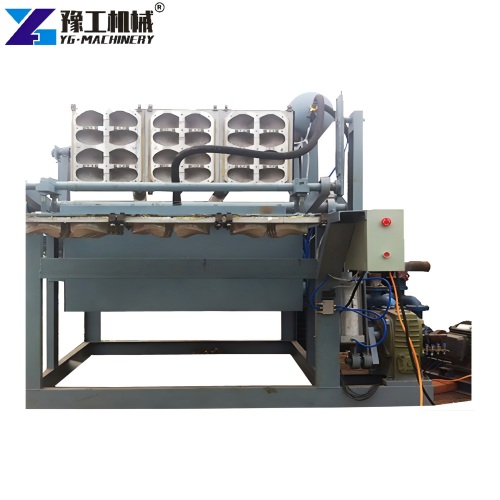
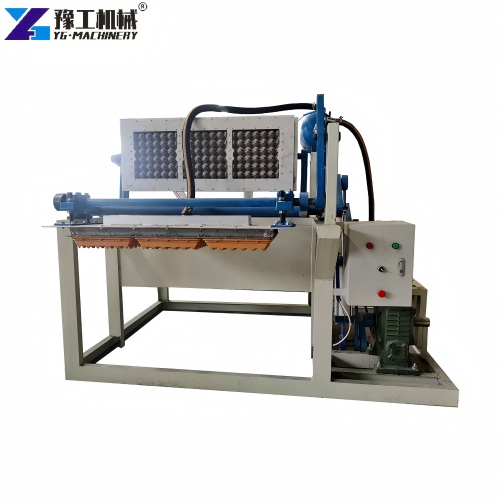
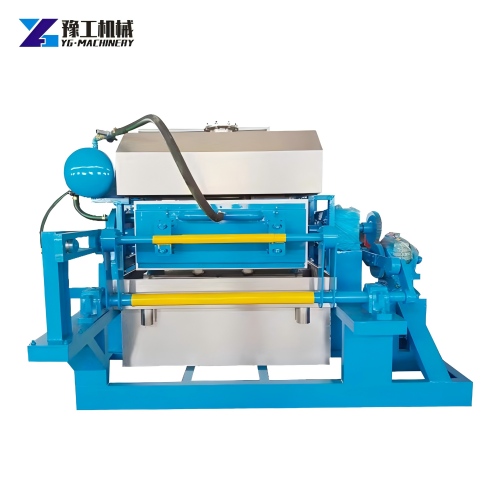
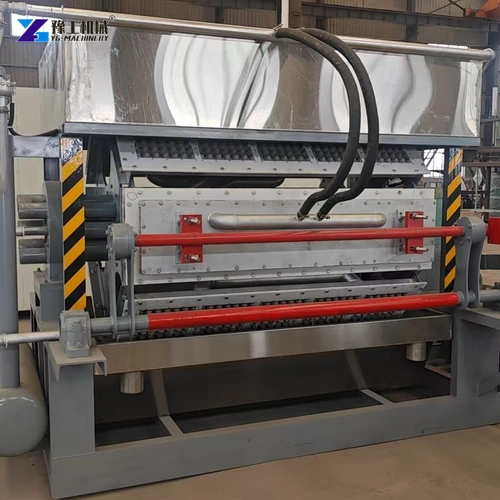
The YG egg-box forming configurations below describe the forming-stage equipment. Their mould positions receive the tooling for the required product. For a one-piece lidded carton, that tooling must form and transfer the complete open blank. Drying and optional hot pressing are separate stages; the figures below do not describe an assembled carton-finishing line.
| YG forming model | YG-1*3 | YG-1*4 | YG-3*4 |
| Forming mould quantity | 3 | 4 | 12 |
| Listed total power | 40 kW | 40 kW | 50 kW |
| Listed worker range | 3–5 | 4–6 | 4–6 |
Mould quantity describes the forming arrangement. To relate it to carton output, specify how the complete open blank occupies each mould position and how the positions advance through forming and transfer. The lid makes that blank different from an open tray with the same pocket count.
The listed worker range refers to its production arrangement. Staffing for additional finishing, materials and packing depends on how those stages are connected and automated. Likewise, the forming configuration and separate finishing equipment need to be identified when planning connected power and site services.
Open trays and lidded cartons use the same broad pulp-forming principle but need different tool surfaces. A tray mould forms the pockets and perimeter; a one-piece carton mould also forms the lid and folding connection. The pictured machines illustrate different forming configurations. Product tooling and any separate finishing equipment determine the pack geometry made by a chosen configuration.
Consistent Egg-Carton Closure Depends on the Complete Process
Consistent closing begins with repeatable fibre placement at the hinge, lid and rim of the carton base. It continues through drying, where uneven moisture loss can change those shapes, and through any finishing operation that controls the final fit. A carton that closes straight after all these stages is a more useful assessment product than a wet blank that has not yet undergone dimensional change.
If a finished carton twists or closes unevenly, trace that same feature backwards through the process. Compare the rim and hinge after finishing with their dried shape, then compare the dried blank with its formed geometry. A change appearing during drying calls for a different investigation from variation already present at forming. This gives the production team a place to investigate rather than treating every closure problem as a mould defect.
Finished-pack output depends on how those stages work together. A forming unit can produce blanks faster than a dryer or finishing unit can process them, creating waiting material rather than more completed cartons. Product changeovers and rejected packs also reduce the accepted quantity. Compare output at the point where the selected carton has completed all specified production stages and is ready for packing, rather than treating a forming-stage figure as the finished-line result.
Choose the forming and finishing route around the complete closed pack: pockets that suit the eggs, a hinge that guides the fold, and a lid and closure that meet consistently after processing. The mould, drying route and any finishing tools must deliver those features together. The egg box making machine range provides the wider equipment context for building that product-specific proposal.
Discuss tooling and finishing for the required egg size, carton shape, lid and closure.
Egg Carton Making Machine FAQs
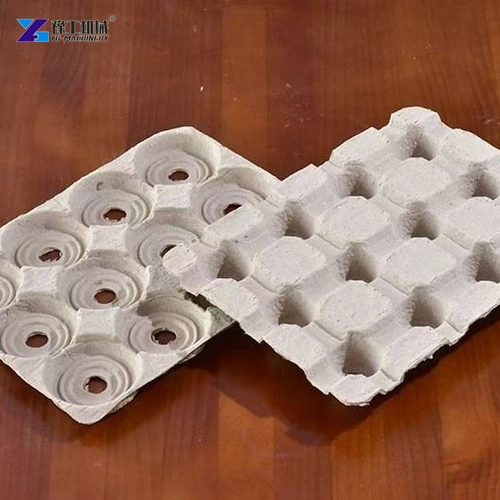
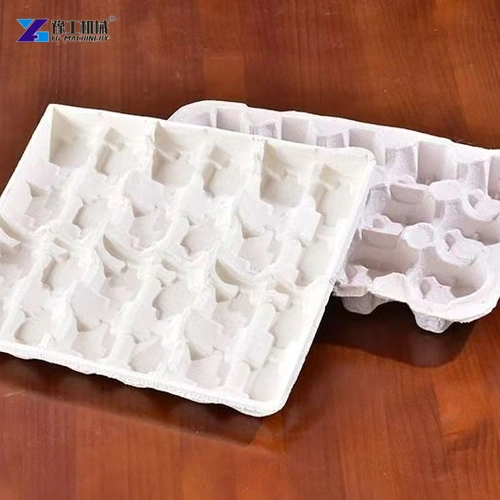
It shapes the pocket section, lid and folding connection as one open blank. Matching transfer surfaces support that blank as it leaves forming. Pocket spacing, rim shape and the open lid’s footprint determine the tooling layout together.
Matched heated tools apply pressure to refine the carton shape and surface after drying. Whether this stage is needed depends on the required finished pack and process. Its tooling, capacity and connected power belong in the finishing specification, separately from the forming machine.
The hinge guides the fold so the lid approaches the rim of the carton base and closure features. Check their engagement together with clearance over the specified eggs, because a closed pack must contain its contents without unintended distortion or pressure.
Mould quantity counts positions in the forming arrangement. Carton size and the number of complete blanks accommodated at each position connect that arrangement to product output. The forming and transfer cycle, followed by drying and any finishing capacity, determines the useful production rate.
Follow the agreed carton through forming, drying, any finishing and closing. Evaluate the finished pack and define output at the same production boundary used in the proposed supply.
Send the intended egg count and size range, carton drawing or sample, and required lid and closure style. These define the forming tooling and any finishing equipment needed for the pack.